
Introduction
I finally got started on the allotment this week after the council offered me a place after waiting on the local list. The first job was clearing what was already there. What looked like a few raised beds turned out to be a mix of rotting timber, compacted soil, and a bit of a reset job.
The Reality of the Raised Beds
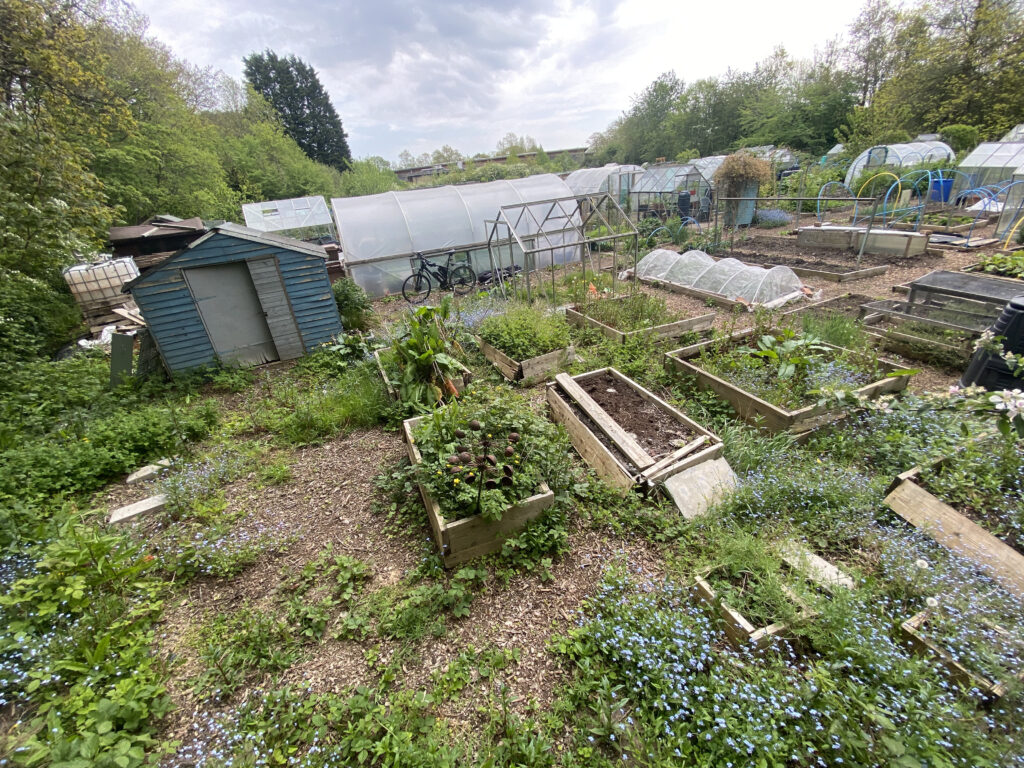
On first glance, the plot looked like it had a decent structure in place, but once I got into it, the raised beds were well past their best.
- Timber was rotten and falling apart.
- Beds weren’t structurally sound
- The soil inside was still usable
One thing that stood out — and is worth mentioning — was that the previous tenant had lined the inside of the beds with plastic. Over time, this had started to break down and crumble into the soil.
That’s something I’d strongly avoid. As it degrades, it can leave bits of plastic throughout your growing area, which is the last thing you want when you’re trying to grow food properly.
I did consider rebuilding the beds, but it quickly became clear it would be more work (and cost) than it was worth.
Going No Dig (Why It Made Sense Here)
Instead of rebuilding the beds, I’ve decided to switch to a no-dig approach and work with what’s already there.
I first learned about the no-dig approach through Charles Dowding’s work, and the more I looked at this plot, the more it seemed like the right direction to take.
For this plot, it just makes more sense:
- Saves time and money
- Makes use of the existing soil
- Avoids unnecessary digging and disruption
Nothing against raised beds — they just weren’t worth saving in this case, and wood is now very expensive!
Reusing What Was There
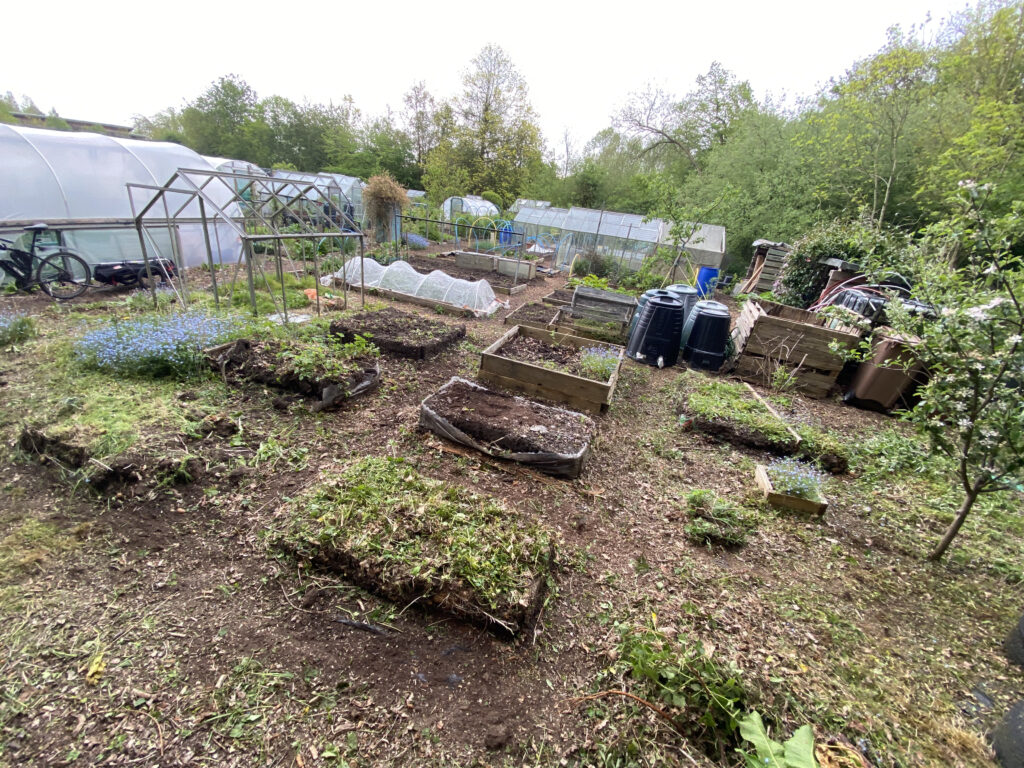
Rather than starting from scratch, I’ve been dragging the contents of the old beds out and reshaping them into new growing areas.
Nothing fancy here — just shifting what was already on site and working with it instead of against it.
It’s a bit rough at the moment, but it’s a solid base to build on using a simple garden plan.
Unexpected Win – Established Comfrey
One of the better surprises was finding established comfrey already growing on the plot.
That’s a big win.
- Great for making natural fertiliser (comfrey tea)
- Brilliant for pollinators, especially bees
It’s one of those plants that really earns its keep, so I’ll definitely be keeping it and making use of it going forward.
Hidden Crops in the Weeds
As I worked through the overgrowth, I started uncovering what the previous tenant had left behind — and there were a few decent surprises mixed in.
- Strawberries tucked under the weeds
- Potatoes are still in the ground
- Raspberry canes that should come back strong
- What looks like an artichoke plant
- And a fruit tree (apple or pear) already in full blossom
It’s a good reminder not to rush in and clear everything blindly. There’s often something worth keeping if you take the time to look.
I’ll be keeping an eye on these as things develop — especially the fruit tree — and working them into the overall plan rather than ripping everything out and starting again.
Turning Waste Into Something Useful (Bug Hotel)
Rather than getting rid of all the old wood, I decided to reuse some of it to build a simple bug hotel.
It’s a good way to:
- Support beneficial insects
- Reduce waste
- Add a bit of life back into the plot early on
What’s Next
Now the plot is starting to take shape. The next steps are:
- Levelling out the growing areas
- Planning the layout properly
- Deciding what to plant first
I’ll be mapping everything out properly before planting, rather than just guessing and hoping for the best.
Final Thoughts (Week 1)
This week was more about understanding the plot than making it look good.
A bit more work than expected, but already feels like a step in the right direction.
Next week should be where things start to get more interesting — planning, layout, and the first real decisions on what’s going in the ground.