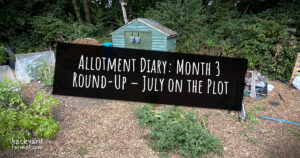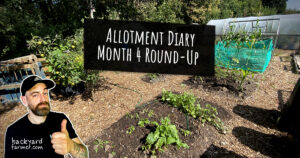

June was a quieter month on the allotment, but that is not a bad thing.
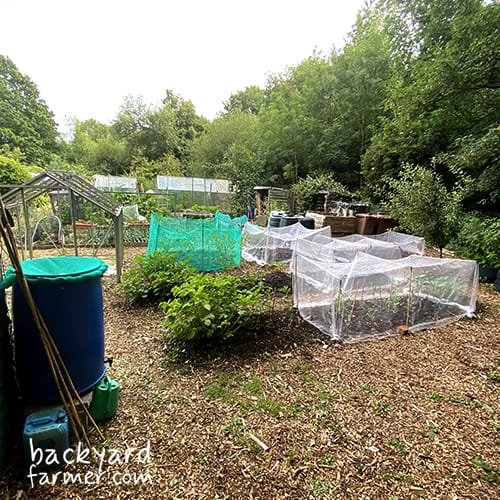
After the big clear-out in May, this month was more about keeping the plot moving, adding a few more crops, protecting what was already in the ground, and slowly bringing the last rough areas under control.
The plot still is not finished, and the soil is still a long-term job. Even so, it is starting to feel less like a rescue project and more like a working allotment.
The potatoes are growing well, the corn has settled in, the tomatillo is covered in flowers, and I have started getting small harvests from the rescued strawberries, peas, and raspberries — when I get there before the pigeons.
There is still plenty to do. Still, June felt like the month the plot started giving something back.
What Changed In June?
June was not about dramatic change in the same way May was.
Instead, the shift this month was from clearing and building into planting, protecting, and maintaining. That is a good sign. It means the allotment is starting to move into a more normal rhythm.
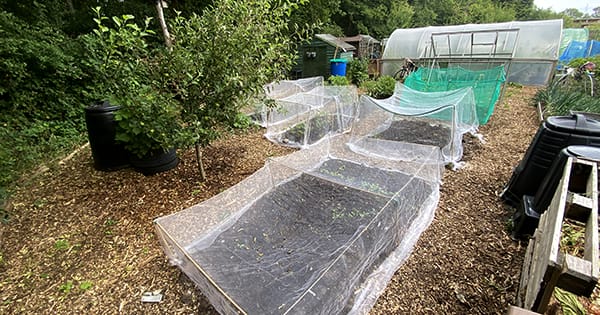
The no dig beds have continued to take shape, with more netting going over the growing areas. That matters more now there are proper crops in the ground and more pests taking an interest.
I also started tackling the ditch around the plot, which feels like the last of the really big clearing jobs left from when the allotment had been left for a while.
It is not the most exciting job, but jobs like that are often the ones that make a plot easier to manage later on.
The main jobs this month were:
- Continuing the netting over the no dig beds
- Planting out sprouting broccoli
- Letting the corn settle in properly
- Planting radish, beetroot, and turnips
- Moving home-reared cucumbers and courgettes onto the plot
- Keeping an eye on slug damage
- Starting to clear the ditch
- Taking the first proper small harvests
It feels like the plot is moving into its next stage now.
Less dragging it back into use. More keeping it productive while improving it bit by bit.
Allotment Day #1
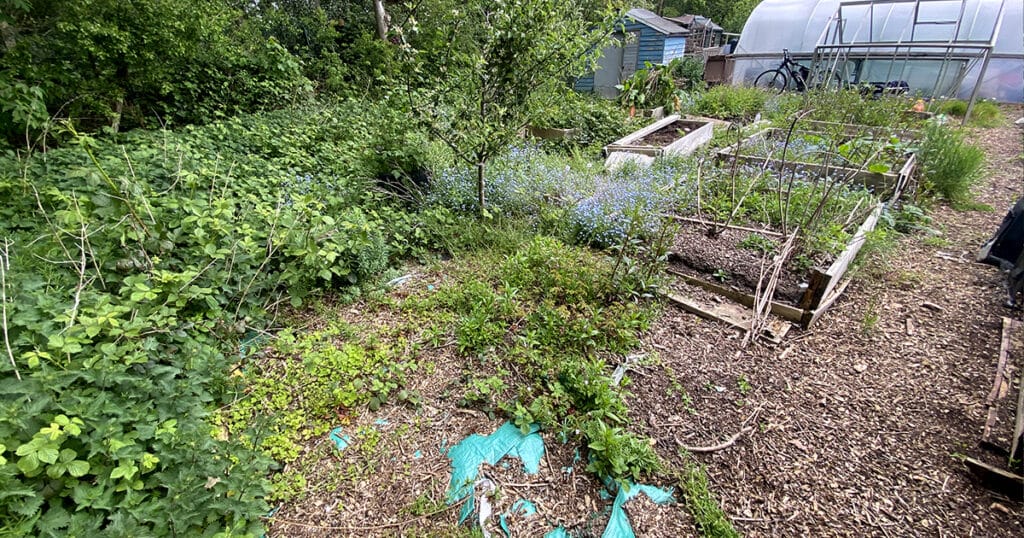
Allotment Month #1
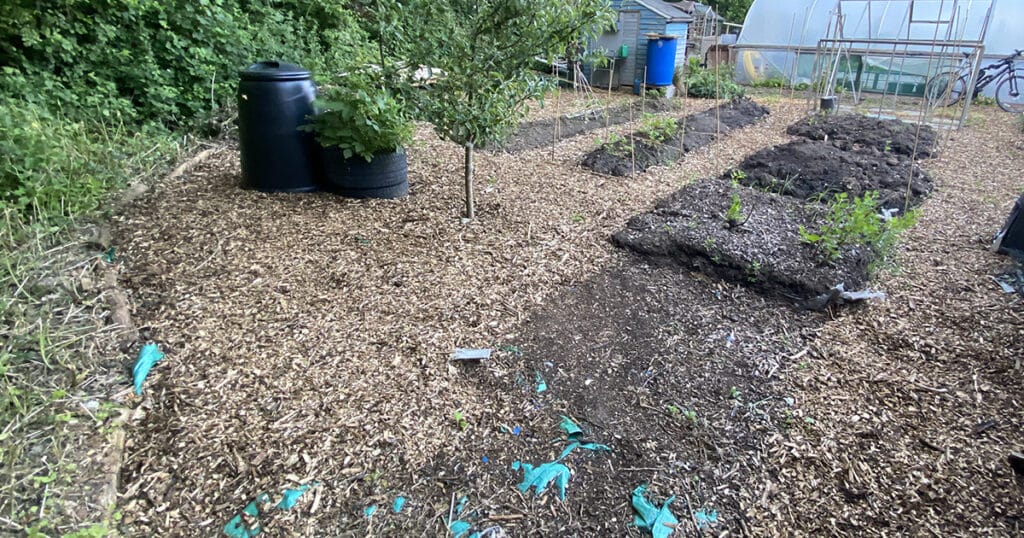
Allotment Month #2
Crops Now Growing On The Plot
By the end of June, the crop list has filled out quite a bit.
Some things were already in from May, while others have gone in as more growing space has become usable.
| Crop | Notes |
|---|---|
| Potatoes | Growing well and putting on strong top growth |
| Corn | Now established and settling into the main growing area |
| Tomatillo | Growing well with lots of flowers |
| Sprouting broccoli | Three gifted plants now planted out |
| Beans | Planted and starting to flower |
| Peas | Producing small harvests |
| Strawberries | Rescued plants are now cropping |
| Raspberries | Starting to harvest, if the pigeons do not get there first |
| Radish | Sown into the newer growing areas |
| Beetroot | Planted as part of the next round of crops |
| Turnips | Added for another quick, useful crop |
| Cucumbers | Reared at home, then planted out once stronger |
| Courgettes | Also started at home to give them a better chance against slugs |
That feels like a decent mix for month two.
There are quick crops, longer-season crops, inherited fruit, gifted plants, and a few things that were started at home first before being risked on the plot.
That last part has become more important than I expected. The slugs are quite bad down there, so giving cucumbers and courgettes a head start at home makes sense.
They go into the ground with a bit of size on them, instead of being tiny seedlings that can disappear in one night.
Netting The No Dig Beds
Netting has continued to be one of the most useful jobs on the plot.
It is not glamorous, but it makes a real difference.
As more crops have gone into the no dig beds, the netting has helped protect them while they get established. The pigeons are clearly active, and between them and the slugs, young plants need all the help they can get.
The simple approach is still working well:
- Bamboo supports
- Netting over vulnerable crops
- Beds protected before damage gets too bad
- Easy access for watering and checking plants
I would still rather keep it practical than build anything too complicated at this stage.
The plot needs to stay flexible while I work out what grows well where, how the light moves, how the pests behave, and which areas need the most improvement.
For now, the main aim is simple: protect the crops long enough for them to get going.
Planting Out Home-Reared Cucumbers And Courgettes
Because the slugs have been quite bad on the allotment, I have been starting some crops at home and planting them out once they are a bit stronger.
That has worked well for the cucumbers and courgettes.
Rather than sowing direct and hoping for the best, I gave them a better start away from the worst of the slug pressure. Once the plants had some size on them, they went onto the plot.
It is not a perfect defence, of course. Slugs can still do damage.
Even so, a stronger plant stands a much better chance than a seedling that has only just come through the soil.
This is probably how I will handle the more vulnerable crops while the plot is still settling down. Later on, when the beds are cleaner and the whole place is a bit more balanced, I may be able to sow more direct.
For now, starting plants at home gives me a bit more control, and honestly, it saves a fair bit of frustration too.
The Crops Are Starting To Settle In
The best part of June has been seeing crops settle into the plot properly.
The corn has established, which is always a good sign. I wanted it in early enough to make the most of summer, and it now looks like it has found its feet.
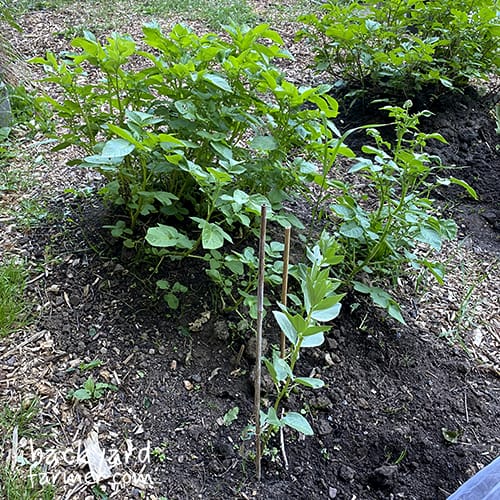
The potatoes are still growing well too. They have been one of the more reassuring crops so far, partly because they make the plot feel properly productive while other areas are still being improved.
The tomatillo has also been a nice surprise. It is growing well and has lots of flowers, so I am interested to see how it performs over the next month.
The beans have started to flower as well, which is another sign that things are heading the right way.
It is still early days, but the allotment is no longer just a cleared space with a few hopeful plants in it.
It is starting to look like somewhere that grows food.
First Harvests From The Plot
June also brought the first proper harvests.
Nothing huge yet, but enough to make the work feel worthwhile.
So far, I have had:
- Strawberries from the rescued plants
- Peas from the early planting
- Raspberries from the inherited fruit
The strawberries are especially satisfying because they were already on the plot and could easily have been lost in the early clear-out. Instead, they have been worked back into the space and are now producing.
The raspberries are doing what raspberries do, although the pigeons seem just as interested in them as I am.
That is part of allotment life, really. You either protect things properly or accept that some of the crop will be shared.
Even so, getting those first small harvests changes how the plot feels.
After weeks of clearing, planting, netting, and improving, it is good to actually take something home.
Clearing The Ditch Around The Plot
One of the less pretty jobs this month has been starting to clear the ditch around the plot.
This feels like the last of the big clearing jobs left from when the allotment had been left for a while.
It is not the kind of task that gives instant results in the beds, but it still matters. A plot is much easier to manage when the edges are under control, water can move properly, and old growth is not constantly creeping back in.
After this, most of the big rescue work should be behind me.
There will always be weeding, tidying, cutting back, and sorting out rough corners. That is normal allotment maintenance.
The ditch feels more like one of the final jobs from the taking back the plot stage.
Once that is done, the focus can move more fully towards soil, crops, structure, and making the whole space easier to manage through the seasons.
Building The Soil Slowly
The soil is still the main long-term job.
I am not expecting to fix it all in one season, and I do not think that would be realistic. The plot had been left for a while, and although it can grow crops now, it still needs feeding, covering, and improving over time.
Most of that bigger soil-building work will happen over winter.
For now, I am trying to keep the beds productive without stripping too much from them. As crops come out, I can start adding more organic matter, covering bare soil, and improving each section bit by bit.
The aim is not to make the plot perfect this summer.
The aim is to keep it growing, keep it covered, and send it into winter in better shape than it started.
That feels like the right pace for this first year.
What Worked Well In June
A few things have stood out this month.
| Job | Why It Helped |
|---|---|
| Netting the no dig beds | Protected young crops from birds and pests |
| Starting cucumbers and courgettes at home | Gave vulnerable plants a better chance against slugs |
| Keeping inherited fruit | Started giving early harvests from the plot |
| Taking gifted plants | Added useful crops without overcomplicating the plan |
| Planting quick crops | Filled gaps with radish, beetroot, and turnips |
| Clearing the ditch | Began the last major clearing job around the plot |
| Letting crops settle | Helped the plot feel productive rather than rushed |
The biggest lesson this month is probably that a quiet month can still be a productive one.
Not every allotment update needs to be dramatic.
Sometimes progress is just plants establishing, netting going on, weeds being held back, and the first small harvests coming home.
That still counts.
Jobs For July
July should be about keeping the plot ticking over and staying ahead of problems.
The main jobs for next month are:
- Keep watering during dry spells
- Finish clearing the ditch
- Keep checking netting and crop protection
- Watch the slugs around cucumbers and courgettes
- Support beans as they keep flowering
- Keep picking peas, strawberries, and raspberries
- Check how the corn develops
- Keep an eye on the tomatillo flowers and fruit set
- Sow more quick crops where gaps open up
- Start thinking ahead to autumn and winter soil improvement
The soil will still be the bigger job later in the year.
For now, the focus is keeping crops alive, productive, and protected through summer.
Final Thoughts — June On The Allotment
June was not as dramatic as the first month, but it was still an important one.
May was about turning an overgrown plot back into something usable. June has been about proving that it can actually grow food.
The potatoes are doing well. The corn has established. The tomatillo is flowering. Beans are starting to flower. Cucumbers and courgettes are now in. Radish, beetroot, and turnips have been planted. The rescued strawberries are producing, and the raspberries and peas are giving small harvests.
There is still rough work to do, especially around the ditch and the soil, but the plot feels much more settled now.
The big clearing stage is nearly behind me.
From here, it is about keeping the crops going, improving the soil slowly, and building the allotment into something better season by season.
For month two, that feels like enough.