
Introduction
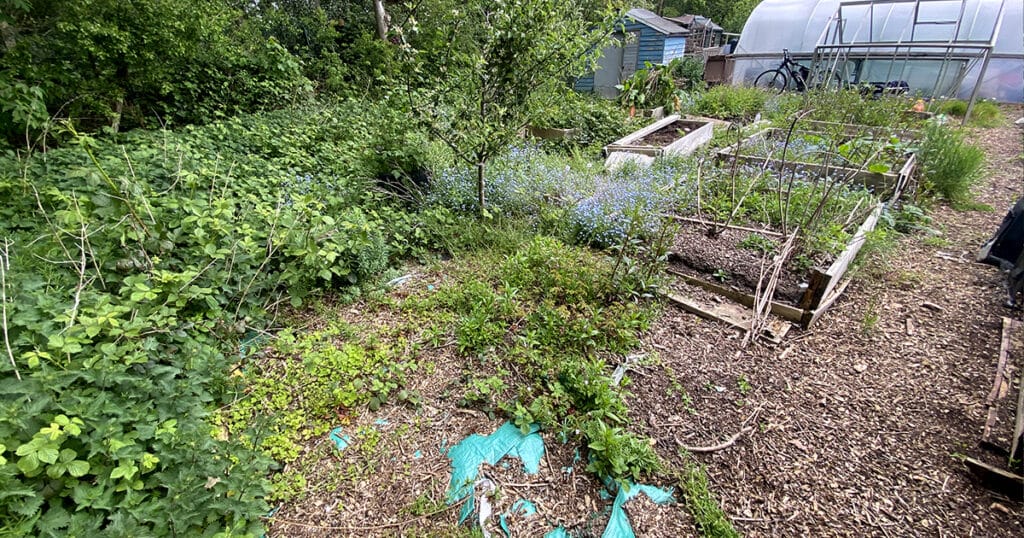
May was the first proper month on the allotment, and looking back, it already feels like the plot has turned a corner.
At the start, it was still more of a clearing job than a growing space. There were old beds to pull apart, weeds coming in from all sides, and plenty of rough ground to make sense of before I could really get going.
By the end of the month, though, it had started to feel like a proper allotment.
The paths are clearer, the old beds are being turned into no dig patches, crops are in the ground, and a few simple systems are starting to fall into place. There is still a lot to do, especially with the soil, but it no longer feels like I am just fighting an overgrown plot.
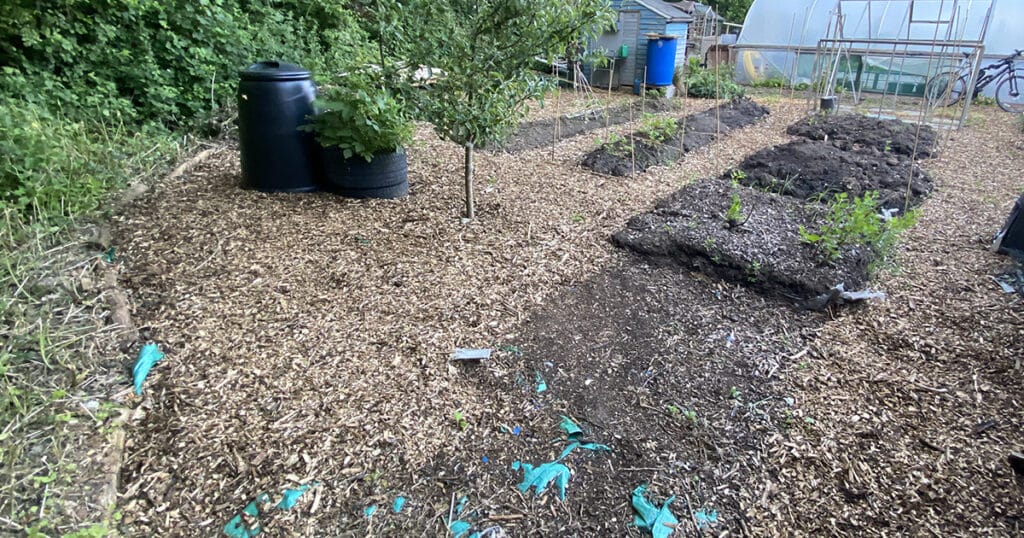
It feels like I am building something now.
Because of that, this allotment diary is moving from weekly updates to monthly round-ups. The big early push is done, and from here it is less about dramatic clear-outs and more about steady progress, improving the soil, and seeing how the plot settles into itself.
If you are planning your own plot at the same time, my free UK vegetable planting calendar and square foot garden planner can help with both timing and layout.
What Changed in May?
May was really about turning the plot from a rough patch into something I could actually work with.
The first couple of weeks were all clearing, reclaiming edges, pulling apart rotten old beds, and getting the first rows in. If you want the earlier stages, I covered that in Week 2 of the allotment diary. Even then, the plot had already started to feel more organised, mostly because the woodchip paths went down early and gave everything a bit more shape.
That carried on through weeks 3 and 4.
Rather than trying to rebuild the whole allotment in one go, I just kept working with what was there. That felt like the better approach. Some of the old bed spaces were worth keeping in some form, while others clearly needed stripping back and reworking properly.
So that became the job.
The old growing areas have gradually been cleaned up and turned into no dig patches. Anything useful has been reused where possible, and the focus has shifted away from constant clearing and towards building the plot back up in a more sensible way.
That is the real change, looking back on May.
At the start, it still felt like an overgrown plot I was trying to get under control. By the end of the month, it felt like a working allotment. Not finished, and definitely not polished, but functional — and honestly, that matters more.
I would much rather have a slightly rough plot that is growing food and improving week by week than something that looks tidy for five minutes and still is not doing much.
Crops Now Growing on the Plot
By the end of May, the allotment had gone from looking half-abandoned to actually having a decent mix of crops on it.
At this stage, we now have:
| Crop | Notes |
|---|---|
| Corn | Planted into one of the main growing areas |
| Courgettes | Finally planted out once the weather felt safe enough |
| Strawberries | Already on the plot and well worth keeping |
| Tomatillo | Gifted by a neighbour on the allotment |
| Potatoes | Now growing on well |
| Peas | Added for quick growth and climbing support |
| Beans | Part of the first productive rows |
| Apples | Existing fruit trees already in place |
| Gooseberries | Established soft fruit being worked back into the plot |
| Raspberries | Another inherited crop worth keeping |
That is a pretty good place to be after the first month.
The tomatillo was a nice reminder of what allotments are like at their best. Someone nearby had a spare plant, I had space for it, and that was that. Those small exchanges are part of what makes allotment growing different from working in a garden on your own.
Plants, cuttings, spare seedlings, bits of advice — they all seem to move around naturally. One person has too much of something, someone else has a gap to fill, and before long a crop you never planned to grow ends up becoming part of the plot.
I like that side of it.
It makes the space feel shared in a good way. You have your own patch to build and manage, but you are still part of a wider growing community at the same time.
Turning Old Beds Into No Dig Patches
A fair bit of May was spent dealing with the old growing areas.
At first glance, some of the raised beds looked like they might be worth saving. Once I started pulling them apart, though, it became obvious they were past it. The timber was soft, the layout was awkward, and keeping them for the sake of it would only have made the plot harder to work.
So instead of rebuilding tired beds, I started reshaping those spaces into no dig patches. That follows on from the earlier shift I wrote about in my first new allotment diary update on going no dig.
That feels like the right move for this allotment. I am not interested in digging everything over just because that is how it has always been done. The soil already needs improving, so it makes more sense to disturb it as little as possible and build it back up gradually.
The basic approach has been simple:
- Clear the worst weeds
- Keep disturbance to a minimum
- Reuse what is still useful
- Add organic matter where I can
- Keep the ground covered and improving
It is not a quick fix, but that is fine.
This plot was never going to be sorted in a month, and I think that is worth accepting early on. The real job now is getting the soil back into decent condition and making each area a bit better as I go.
That means mulch, organic matter, ground cover, and patience more than anything else. Bit by bit, the old rough spaces are starting to become proper growing areas again.
Starting to Improve the Soil
More than anything else, the main long-term job on this plot is getting the soil back into decent condition.
You can grow into tired ground for a while, but it catches up with you. This allotment has clearly produced before, yet it also feels like a plot that needs feeding back into life rather than just pushed for a quick season.
That is how I am trying to treat it.
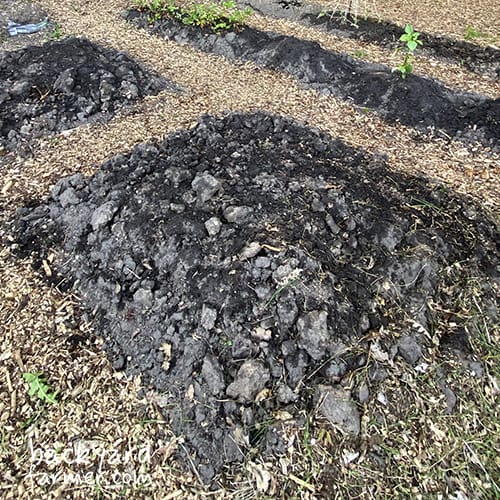
I want food out of it this year, obviously, but I also want the soil to be in better shape by the end of the season than it was at the start. Otherwise you are just borrowing from next year.
Around the corn, I have started putting down alfalfa as a green manure to begin that process. It is only one small step, but it should help with soil structure, organic matter, and getting a bit more life back into that area over time.
There is no instant fix for this sort of thing, and honestly, I do not mind that. Part of taking on an older allotment is accepting that some jobs happen slowly.
So this first season is really two things at once. It is a growing season, but it is also a restoration job.
The aim is not just to get crops out of the ground this summer. It is to leave the plot in better condition for next year, and better again the year after that.
If the soil is healthier next spring than it is now, I will count that as real progress.
Netting, Bamboo Frames and Pest Protection
I have also started putting up netting using simple bamboo frames.
Part of that is basic crop protection, obviously, but it also helps the plot feel more settled. Once the frames start going up and certain areas are properly marked out, the allotment stops looking like a clearing job and starts looking like somewhere set up to grow food.
I am keeping it straightforward for now.
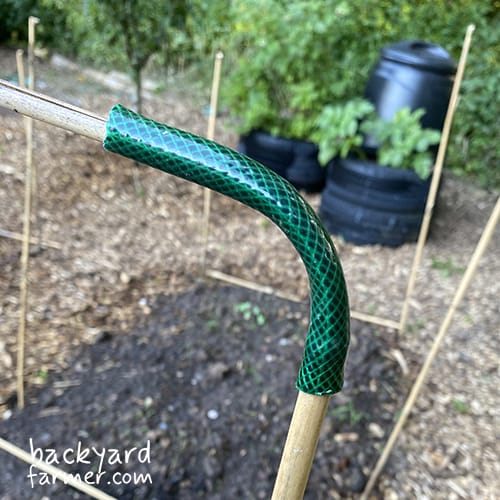
There is no need to overcomplicate this stage. A few bamboo canes, some decent netting, and simple supports do the job well enough. I would rather get practical protection in place early than leave it too late and end up feeding the pigeons.
That is really the main point with netting. It is much easier to put it up before crops are under pressure than after something has already found them. Once birds or pests get into the habit of visiting, you are already on the back foot.
The bamboo frames have worked well for that so far. They are cheap, easy to adjust, and good enough to get protection in place without turning the whole plot into a building project.
If you are setting up something similar, I have written a separate guide on garden netting for vegetable beds if you want a practical way to protect crops without making the whole plot awkward to work around.
Water Butt and Fertiliser Tea System
One of the handiest additions this month has been the water butt.
It is not the most exciting job on the plot, but it makes a real difference. Once you have stored water on site, everything feels a bit easier, especially when you are also starting to build simple feeding systems around it.
Alongside that, I have started using a basic “tea bag” system for fertiliser teas, starting with comfrey and nettle.
The idea is simple enough. The plant material goes into a contained bag so it can steep in the water without turning the whole butt into a swampy mess. You still get the goodness leaching out, but it is much easier to manage and far less grim to deal with.
I have also added a small solar aeration stone to keep the water moving.
That should help stop things going stagnant as the weather warms up, and it suits the kind of setup I want on the plot anyway: simple, low-cost, practical systems that do a proper job without needing loads of fuss.
Comfrey and nettle are perfect for this sort of thing. They are easy to get hold of, they grow strongly, and they turn what would otherwise just be green bulk into something genuinely useful.
That is the kind of cycle I want more of on this allotment — using what is already there, wasting less, and feeding the plot back as I go.
The Plot Feels Functional Now
For me, the biggest change in May is not just the list of crops now growing on the allotment.
It is the fact that the plot actually feels functional.
At the start, it felt like an overgrown space that needed rescuing before it could really do anything. By the end of the month, it felt like a working allotment.
There are crops in the ground. The paths are doing their job. The no dig areas are taking shape. Water is being collected. Feed is brewing. The fruit bushes and trees are no longer just there in the background either — they are starting to feel like part of the plan.
It is still rough in places, and that is fine.
What matters is that the plot now has direction. Once you get to that stage, it becomes much easier to decide what needs doing next. You are no longer just clearing for the sake of clearing. Each job starts to support the bigger picture.
That shift is probably the most satisfying part of the first month.
A few weeks ago, it felt like I had taken on an overgrown patch that needed dragging back into use. Now it feels like an allotment I can actually build on.
What Worked Well in May
A few things made a bigger difference than others this month.
| Job | Why It Helped |
|---|---|
| Clearing old beds | Opened up usable growing space quickly |
| Sticking with no dig | Kept disruption down while improving the soil |
| Adding woodchip paths early | Made the whole plot easier to move around and manage |
| Getting crops in early | Helped the plot feel productive straight away |
| Taking gifted plants | Added variety and made the allotment feel more connected |
| Starting fertiliser teas | Began turning green growth into something useful |
| Using alfalfa as green manure | Started the longer job of feeding the soil back up |
The main lesson for me is that an allotment does not need to be perfect before it starts becoming useful.
In fact, waiting for perfect is probably one of the easiest ways to lose momentum. A plot like this improves by stages. You clear a bit, plant a bit, sort a path, improve the soil, then go again.
That approach has worked well this month.
It has kept the job manageable, and more importantly, it has meant the plot is already growing food while still being improved. For a first month, I do not think you can ask for much more than that.
Jobs for June
June should be less about big clear-outs and more about keeping the plot moving in the right direction.
A lot of the heavy lifting from the first month is done now. From here, it is more about building on what is already in place, staying on top of the basics, and not letting things slip just because the plot finally looks more functional.
The main jobs for next month are:
I will also be using my free UK vegetable planting calendar to stay on top of what can still go in, and the square foot garden planner to keep the layout practical as the plot fills up.
- Keep improving the no dig beds
- Finish the main netted areas
- Stay on top of watering as the weather warms up
- Keep the comfrey and nettle feeds going
- Support peas, beans, and other climbers properly
- See how the corn settles in
- Clear and tidy around the fruit bushes
- Mulch bare soil where I can
- Keep feeding the soil rather than rushing for neatness
There will still be bits of clearing and tidying to do, of course, but it no longer feels like the whole plot is one big rescue job.
That is a good feeling.
Now it is more about maintenance, small improvements, and helping everything settle in properly as summer gets going.
Final Thoughts — May on the Allotment
May was the month this allotment stopped being an idea and started feeling real.
At the beginning, it was an overgrown plot with tired beds, rough edges, and plenty of question marks. By the end of the month, there were crops in the ground, paths taking shape, water being stored, homemade feeds on the go, and the first real sense of structure starting to form.
There is still loads to improve, especially with the soil, and that will probably be one of the main themes of this first year.
I am not trying to rush it into looking finished. I would rather grow a bit, improve a bit, and keep building the plot back properly so it gets easier and more productive over time.
For now, though, I am happy with where it has got to.
The potatoes are in. The corn is in. The courgettes are in. The fruit is there. The water butt is doing its job. The first comfrey and nettle feeds are brewing away.
A month ago, it was an overgrown patch that needed sorting.
Now it feels like an allotment.
And that is a good place to end the first month.