
July has felt much more like proper allotment growing.
The big clearing jobs are mostly behind me now, crops are filling the beds, and I have started bringing home some proper harvests.
There have still been a few problems. Flea beetles arrived in numbers, the cucumbers were eaten almost as soon as they went out, and the hot weather made keeping some of the quicker crops watered properly difficult.
Even so, the plot is producing food, the corn is maturing, courgettes are coming through, and the first potatoes were well worth waiting for.
What Changed In July?
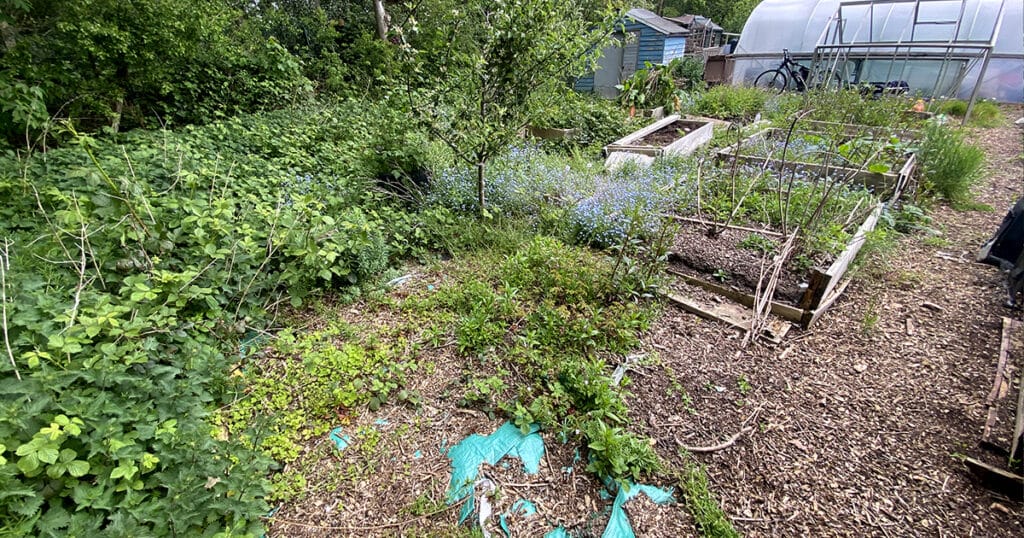
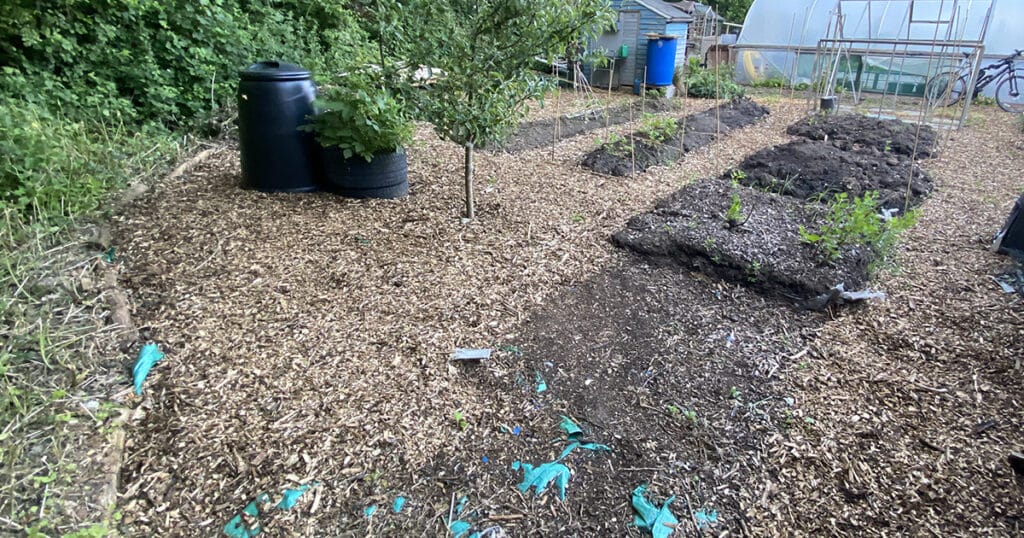
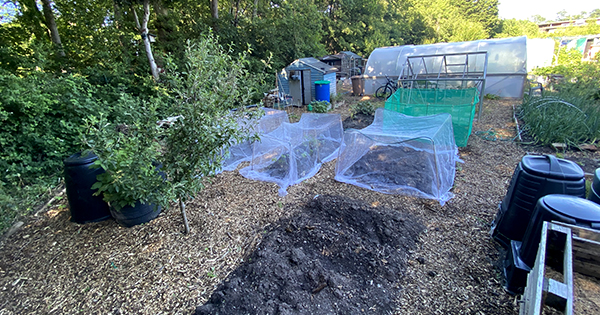
One of the bigger physical changes was moving the shed to the back of the plot.
It had been sitting in one of the better sunny areas, which did not make much sense when growing space is at a premium. Moving it backwards has opened up more useful ground while putting the structure somewhere that makes better use of the shadier end.
The main jobs and changes this month were:
- Moving the shed out of a prime sunny position
- Harvesting the first potatoes
- Dealing with a sudden flea beetle problem
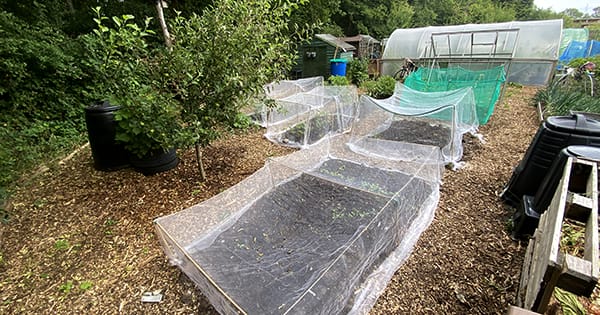
- Taking some of the crop netting off
- Setting up a simple gravity-fed drip watering system
- Planting out cucumbers, then replacing the losses with tomatoes
- Watching the courgettes and corn develop
- Adding a gifted squash plant alongside the corn
- Making a batch of comfrey feed
- Keeping the beetroot and turnips moving through their first succession
The plot is starting to become less about creating the allotment and more about responding to what is actually happening on it.
Crops On The Plot In July
There is quite a mixture now, with some crops being harvested while others are only just getting going.
| Crop | July Progress |
|---|---|
| Potatoes | First crop harvested, with King Edwards still to dig |
| Courgettes | Starting to come through |
| Sweetcorn | Developing well and beginning to mature |
| Squash | Gifted plant added alongside the corn |
| Apples | Fruit starting to ripen |
| Tomatoes | Planted where the cucumbers were lost |
| Cucumbers | Planted out but badly eaten |
| Radish | Growing, although heat caused some bolting |
| Beetroot | First succession developing well |
| Turnips | First succession developing well |
There are still successes and failures mixed together, but that is becoming one of the most useful parts of the first year.
Every crop is showing me a little more about the plot.
The First Proper Potato Harvest
The potatoes finally came out this month.
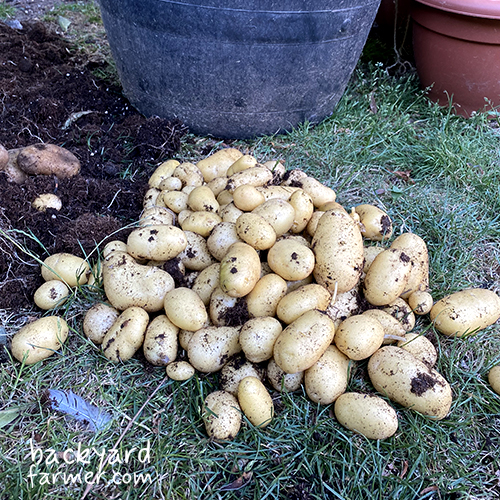
And, thankfully, they were delicious.
After spending the first couple of months watching the plants put on top growth, actually digging underneath and finding a worthwhile crop felt like a bit of a milestone.
I still have some King Edwards in the ground, so the potato harvest is not finished yet.
It is one of those simple allotment jobs that makes all the earlier clearing and preparation feel worthwhile.
Flea Beetles Hit The Brassicas
July also brought the first proper flea beetle problem.
The timing coincided with the nearby oilseed rape fields being cleared, after which there suddenly seemed to be far more of them around the plot.
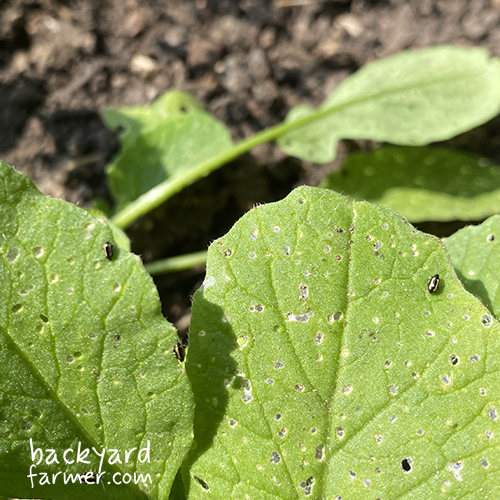
They went after the brassica-family crops and peppered the leaves with their characteristic little holes.
Fortunately, most of the affected radish, beetroot and turnips were coping well enough, so the damage was more annoying than disastrous.
Interestingly, I eventually removed the netting, and the number of flea beetles seemed to fall afterwards.
They now appear to have largely moved on.
It is another reminder that crop protection is not always as simple as covering everything and leaving it covered. Sometimes it is worth watching what is actually happening underneath.
A Simple Gravity-Fed Drip Watering System
Water became a bigger issue during the hotter spells.
The radish in particular started bolting despite being watered every day, which suggested the surface watering was simply not keeping the soil consistently moist enough.
Rather than adding anything complicated, I made a basic drip system using the water butt.
The butt is raised off the ground, so there is enough gravity to push water through a length of hose. I made a series of small holes along the hose so that water can slowly drip into the bed.
It is very simple:
- Raised water butt
- Length of ordinary hose
- Small holes along the growing area
- Gravity providing the pressure
The idea is not to flood the bed, but to deliver water more slowly and consistently around the crops.
For an allotment without mains irrigation, it is proving to be a useful little setup.
Cucumbers Lost, Tomatoes In Their Place
The cucumbers did not go quite as well.
I had started them away from the allotment and planted them out, but they were still too small and tender.
They got munched almost immediately.
The lesson for next time is straightforward: let them get bigger before planting them out.
A plant with several established leaves has a much better chance of taking some damage than a small seedling that can disappear overnight.
Rather than leave the space empty, I have planted tomatoes in their place.
Not everything needs rescuing. Sometimes it is easier to accept the loss and use the space for something else.
Courgettes, Corn And A Gifted Squash
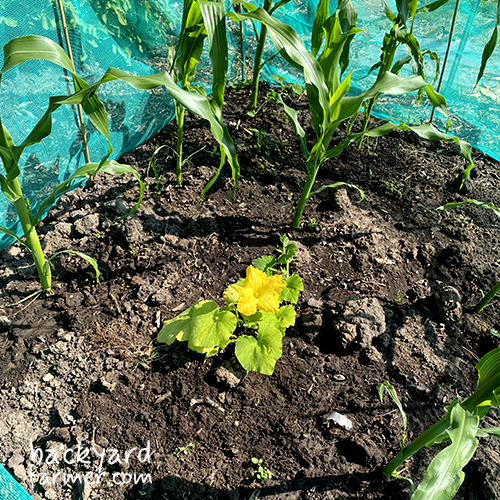
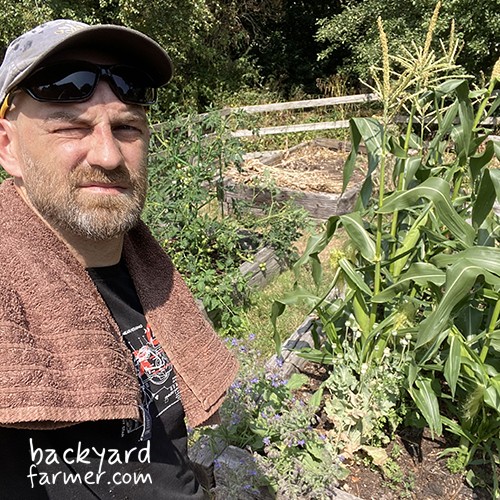
The courgettes are now starting to come through, while the sweetcorn has continued to develop well.
A neighbour also gave me a squash plant, which has gone into the same area as the corn.
They should make good neighbours in the bed, with the corn growing upwards while the squash spreads lower across the ground.
The corn itself is beginning to mature now, so hopefully August will bring another proper harvest from this part of the plot.
Making Comfrey Feed From The Plot
I have also started using one of the resources already growing on the allotment.
There is comfrey on site, so I used some of it to make a simple liquid feed.
The comfrey sat in water for around two weeks, allowing it to break down before the liquid was used.
Before adding it to the watering system, I strained it through a hessian sack.
That removes most of the bits of decomposing plant material and leaves a much cleaner liquid feed to dilute into the watering water.
It is not glamorous stuff – and it certainly does not smell glamorous – but it means the plot is starting to provide some of its own fertility as well as food.
Beetroot And Turnips Are Coming Along
The first succession of beetroot and turnips is developing well.
These have been useful crops for filling some of the newer growing areas while the longer-season plants mature around them.
The flea beetles have nibbled the leaves, but the plants have continued growing.
That is one thing I am beginning to appreciate more: a crop does not have to look perfect to be productive.
What Worked Well In July
A few things stood out this month.
| Job | Why It Helped |
|---|---|
| Moving the shed | Freed one of the better sunny areas for growing |
| Gravity drip watering | Gives crops slower, more consistent watering |
| Harvesting the potatoes | First substantial crop from the plot |
| Removing unnecessary netting | Made it easier to monitor the flea beetle problem |
| Making comfrey feed | Turned an existing allotment plant into useful fertiliser |
| Replacing lost cucumbers | Kept valuable growing space productive |
| Taking gifted plants | Added squash without needing to raise another plant |
The biggest lesson this month has probably been adaptability.
Some things worked. Some did not.
The important bit is noticing early enough to change what I am doing.
Jobs For August
August should mostly be about harvesting what is ready and keeping the summer crops productive.
The main jobs are:
- Dig the remaining King Edward potatoes
- Keep picking courgettes as they develop
- Watch the sweetcorn as it reaches maturity
- Keep an eye on the squash
- Continue using the drip watering system during dry spells
- Harvest beetroot and turnips as they reach a useful size
- Keep the tomatoes watered and supported
- Watch the apples as they ripen
- Make more comfrey feed if needed
There should be considerably more coming off the plot now than there was a month ago.
Final Thoughts — July On The Allotment
July has probably been the first month where the allotment has really started behaving like a productive plot rather than a restoration project.
The shed has moved out of valuable growing space. The first potatoes have been harvested. Courgettes are appearing, the corn is maturing, apples are ripening, and beetroot and turnips are coming along.
There have been failures too.
The cucumbers were planted out too small and got eaten, flea beetles caused a temporary headache, and the heat exposed a weakness in how I was watering some of the beds.
But those problems have also led to improvements.
The cucumbers have been replaced with tomatoes, the watering setup is better, and I know a little more about how the pests behave on this particular plot.
Three months in, it is becoming less about taking back the allotment and more about learning how to grow well on it.
That feels like progress.