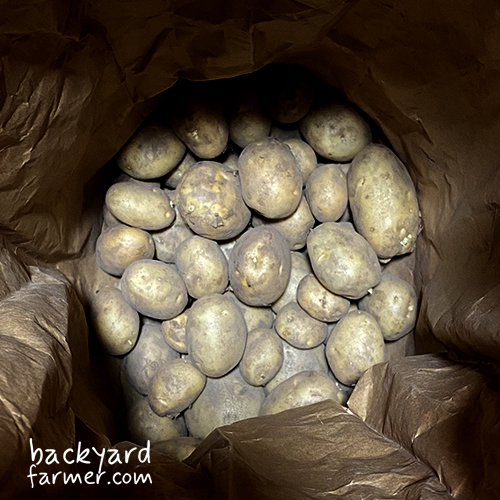
How to Store Potatoes in the UK: For Eating, Seed Potatoes and Chitting

This post may contain affiliate links, which means I earn a small commission at no extra cost to you.

Table of Contents (Quick Nav)

Introduction

Learning how to store potatoes properly sounds simple enough, until you have a sack of muddy spuds, a damp shed, and no clear plan for what needs eating first.

charlotte potatoes

For UK gardeners and allotment growers, potato storage is rarely about having the perfect root cellar. Most of us are working with whatever space we have:

  • A garage
  • A shed
  • A pantry
  • A utility room
  • A spare room
  • A cool, dark corner that stays dry and frost-free

Get it right, and your maincrop potatoes can keep well for months. Get it wrong, and you can end up with soft tubers, early sprouts, rot, green patches, or seed potatoes that are too far gone by spring.

The important thing to remember is this:

The best way to store potatoes depends on what you want to use them for.

Potato useWhat they need
Eating potatoesCool, dark, dry and breathable storage
Seed potatoesHealthy tubers, clear labels and frost-free storage
Chitting potatoesCool light so they produce short, sturdy shoots

That is the bit many guides miss. Storing potatoes for eating is not quite the same as saving potatoes for seed, and neither is it the same as chitting them before planting.

In this guide, I’ll walk through how to store potatoes in the UK for eating, seed potatoes and chitting. We’ll look at what to do after harvest, whether sacks, trays or boxes are best, when fridge storage makes sense, which potatoes to eat first, and how to avoid common problems like sprouting, soft tubers, rot, rodents and long white chits.


The Short Answer: The Best Way to Store Potatoes

The best way to store potatoes is to keep them somewhere:

  • Cool
  • Dark
  • Dry
  • Frost-free
  • Well ventilated

For homegrown potatoes, that usually means using breathable storage like paper sacks, hessian sacks, shallow trays or cardboard boxes. Avoid sealed plastic bags, especially with freshly lifted potatoes, because trapped moisture can make them sweat and rot.

For long-term storage, only keep potatoes that are:

  • Dry
  • Firm
  • Undamaged
  • Free from rot, mould or suspicious marks

Any potatoes that are forked, bruised, slug-nicked or slightly damaged should be kept separate and used first. I would not hide those in the middle of a winter sack. They might be perfectly usable, but they are not the best candidates for long storage.

For most UK growers, maincrop potatoes are the best potatoes for long-term storage. Earlies and new potatoes are usually better eaten fresh, while the skins are still thin and the flavour is at its best.

Potato typeBest approach
Maincrop potatoesStore long-term if dry, firm and undamaged
Earlies and new potatoesEat fresh or use soon
Damaged potatoesKeep separate and eat first
Seed potatoesStore cool, dry, labelled and frost-free
Chitting potatoesMove into cool light before planting

A simple rule clears up most of the confusion:

Dark is for storing. Light is for chitting.


The 3 Main Ways to Store Potatoes

Potatoes are not all stored for the same reason. Some are being kept for the kitchen, some are being saved for next year’s planting, and some are being moved into light so they can chit before going into the ground.

That is where a lot of the confusion starts. The best storage method depends on the job.

Potato useWhat you are trying to doStorage ruleMain mistake to avoid
Eating potatoesKeep them firm, safe and usableKeep them cool, dark, dry, frost-free and ventilatedStoring them warm, damp or in sealed plastic
Seed potatoesKeep healthy tubers for plantingKeep them labelled, dry, cool and frost-freeSaving damaged or disease-suspect tubers
Chitting potatoesEncourage controlled shoots before plantingMove them into cool light when you are ready for shootsLeaving them warm and dark, which creates long, weak chits

For eating potatoes, the aim is to keep them dormant. For seed potatoes, the priority is health. However, when you start chitting potatoes, the rules change because you are no longer trying to hold them back. You are encouraging growth, just in a controlled way.

That is why this simple rule helps:

Dark is for storage. Light is for chitting.

Once you separate those three uses, potato storage becomes much easier. The question is no longer just:

“Where do I put them?”

It becomes:

“Are these potatoes for eating, saving, or starting next year’s crop?”

1. Storing Potatoes for Eating

If you are storing potatoes for eating, the aim is to keep them dormant, dry and usable for as long as possible.

This is where the classic potato storage advice earns its keep. Store eating potatoes somewhere:

  • Cool
  • Dark
  • Dry
  • Frost-free
  • Well ventilated

Maincrop potatoes are the best choice for long-term storage. They usually have thicker skins and better keeping qualities than first earlies or second earlies.

Potato typeBest use
First earliesEat fresh or use soon
Second earliesEat fresh or use within a shorter window
Maincrop potatoesStore for longer if dry, firm and undamaged

Earlies are lovely fresh from the ground, but they are not the potatoes I would rely on for winter storage. Use those first, then save your sound maincrop potatoes for the sacks, trays or boxes.

Before storing homegrown potatoes, let them dry properly and give the skins time to set. Do not put wet potatoes straight into a sack, especially after lifting them from damp autumn soil.

Once they are dry:

  • Brush off loose soil
  • Sort them carefully
  • Store firm, undamaged potatoes
  • Keep forked, bruised or slug-nicked potatoes in an eat-first tray
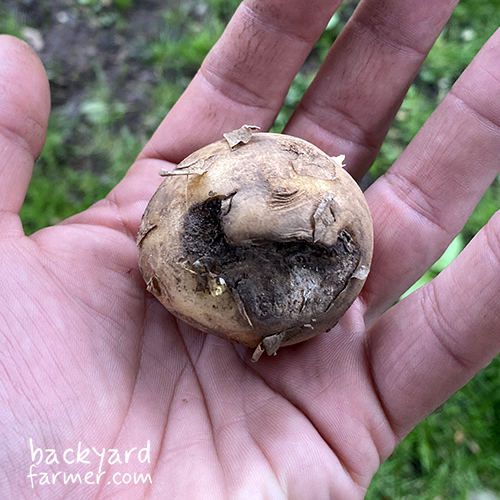
  • Remove anything soft, rotten, green, mouldy or suspicious

For eating potatoes, darkness matters. Light can make potatoes turn green, and green potatoes are not something you want to encourage.

Good storage options include:

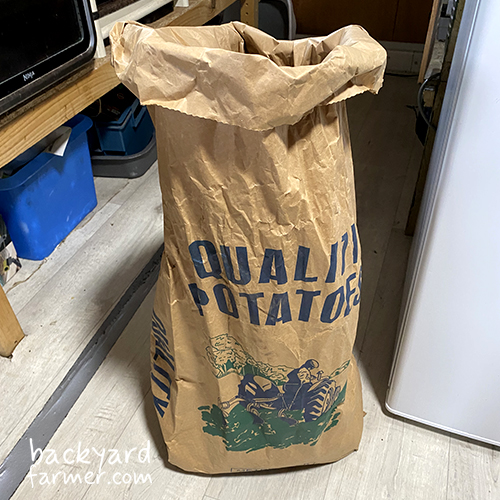
  • Paper sacks
  • Hessian sacks
  • Cardboard boxes
  • Shallow trays covered with newspaper
  • Wooden crates kept somewhere dark

The main thing to avoid is sealed plastic. It traps moisture, and that can make potatoes sweat, soften and rot.

Check stored potatoes regularly, especially during the first few weeks. If one potato starts to soften or rot, remove it before it affects the rest.

This is one reason trays and shallow boxes can be useful. They make it easier to spot problems than a deep sack that only gets opened now and again.

For most UK homes, a garage, outhouse, cool pantry, utility room or frost-free shed can work, provided it stays dry and does not freeze. Keep sacks and boxes off damp floors where possible, and keep an eye out for mice or rats if you are storing potatoes in an outbuilding.

The simple rule is this:

Store eating potatoes like a winter crop, not a kitchen vegetable. Keep them cool, dark, dry and breathable, and check them before one bad tuber spoils the batch.

2. Storing Potatoes for Seed Potatoes

Storing potatoes for seed is a different job from storing potatoes for eating.

With eating potatoes, you are mainly trying to keep them firm and usable. With seed potatoes, you are also thinking about:

  • Plant health
  • Disease risk
  • Variety labelling
  • Next year’s crop

That is why I would treat saved seed potatoes with a bit more caution than ordinary eating potatoes.

The safest option is to buy certified seed potatoes each season, especially if you are new to growing potatoes or you grow on an allotment site. Certified seed is produced and checked for planting, while saved potatoes from your own harvest carry more risk.

That does not mean gardeners never save their own seed potatoes. Plenty do. However, if you go down that route, you need to be strict about what you keep.

Only save seed potatoes from:

  • Healthy plants
  • Clean crops
  • Firm tubers
  • Undamaged potatoes
  • Disease-free harvests

Avoid saving anything that is:

  • Soft
  • Rotten
  • Badly scabbed
  • Slug-hit
  • Fork-damaged
  • Mouldy
  • Blight-suspect
  • Generally suspicious

If blight has been a problem, be especially careful. A potato that looks “probably fine” is not worth risking if it could carry disease into next year’s planting.

Keep seed potatoes separate from your eating potatoes and label them clearly by variety. This matters more than you think once you have a few different types sitting in sacks or boxes.

A simple label should include:

Label detailWhy it helps
Variety nameStops you from mixing up different potatoes
Year savedHelps you track older seed stock
Any notesUseful if one variety stores or crops better than another

For storage, keep seed potatoes:

  • Cool
  • Dry
  • Frost-free
  • Clearly labelled
  • Separate from eating potatoes

If you are holding seed potatoes before chitting, they can stay somewhere cool and dark. Check them through winter and remove anything that softens, moulds or starts to rot.

Once you are ready to chit them, the rules change. At that point, they need cool light rather than dark storage.

The key point is simple:

Seed potatoes are not just spare eating potatoes. Certified seed is safest, but if you save your own, only save clean, healthy tubers and be strict about disease.

3. Storing Potatoes for Chitting

Chitting is not really long-term storage. It is the in-between stage where seed potatoes move from being stored to being prepared for planting.

Up to this point, you may have kept seed potatoes cool and dark to hold them back. Once you want them to chit, the aim changes. Now you want controlled growth rather than dormancy.

To chit potatoes, move them to a place that is:

  • Cool
  • Bright
  • Frost-free
  • Easy to check

Good chitting containers include:

  • Egg boxes
  • Seed trays
  • Shallow boxes
  • Open cardboard trays

These hold each potato upright and stop them rolling around. If you can spot the rose end, place it facing up. That is the end with the smallest eyes, and it is usually where the strongest shoots form.

The goal is to produce short, sturdy green or purple-tinged shoots.

Good chitsPoor chits
Short and sturdyLong and pale
Green or purple-tingedWhite or yellowish
Compact and strongFragile and easy to snap
Grown in cool lightUsually caused by warmth and darkness

A warm cupboard might keep seed potatoes out of the way, but it is not a good chitting spot. Warm darkness usually creates long, weak shoots rather than strong planting growth.

In the UK, chitting usually starts in late winter or early spring, depending on when you plan to plant and how cold your area is.

Potato typeChitting notes
First earliesBenefit most from chitting because they are planted early
Second earliesCan be chitted before planting
Maincrop potatoesCan be chitted, but it is usually less essential

A greenhouse can work if it stays frost-free. However, many unheated greenhouses, cold frames and plastic mini-greenhouses still get too cold at night. I would rather use a slightly less glamorous but safer spot indoors than risk freezing good seed potatoes.

Safer chitting spots often include:

  • A bright porch
  • A cool spare room
  • A utility room
  • A frost-free windowsill
  • A bright shelf in a cool room

The key point is simple:

Dark keeps seed potatoes dormant, but cool light starts chitting.


What to Do Before Storing Homegrown Potatoes

Good potato storage starts before the potatoes ever reach the sack. If you lift them roughly, bag them wet, or mix damaged tubers in with the good ones, you are giving rot a head start.

I would keep the process simple:

StepWhat to doWhy it matters
LiftDig carefully and avoid stabbing tubersFork damage quickly turns into rot
DryLet potatoes dry somewhere airy and shelteredDamp potatoes sweat and spoil in storage
BrushRub or brush off loose soil once dryDry soil is less risky than wet skins
SortSeparate store, eat first, and discard potatoesKeeps one bad tuber from spoiling the batch

Lift them carefully

Lift potatoes carefully and try not to stab them with the fork. It happens to everyone, especially when the soil is heavy or the crop is tucked deeper than expected, but fork-damaged potatoes do not store well.

The same goes for potatoes with:

  • Slug holes
  • Bruises
  • Cuts
  • Cracks
  • Soft patches

Put those to one side and use them first rather than hiding them in the middle of your winter store.

Let them dry before storage

Once lifted, let the potatoes dry somewhere airy and sheltered. On a dry day, they may only need a short spell on the soil surface or in trays.

After a wet lift, especially from heavy or clay soil, they may need longer on:

  • Newspaper
  • Cardboard
  • Racks
  • Trays
  • Open boxes

The aim is not to hit an exact number of curing days. Instead, the aim is to let the skins set, dry the surface properly, and make sure the potatoes are not going into storage damp.

Never bag potatoes while they are wet

Do not put wet potatoes into paper sacks, hessian sacks, boxes or trays and then forget about them. Damp potatoes packed together can sweat, soften and rot.

Thankfully, this is one of the easiest storage problems to avoid. Let them dry first, even if it means leaving them spread out for longer than planned.

Brush, sort and store

When the potatoes are dry, brush or rub off loose soil. They do not need to look spotless. In fact, washing potatoes before long-term storage usually creates more problems than it solves.

A bit of dry soil is much less of a worry than putting damp tubers into a bag.

As you handle them, sort them properly:

Potato conditionWhat to do
Sound maincrop potatoesStore long-term
Forked, bruised or slug-nicked potatoesEat first
Soft, rotten, green, mouldy or suspicious potatoesKeep away from the good crop

The rule I would stick to is simple:

Dry first, sort hard, never bag them wet.


Should You Wash Potatoes Before Storing Them?

As a rule, you should not wash potatoes before storing them. It is better to let them dry, brush off loose soil, and wash them only when you are ready to cook them.

I know that can feel wrong when you have just lifted a muddy crop from wet British soil, especially on clay ground. However, long-term potato storage is all about keeping moisture under control.

Once potatoes are washed, the skins and eyes can hold damp patches. Then, when they are packed into sacks or boxes, they are much more likely to:

  • Soften
  • Sweat
  • Mould
  • Rot
  • Spoil nearby potatoes

The better method

Spread the potatoes out somewhere airy and sheltered until the soil dries. Then, gently rub or brush off the loose dirt.

They do not need to look supermarket-clean before storage. A little dry soil on the skin is usually far less risky than putting damp potatoes into a sack.

SituationBest approach
Light dry soilLet it dry, then brush off loose soil
Damp soil on the skinsSpread potatoes out and dry them before brushing
Heavy wet clayWipe or rinse only if needed, then dry completely
Potatoes for cooking tonightWash before cooking
Potatoes for winter storageKeep dry and unwashed where possible

The muddy clay exception

There is one practical exception. If the potatoes are absolutely caked in wet clay, you may need to wipe or rinse the worst of it off so you can inspect them properly.

If you do this, dry them thoroughly afterwards on:

  • Newspaper
  • Cardboard
  • Racks
  • Trays
  • Open boxes

Never put damp potatoes into winter storage. Whether you use paper sacks, hessian sacks, trays or cardboard boxes, the potatoes should be dry first.

The simple rule is:

Brush, don’t wash, unless they are heavily caked — and even then, dry them completely before storage.


Sort Potatoes Into Store, Eat First and Throw Away

Before you store homegrown potatoes, sort them properly. This is one of the simplest ways to avoid losing a whole sack to rot. It also helps you use the imperfect potatoes while they are still perfectly edible.

I like to think of it as three piles:

PileWhat goes in itWhat to do next
StoreDry, firm, undamaged maincrop potatoesPut into long-term storage
Eat firstSlightly damaged, bruised, forked or slug-nicked potatoesKeep separate and use soon
Throw awaySoft, rotten, mouldy, badly green or disease-suspect potatoesKeep away from the good crop

The best potatoes go into long-term storage. The slightly damaged ones stay in the kitchen or an easy-to-check tray. Anything soft, rotten, badly green or disease-suspect goes nowhere near the good crop.

What to store, eat first or discard

Potato conditionWhat to do
Dry, firm, undamaged maincropStore long-term
Forked, bruised, slug-nicked or slightly damagedKeep separate and eat first
Early or new potatoesEat fresh or use soon
Soft, wet, mouldy or rotten potatoesDiscard
Badly green or heavily sprouted potatoesDiscard rather than risk it
Blight-suspect or diseased tubersDo not store with the sound crop
Healthy small tubers from clean plantsPotential seed potatoes, if saving your own

Why the eat-first pile matters

The eat-first pile is especially useful after an allotment harvest. A fork mark, slug nick or small bruise does not always mean the potato is wasted. However, it does mean it should not be hidden away in a winter sack.

Use those potatoes first while they are still firm and sound. In my view, this is one of the easiest habits to build into harvest day: the best potatoes go into storage, the questionable ones go where you can see them.

Be strict with disease-suspect potatoes

Be stricter with anything that looks diseased. Keep a tuber out of storage if it has:

  • Wet patches
  • Mould
  • A rotten smell
  • Soft collapse
  • Suspicious marks after blight has been around

One bad potato can spoil others surprisingly quickly, especially if it is tucked away in a sack where you will not spot it for a while.

The simple rule is:

Not every potato from the harvest belongs in the storage sack.

Where Should You Store Potatoes in the UK?

The best place to store potatoes in the UK is somewhere:

  • Cool
  • Dark
  • Dry
  • Frost-free
  • Ventilated
  • Easy to check

That sounds simple, but most of us are not working with perfect cellars or purpose-built root stores. We are usually choosing between a garage, shed, pantry, spare room, utility room or whatever outbuilding happens to be available.

The right place depends on what you are storing and how stable the conditions are.

PlaceGood for?Watch out for
GarageEating potatoes and seed potatoesCold snaps, damp floors and rodents
Brick outhouseEating potatoes and seed potatoesDamp, poor airflow or freezing temperatures
ShedShort-term or protected storageCan become too cold, damp or rodent-prone in winter
Pantry or cupboardSmall amounts of eating potatoesWarm kitchens can encourage sprouting
Utility room or spare roomSmall amounts, chitting or temporary storageMake sure it is not too warm
CellarLong-term storageIdeal if dry and ventilated, but many UK homes do not have one
GreenhouseChitting onlyOnly suitable if frost-free; not ideal for normal storage
FridgeSmall amounts of eating potatoesUseful for small amounts, but not practical for large harvests or chitting

Best options for eating potatoes

For eating potatoes, choose somewhere cool, dark and breathable. A garage, brick outhouse, cool pantry or frost-free shed can work well if it stays dry and does not freeze.

Avoid warm kitchen cupboards for long-term storage. They may be dark, but they are often too warm, and warmth encourages potatoes to sprout early.

Best options for seed potatoes

Seed potatoes also need cool, dry and frost-free storage. If you are holding them before chitting, they can stay somewhere cool and dark.

Keep them:

  • Labelled by variety
  • Separate from eating potatoes
  • Away from damp floors
  • Easy to inspect through winter

Best options for chitting potatoes

A greenhouse might be bright enough for chitting, but it is only safe if it stays frost-free. Many unheated greenhouses, cold frames and plastic mini-greenhouses still get too cold at night.

Better chitting spots often include:

  • A bright porch
  • A cool spare room
  • A utility room
  • A frost-free windowsill
  • A bright shelf in a cool room

It does not need to look pretty. It just needs to be cool, bright and safe from frost.

Keep potatoes off damp floors

For a homegrown crop, I would choose easy checking over hiding everything away. Potatoes stored in trays, shallow boxes or smaller sacks are easier to inspect than one deep sack tucked into a dark corner.

This matters because one soft or rotten tuber can quickly affect the rest.

Also think about the floor and the walls. A garage or shed floor can be cold and damp, so raise sacks or boxes slightly if you can.

Useful options include:

  • A wooden pallet
  • A shelf
  • A crate
  • A thick cardboard base
  • A bench or storage rack

If mice or rats are a problem, hessian and paper sacks alone may not be enough. In that case, consider a more protected storage spot or a more rodent-resistant container.

The best storage place is not the fanciest one. It is the place that stays:

Cool, dark, dry, frost-free, breathable and easy to check.


Paper Sacks, Hessian Sacks, Trays or Boxes?

The best potato storage container is one that does three things well:

  • Keeps the light out
  • Allows some airflow
  • Let’s you check the crop without too much hassle

Paper sacks, hessian sacks, trays and cardboard boxes can all work. However, they suit slightly different situations, and I would not treat them all the same.

Storage optionBest forWatch out for
Paper sacksSmall to medium harvests and blocking lightKeep off damp floors and check regularly
Hessian sacksBreathable traditional storageRodents, damp floors and harder inspection
Cardboard boxesSorting varieties and checking oftenNeeds a dark location or newspaper cover
Shallow traysEasy inspection and dryingTakes up more space
Wooden cratesAirflow and stackingNeeds darkness and rodent protection
Sealed plastic bagsShort-term carrying onlyTraps moisture and encourages sweating or rot

Paper sacks

Paper potato sacks are useful because they block light and still breathe better than plastic. They are a good choice for small to medium harvests, especially if you can keep them somewhere dry and off the floor.

They also suit growers who want a simple, low-fuss option. Just remember to open and check them regularly, because problems can hide inside a sack.

Hessian sacks

Hessian sacks are the traditional option, and they give good airflow. I like them for breathability, but they are not magic.

They do not protect much against:

  • Damp floors
  • Mice or rats
  • Potatoes rotting unseen in the middle of the sack

So, if you use hessian sacks, keep them raised, dry and easy to inspect.

Trays and boxes

Trays and shallow boxes are often more practical than they look. They take up more space than sacks, but they make it much easier to spot problems early.

If a potato starts to soften, rot or sprout, you are more likely to see it before it affects the others.

Good options include:

  • Cardboard boxes
  • Supermarket fruit trays
  • Shallow wooden crates
  • Seed trays for smaller batches
  • Boxes covered with newspaper and kept somewhere dark

For a homegrown harvest, I often prefer anything that lets me see what is going on. A deep sack is tidy, but a shallow tray can save you from finding a rotten mess later.

Avoid sealed plastic

The one thing I would avoid for long-term storage is sealed plastic. Potatoes need to breathe.

If they are packed into plastic bags, especially while slightly damp, they can:

  • Sweat
  • Soften
  • Mould
  • Rot quickly

Plastic is fine for carrying potatoes home from the shop, but it is not how I would store a homegrown crop through winter.

Mix methods for bigger harvests

For a bigger harvest, you can combine methods rather than trying to make one container do every job.

Crop groupStorage idea
Best maincrop potatoesStore in sacks, boxes or crates
Damaged potatoesKeep in an eat-first tray
Saved seed potatoesLabel and store separately
Different varietiesKeep in separate boxes, trays or labelled sacks

The key message is:

Sacks are good for storage, but trays and boxes are better when you want to spot trouble early.


Can You Store Potatoes in the Fridge?

Yes, you can store potatoes in the fridge, especially if you only have a small amount of eating potatoes and your kitchen is warm.

This is one of those bits of advice that has changed over time, so it is worth handling carefully rather than repeating old blanket rules.

When fridge storage makes sense

Fridge storage can be useful for:

  • Shop-bought potatoes
  • Small amounts of eating potatoes
  • Warm kitchens
  • Short-term food waste reduction
  • A few homegrown potatoes you plan to use fairly soon

Keeping potatoes cool can slow sprouting, especially if the rest of your house is too warm.

When the fridge is not practical

Fridge storage is not always the best answer for a homegrown or allotment crop.

If you have lifted a decent maincrop harvest, you probably do not want sacks of potatoes taking over the fridge. For that kind of storage, a cool, dark, dry, frost-free and breathable space is usually more realistic.

Better options for larger harvests include:

  • Paper sacks
  • Hessian sacks
  • Cardboard boxes
  • Shallow trays
  • Wooden crates
  • A suitable garage, outhouse, pantry or frost-free shed
SituationFridge storage?Better option
Small bag of eating potatoesYes, if usefulFridge or cool cupboard
Warm kitchen with no cool storageYes, for small amountsFridge
Large homegrown harvestUsually not practicalCool, dark, breathable storage
Seed potatoes being held backSometimes, in small amountsCool, dry, frost-free storage
Potatoes being chittedNoCool, bright, frost-free place

Fridge storage is not chitting

It is also important not to confuse fridge storage with chitting.

A fridge may hold potatoes back, but it is not where you put seed potatoes when you want strong shoots. When you are ready to chit seed potatoes, they need:

  • Cool conditions
  • Bright light
  • Frost protection
  • Good airflow

They do not need cold, dark fridge storage at that stage.

A spare fridge may be useful for some growers holding a small number of eating potatoes or seed potatoes. However, I would not treat it as the default method for a full homegrown harvest. It is one tool, not the whole storage plan.

The balanced answer is this:

Fridge storage can be fine for eating potatoes, but it does not replace proper homegrown harvest storage.


How Long Do Stored Potatoes Last?

How long potatoes last in storage depends on three main things:

  • The type of potato
  • The condition of the crop
  • The storage conditions

A sound maincrop potato kept somewhere cool, dark, dry and frost-free will last far longer than a thin-skinned early potato left in a warm kitchen cupboard.

As a general rule, maincrop potatoes are the storage crop. First earlies and second earlies are better treated as fresh eating potatoes. They can keep for a short while if handled well, but I would not rely on them for winter storage.

Potato typeLikely storage behaviour
New potatoesBest eaten fresh, as they have thin skins and poor long-term storage quality
First earliesUsually short storage; eat soon after harvest
Second earliesBetter used fresh or fairly soon, though some may hold briefly if sound and dry
Maincrop potatoesBest choice for long-term storage if dry, firm and undamaged
Damaged potatoesEat first; do not long-store
Seed potatoesCan be held until chitting or planting time if healthy, dry, labelled and frost-free

What shortens potato storage life?

Storage time is not just about the variety. The condition of the crop matters just as much.

Potatoes will fail much sooner if they are:

  • Lifted from very wet soil and stored damp
  • Bruised or stabbed with a fork
  • Nibbled by slugs
  • Stored before the skins have dried and set
  • Kept somewhere too warm
  • Exposed to light
  • Left unchecked for too long

Check more often at the start

Check stored potatoes more often during the first few weeks. This is when hidden damage, damp patches or missed rotten tubers often show themselves.

Once you know the crop is keeping well, you can settle into regular checks through winter.

If potatoes start sprouting, softening or smelling musty:

  • Remove anything rotten straight away
  • Move firm sprouting potatoes into the eat-first pile
  • Check the rest of the batch
  • Consider moving them somewhere cooler or drier

The key message is simple:

Maincrop potatoes are the storage crop. Earlies and damaged potatoes should be eaten first.


How to Stop Potatoes Sprouting Too Early

Potatoes sprout because they are living tubers. They are naturally trying to grow again, so the aim of storage is not to stop that forever. The aim is to slow things down for as long as possible.

The best way to stop potatoes sprouting too early is to keep eating potatoes:

  • Cool
  • Dark
  • Dry
  • Well ventilated

Warm cupboards, sunny kitchens and damp storage spots all push potatoes in the wrong direction.

Why potatoes sprout in storage

If your potatoes are sprouting quickly, it usually means one of three things:

CauseWhat it means
Too warmThe storage space is encouraging growth
Stored too longThe potatoes are naturally coming out of dormancy
Wrong potato typeEarlies do not usually store as well as maincrop potatoes

Darkness matters for eating potatoes because light encourages greening. However, darkness alone is not enough. A dark cupboard beside a cooker, boiler or radiator may still be far too warm.

A cooler garage, pantry, utility room, outhouse or frost-free shed will usually work better, provided it stays dry and does not freeze.

What to do with sprouting potatoes

Check stored potatoes regularly and remove anything soft, rotten or heavily sprouting.

If a few potatoes are starting to sprout but are still firm and sound:

  • Move them into the eat-first pile
  • Remove small sprouts before cooking
  • Check the rest of the batch
  • Move the store somewhere cooler if possible

Do not let one failing potato sit in the middle of a sack until it turns into a bigger problem.

Choose better potatoes for winter storage

Variety and harvest type matter too. Maincrop potatoes generally store better than earlies, so choose maincrop varieties if your goal is winter storage.

Potato typeStorage expectation
First earliesBest eaten fresh
Second earliesBetter used fairly soon
Maincrop potatoesBest choice for longer storage

Sprouting is not the same as chitting

It is worth separating unwanted sprouting from deliberate chitting.

SituationWhat it means
Eating potatoes sprouting in a warm cupboardA storage problem
Seed potatoes forming short, sturdy shoots in cool lightDeliberate chitting
Seed potatoes producing long, pale shootsToo warm and dark once growth has started

If seed potatoes are producing long, pale, weak shoots, move them into a cool, bright, frost-free place so the shoots become shorter and sturdier.

The key message is:

Sprouting usually means the potatoes are too warm, too old, or ready to start growing.


Common UK Potato Storage Problems

Most potato storage problems come back to a handful of causes:

  • Too much warmth
  • Too much damp
  • Too much light
  • Damaged tubers
  • Disease
  • Frost
  • Rodents
  • Not checking the crop often enough

The awkward part is that these problems are easy to miss when potatoes are tucked away in a sack at the back of a shed. By the time you notice the smell, one bad tuber may already have started spoiling the rest.

That is why regular checking matters. You do not need to fuss over them every day, but you should look through stored potatoes often enough to catch soft, sprouting or rotten ones before the problem spreads.

ProblemLikely causeWhat to do
Potatoes sprouting too earlyToo warm, stored too long, or dormancy endingMove eating potatoes somewhere cooler and darker; use sprouting ones first if still firm and sound
Potatoes going softWarmth, age, dehydration or poor storageUse quickly if still sound, or discard if they are collapsing or smell bad
Potatoes rotting in sacksDamp tubers, damage, disease or poor inspectionRemove bad tubers, check the rest, and avoid storing wet crops
Potatoes sweatingSealed plastic, poor airflow or damp storageSwitch to paper, hessian, trays or boxes, and make sure the potatoes are dry
Slug-hit potatoes rottingSlug holes allow decay into the tuberKeep slug-damaged potatoes separate and eat first
Fork-damaged potatoes failingWounds rot easily in storageKeep separate and eat first rather than storing long term
Rodents chewing sacksShed, garage or outbuilding accessRaise sacks, tidy the storage area, and use a more rodent-resistant container if needed
Potatoes freezingShed or garage too coldMove to a frost-free place or protect them during cold snaps
Green potatoesToo much lightStore eating potatoes in the dark and discard badly green potatoes
Long white shoots on seed potatoesToo warm or dark once growth has startedMove seed potatoes into cool light for chitting
Blight-suspect tubersDisease carryover and storage rot riskDo not store with the sound crop

If potatoes are sprouting

Sprouting potatoes are not automatically ruined if they are still firm and sound.

Move them into the eat-first pile and use your judgment. However, discard potatoes if they are:

  • Soft
  • Wet
  • Smelly
  • Badly green
  • Rotten
  • Heavily sprouted

If potatoes are rotting in sacks

If stored potatoes are rotting in sacks, assume there is a sorting or moisture problem.

Do this straight away:

  1. Empty the sack.
  2. Remove anything soft, wet, rotten or suspicious.
  3. Let the sound potatoes air if they feel damp.
  4. Move them into shallow trays or boxes if you need easier checking.
  5. Check again over the next few days.

Rot spreads quickly, especially when potatoes are damp or packed tightly together. It is a bit of a faff to empty a sack, but it is still better than losing the lot.

If rodents are getting into stored potatoes

Rodents are a very real UK shed and garage problem. Paper and hessian sacks breathe well, but they will not stop a determined mouse or rat.

If rodents are active:

  • Avoid storing potatoes on the floor
  • Keep the storage area tidy
  • Raise sacks or boxes on a shelf, pallet or crate
  • Use a more protected storage spot if needed
  • Check more often for damage

The key message is:

Most storage failures come from damp, warmth, damage, disease, light or lack of checking.


When to Throw Stored Potatoes Away

Not every marked potato needs throwing away, but you do need to be strict with anything that looks rotten, diseased or unsafe.

Stored potatoes can go downhill quickly. Once one bad tuber starts leaking or rotting, it can spread moisture through the rest of the batch.

Throw potatoes away if they are clearly failing

Discard stored potatoes if they are:

  • Soft and collapsing
  • Wet or leaking
  • Mouldy
  • Slimy
  • Badly green
  • Rotten-smelling
  • Showing suspicious disease patches
  • Heavily sprouted and no longer firm

If blight has been a problem in the crop, be especially cautious. If you are not confident a potato is sound, do not put it back with the good ones.

Be stricter with seed potatoes

Seed potatoes need even stricter sorting. A slightly questionable eating potato might simply go in the compost or the bin, but a questionable seed potato can carry problems into next year’s crop.

Discard saved seed potatoes if they show:

  • Rot
  • Mould
  • Softness
  • Wet patches
  • Disease-like marks
  • Blight-suspect symptoms

It is better to lose a few saved tubers than plant trouble back into the soil.

Some damaged potatoes can still be eaten first

There is a middle ground. Minor fork marks, small bruises, slug nicks or light cosmetic scab do not always mean the potato is wasted.

If the potato is still firm, dry and otherwise sound, keep it separate and use it first. Just do not hide it away in the winter storage sack.

Potato problemBest action
Soft, wet or collapsingDiscard
Rotten smell or leakingDiscard
Mould or slimeDiscard
Badly green potatoesDiscard rather than risk it
Suspicious disease patchesDiscard and keep away from stored crop
Blight-suspect tubersDo not store or save for seed
Minor fork damageEat first if still firm and sound
Slug nicks or small holesEat first if still firm and sound
Light superficial scabUsually cosmetic if the potato is firm, but use judgement

Do not be sentimental about potatoes in storage. A few lost tubers are much better than losing the whole batch because one rotten one was left in the sack too long.

The key message is:

One rotten potato can quickly spoil others, so remove bad tubers as soon as you spot them. Damaged potatoes are for the eat-first tray, not the winter sack.


How to Store Seed Potatoes Safely

Seed potatoes need a little extra care because they are not just being stored for food. They are being kept alive for next year’s crop.

If they carry disease, rot or weak growth into spring, the problem goes straight back into the soil with them.

Certified seed potatoes are the safest option

The safest route is to buy certified seed potatoes. This is especially sensible if you are:

  • New to growing potatoes
  • Growing on an allotment site
  • Dealing with a previous blight issue
  • Unsure whether your saved tubers are healthy
  • Growing potatoes near other people’s plots

Certified seed potatoes are produced for planting. Saved potatoes from your own harvest are more of a calculated risk.

If you save your own, be selective

Some gardeners do save their own seed potatoes. I understand the appeal, especially if a variety has done well for you. However, if you choose to do it, be strict about what you keep.

Only save tubers from:

  • Healthy plants
  • Healthy crops
  • Firm potatoes
  • Clean, dry tubers
  • Varieties you actually want to grow again

Avoid saving anything that is:

  • From a blight-hit crop
  • Soft or damaged
  • Slug-hit
  • Mouldy
  • Badly scabbed
  • Rotten
  • Suspicious in any way

A saved seed potato needs to be something you would trust to start next year’s plant, not just a small leftover tuber.

Label seed potatoes clearly

Label seed potatoes clearly by variety and year. This is easy to skip, but it saves confusion later when every small potato in a tray starts looking the same.

Label detailWhy it matters
Variety nameKeeps different potatoes separate
Year savedHelps you avoid using old seed stock without realising
SourceUseful if comparing bought seed with saved seed
NotesHelps track varieties that stored or cropped well

A paper label in the box or sack is enough, as long as it stays readable.

Store seed potatoes before chitting

Store seed potatoes somewhere:

  • Cool
  • Dry
  • Frost-free
  • Clearly labelled
  • Easy to check

If you are not ready to chit them yet, keep them cool and dark so they stay as dormant as possible.

Check them through winter and remove anything that starts to:

  • Soften
  • Mould
  • Rot
  • Shrivel badly
  • Produce weak, unwanted shoots

Move them into light when you are ready to chit

When planting time gets closer, move seed potatoes into cool light for chitting. This is the point where the storage job ends and the planting-prep job begins.

StageBest conditions
Holding seed potatoesCool, dark, dry and frost-free
Chitting seed potatoesCool, bright and frost-free

The key message is:

Saving seed potatoes is not just saving leftovers. It is plant health management.


Dark for Storage, Light for Chitting

One of the most confusing parts of potato storage is the advice around light. You will often hear that potatoes should be kept in the dark. Then, a few weeks later, you will hear that seed potatoes need light for chitting.

Both are true. They just apply to different stages.

Potato stageBest light conditionWhy
Eating potatoesDarkHelps reduce greening
Seed potatoes being held backCool and darkHelps keep them dormant before chitting
Seed potatoes being chittedCool and brightEncourages short, sturdy shoots
Potatoes kept warm and darkAvoidEncourages long, weak, pale shoots

Eating potatoes need darkness

Eating potatoes should be stored in the dark. Light encourages greening, and once potatoes start turning green, they are no longer good storage potatoes.

If your aim is to keep potatoes for cooking, darkness is your friend.

Stored seed potatoes can stay dark until chitting

Seed potatoes being held back can also be kept cool and dark. At that stage, you are trying to keep them dormant until you are closer to planting time.

They still need to be:

  • Dry
  • Frost-free
  • Clearly labelled
  • Checked regularly
  • Kept away from rotten or diseased tubers

They do not need light yet.

Chitting potatoes need cool light

When you are ready to chit seed potatoes, the rules change. Move them into a cool, bright, frost-free place so they can form short, sturdy shoots.

Good chitting spots include:

  • Egg boxes on a cool, bright windowsill
  • A bright porch
  • A frost-free spare room
  • A bright utility room
  • A cool shelf with natural light

It does not have to be fancy. It just needs to be cool, light and safe from frost.

Avoid warm darkness

What you want to avoid is warm darkness. That is when potatoes produce long, pale, fragile shoots that snap easily and leave you with weak growth before planting.

Good chitting conditionsPoor chitting conditions
Cool and brightWarm and dark
Frost-freeFreezing or very cold
Good airflowStuffed in a closed cupboard
Short, sturdy shootsLong, pale, fragile shoots

If you remember one thing, remember this:

Dark is for storing. Light is for chitting.

The advice only sounds contradictory when storage and chitting are treated as the same job.


Quick Potato Storage Checklist

Use this checklist when you are lifting, sorting and storing homegrown potatoes. It is much easier to prevent storage problems at the start than to rescue a sack once rot, damp or sprouting has taken hold.

Before storage

JobQuick check
Choose the right potatoesMaincrop potatoes store best
Use earlies firstFirst earlies, second earlies and new potatoes are best eaten fresh
Lift carefullyAvoid stabbing or bruising tubers with the fork
Dry properlyNever put wet potatoes into storage
Avoid washingBrush off dry soil unless potatoes are heavily caked in mud
Sort the cropSplit into store, eat-first and throw-away piles

What to store

Store potatoes that are:

  • Dry
  • Firm
  • Undamaged
  • Maincrop where possible
  • Free from rot, mould or suspicious marks

Keep these separate and use them first:

  • Forked potatoes
  • Bruised potatoes
  • Slug-nicked potatoes
  • Slightly damaged but otherwise sound potatoes

Throw away potatoes that are:

  • Soft
  • Rotten
  • Mouldy
  • Badly green
  • Wet or leaking
  • Disease-suspect

Best storage conditions

For eating potatoes, aim for storage that is:

  • Cool
  • Dark
  • Dry
  • Frost-free
  • Ventilated
  • Easy to check

Good storage options include:

  • Paper sacks
  • Hessian sacks
  • Trays
  • Crates
  • Cardboard boxes

Avoid sealed plastic bags, especially for damp or homegrown potatoes. They trap moisture, and that is usually where trouble starts.

Seed potatoes and chitting

StageWhat to do
Saving seed potatoesOnly keep healthy, firm, disease-free tubers
Labelling seed potatoesLabel by variety and year
Holding seed potatoesKeep cool, dry, dark and frost-free
Chitting seed potatoesMove into cool light when you are ready for shoots

Store seed potatoes separately from eating potatoes, and remove anything that softens, moulds or starts to rot.

Check through winter

Check stored potatoes weekly at first, then regularly through winter. Watch for:

  • Sprouting
  • Soft tubers
  • Rotten smells
  • Mould
  • Damp patches
  • Frost damage
  • Rodent damage

If in doubt, remember the simple version:

Dry them, sort them, store the sound ones, eat the damaged ones first, and keep checking.


FAQs

These quick answers cover the most common questions about storing potatoes in the UK, especially for homegrown and allotment crops.

How do you store potatoes long-term?

To store potatoes long term, keep them somewhere cool, dark, dry, frost-free and well ventilated. Use breathable containers such as paper sacks, hessian sacks, trays, crates or cardboard boxes. Only store dry, firm, undamaged maincrop potatoes, and check them regularly through winter.

Should potatoes be stored in the fridge?

Potatoes can be stored in the fridge if you only have a small amount for eating, especially if your kitchen is warm. However, the fridge is not usually practical for a large homegrown or allotment harvest. For bigger crops, a cool, dark, dry and breathable store is normally more useful.

Can you store potatoes in the shed?

You can store potatoes in a shed if it stays dry, dark and frost-free. The problem is that many UK sheds become damp, very cold or rodent-prone in winter. Keep potatoes off damp floors, protect them from frost, and check them often.

Can you store potatoes in the garage?

A garage can be a good place to store potatoes if it is cool, dark, dry and frost-free. Keep sacks or boxes away from damp floors and watch for mice or rats. If the garage gets very cold during hard frosts, move the potatoes somewhere more protected.

Should you wash potatoes before storing them?

No, it is better not to wash potatoes before long-term storage. Let them dry, brush or rub off loose soil, and wash them only before cooking. If they are caked in wet clay, clean them gently only if you can dry them completely before storing.

Do potatoes need to be cured before storage?

Potatoes need to be dry with set skins before they go into long-term storage. You do not need to follow an exact curing time for every crop. The important thing is to let the surface dry, toughen the skins, remove damaged tubers, and keep suspicious potatoes away from the stored crop.

How do you store potatoes for seed?

Store seed potatoes somewhere cool, dry and frost-free. Keep them labelled by variety and separate from eating potatoes. Only keep healthy, firm, disease-free tubers for seed, and remember that certified seed potatoes are the safest option for most growers.

Can I save my own seed potatoes?

You can save your own seed potatoes, and many growers do, but it carries more disease risk than buying certified seed. Only save tubers from healthy plants and clean crops. Avoid saving anything from blight-hit, diseased or suspicious plants.

Should seed potatoes be stored in the dark or light?

Seed potatoes can be stored in the dark if you are trying to hold them dormant. When you are ready to chit them, move them into cool light.

When should I start chitting potatoes?

Most UK growers start chitting potatoes in late winter or early spring, a few weeks before planting. First earlies benefit most from chitting because they are often planted earliest. Keep them somewhere cool, bright and frost-free.

Where can I chit potatoes if my greenhouse is too cold?

If your greenhouse is too cold, use a cool, bright, frost-free place indoors. A porch, spare room, utility room, bright shelf or cool windowsill can all work. Avoid warm dark cupboards, as they encourage long, weak white shoots.

Can you eat sprouted potatoes?

Firm potatoes with small sprouts may still be usable if you remove the sprouts and any green parts before cooking. However, discard potatoes that are soft, rotten, badly green, bitter-smelling, heavily sprouted, wet, mouldy or suspicious. Use your judgement and do not take risks with potatoes that look or smell wrong.

Will slug-damaged potatoes store?

Slug-damaged potatoes do not store reliably. If they are still firm and sound, keep them separate and eat them first. Do not put holed or damaged potatoes into long-term storage with the best crop.

Are scabby potatoes safe to store?

Light superficial scab is often cosmetic if the potato is firm and otherwise healthy. However, badly damaged, cracked, holed, soft or disease-suspect potatoes should not go into long-term storage. When in doubt, keep them separate and use them first.

How do you store potatoes from the allotment?

After lifting potatoes from the allotment, let them dry properly before storage. Brush off loose soil rather than washing them, then sort the crop into three groups:

GroupWhat to do
StoreKeep dry, firm, undamaged maincrop potatoes
Eat firstUse bruised, forked or slug-nicked potatoes soon
Throw awayDiscard soft, rotten, mouldy or disease-suspect potatoes

Store sound maincrop potatoes in breathable sacks, trays or boxes somewhere cool, dark, dry and frost-free.

Facebook
X
Pinterest
Reddit

Related Articles

Scroll to Top