
Introduction
The Bilberry Bumblebee (Bombus monticola) is a distinctive upland bumblebee closely associated with moorland and mountainous landscapes in the UK. It is most active during the warmer months, where it plays an important role in pollinating plants adapted to harsher, cooler environments.
You’re unlikely to spot this species in gardens or lowland farmland. Instead, it is typically found on heather moorland, upland grassland, and open hillsides, particularly in northern England, Scotland, and parts of Wales. Its strong link to wild, open habitats makes it a valuable indicator of healthy upland ecosystems.
Like many specialist bumblebees, the Bilberry Bumblebee is sensitive to habitat change and climate pressures. In this guide, you’ll learn how to identify Bombus monticola, tell it apart from similar species, and understand why protecting upland habitats is essential for its survival.
Continue your bee species identification journey
- Red-tailed Black Bumblebee – Get to know this striking bumblebee species and how to recognise it in gardens and wildflower areas
- Bee species profile – Early mining bee (Andrena haemorrhoa) – Identify another native solitary bee with unique features and seasonal habits
- Bee species profile – Short-haired bumblebee (Bombus subterraneus) – Learn the identification traits of this compact bumblebee species often found on low flowers
Identification & Key Facts
| Attribute | Details |
|---|---|
| Common Name | Bilberry Bumblebee |
| Latin Name | Bombus monticola |
| Size | Queens: ~18–20 mm, Workers: ~12–16 mm |
| Location | Northern England, Scotland, Wales (upland areas) |
| Active Months | May to August |
| Habitat | Moorland, heathland, upland grassland |
| Nesting Behaviour | Ground-nesting, often in old rodent burrows |
| Social Behaviour | Social |
| Flora | Bilberry, heather, blaeberry, upland wildflowers |
| UK Status | Locally common (upland specialist) |
How to Identify the Bilberry Bumblebee
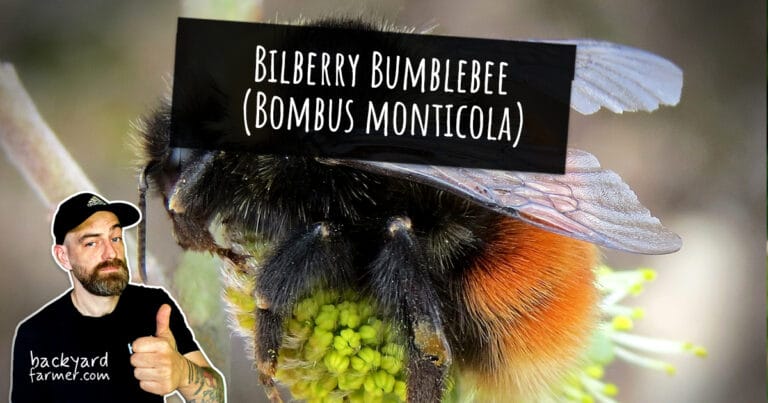
The Bilberry Bumblebee is a medium-sized bumblebee with a characteristically warm, reddish-brown or ginger band across the thorax. This colouring helps distinguish it from many other upland species that show stronger yellow-and-black contrasts.
In the UK, it is most often seen flying low over heather and bilberry plants on open hillsides and moorland. It tends to forage steadily and close to the ground, particularly in windy or exposed conditions.
Physical Characteristics
- Queen – Larger and more robust, with a noticeable reddish-brown thoracic band and darker abdomen.
- Worker – Smaller than the queen, sharing similar colouring but with less bulk.
- Male (Drone) – Often slightly slimmer, with longer antennae and variable facial hair.
Image source: {source}
Similar Species
The Bilberry Bumblebee can be confused with other bumblebees found in upland or heathland habitats:
- Red-tailed Bumblebee (Bombus lapidarius) – Has a bright red tail rather than a reddish thoracic band.
- Garden Bumblebee (Bombus hortorum) – Slimmer with clearer yellow striping and a longer face.
- Heath Bumblebee (Bombus jonellus) – Smaller and often shows more yellow banding.
If you’re unsure which bee you’ve spotted, our Bee Identification guide can help you narrow down UK species by size, colour, and behaviour.
Why the Bilberry Bumblebee Matters
The Bilberry Bumblebee is an important pollinator of upland plants such as bilberry and heather, which in turn support a wide range of other wildlife. Its activity helps maintain plant diversity in habitats that are often overlooked but ecologically significant.
Because it relies on intact moorland and upland ecosystems, this species is vulnerable to habitat degradation, climate change, and changes in land management. Protecting these landscapes benefits many other specialist species alongside it.
FAQs
No. This species is generally calm and focused on foraging, and it is unlikely to sting unless handled or threatened.
It is usually active from late spring through summer, with peak activity between May and August.
No, it is locally common in suitable upland habitats but rarely seen in lowland areas.
Yes, females can sting, but stings are uncommon and typically occur only in defence.
How You Can Help
Supporting the Bilberry Bumblebee means helping to protect and restore upland habitats:
🌿 Plant Bee-Friendly Flowers
- Heather, bilberry, blaeberry, upland wildflowers
🚫 Avoid Harmful Pesticides
- Avoid pesticide use in areas near moorland and upland habitats
🏡 Provide Nesting Spaces
- Leave areas of rough ground and undisturbed vegetation in upland settings
By supporting responsible land management and protecting upland ecosystems, you help ensure the Bilberry Bumblebee continues to thrive.