
Introduction
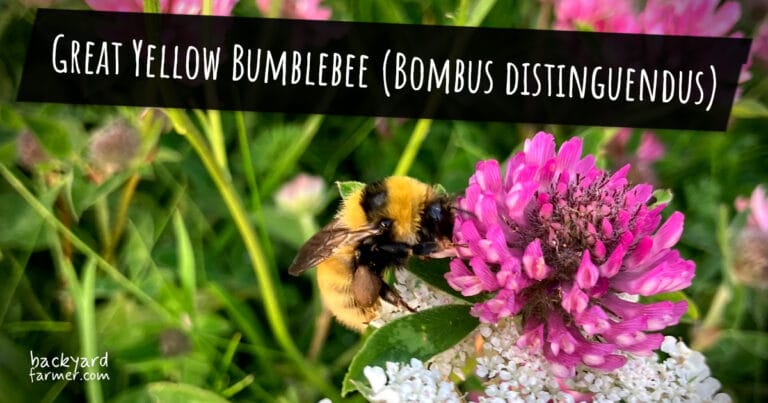
The Great Yellow Bumblebee (Bombus distinguendus) is one of the UK’s rarest and most distinctive bumblebees. Once widespread, it is now largely confined to a few remote coastal areas, where it emerges during the summer months and quietly goes about its work as a specialist pollinator.
You are most likely to encounter this species in flower-rich coastal grasslands, machair, and low-intensity farmland, particularly in parts of northern Scotland. Its presence is closely tied to traditional land management and abundant wildflowers, making it an important indicator of healthy, biodiverse landscapes.
Sadly, habitat loss, changes in farming practices, and declining flower availability have caused dramatic population declines. In this guide, you’ll learn how to identify the Great Yellow Bumblebee, tell it apart from similar species, and understand why protecting its remaining habitats is so important.
Continue your bee & pollinator support journey
If you’re learning about the great yellow bumblebee, these guides will help you understand bee behaviour, support healthy hives, and create a more wildlife-friendly garden environment for all pollinators.
- Bee facts – A broader look at bee biology, behaviour, and why bees matter — ideal for readers who want context beyond species identification.
- Winter bee feeding recipe for healthy hives – A seasonal guide to keeping bees nourished through challenging months, perfect for gardeners who care about bee wellbeing.
- How to make your garden wildlife-friendly – Practical tips on attracting and supporting beneficial wildlife — including pollinators like bumblebees — in your outdoor space.
Identification & Key Facts
| Attribute | Details |
|---|---|
| Common Name | Great Yellow Bumblebee |
| Latin Name | Bombus distinguendus |
| Size | Queens: ~20–22 mm, Workers: ~15–18 mm |
| Location | Northern Scotland, mainly coastal regions |
| Active Months | June to August |
| Habitat | Coastal grassland, machair, flower-rich farmland |
| Nesting Behaviour | Ground-nesting, often in abandoned rodent burrows |
| Social Behaviour | Social |
| Flora | Red clover, vetches, knapweed, thistles |
| UK Status | Rare / Threatened |
How to Identify the Great Yellow Bumblebee
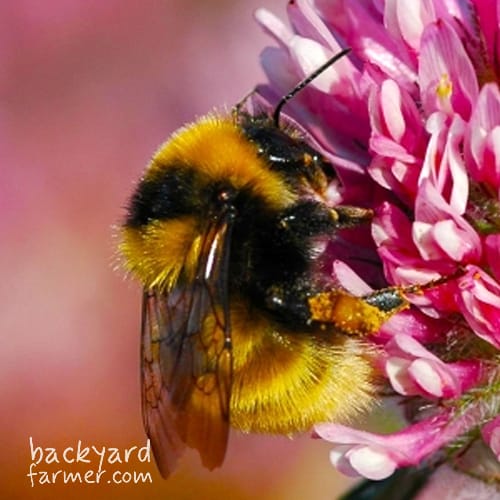
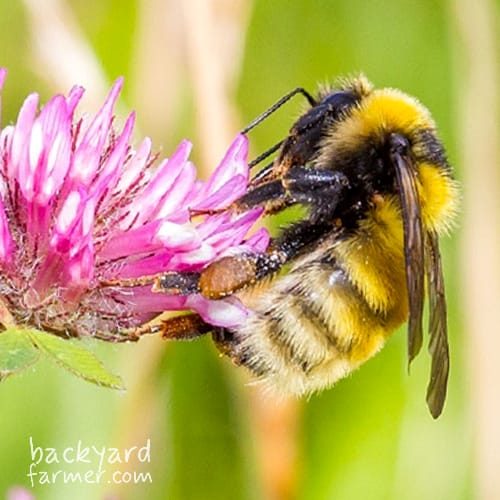
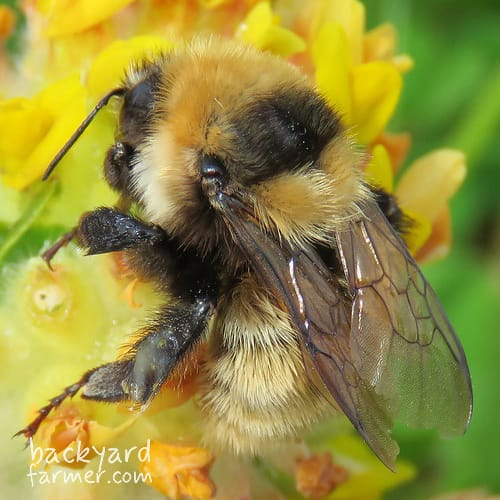
The Great Yellow Bumblebee is a large, long-haired species with a noticeably pale yellow colouring. Unlike many bumblebees, its yellow bands are broad and soft in tone rather than sharply defined. The tail is usually pale yellow to buff rather than white or orange.
In the UK, it is most often seen flying low over grassland and flower-rich coastal areas, moving steadily between large blooms such as clover and vetch.
Physical Characteristics
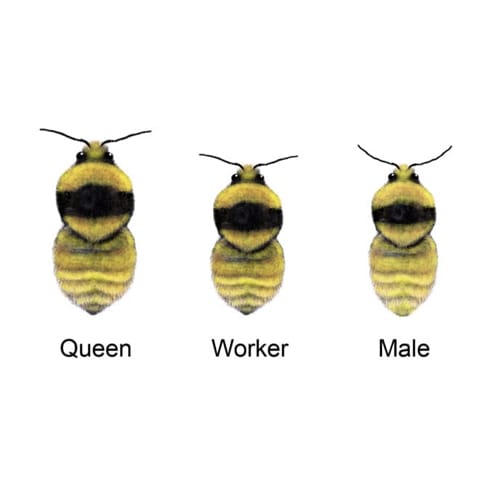
- Queen – Large and robust with long, shaggy pale yellow hair covering much of the body.
- Worker – Smaller than the queen but similarly coloured, with a softer, less contrasting appearance.
- Male (Drone) – Often appears especially fluffy, with longer facial hair and slightly more variable colouring.
Similar Species
The Great Yellow Bumblebee can be confused with other pale or yellow-toned bumblebees, especially at a glance:
- Northern White-tailed Bumblebee (Bombus magnus) – Has stronger colour contrast and a clearer white tail.
- Garden Bumblebee (Bombus hortorum) – Shows bold black-and-yellow striping and a longer face.
- Buff-tailed Bumblebee (Bombus terrestris) – Stockier with darker bands and a distinct buff or white tail.
If you’re unsure which bee you’ve spotted, our Bee Identification guide can help you narrow down UK species by size, colour, and behaviour.
Why the Great Yellow Bumblebee Matters
The Great Yellow Bumblebee is an important pollinator of wildflowers in coastal and low-intensity farmland systems. It plays a key role in maintaining plant diversity in habitats that support many other insects and wildlife.
Because it relies on traditional, flower-rich landscapes, its decline highlights the wider loss of biodiversity linked to intensive land use and habitat change. Protecting this species helps safeguard some of the UK’s most valuable and fragile ecosystems.
FAQs
No. This species is generally gentle and non-aggressive, focusing on foraging rather than defending its nest.
It is mainly active during the summer, from June to August, when flowering plants are at their peak.
Yes. It is one of the UK’s rarest bumblebees and is now largely restricted to northern Scottish coastal areas.
Yes, females can sting, but stings are uncommon and usually only occur if the bee is handled or threatened.
How You Can Help
Supporting the Great Yellow Bumblebee means protecting and restoring flower-rich habitats. Even small actions can contribute to wider conservation efforts:
🌿 Plant Bee-Friendly Flowers
- Red clover, bird’s-foot trefoil, vetches, knapweed
🚫 Avoid Harmful Pesticides
- Avoid insecticides and herbicides that reduce wildflower abundance
🏡 Provide Nesting Spaces
- Leave areas of rough grass and undisturbed ground, especially in coastal or meadow environments
By supporting low-intensity land management and pollinator-friendly planting, you help protect the Great Yellow Bumblebee and the wider web of wildlife that depends on these habitats.