
The Buff-tailed Bumblebee (Bombus terrestris) is one of the UK’s most familiar bumblebees and often one of the first large queens seen in late winter or early spring.
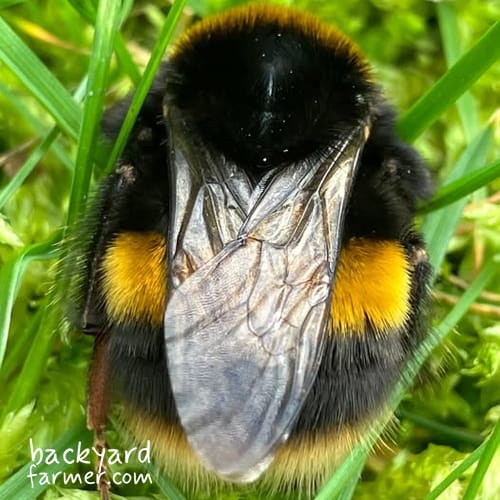
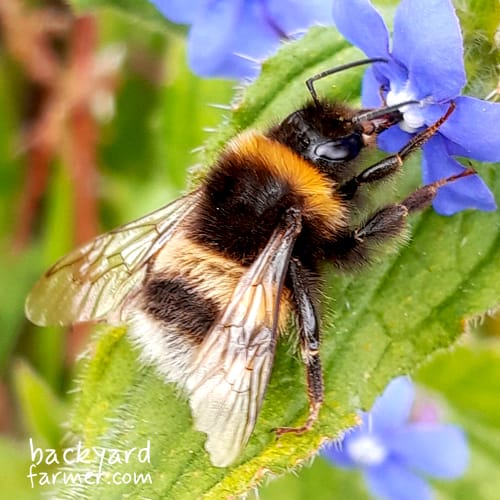
It is a broad, sturdy bumblebee with two golden-yellow bands and a pale tail. Despite the name, the “buff tail” is most obvious on queens. Workers often have much whiter tails, which means they can be surprisingly easy to confuse with White-tailed Bumblebees.
You’ll often see Buff-tailed Bumblebees in gardens, parks, farmland, allotments and hedgerows, where they feed from a wide range of flowers through much of the year.
How to Identify a Buff-tailed Bumblebee
The Buff-tailed Bumblebee is usually recognised by its strong, chunky build, two yellow bands and pale tail. However, the caste matters. Queens, workers and males can look slightly different, and workers are not always safe to identify to the species level from a quick garden photo.
Looking for more on UK bumblebee identification? Explore our full British bumble bees guide.
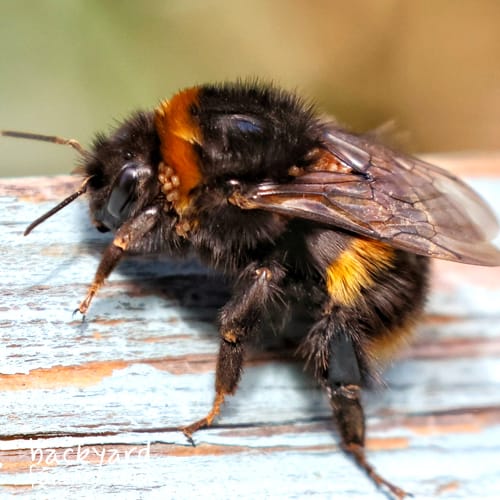
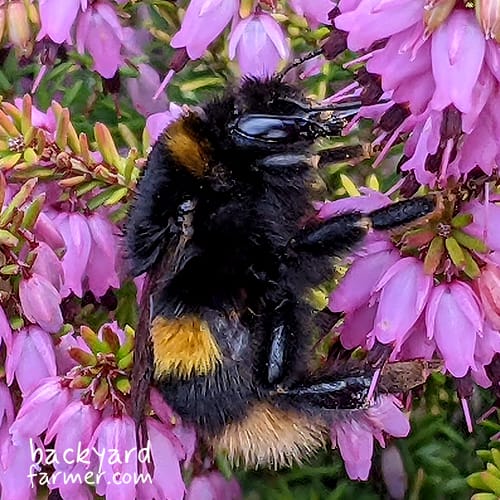
Queen Buff-Tailed Bumblebee
Large, broad-bodied and robust, with two golden-yellow bands and a dull buff or beige tail. Queens are the easiest caste to identify and are often seen early in spring searching for nest sites.
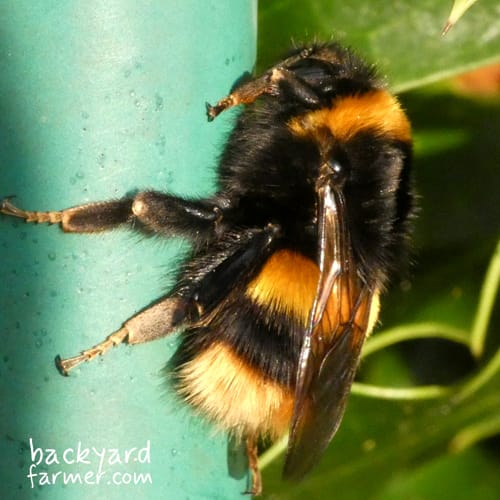
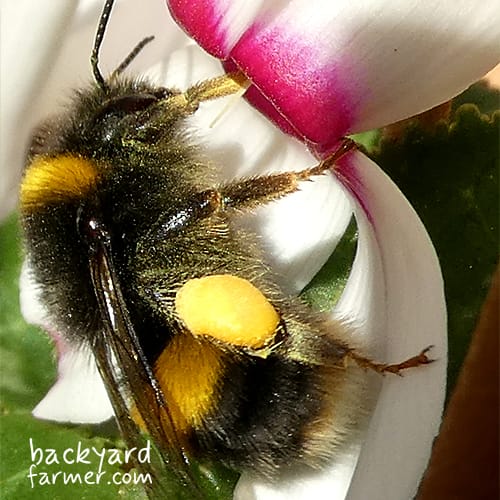
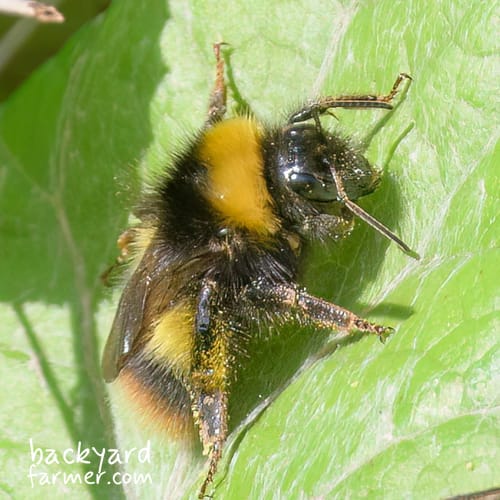
Female (Worker) Buff-Tailed Bumblebee
Smaller than the queen, with similar black-and-yellow banding. The tail often looks pale or almost white, so workers can be confused with White-tailed Bumblebees.
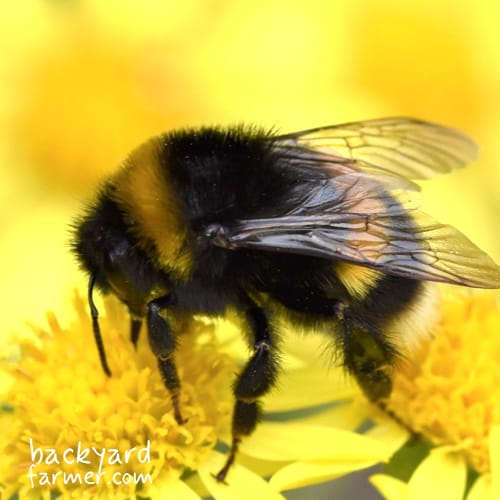
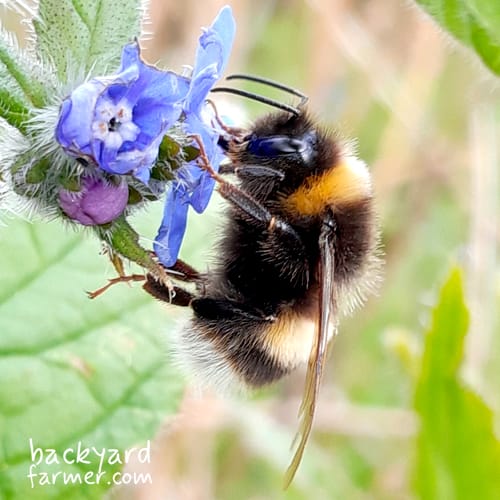
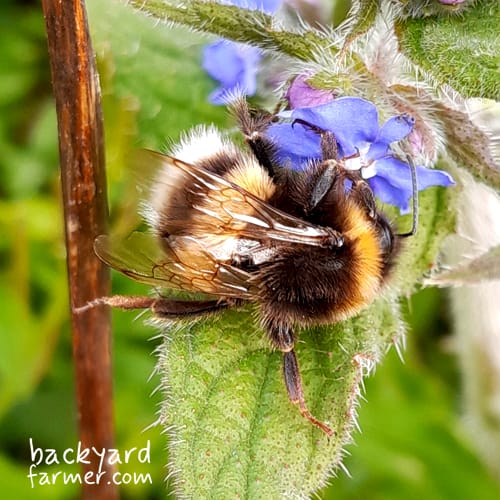
Male (Drone) Buff-Tailed Bumblebee
Slimmer than females, with longer antennae and no pollen baskets. Males often appear later in the season and may have a pale, whitish or slightly buff-tinged tail.
Identification & Key Facts
| Attribute | Details |
|---|---|
| Common Name | Buff-tailed Bumblebee |
| Latin Name | Bombus terrestris |
| Main ID Features | Large, sturdy bumblebee with two golden-yellow bands and a pale buff or whitish tail |
| Queen | Large, robust, with a clearer buff-coloured tail |
| Worker | Smaller, often with a whiter tail; easily confused with White-tailed Bumblebee workers |
| Male | Slimmer, longer antennae, no pollen baskets, pale or buff-tinged tail |
| Active Months | Often seen from February onwards; can be active later into the year in mild areas |
| Habitat | Gardens, parks, allotments, farmland, hedgerows and lowland countryside |
| Nesting Behaviour | Usually nests underground, often in old mouse or vole holes |
| Social Behaviour | Social bumblebee living in colonies |
| Flowers Visited | Feeds from a wide range of flowers, especially open or accessible blooms |
| UK Status | Common and widespread |
Similar Species
Many people often confuse the Buff-tailed Bumblebee with other bumblebee species because of its similar markings. Here’s how to tell them apart:
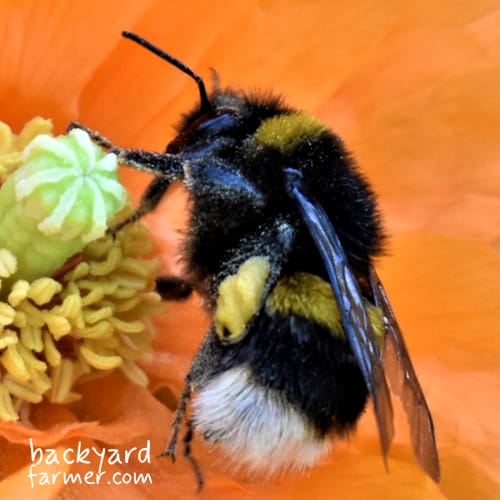
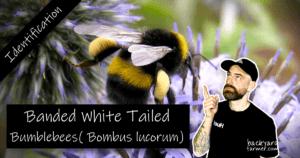
White-tailed Bumblebee (Bombus lucorum) – Similar black, yellow and white pattern. Queens usually have a cleaner white tail and brighter yellow bands, but workers can be extremely difficult to separate from Buff-tailed workers.
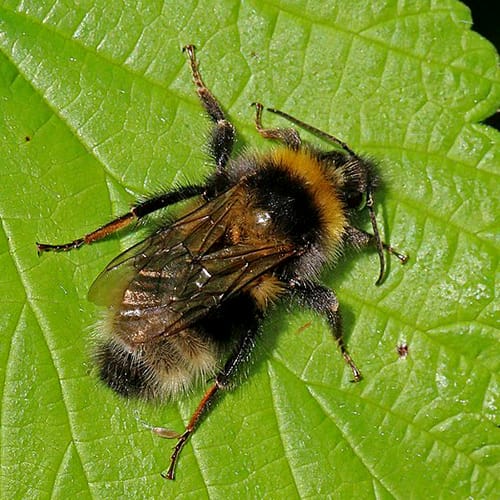
Garden Bumblebee (Bombus hortorum) – Also has a white tail, but it usually looks longer-faced and longer-bodied, with a longer tongue and an extra yellow band.
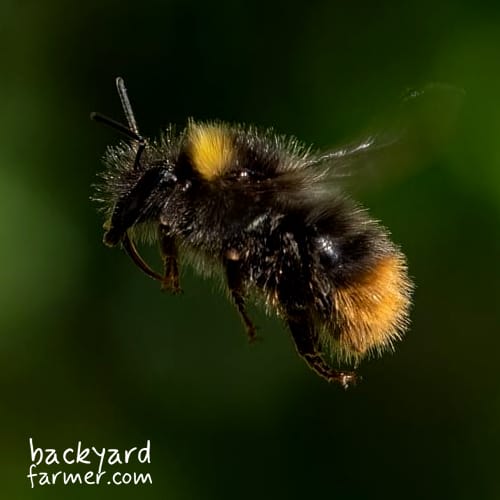
Early Bumblebee (Bombus pratorum) – Smaller overall, with a distinctive orange-red tail rather than a buff or white one.
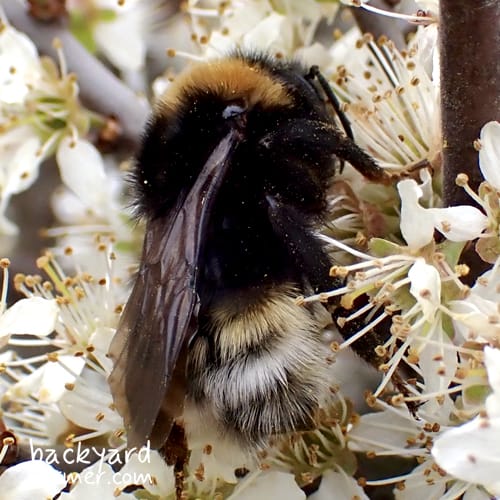
Southern Cuckoo Bumblebee (Bombus vestalis) – Can resemble Buff-tailed Bumblebees, but cuckoo bumblebees lack pollen baskets and often show yellow patches near the front of the tail.
For casual garden identification, the safest approach is to identify clear queens as Buff-tailed Bumblebees, but be more cautious with workers unless the buff tint is obvious.
Why the Buff-tailed Bumblebee Matters
The Buff-tailed Bumblebee is common, but that does not make it unimportant. It is one of the most useful everyday pollinators in gardens, allotments and the wider countryside.
Because it emerges early and feeds from many different flowers, it helps pollinate spring blossom, wildflowers, herbs, soft fruit and garden crops. It is also one of the bumblebees most likely to remain active during mild winter periods, especially in southern towns and cities where winter-flowering plants are available.
Rather than presenting this species as rare or in immediate danger, it is better to see it as a common pollinator that still benefits from better gardens, fewer pesticides and more connected habitat.
Did You Know?
Buff-tailed Bumblebees have short tongues, which means deep tubular flowers can be difficult for them to feed from properly.
Sometimes they get around this by making a small hole near the base of the flower to reach the nectar. This is known as nectar robbing. It may sound cheeky, but it is a normal behaviour seen in some short-tongued bees.
Frequently Asked Questions (FAQ)
The scientific name is Bombus terrestris.
It is widespread across much of the UK and is often seen in gardens, parks, allotments, farmland, hedgerows and other flower-rich habitats.
Queens are the easiest to separate. Buff-tailed queens usually have a dull buff or beige tail, while White-tailed Bumblebee queens have a cleaner white tail. Workers are much harder and can often only be recorded as White/Buff-tailed Bumblebee workers.
Queens can appear from late winter or early spring, with workers following once nests are established. In mild parts of the UK, especially towns and cities with winter-flowering plants, this species can sometimes be seen during winter too.
They feed on nectar and pollen from a wide range of flowers. Useful garden plants include crocus, lavender, bramble, comfrey, foxgloves, fruit blossom, heather and many open daisy-like flowers.
Yes. They are important pollinators of wildflowers, fruit blossom, garden plants and some crops. Their early activity makes them especially useful when fewer pollinators are on the wing.
Plant flowers across the seasons, avoid pesticides, leave undisturbed corners for nesting, and include early and late nectar sources so queens and workers have food when they need it most.
How You Can Help
Supporting Buff-tailed Bumblebees is mostly about making your garden useful for pollinators across the whole year, not just during summer.
Plant Bee-Friendly Flowers
Aim for a long flowering season, from early spring through to autumn. Good choices include crocus, hellebore, mahonia, fruit blossom, comfrey, lavender, foxgloves, bramble, heather, herbs and open daisy-like flowers.
Avoid Harmful Pesticides
Avoid broad-spectrum insecticides where possible, especially on flowering plants. Even common garden chemicals can affect bees directly or reduce the insects and wild plants that support wider wildlife.
Provide Nesting Spaces
Buff-tailed Bumblebees often nest underground in old mouse or vole holes. Leaving a few quiet, undisturbed corners, rough edges, compost areas, or wild patches can make a garden much more useful for nesting bees.
Keep Winter and Spring Flowers Available
In milder parts of the UK, Buff-tailed Bumblebees may be active during winter. Winter-flowering plants such as mahonia, winter heather, hellebore and early spring bulbs can provide useful food when little else is available.
Continue your bumblebee identification journey
- White-tailed Bumblebee aggregate guide – Understand why some white-tailed bumblebees are hard to identify to the exact species level.
- Garden bumblebee identification: a complete guide – Learn how to spot and tell apart this common garden companion and compare it with other species
- Heath bumblebee identification: a complete guide – Discover the traits and habitats of this more subtly patterned bumblebee species
- Common carder bee identification: a complete guide – A friendly introduction to another frequent bee visitor, useful for contrast and broader pollinator awareness