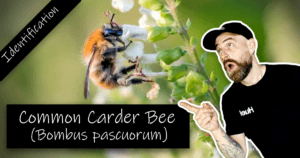

Introduction
The Garden Bumblebee (Bombus hortorum) is one of the most recognisable long-tongued bumblebees you are likely to see in a UK garden. It is often spotted working deep flowers such as foxgloves, honeysuckle, red clover, comfrey and vetches, where its long face and tongue give it an advantage over many shorter-tongued bees.
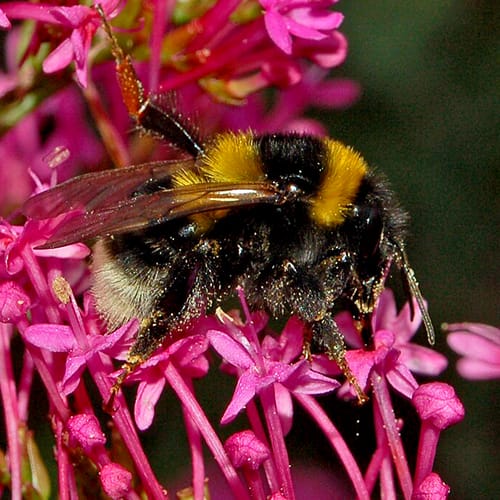
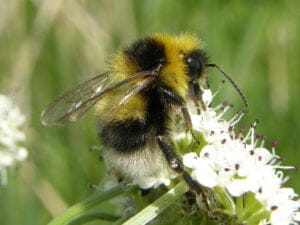
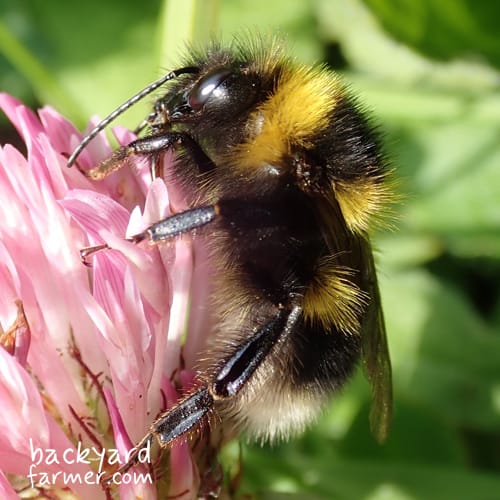
At first glance, it can look like a typical black-and-yellow bumblebee with a white tail. However, look a little closer and the pattern becomes easier to read: a slim, slightly scruffy body, three yellow bands, a clean white tail, and a noticeably long, narrow face, sometimes described as horse-shaped.
In this guide, you’ll learn how to identify the Garden Bumblebee, how to separate it from similar white-tailed species, when you are most likely to see it, and how to make your garden more useful for this brilliant long-tongued pollinator.
How to Identify a Garden Bumblebee
The easiest way to identify a Garden Bumblebee is to look for the combination of a long face, long tongue, three yellow bands and a white tail.
It usually has:
| Feature | What to look for |
|---|---|
| Face | Long, narrow and noticeably elongated |
| Tongue | Very long, often visible as it approaches deep flowers |
| Body shape | Slimmer and more elongated than many common bumblebees |
| Yellow bands | One near the head, one at the rear of the thorax, and one at the front of the abdomen |
| Tail | Clean white, rather than buff, orange or red |
| Favourite flowers | Foxglove, honeysuckle, red clover, vetches, comfrey and other tubular flowers |
Do not rely on colour alone. Several UK bumblebees have yellow bands and pale tails, so the long face and deep-flower feeding habit are especially useful clues.
Queen Garden Bumblebee
Queens are the largest Garden Bumblebees, at 17–20mm long. They have three yellow bands, a white tail and a noticeably long face.
In early spring, queens may be seen searching low over the ground for nest sites around old burrows, sheds, rough grass and sheltered garden edges.
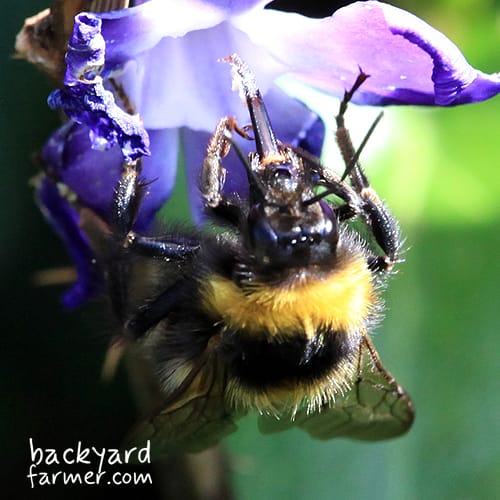
Female Garden Bumblebee (Worker)
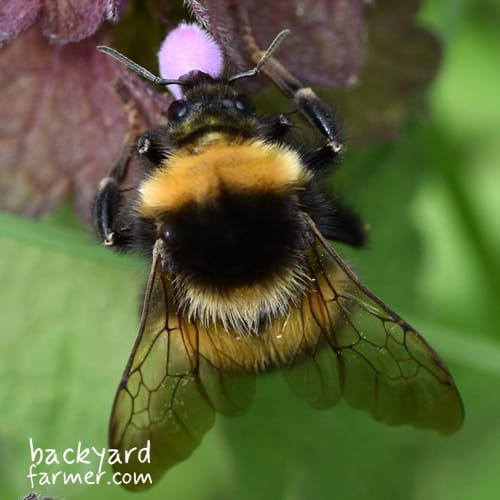
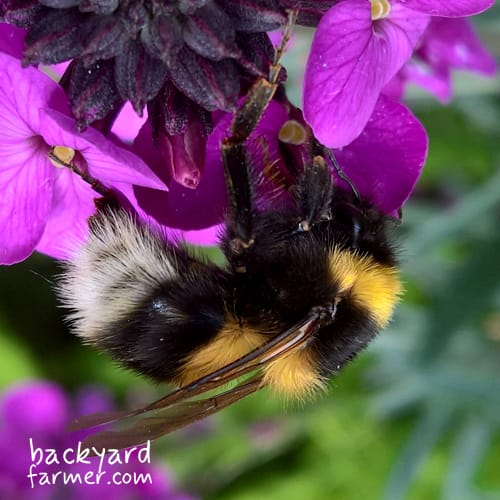
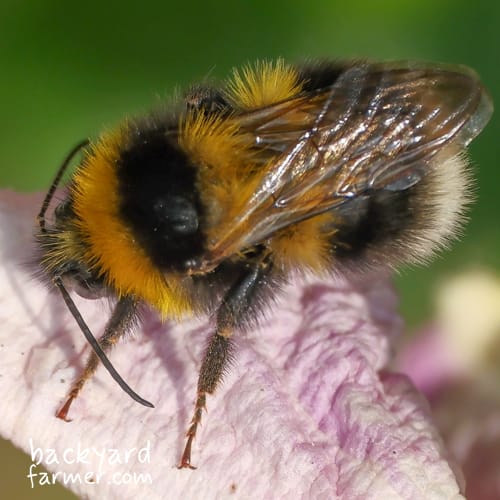
Workers look like smaller queens, usually around 11–16mm long. They keep the same long-faced, three-banded pattern, although they may look worn or faded later in the season.
Female workers also have pollen baskets on their hind legs, which may appear shiny when empty or packed with pollen.
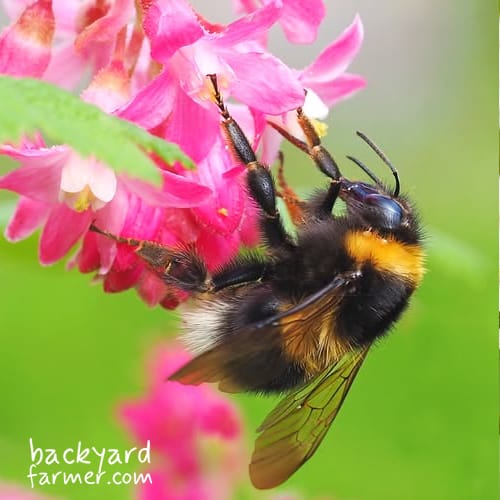
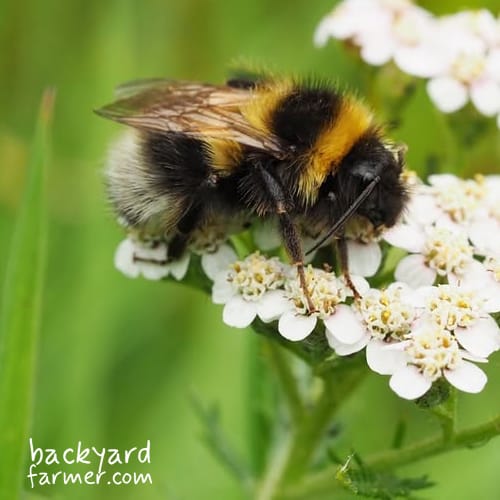
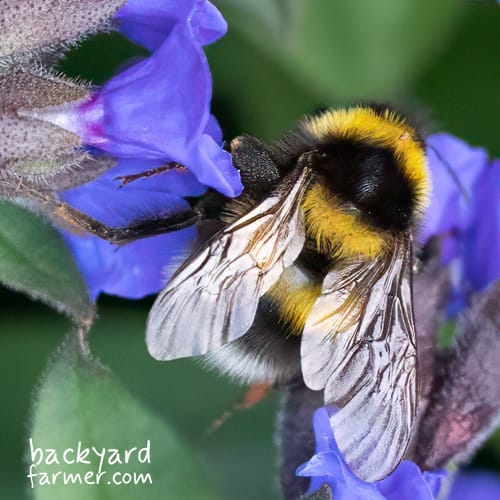
Male Garden Bumblebee (Done)
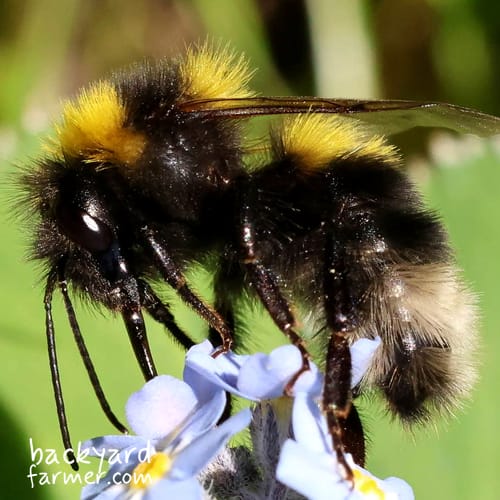
Males are usually around 14–15mm long and appear later in the season. They look similar to females, but have longer, more curved antennae.
Unlike females, males do not have pollen baskets. They may show a small yellow tuft on the head, but not the broad yellow facial hair seen on some similar white-tailed bumblebee males.
Identification & Key Facts
| Attribute | Details |
| Common name | Garden Bumblebee, sometimes Small Garden Bumblebee |
| Latin name | Bombus hortorum |
| Size | Queen 17–20mm; worker 11–16mm; male 14–15mm |
| UK status | Common and widespread, though not always abundant everywhere |
| Active months | Usually from March/April to October, depending on the region and weather |
| Key ID features | Long face, very long tongue, three yellow bands, white tail |
| Tail colour | White |
| Favourite flowers | Foxglove, honeysuckle, red clover, vetches, cowslips, dead-nettle, lavender and comfrey |
| Habitat | Gardens, parks, woodland edges, hedgerows, scrub and flower-rich grassland |
| Nesting behaviour | Often nests underground or under cover, commonly using old small mammal nests |
| Colony size | Small to medium-sized colonies, often reaching around 100 workers or more in good conditions |
| Similar species | Heath Bumblebee, White-tailed Bumblebee, Buff-tailed Bumblebee, Large Garden Bumblebee / Ruderal Bumblebee |
Similar Species
The Garden Bumblebee is fairly distinctive once you know what to look for, but it can still be confused with other black-and-yellow bumblebees with pale tails. The long face, three yellow bands and deep-flower feeding habit are usually the best clues.
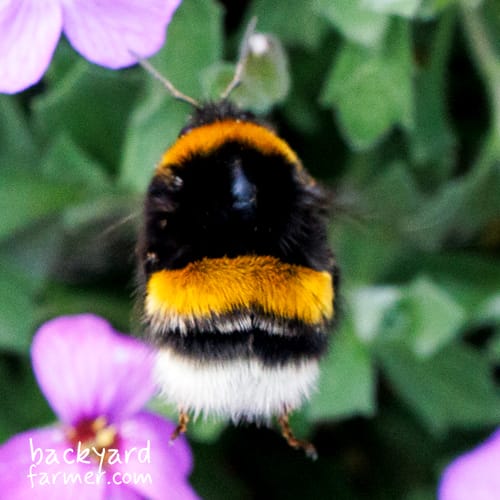
White-tailed Bumblebee (Bombus lucorum agg.)
White-tailed Bumblebees can look similar because they also have a pale tail and yellow banding. However, they usually lack the Garden Bumblebee’s clear three-band pattern and do not have the same long, horse-shaped face.
Males often have much more yellow facial hair, which can help separate them from male Garden Bumblebees.
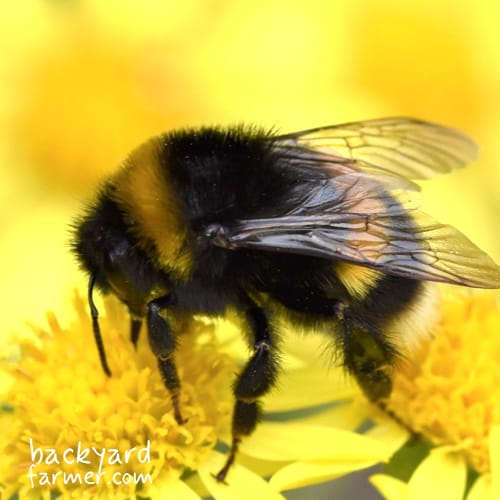
Buff-tailed Bumblebee (Bombus terrestris)
Buff-tailed Bumblebee queens are usually bulkier, with a warmer buff-coloured tail rather than a clean white one. Workers can sometimes have whiter tails, which makes them trickier, but they are usually chunkier and shorter-faced than Garden Bumblebees.
If the bee looks heavy-bodied and blunt-faced, it is less likely to be a Garden Bumblebee.
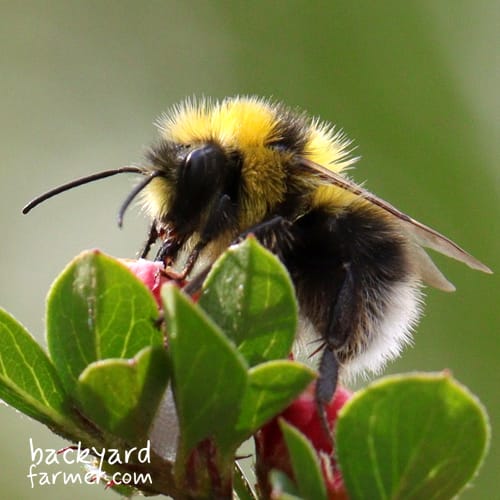
Heath Bumblebee (Bombus jonellus)
The Heath Bumblebee is one of the closest visual matches. It can also show three yellow bands and a pale tail, but it is usually smaller, fluffier and much shorter-faced.
Male Heath Bumblebees often show yellow facial hair, while Garden Bumblebee males usually have a darker face with only a small yellow tuft.
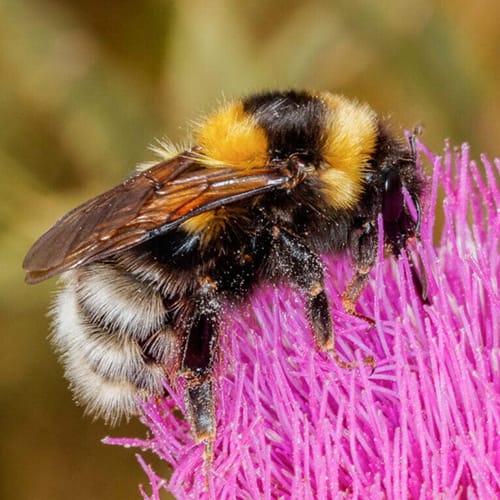
Large Garden Bumblebee / Ruderal Bumblebee (Bombus ruderatus)
The Large Garden Bumblebee is a separate species, not just a big Garden Bumblebee. It can look very similar to Bombus hortorum, with a long tongue and similar banding.
It is generally scarcer, more localised, and harder to confirm from casual garden photos. If you think you have found one, take several clear photos from different angles, especially showing the face, side profile, tail and banding.
Still unsure which bee you’ve found? Try our UK Bee Identification Guide or use the free Bee ID App to narrow it down by colour, size, tail colour and markings.
Why the Garden Bumblebee Matters
The Garden Bumblebee is especially useful because it can reach flowers that many shorter-tongued bees struggle with. Plants such as foxgloves, honeysuckle, red clover, comfrey and vetches are all well suited to this kind of pollinator.
This makes it an important species for wildlife gardens, cottage-style borders, orchards, allotments and flower-rich hedgerows. Even though it is still a common and widespread bee, it faces the same pressures as many pollinators: habitat loss, fewer wildflowers, pesticide use and tidier gardens with fewer nesting places.
A garden with deep flowers, rough corners and no unnecessary chemicals can make a real difference.
How You Can Help Garden Bumblebees
Supporting Garden Bumblebees is mostly about giving them the right flowers, safe feeding areas and quiet places to nest.
Plant Deep Tubular Flowers
Grow deep, tubular and legume-style flowers such as foxglove, honeysuckle, red clover, comfrey, vetches, dead-nettle and borage. These are especially useful for long-tongued bees like the Garden Bumblebee and provide a valuable food source through spring and summer.
For the best results, aim for a long flowering season rather than one short burst of colour. Early spring flowers help queens, while summer flowers support workers, males and new queens.
Avoid Harmful Pesticides
Avoid routine insecticide use, especially on flowering plants. Many garden chemicals can harm bees directly or reduce the number of insects and wild plants your garden supports.
If you do need to deal with pests, start with physical controls, hand removal, companion planting, healthy soil and encouraging natural predators before reaching for sprays.
Leave Nesting Corners
Leave some rough, quiet areas around the garden. Old grass edges, compost heaps, undisturbed banks, gaps under sheds and old mammal burrows can all provide the sort of sheltered spaces bumblebees may use.
A perfectly tidy garden often has fewer nesting options. A few wild corners can be far more useful than another bare patch of paving or short-mown lawn.
Frequently Asked Questions
Its long face, very long tongue, three yellow bands and clean white tail are the main clues. It is especially good at feeding from deep flowers that many shorter-tongued bees struggle to use.
No, it is still a common and widespread UK bumblebee. However, like many pollinators, it benefits from gardens with more flowers, fewer chemicals and better nesting habitat.
Foxglove, honeysuckle, red clover, comfrey, vetches, cowslips, dead-nettle, lavender and borage are all useful choices. In general, long tubular flowers are especially good for this species.
Look at the face and banding. Garden Bumblebees have a much longer face and a clearer three-band pattern, while White-tailed Bumblebees are usually shorter-faced and males often have yellow facial hair.
No. The Large Garden Bumblebee is Bombus ruderatus, a different and much scarcer species. It can look very similar, so casual garden photos are not always enough for a confident ID.
Females can sting if seriously threatened, but they are not aggressive. Like most bumblebees, they usually ignore people and focus on feeding from flowers.
They are most often seen from spring into autumn, with queens appearing first and workers becoming more common as colonies build. Sightings depend on local weather, region and available flowers.
Final Thoughts
The Garden Bumblebee is one of those species that becomes much easier to spot once you know the clues. Once you’ve seen a few, the shape becomes the giveaway: a longer face, slim body, clear banding and a habit of diving into deeper flowers.
For gardeners, it is also a useful reminder that flower shape matters. By growing foxgloves, honeysuckle, red clover, comfrey, vetches and other tubular flowers, you can support bees that shorter, open flowers may not help as much.
A few rough corners, a long season of flowers and a lighter touch with chemicals can turn an ordinary garden into a much better home for Garden Bumblebees and plenty of other pollinators too.