
Last year I made my own bird box, put it up in what seemed like a sensible spot, and then nothing used it.
It was disappointing, but an empty bird box is useful feedback. It may be too exposed, too sunny, too close to people, too easy for cats to reach, or simply in the wrong place for the birds already using the garden.
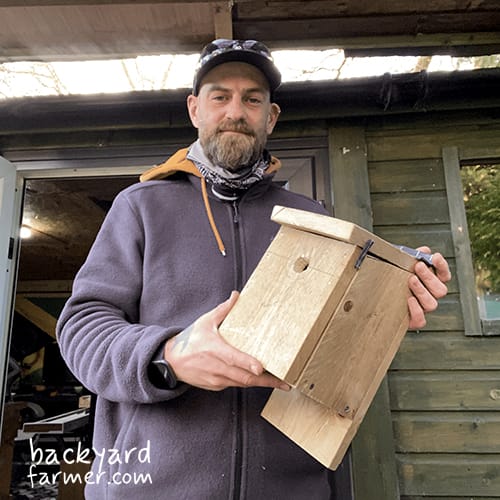
So this guide is partly about correcting my own mistake. I’m moving the box to a better position and using that process to explain where to put a bird box, why birds might ignore it, when to clean it, and how to make the surrounding garden more useful for nesting birds.
I’m particularly interested in House Sparrows, so I’ll also cover what can make a garden more suitable for them.
Where to Put a Bird Box: Quick Answer
A bird box has the best chance of being used when it is sheltered, quiet and easy for birds to approach safely. The exact position matters more than simply fixing it to the nearest tree, shed or fence.
For most UK gardens, look for a spot that is:
| What to look for | Why it matters |
|---|---|
| North, north-east or east facing where possible | Helps avoid strong afternoon sun and some of the worst prevailing weather. |
| Sheltered from heavy rain and exposed wind | Keeps the box drier and less exposed, without burying it deep in dense growth. |
| High enough to reduce disturbance | Makes it harder for cats, people and other predators to reach. |
| A clear entrance and flight path | Gives birds an easy route in and out of the box. |
| Some natural cover nearby | Shrubs, hedges and climbers provide shelter without blocking the entrance. |
| Away from feeders and busy garden areas | Reduces traffic, competition and disturbance around the nest. |
There is no perfect compass position for every garden. A shaded, protected wall may work better than a north-facing position that gets battered by wind and rain. The aim is to find the calmest, most sheltered part of the garden that still gives birds a clear route to the box.
Choose the Right Bird Box for the Bird
Before moving my bird box, I also need to check what it is actually suitable for. Not every box works for every bird, even if it looks perfectly good to us.
The entrance-hole size is one of the first things to check:
| Bird box type | Most suitable for |
|---|---|
| 25mm entrance hole | Blue Tits, Coal Tits and Marsh Tits |
| 28mm entrance hole | Great Tits and Tree Sparrows |
| 32mm entrance hole | House Sparrows and Nuthatches |
| Open-fronted box | Robins, Wrens, wagtails and similar species depending on placement |
| Larger entrance hole | Larger species such as Starlings, depending on box dimensions |
For House Sparrows, a 32mm entrance hole is usually the size to look for. But getting the hole size right is only part of the job.
A useful bird box should also be:
- Dry inside
- Securely fixed
- Sheltered from harsh weather
- Easy to clean after the nesting season
- Placed somewhere birds feel safe
House Sparrows are social birds, so several nearby boxes or a sparrow terrace can work well where sparrows already use the garden. A terrace is not a magic fix, though — it still needs a good position, safe access and nearby cover.
For exact dimensions or build plans, I would use trusted RSPB or BTO designs. Here, I’m concentrating on what happens once you have the box: where to put it, why it might stay empty and what you can change to give it a better chance of being used.
Why Is My Bird Box Not Being Used?
If your bird box is sitting empty, do not assume it is useless. Birds may inspect a site for some time before deciding to nest, and some boxes simply take longer to be used.
If it has been ignored for a while, check the whole setup rather than just the box itself. Birds are judging shelter, safety, disturbance, access and the surrounding habitat.
| Possible issue | What to check |
|---|---|
| Too exposed | Is the box out in the open with little shelter or cover nearby? |
| Too much sun | Does it get strong midday or afternoon sun, particularly on a south- or west-facing wall? |
| Too much disturbance | Is it near doors, paths, seating areas, play areas or regular garden traffic? |
| Too low | Is it easy for cats, squirrels or people to reach? |
| Wrong direction | Is it facing into prevailing wind, heavy rain or strong sun? |
| Too close to feeders | Are birds constantly moving around the entrance area? |
| No clear flight path | Are branches, clutter or foliage blocking the entrance? |
| Wrong entrance size | Is the box suitable for the birds you are hoping to attract? |
| Not enough habitat | Is there nearby cover, water, insects, seeds, hedges or shrubs? |
| Needs more time | Has it only been up for one season? Some boxes take longer to be used. |
| Wrong target bird | Tit boxes, sparrow boxes and open-fronted boxes suit different birds and locations. |
Most of these problems are fixable. You may not need a new box at all — it could simply need a better position, more nearby cover, a feeder moved further away, or more time.
That is the main lesson from my own box: the box itself is only part of the setup. Birds are judging the whole garden around it.
Where I Went Wrong With My Bird Box
Looking back, my main mistake was treating the bird box like a finished DIY project. I built it, put it up, and expected the birds to do the rest.
But wildlife gardening does not really work like that. You add something, watch what happens, and adjust it when the garden tells you it is not quite right.
In my case, I do not think there is one single problem. It is probably a mix of position, exposure, cover and disturbance. I placed the box where it seemed convenient, rather than where a small bird would feel safe enough to raise chicks.
That is an easy trap to fall into. We naturally look at a bird box from our own point of view:
- Does it look nice?
- Can we see it from the house?
- Is it easy to reach?
- Does it fit the space?
Birds are asking different questions:
- Is it sheltered?
- Can predators reach it?
- Is there cover nearby?
- Is the entrance too exposed?
- Is there too much movement around it?
So the next job is to move my box to a calmer, more sheltered part of the garden. I do not want to keep shifting it around, so I will move it once, outside the active nesting season, and then give the birds time to find it.
This time I am not asking where the box looks best. I am looking for a position with less direct sun, less regular disturbance, a clear flight path and some nearby cover, without burying the box deep inside a hedge.
It may still take time to be used, but leaving it in a position that already looks wrong for another year does not make much sense.
That is the useful lesson from mine: an empty bird box is not always a failure. Sometimes it is just feedback that the position needs changing.
Helping House Sparrows Use a Nest Box
House Sparrows are still familiar around UK rooflines, hedges and feeders, but their numbers have fallen heavily over recent decades. The RSPB says almost 30 million House Sparrows have disappeared from the UK since 1970, and the species is now on the UK Red List of Birds of Conservation Concern.
So, rather than calling them “endangered”, it is more accurate to say that House Sparrows are a UK Red List species in serious long-term decline.
One problem is the loss of suitable nesting spaces. Older buildings often had gaps under eaves, loose roof tiles and small cavities where sparrows could nest. Modern homes tend to be much more tightly sealed, while older buildings are often repaired in ways that remove those spaces.
That is where a House Sparrow nest box can help. It will not bring sparrows back on its own, but it can give them another safe nesting option, particularly if they already use your garden or nearby street.
House Sparrows are social birds, so one box can work, but several nearby boxes or a sparrow terrace may suit them better if you are specifically trying to support them.
The box is only part of the picture, though. Sparrows also need a garden that gives them somewhere to feed, shelter and move around safely. If you want to improve the wider habitat, my guide to making a garden more wildlife-friendly covers food, shelter, water and low disturbance in more detail.
Useful things to add or keep include:
- Thick shrubs and hedges for cover
- Ivy, climbers and evergreens for year-round shelter
- Seed heads and grasses for natural food
- Insect-friendly flowers and herbs to support food for chicks
- A shallow bird bath or water dish
- Leaf litter, log piles and slightly messy corners where insects can live
- Dry patches of soil for dust bathing
- Feeders as extra support rather than the whole strategy
You do not need to turn the whole garden into a wilderness. My wildlife gardening hub has more practical ways to support birds, pollinators and other garden wildlife without making the space unmanageable.
It is also worth looking at what is already happening locally. If House Sparrows use nearby rooflines, hedges, feeders or gardens, a well-placed box gives them another option. If you rarely or never see them nearby, improving the habitat may need to come before expecting them to nest.
For my own box, that is the main lesson: the right entrance size and position matter, but the garden around the box is what gives sparrows a reason to stay.
Should You Put Food Near a Bird Box?
Feeders can help bring birds into the garden, but I would not place one right beside a bird box. A busy feeder can mean more traffic, competition and predator attention around the nest entrance.
A better rule is: feed the garden, not the nest box entrance.
Keep feeders elsewhere so the nesting area stays quieter, while still supporting birds with food. Natural sources such as seed heads, berries, insects, long grass and leaf litter also help without concentrating activity in one spot.
When to Clean or Move a Bird Box
The best time to clean or move a bird box is after the nesting season, usually in autumn or winter, once you are sure it is no longer being used.
Do not open, clean or move a box if birds are nesting. If you see eggs, chicks, fresh nesting material, or birds regularly entering and leaving, close the box and leave it alone.
Once the box is definitely inactive:
- Wear gloves before handling old nesting material
- Remove the old nest and loose debris
- Use boiling water to clean the inside
- Avoid chemicals, insecticides and strong cleaners
- Let the box dry properly before closing it
- Check the fixings, drainage and condition of the box
- Move it now if the original position was too exposed, too sunny or too disturbed
If you find unhatched eggs later in the year, check current UK wildlife guidance before removing them.
Cleaning is not about making the box spotless. It is about removing old nesting material, reducing parasite build-up and making sure the box is still dry, secure and ready for the next season.
Autumn and winter are also the best times to correct a poor position. If the box has been ignored, battered by weather or left too exposed, move it once and then give birds time to find it.
The simple rule is: if you are not sure the box is inactive, leave it alone and check again later.
Common Bird Box Mistakes to Avoid
Most bird box mistakes come down to choosing a position or design that suits us rather than the birds.
| Common mistake | Better approach |
|---|---|
| Putting the box in full sun | Choose a more sheltered position, especially away from hot south- or west-facing walls. |
| Placing it too low | Position it high enough to reduce disturbance from cats, people and other predators. |
| Facing it into strong wind or rain | Use the most sheltered side available rather than following direction alone. |
| Putting it beside feeders | Keep feeding areas separate so the nest entrance stays quieter. |
| Choosing a busy location | Avoid doors, paths, seating areas and places with regular garden traffic. |
| Blocking the entrance | Leave a clear flight path while keeping useful cover nearby. |
| Opening the box repeatedly | Watch from a distance and avoid unnecessary disturbance. |
| Cleaning or moving an active box | Wait until the nesting season has finished and the box is definitely inactive. |
| Using chemicals inside | Clean with boiling water and allow the box to dry thoroughly. |
| Adding a perch | Leave it off — small nesting birds do not need one. |
| Choosing decoration over function | Prioritise drainage, ventilation, secure fixing and cleaning access. |
| Expecting instant results | Give birds time; some boxes take more than one season to be used. |
A good bird box does not need to look fancy. The right entrance size, good drainage, secure fixing and a sheltered position matter far more than decoration.
For my own box, that has been the main lesson: the position is part of the design.
What to Look for in a Good Bird Box
Whether you build a bird box or buy one, the important thing is that it is safe, practical and suited to the bird you want to support.
Look for:
- Untreated timber or other bird-safe materials
- The correct entrance size for the target species
- Good drainage so water cannot collect inside
- Some ventilation without making the box draughty
- Secure fixing points so it does not wobble or fall
- Access for cleaning after the nesting season
- No perch below the entrance hole
Avoid flimsy decorative boxes, poor drainage, awkward designs and boxes that cannot be opened for cleaning.
If you are building one yourself, I would use a trusted RSPB, BTO or Wildlife Trusts plan rather than guessing the dimensions.
Homemade or bought is less important than getting the basics right. A simple, well-designed box in a good position is far more useful than a decorative one in the wrong place.
FAQs
An empty bird box does not necessarily mean there is anything wrong with it. Birds may take time to find and trust a new nesting site.
If it has been ignored for a while, check the position, shelter, entrance size, nearby cover and level of disturbance. Boxes in strong sun, exposed weather or busy parts of the garden may be less attractive.
In most UK gardens, north, north-east or east is a good starting point because it helps avoid strong afternoon sun and some of the worst weather.
However, shelter matters more than following the compass rigidly. A protected position that stays cool and dry can be better than an exposed north-facing wall.
For small garden birds, a position roughly 2–4 metres above the ground is often suitable.
The exact height depends on the bird and location, but the main aim is to keep the box away from regular disturbance and make it harder for cats and other predators to reach.
Yes. House Sparrows will use nest boxes, particularly where they already live and feed nearby.
A 32mm entrance hole is commonly used for House Sparrow boxes. Because sparrows are social birds, several nearby boxes or a sparrow terrace can also work well.
I would keep feeders away from the immediate nesting area.
A busy feeder can create extra traffic, competition and predator attention around the box. Feeders can still support garden birds — just give the nest box a quieter part of the garden.
Clean a bird box after the nesting season, usually during autumn or winter, once you are sure it is no longer active.
Remove old nesting material, clean the inside with boiling water, let it dry thoroughly and avoid strong chemicals or insecticides.
Yes, but move it when you are sure the box is inactive, ideally outside the nesting season.
If the current position is too exposed, sunny or disturbed, autumn or winter is a good time to relocate it. Once moved, leave it in place and give birds time to find it.
No. Small garden birds do not need a perch to enter a nest box.
A perch may actually make the entrance easier for predators to approach, so a simple box without one is usually the better design.