
Quick Answer: What Is the White-tailed Bumblebee Aggregate?
The White-tailed Bumblebee aggregate, or Bombus lucorum agg., is a group of very similar UK bumblebees that are difficult to separate by sight.
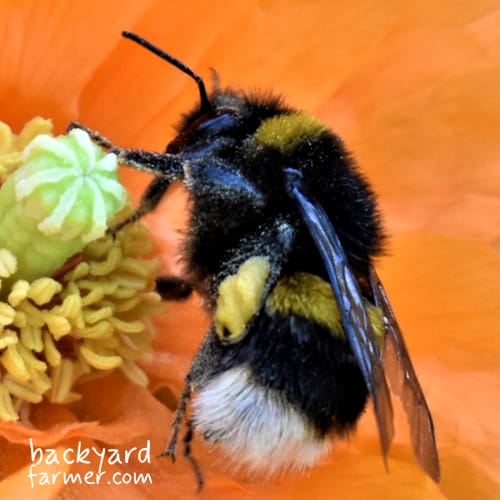
It usually includes:
- White-tailed Bumblebee — Bombus lucorum
- Northern White-tailed Bumblebee — Bombus magnus
- Cryptic Bumblebee — Bombus cryptarum
All three can look much the same in the garden: black body, yellow bands, and a bright white tail. Because the differences are often subtle, many sightings are safest recorded at group level.
If you’ve seen a black and yellow bumblebee with a white tail, the best ID is often:
White-tailed Bumblebee aggregate
or
Bombus lucorum agg.
However, there is one important catch. Buff-tailed Bumblebee is not part of this aggregate, but its workers can look very similar. If you cannot rule out Buff-tailed, record it as White/Buff-tailed Bumblebee workers instead.
Introduction
A black and yellow bumblebee with a bright white tail can look like an easy ID. However, in the UK, a clean white tail is not always enough to confirm one exact species.
Several closely related bumblebees share this pattern. They are often grouped as the White-tailed Bumblebee aggregate, or Bombus lucorum agg. Put simply, this means a small group of species that can be difficult, and sometimes impossible, to separate from a quick sighting or single photo.
That is not a problem with your ID skills. It is just how bee identification works sometimes. A careful group-level ID is often better than forcing a species name that might be wrong.
This guide explains what the aggregate means, which species are included, why they are hard to separate, and how to record sightings more accurately. It also covers the main lookalike issue: Buff-tailed Bumblebee workers, which can look very similar.
By the end, you’ll know when to use White-tailed Bumblebee aggregate, when to be more cautious, and why honest uncertainty is part of good wildlife recording.
What Is the White-tailed Bumblebee Aggregate?
The White-tailed Bumblebee aggregate is a practical label for several UK bumblebees that look almost identical in the field. They share the familiar black, yellow, and white-tailed pattern, but they cannot always be separated safely by sight.
The group usually includes:
- White-tailed Bumblebee — Bombus lucorum
- Northern White-tailed Bumblebee — Bombus magnus
- Cryptic Bumblebee — Bombus cryptarum
These are real species, not just different names for the same bee. However, their markings overlap so much that normal garden sightings, especially of workers, often do not give enough evidence for a confident species ID.
That is why you may see records written as Bombus lucorum agg., Bombus lucorum aggregate, or White-tailed Bumblebee aggregate. In plain terms, it means: “this bee appears to belong to the white-tailed group, but the exact species has not been confirmed.”
Think of it as a safe ID label. It keeps the sighting useful without pretending we know more than we do.
Which Species Are Included in the White-tailed Bumblebee Aggregate?
The White-tailed Bumblebee aggregate usually covers three closely related species. For most beginners, the useful point is not to memorise tiny differences. It is to know why these bees are often treated as a group.
White-tailed Bumblebee — Bombus lucorum
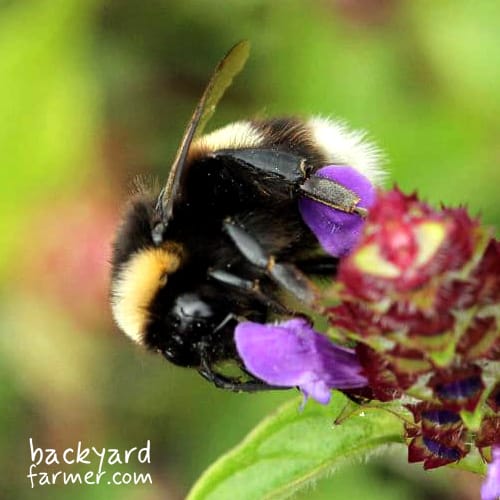
The White-tailed Bumblebee is the familiar name many people use for black and yellow bumblebees with bright white tails.
It is widespread in the UK and turns up in gardens, parks, hedgerows, grassland, woodland edges, and the wider countryside. A typical bee has a yellow collar behind the head, a yellow band across the abdomen, and a clean white tail.
However, it overlaps closely with Bombus magnus and Bombus cryptarum. So, unless the evidence is strong, many casual sightings are better recorded as Bombus lucorum agg. rather than definite Bombus lucorum.
Northern White-tailed Bumblebee — Bombus magnus
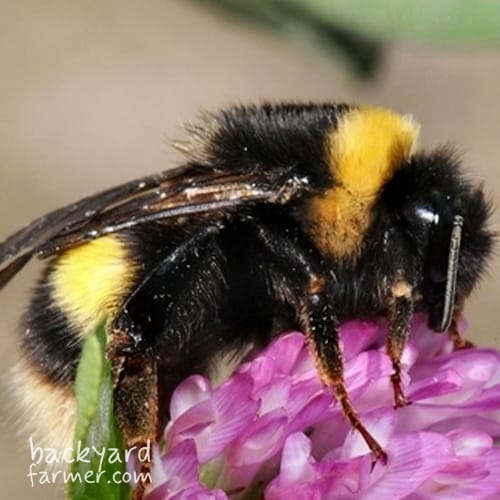
The Northern White-tailed Bumblebee is another member of the group. It has the same broad black, yellow, and white pattern, which makes it difficult to separate from Bombus lucorum by sight.
It is often linked with cooler areas and heathland-type habitats. However, habitat should only support an ID, not prove it. Some queens may show broader or longer yellow collar markings, but that is not a beginner-safe rule.
For most casual sightings, possible Bombus magnus is best treated as part of the White-tailed Bumblebee aggregate unless confirmed by stronger evidence.
Cryptic Bumblebee — Bombus cryptarum
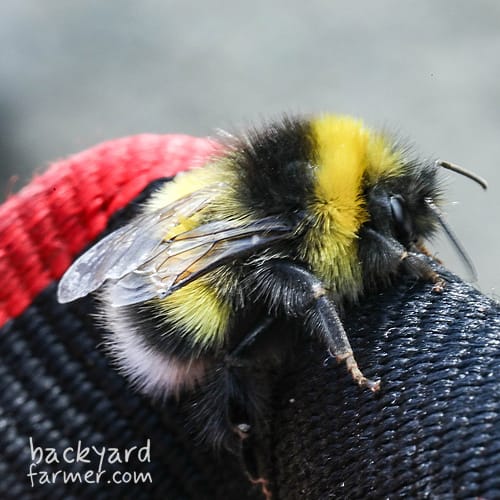
The Cryptic Bumblebee lives up to its name. It can be extremely difficult to identify by sight and is easily confused with the other white-tailed aggregate species.
Some specialist guides mention subtle collar features, such as dark hairs cutting into the yellow band. However, these details can overlap between species and are often hard to judge from normal garden photos.
For beginners and casual recorders, the safest option is usually White-tailed Bumblebee aggregate unless the sighting has been checked by someone with specialist experience.
Why Are These Bumblebees So Hard to Separate?
These bumblebees are tricky because they share the same basic pattern:
- black body
- yellow collar behind the head
- yellow band on the abdomen
- white tail
That pattern helps you recognise the White-tailed Bumblebee aggregate, but it does not always prove the exact species.
The problem is overlap. Bombus lucorum, Bombus magnus, and Bombus cryptarum can overlap in colour, size, markings, and shape. Some individuals look fairly typical, while others sit in that awkward middle ground where a confident visual ID just is not realistic.
Workers are the hardest
Workers are usually the hardest to identify. They are smaller than queens, move quickly, and often show less obvious markings.
In many garden sightings, workers of Bombus lucorum, Bombus magnus, and Bombus cryptarum are best recorded as White-tailed Bumblebee aggregate rather than pushed to exact species level.
Queens can show more clues
Queens are larger, so their markings can be easier to compare. Some may show features that point towards one species, such as broader yellow collar markings.
Even so, those clues are not foolproof. They can overlap between species and are not always visible in normal photos. For beginners, they are hints rather than proof.
Males can still be awkward
Male bumblebees may show extra yellow on the face and longer antennae. These features can help you recognise a male, but they do not automatically solve the species ID.
As with queens and workers, males in this group can still overlap visually.
Worn bees lose useful clues
Bumblebees do not stay fresh-looking all season. Their hairs fade, rub away, or become patchy as they age.
A bee seen later in the season may look duller or less clearly marked than a fresh spring queen. As a result, colour-based ID becomes even less reliable.
One photo is often not enough
A single top-down photo may show the tail and bands, but miss useful details such as:
- face shape
- antennae
- hind legs
- side markings
- collar shape
- pollen baskets
Photos are still helpful, of course. However, for this group, one nice garden photo may only support an aggregate-level ID.
Specialist features need caution
Some expert guides discuss collar width, dark hairs in the yellow collar, and subtle band placement.
Those features can help experienced recorders, especially with fresh queens and good views. However, they should not be treated as simple beginner rules.
For most readers, the safest approach is simple: recognise the group, check the main lookalikes, and only claim an exact species when the evidence is strong enough.
What Features Can You Still Use?
Even when exact species ID is tricky, the visible features still help. They can place the bee in the White-tailed Bumblebee aggregate and show how confident you should be.
The key is to treat them as clues, not guarantees.
| Feature | What to look for | How much confidence it gives |
|---|---|---|
| Tail | A clean white tail | Good group clue, but Buff-tailed workers can look similar |
| Bands | Lemon-yellow collar and yellow abdominal band | Useful for the group, not exact species ID |
| Body shape | Sturdy, rounded bumblebee shape | Helpful alongside the colour pattern |
| Female clue | Pollen baskets on the hind legs | Confirms a queen or worker, not the exact species |
| Male clue | Yellow face and longer antennae | Helps recognise males, but still needs caution |
| Photo angle | Side, face, tail, and hind-leg views | Much better than one top-down photo |
| Specialist clues | Collar width, dark collar hairs, subtle band shape | Useful for experienced recorders, but not beginner-safe alone |
For most garden sightings, focus on the simple features first: white tail, yellow bands, and overall bumblebee shape. These can put the bee in the right group, even if they do not prove whether it is Bombus lucorum, Bombus magnus, or Bombus cryptarum.
If you are taking photos, try to get more than one angle. A side view, a clear tail shot, and a view of the face or hind legs can all help. Even then, a good photo may still only support an aggregate-level ID.
Backyard Farmer ID rule
If the bee has the classic black, yellow, and white-tailed pattern, but you cannot confirm the species, record it as:
White-tailed Bumblebee aggregate
or
Bombus lucorum agg.
If it is a worker and you cannot rule out Buff-tailed Bumblebee, use:
White/Buff-tailed Bumblebee workers
That keeps the record useful without making the ID sound more certain than it is.
What Should Gardeners Record?
For most garden sightings, you do not need to force an exact species name. If the bee clearly fits the white-tailed group but the finer details are uncertain, record it as:
White-tailed Bumblebee aggregate
or
Bombus lucorum agg.
This is especially useful when:
- you only saw the bee briefly
- you have one photo
- the bee was moving quickly
- the bee was a worker rather than a queen
- the markings look worn or faded
- you cannot clearly see the face, collar, antennae, or hind legs
- the photo is mostly taken from above
It might feel less satisfying than naming one exact species. However, it is often the better record because it says what you can safely tell from the sighting without adding guesswork.
When to use White/Buff-tailed Bumblebee workers
There is one extra trap to know about: Buff-tailed Bumblebee workers can look very similar to White-tailed Bumblebee aggregate workers.
Buff-tailed queens often have a buff or dirty-white tail. Workers, though, can look much paler. Sometimes the buff edge is narrow, faint, or missing from the photo altogether.
So, if the bee is a worker and you cannot safely rule out Buff-tailed Bumblebee, use:
White/Buff-tailed Bumblebee workers
or
Bombus lucorum/terrestris
Simple recording rule
| What you are confident about | Safest record |
|---|---|
| It fits the white-tailed group, but exact species is uncertain | White-tailed Bumblebee aggregate / Bombus lucorum agg. |
| It is a worker and Buff-tailed cannot be ruled out | White/Buff-tailed Bumblebee workers / Bombus lucorum/terrestris |
| It has been confirmed by an expert or strong evidence | Use the confirmed species name |
| You only saw it briefly | Use the broadest honest ID |
A group-level ID is not a failed ID. For difficult bumblebee sightings, it is often the most accurate and useful record.
White-tailed Bumblebee Lookalikes
The White-tailed Bumblebee aggregate is not the only source of confusion. Several UK bumblebees can show a pale or white-looking tail, especially when you only get a quick look.
The main thing to remember is simple: not every bumblebee with a white-looking tail belongs to the White-tailed Bumblebee aggregate.
Buff-tailed Bumblebee — Bombus terrestris
The Buff-tailed Bumblebee is the main one to watch.
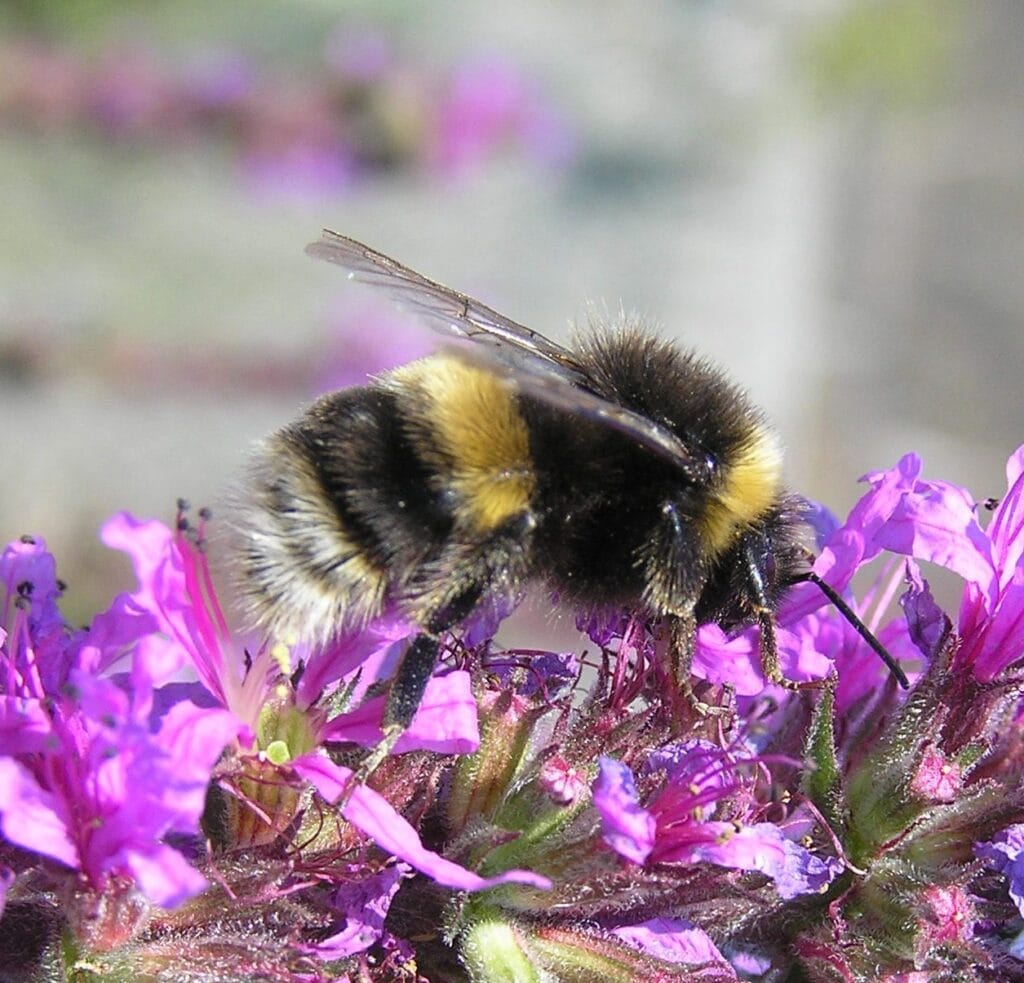
It is not part of the White-tailed Bumblebee aggregate, but its workers can look very similar. Queens often have a buff or dirty-white tail. Workers, though, can look much paler, sometimes with only a narrow buff edge.
In a quick garden sighting, that buff edge can be hard to spot. From above, or in a single photo, a Buff-tailed worker can easily look like a white-tailed bumblebee.
Beginner clue: If the bee looks white-tailed but appears to be a worker, and you cannot rule out Buff-tailed Bumblebee, record it as White/Buff-tailed Bumblebee workers.
Heath Bumblebee — Bombus jonellus
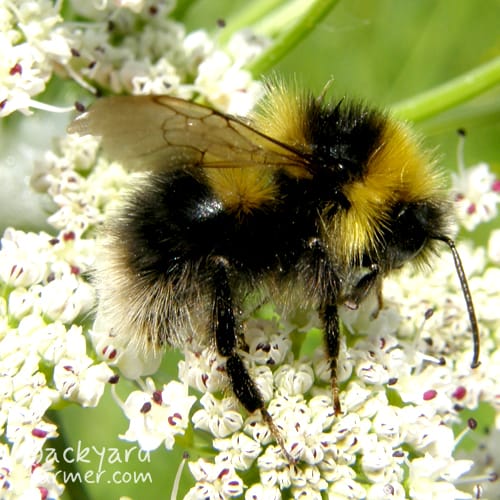
The Heath Bumblebee can also have yellow bands and a white tail. It is usually smaller than the larger white-tailed aggregate bees and is often linked with heathland, moorland, and acidic habitats.
However, habitat is only a clue. A bee on heathland is not automatically a Heath Bumblebee, and a bee in a garden is not automatically something else.
Beginner clue: Look for a smaller, fluffier bee, then compare it carefully with the white-tailed group.
Garden Bumblebee — Bombus hortorum
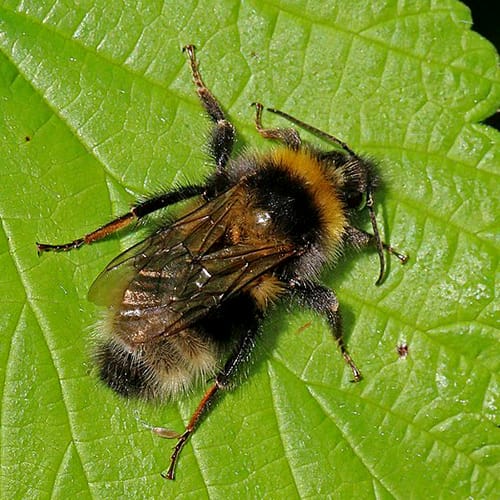
The Garden Bumblebee can have a white tail too, but it usually looks longer and more stretched out than the white-tailed aggregate bees.
It often has a long face and is commonly seen working deep flowers, where its long tongue comes in handy.
Beginner clue: Look for the long face and longer body shape. Once you spot that shape, Garden Bumblebees become much easier to separate.
Broken-belted Bumblebee — Bombus soroeensis
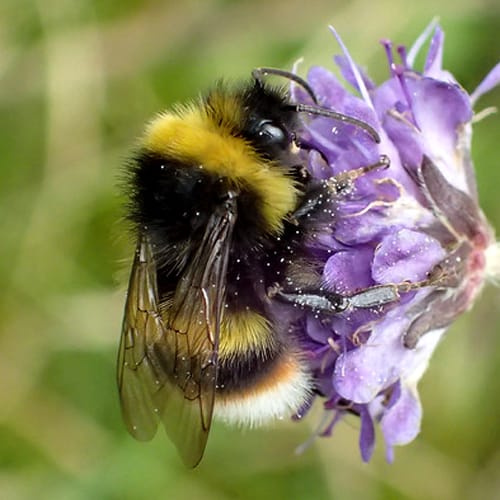
The Broken-belted Bumblebee is more of an advanced lookalike, but it is worth knowing about if you are getting deeper into bee ID.
It can look like a two-banded white-tailed bumblebee. However, the abdominal band is often more broken or crescent-shaped rather than a neat full band.
For most beginners, this is not the first confusion to worry about. Still, it is a good reminder that white-tailed bumblebee ID is not just about tail colour.
Quick lookalike guide
| Lookalike | Why it causes confusion | Beginner clue |
|---|---|---|
| Buff-tailed Bumblebee | Workers can look almost white-tailed | If Buff-tailed cannot be ruled out, use White/Buff-tailed workers |
| Heath Bumblebee | Also has yellow bands and a white tail | Usually smaller and often linked with heathland-type habitats |
| Garden Bumblebee | Has a white tail and yellow bands | Look for the long face and longer body |
| Broken-belted Bumblebee | Can resemble a two-banded white-tailed bee | Look for a broken or crescent-shaped abdominal band |
Why Some Bee ID Guides Disagree
If you compare bee books, websites, apps, and recording schemes, you may see different names for the same difficult group.
One guide might say White-tailed Bumblebee. Another might say Bombus lucorum agg. A recording form may use White-tailed Bumblebee aggregate, while some worker records may go broader and say White/Buff-tailed Bumblebee workers.
That looks confusing at first, but it usually comes down to confidence.
Simple guides use familiar names
Beginner guides often use familiar names to help people recognise common bees quickly. That is useful when you are learning, but it can make the ID sound more certain than it really is.
So, a simple guide might say White-tailed Bumblebee, while a more cautious guide may use Bombus lucorum agg. for the same sort of sighting.
Recording schemes need more caution
Wildlife recording schemes have to be stricter. They need records to reflect what can safely be confirmed, not just what the bee most resembles.
That is why you may see labels such as:
- Bombus lucorum agg.
- White-tailed Bumblebee aggregate
- White/Buff-tailed Bumblebee workers
These names are not there to make things awkward. They help keep records honest.
Same bee, different confidence level
A useful way to think about it is this:
| Type of guide | What it is usually asking |
|---|---|
| Beginner field guide | What does this bee most look like? |
| Recording scheme | What can we safely prove? |
| Expert ID guide | Which features support a more detailed ID? |
All three approaches have their place. They are just working at different levels of detail.
For Backyard Farmer, the aim is to keep bee identification practical and honest. If a sighting is only safe at aggregate level, that is the answer we should give.
Why the Bee ID App May Show an Aggregate Result
The Backyard Farmer Bee ID app helps narrow down likely matches from quick visual features. However, it should not pretend every bumblebee can be identified to exact species level from limited information.
For the White-tailed Bumblebee aggregate, the most accurate result may be a group-level ID rather than one species.
That means the app has recognised the likely group, but there is not enough visible evidence to safely choose between Bombus lucorum, Bombus magnus, and Bombus cryptarum.
That is not a failure. A careful aggregate result is better than a confident answer that may be wrong.
Why this result is shown as an aggregate
Some white-tailed bumblebees are extremely hard to separate by sight. The app may group them together so you can make a safer ID without overclaiming.
For many garden sightings, especially workers, White-tailed Bumblebee aggregate is the most accurate answer.
Could it also be Buff-tailed?
Possibly. Buff-tailed Bumblebee workers can look very similar to white-tailed bumblebees.
If the bee is a worker and the tail colour is not clear, it may be safer to record it as:
White/Buff-tailed Bumblebee workers
That keeps your sighting useful without pretending the app, or a single photo, can prove more than it can.
Where to Go Next: Compare the Main Species
Once you understand the aggregate, work from broad to narrow. That is usually the safest way to identify tricky bumblebees.
If your bee has a clean white tail, yellow bands, and the typical white-tailed pattern, start with the White-tailed Bumblebee aggregate. Then compare the individual species guides for:
- White-tailed Bumblebee — Bombus lucorum
- Northern White-tailed Bumblebee — Bombus magnus
- Cryptic Bumblebee — Bombus cryptarum
If the bee is a worker and Buff-tailed Bumblebee cannot be ruled out, check the Buff-tailed Bumblebee guide as well. This is especially useful when the tail looks mostly white but may have a faint buff edge.
You can also compare Heath Bumblebee and Garden Bumblebee if the shape, size, or habitat does not quite fit the white-tailed group.
| Step | What to do |
|---|---|
| 1 | Decide whether the bee fits the white-tailed group |
| 2 | Check whether Buff-tailed worker confusion is possible |
| 3 | Compare likely species guides |
| 4 | Only use an exact species name if the evidence is strong enough |
This broad-to-narrow approach keeps the ID honest and useful without pretending every garden sighting can be pinned down to one species.
Frequently Asked Questions
Bombus lucorum agg. means the bee belongs to the White-tailed Bumblebee aggregate. This usually includes Bombus lucorum, Bombus magnus, and Bombus cryptarum.
The “agg.” part is short for aggregate. In plain English, it means the bee appears to belong to this group, but the exact species has not been confirmed.
No. The White-tailed Bumblebee aggregate is not one single species. It is a practical recording label used when several similar species cannot be safely separated by sight.
That helps avoid overconfident records, especially when the sighting is brief, the bee is a worker, or the photo does not show enough detail.
The White-tailed Bumblebee aggregate usually includes:
White-tailed Bumblebee — Bombus lucorum
Northern White-tailed Bumblebee — Bombus magnus
Cryptic Bumblebee — Bombus cryptarum
All three can share a black body, yellow bands, and a clean white tail, which is why they are often grouped together in casual records.
Sometimes, but not always. A clear photo of a fresh queen may give useful clues, especially if it shows the side, tail, face, and bands.
However, many sightings do not show enough detail for a safe species-level ID. Workers are especially difficult, so Bombus lucorum agg. is often the better record for casual garden sightings.
No. Buff-tailed Bumblebee, Bombus terrestris, is not part of the White-tailed Bumblebee aggregate.
However, Buff-tailed workers can look very similar to white-tailed bumblebee workers. If the bee is a worker and you cannot rule out Buff-tailed, record it as White/Buff-tailed Bumblebee workers.
White-tailed bumblebees usually have a clean white tail. Buff-tailed Bumblebee queens often have a buff or dirty-white tail.
The awkward bit is the workers. Buff-tailed workers can look much paler than queens, and the buff edge may be faint or hard to see. That is why some worker sightings are safest recorded as White/Buff-tailed Bumblebee workers.
If the bee clearly fits the white-tailed group but you cannot confirm the exact species, record it as White-tailed Bumblebee aggregate or Bombus lucorum agg.
If it is a worker and Buff-tailed Bumblebee cannot be ruled out, use White/Buff-tailed Bumblebee workers instead.
The Bee ID app shows an aggregate result when the visible features suggest a group of similar bees, but there is not enough evidence to choose one exact species safely.
For the White-tailed Bumblebee group, that is often the most accurate answer. It helps avoid overclaiming from a quick sighting or one photo.
Final Note
Good bee identification is not always about forcing an exact species name.
With the White-tailed Bumblebee aggregate, the most accurate answer is often a careful group-level ID. If you see a black and yellow bumblebee with a clean white tail but cannot confirm the exact species, record it as:
White-tailed Bumblebee aggregate
or
Bombus lucorum agg.
If it is a worker and Buff-tailed Bumblebee cannot be ruled out, use:
White/Buff-tailed Bumblebee workers
That keeps your sighting useful without adding false certainty. Nature is messy, and honestly, good wildlife recording should leave room for that.