
Mars Hydro makes capable LED grow lights, with its strongest appeal generally coming from value rather than outright superiority. The range covers compact fixtures for seedlings, herbs and small home setups through to larger bar-style lights for broader canopies.
The main caution is revision changes. Mars Hydro often keeps familiar model names while changing wattage, LEDs, controls or other hardware, so an older review may describe a different version from the one currently on sale.
This guide covers the brand’s main strengths and drawbacks, how the TS, FC and FC-E ranges differ, and what to check before buying.
Quick Verdict: Are Mars Hydro Grow Lights Any Good?
Overall: Good value for many UK home growers
Best for: Buyers wanting useful output without paying premium prices
Best-known ranges: TS for lower-cost setups; FC-E for value-focused bar lighting
Main strength: Broad range and competitive pricing
Main drawback: Revisions and specifications can be confusing
Would we consider one? Yes, provided the exact current version is checked before buying
Mars Hydro is best judged model by model. A current TS or FC-E fixture can offer strong value, but older reviews may describe different wattages, LEDs or controls.
What Mars Hydro Does Well
Mars Hydro covers a wide range of budgets and growing spaces, making it easier to find a suitable fixture without moving straight into higher-priced models.
Competitive prices: The TS600 and TS1000 are relatively affordable entry points for UK home growers. Price alone does not make a grow light good value, but Mars Hydro generally combines accessible pricing with useful output and practical features.
Wide range of output levels: The range scales from compact 100–150W fixtures through 300W models and into 400W+ lights for broader canopies. That makes it easier to match the fixture to the space rather than buying more light than you need.
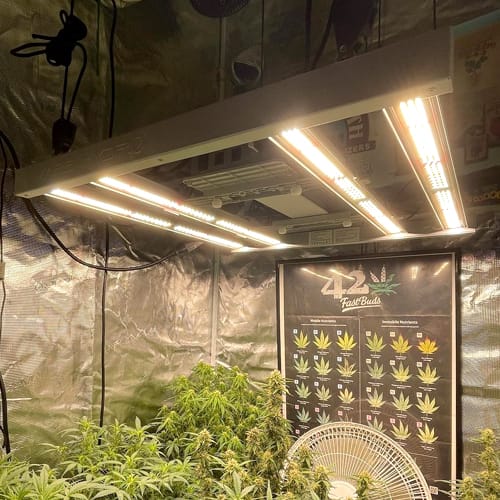
Useful bar-style options: The FC and FC-E ranges use distributed bar layouts, which become more relevant as canopy size increases and even light distribution matters more.
UK availability: Common Mars Hydro models are regularly available through UK-facing sellers and local stock, making the brand easier to buy than some grow lights that rely mainly on overseas imports.
Where Mars Hydro Falls Short
Mars Hydro’s biggest weakness is revision confusion. Model names can stay the same while wattage, LEDs, controls or other hardware change. The TS3000 is a clear example, with older 450W versions still widely referenced alongside the current 420W model. FC3000 specifications can also vary by market or remaining stock.
Official information can be inconsistent: Mars Hydro’s documentation is not always perfectly aligned. We found conflicting TS600 warranty wording, while the formal return policy and FAQ also give different return periods. Retailer listings can lag behind newer revisions too.
Controls vary by model and revision: Dimming, RJ12 connections, app support and external controllers cannot be assumed from the range alone, and some functions require additional hardware.
Smart features are secondary: Mars Hydro offers useful control options, but app feedback is mixed. Output, coverage, reliability and price should come first.
Overall, Mars Hydro rewards checking the exact current listing rather than buying on the model name alone.
Mars Hydro TS vs FC vs FC-E
Mars Hydro’s range is easiest to understand by separating its three main families.
| Range | Design | Position | Best suited to | Key trade-off |
| TS | Panel/reflector | Lower cost | Compact and budget-focused setups | Low entry price, but less distributed coverage |
| FC-E | Multi-bar | Value to mid-range | Medium and larger canopies | Bar-style coverage for less than FC, but revision details vary |
| FC | Multi-bar | Higher within Mars Hydro | Buyers wanting the higher-spec range | Stronger published specifications at a higher price |
The TS range is the cheapest route into Mars Hydro and suits smaller spaces or tighter budgets. FC-E moves to a multi-bar layout for broader, more even coverage without stepping straight up to FC pricing. FC sits higher in the line-up, with stronger published specifications but more cost and greater potential for regional or revision differences.
These labels are useful starting points, but the exact model still matters most. For more detail on coverage, PPFD and fixture layout, see our guide to choosing an LED grow light.
Which Mars Hydro Lights Are Worth Considering?
These models are examples of how the current Mars Hydro range scales rather than a ranked shortlist.
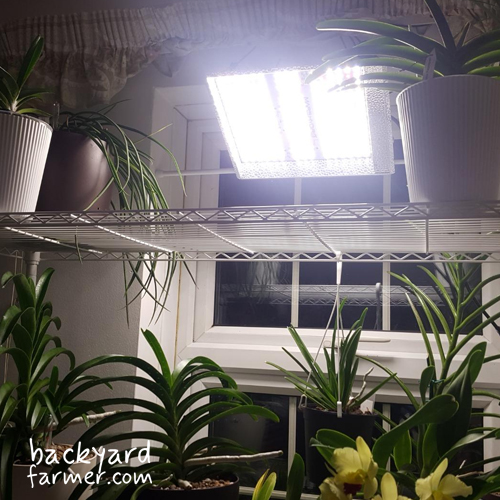
Mars Hydro TS600 — Compact and Low Cost
The current TS600 is a 100W fixture aimed at smaller growing areas, seedlings, herbs and salad crops. The latest version is dimmable, unlike older revisions. Its main strength is the low entry price; its limitation is the relatively small practical growing area.
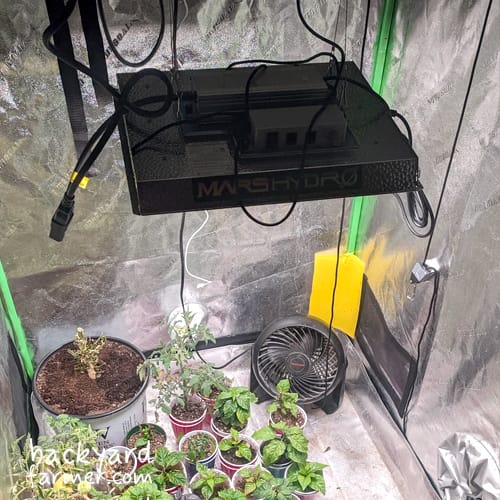
Mars Hydro TS1000 — Compact All-Rounder
At 150W, the TS1000 is a useful step up for compact home setups without moving to a much larger fixture. The current version uses Bridgelux LEDs. See our [full Mars Hydro TS1000 review] for a closer look.
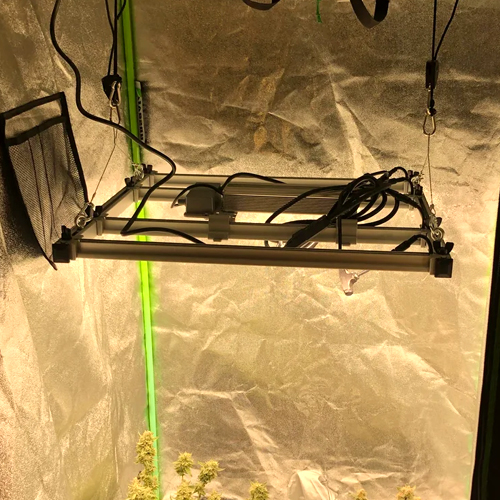
Mars Hydro FC-E3000 — Medium Bar-Style Option
The 300W FC-E3000 uses a distributed multi-bar layout, making it a useful step up for growers who need broader coverage. It represents the value-focused side of Mars Hydro’s bar-light range.
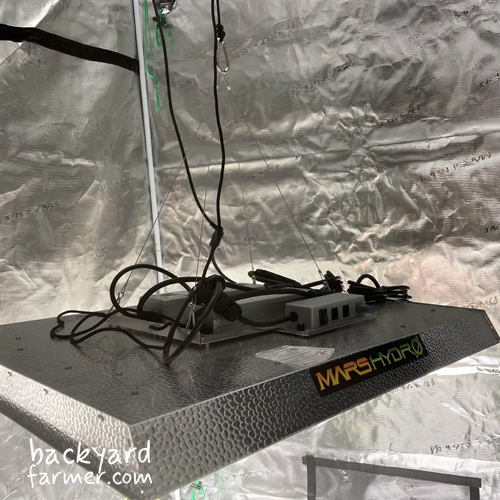
Mars Hydro TS3000 — Lower-Cost Larger Fixture
The current TS3000 is rated at 420W, although older 450W versions remain widely referenced online. It is a good example of why current specifications matter. For larger setups, see our 4×4 grow-light guide.
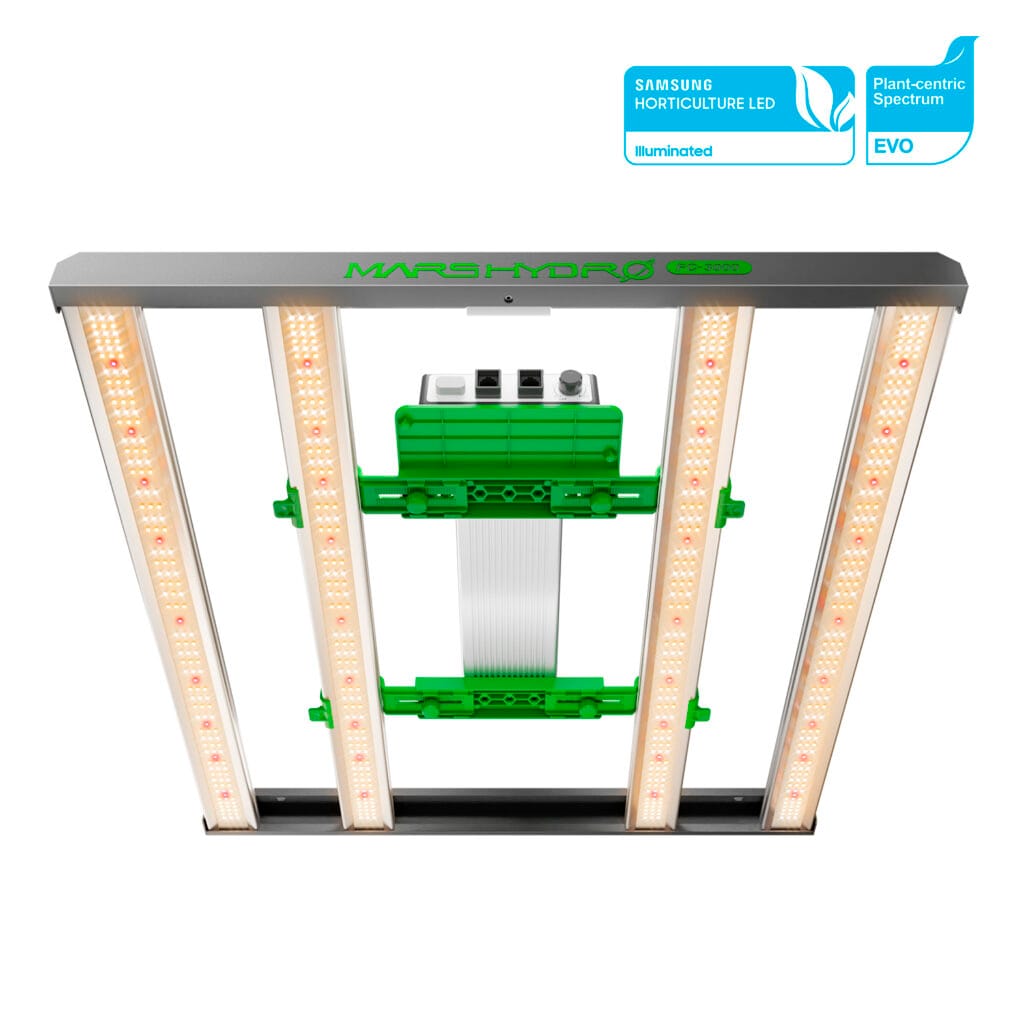
Mars Hydro FC3000 — Higher-Spec Bar Option
The 300W FC3000 represents the higher-spec FC range. Current versions sit above FC-E in Mars Hydro’s line-up, but diode configurations can vary between revisions and regional stock, making the exact listing particularly important.
These examples show how the range scales; the best choice still depends on the size and demands of your growing area.
How Long Do Mars Hydro Grow Lights Last?
Mars Hydro lists a 50,000-hour rated life for many of its LED grow lights, but this is not a guarantee that the complete fixture will run trouble-free for that long. LEDs are only one part of the system; drivers, controllers, connectors and other electronics can fail independently.
Operating conditions matter too. Excess heat and poor ventilation can place additional stress on components over time.
For buyers, the warranty on the exact model is therefore a more useful measure of protection than converting a 50,000-hour rating into an expected number of years.
Mars Hydro Warranty and UK Support
Most of Mars Hydro’s main grow-light ranges currently carry a five-year limited warranty, although protection becomes more limited after the first year. Terms can also vary by model.
The TS600 is a good example: Mars Hydro’s current documentation gives conflicting two- and five-year warranty wording. Its formal return policy and FAQ also list different return periods, while Amazon and other retailers may apply their own terms.
Before buying, check the warranty shown on the exact listing, save your proof of purchase and keep a record of the model and serial number. Treat retailer return rights and the manufacturer warranty as separate protections.
For Mars Hydro, the warranty attached to the exact product listing is more useful than a generic brand-wide promise.
What to Check Before Buying a Mars Hydro Grow Light
Mars Hydro changes specifications between revisions, so check the exact fixture rather than relying on the model name alone.
Before ordering, confirm:
- The model, revision and current wattage.
- The LED type, if it matters to your comparison.
- Dimmer, controller and app functions, including any extra module required.
- The practical growing footprint.
- The current warranty, UK price and seller.
- That the product images and specifications appear to describe the same version.
Do not assume an older review still applies simply because the model name has stayed the same.
Where possible, compare the retailer listing with Mars Hydro’s current product page. If the wattage, LEDs or controls conflict, ask the seller to confirm exactly which version they are supplying.
Mars Hydro vs Spider Farmer
Mars Hydro and Spider Farmer compete across much of the same market, from compact board-style fixtures to larger multi-bar lights. Mars Hydro has a particularly low-cost entry point through its TS range, while both brands offer higher-output options for broader canopies.
Older comparisons based mainly on Samsung LEDs or specific driver brands are no longer reliable. Both manufacturers change components, controls and revisions over time, and their headline warranties are now broadly similar on major ranges.
The better approach is to compare the exact fixtures that suit your space on price, output, coverage, controls and warranty rather than declaring one brand universally better.
Compare Mars Hydro and Spider Farmer model by model rather than choosing from brand reputation alone.
Are Mars Hydro Grow Lights Worth It?
Mars Hydro is a credible value-focused brand rather than an automatic best choice.
Mars Hydro makes sense if:
- Price matters.
- You want an established manufacturer.
- A TS or FC-E fixture suits your growing area.
- You are happy to check the exact current revision before buying.
Consider another option if:
- You want a very specific component package.
- Seamless smart control is a priority.
- Another fixture offers better coverage for your space.
The TS range is strongest at the budget end, while FC-E offers good value for bar-style lighting. FC is worth considering where the specification of the exact model justifies the extra cost.
Frequently Asked Questions
Yes. Mars Hydro has models suitable for propagation, herbs, leafy crops and fruiting vegetables such as chillies and tomatoes. Match the fixture to the mature canopy rather than relying on a simple plant count.
See our guide to growing vegetables under artificial light for more on crop suitability.
Mars Hydro is better described as value-focused than purely budget. TS sits mainly at the lower-cost end, FC-E covers value and mid-range bar lighting, while FC sits higher in the range.
Some models support app or controller functions, but this varies by model and revision. Certain fixtures also require an additional controller or Bluetooth module, so check the current listing before buying.
Yes. Like any sufficiently powerful grow light, a Mars Hydro fixture can provide excessive light or contribute to local heat if the setup is poorly matched. There is no universal safe hanging distance.
See signs a grow light may be too close for a practical diagnosis guide.
Conclusion
Mars Hydro remains a credible choice for UK home growers, particularly if value and a broad range of fixture sizes matter. TS is strongest at the lower-cost end, while FC-E offers an accessible route into bar-style lighting.
The main caution is revision changes, so check the exact specifications of the model currently on sale and match it to your growing area rather than buying on brand name alone.
Still comparing options? See our Best LED Grow Lights UK guide.