
This free online vegetable garden planner helps Washington growers plan raised beds, backyard vegetable gardens, community gardens, and P-Patch plots before planting.
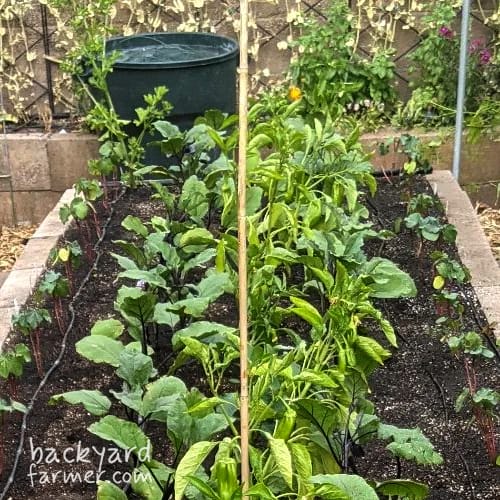
Growing conditions vary widely across the state. Western Washington is generally milder and wetter, while Eastern Washington tends to be drier, with hotter summers, colder winters, and shorter growing windows in many areas.
Use the planner to test your layout, organise crop spacing, and plan how beds will be used through the season. It gives you a flexible structure you can adapt to your own soil, weather, elevation, and microclimate.
Why Garden Planning Matters in Washington
Washington’s growing conditions can change dramatically across relatively short distances. The Cascade Range creates one of the biggest divides:
- Western Washington has a milder maritime climate, generally higher rainfall and longer, cooler growing seasons.
- Eastern Washington is typically drier, with hotter summers, colder winters and shorter growing windows in many areas.
Elevation, exposure, soil and local microclimates can create further differences even within the same region.
Because of this variation, planning a vegetable garden in Washington is less about following one statewide planting schedule and more about adapting your layout and timing to the conditions where you actually grow.
A clear garden plan can help you:
- Choose crops that suit your available growing season
- Leave enough space for airflow, access and drainage
- Plan sowing and succession planting around your local growing window
- Avoid overcrowding that can increase plant stress and disease pressure
The aim isn’t to create a rigid plan. It’s to give yourself a practical starting point that can change as the season develops.
What This Free Vegetable Garden Planner Helps You Do
The planner gives you a simple way to test a garden layout before you start planting. Rather than forcing Washington gardens into one fixed schedule, it helps you organise the space and adapt the plan to your own growing conditions.
You can use it to:
- Visualise your garden layout before planting
- Plan realistic crop spacing for airflow and access
- Plan succession planting so beds can be reused through the season
- Make better use of limited space in raised beds, backyards, and community gardens
The aim is to create a practical layout you can adjust as the season develops, rather than a rigid plan you have to follow exactly.
How to Use the Planner for Washington Gardens
This online vegetable garden planner is designed to be straightforward, flexible, and easy to adapt — which suits the way many Washington gardens actually behave. Rather than entering endless data or following strict rules, use it as a garden planning tool to shape a plan that fits your space, your region, and how you grow food.
1. Set up your growing space
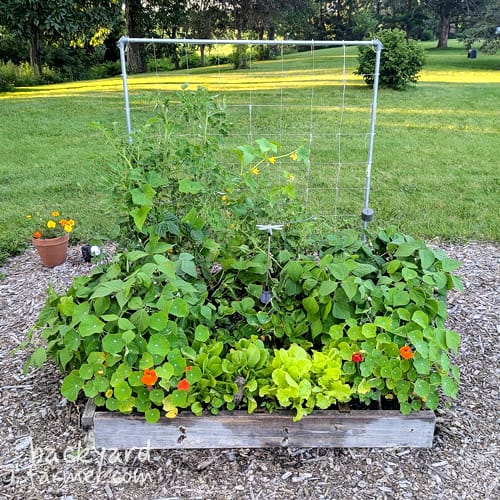
Start by sketching the space you actually have. This might be a single raised bed, several beds with paths between them, or a community garden or P-Patch plot.
The layout does not need to be perfectly measured. Approximate proportions are enough to test how crops, paths, and growing areas fit together before you plant.
2. Add crops and test layouts
Add the crops you want to grow and experiment with different layouts before committing them to the ground.
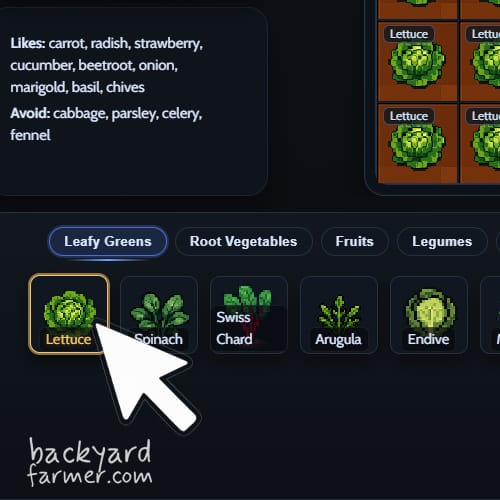
Think about:
- Mature plant spacing
- Airflow between crops
- Access for watering, weeding, and harvesting
- Whether crops are grouped in a practical way
The goal is not a perfect design. It is to spot overcrowding or awkward layouts while they are still easy to change.
3. Think seasonally, not just once
A vegetable garden changes throughout the year, so plan for more than the first round of planting.
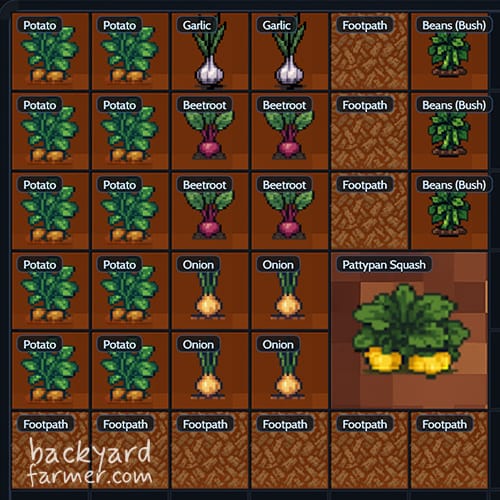
Use the layout to think about:
- Which crops will finish first
- Where later crops can replace them
- Which beds need space left for succession planting
This is especially useful where the growing season is shorter, including parts of Eastern Washington and higher-elevation gardens, where planting windows can be tighter.
4. Adjust for your local conditions
Use the plan as a starting point, then adapt it to what happens in your own garden.
Rainfall, soil, exposure, elevation, frost dates, and local microclimates can all affect how a layout performs. A wetter garden may need more airflow and drainage, while a shorter growing season may need tighter succession planning.
The planner gives you the structure; you bring the local knowledge. That makes it easier to refine the layout as you learn what works in your own growing space.
Washington Growing Conditions to Plan Around
Washington’s varied climate means the same garden layout will not work equally well everywhere. These are some of the main conditions worth accounting for when planning your space.
Moisture, Drainage and Airflow
In Western Washington, regular rainfall, higher humidity, and heavier soils can make moisture management especially important.
When planning your layout:
- Leave enough space between crops for good airflow
- Avoid overcrowding, particularly around dense leafy growth
- Think about drainage when positioning beds and paths
Raised beds can help improve drainage and may warm earlier in spring, but they can also dry out faster during warmer spells. A flexible layout makes it easier to adjust spacing and planting as conditions change.
Soil Warmth and Spring Timing
Mild spring air temperatures do not always mean the soil is ready for planting. Cool or wet ground can slow growth and delay more temperature-sensitive crops.
Rather than filling every bed at once, leave some flexibility in the plan. This allows you to:
- Delay sensitive crops if the soil remains cold
- Stagger sowings and plantings
- Keep space available for later crops
Planning this way makes it easier to respond to the season rather than relying on one fixed planting date.
Shorter Seasons East of the Cascades and at Elevation
In parts of Eastern Washington and at higher elevations, the growing season can be much tighter. Late spring frosts, earlier autumn frosts, and larger temperature swings can all reduce the time available for crops to mature.
When planning these gardens:
- Prioritise crops that can finish within the available season
- Use succession planting carefully
- Avoid committing all of your growing space too early
A clear layout helps you see where later crops can fit and where space should remain flexible as the season develops.
Use the Free Vegetable Garden Planner
The BYF planner is a standalone garden planning app. It doesn’t provide a fixed Washington planting calendar or decide when every crop should be sown. Instead, it gives you the space to build a layout, test crop spacing and organize successive plantings around the conditions where you actually grow.
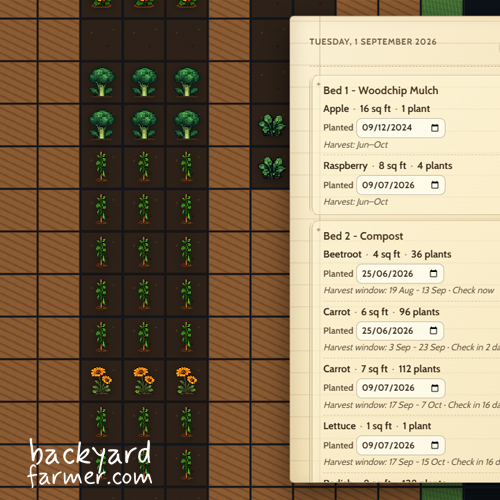
- Sketch raised beds, backyard plots or community garden spaces
- Test crop spacing before planting
- Plan succession and later-season crops
- Adjust your layout as conditions change
No signup. No subscription.
Who This Planner Is For
This Washington vegetable garden planner is a good fit if you:
- Grow in a backyard, raised bed, community garden, or P-Patch plot
- Want to test layouts before planting
- Need flexibility around local weather, frost, and growing-season differences
- Prefer a free planning tool without a subscription
You do not need perfect conditions or expert-level knowledge to use it. Start with a practical layout, then refine it as you learn how your own garden behaves through the season.
Washington Vegetable Gardening Resources
The planner is designed to help you organize your garden layout, crop spacing and succession planting. For Washington-specific planting dates, crop advice and local growing conditions, use it alongside guidance from Washington State University Extension.
Local Extension advice is especially useful where frost dates, elevation, rainfall or growing-season length differ from the wider regional picture.
Think of the two resources as complementary: use WSU Extension for local horticultural guidance, and the BYF planner to turn that information into a practical garden layout.