
Sweet peppers need a long, warm growing season, making them difficult to grow outdoors in the UK, particularly further north.
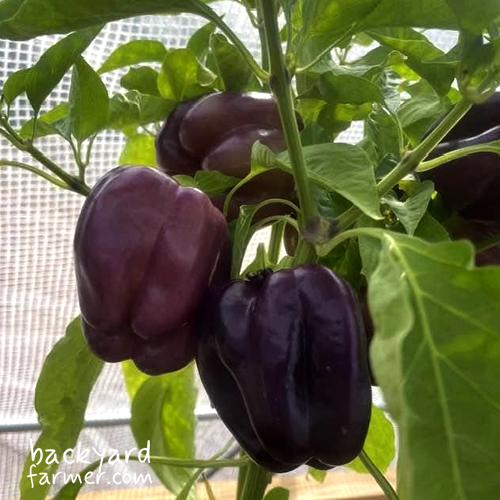
In my experience growing in the North West, an unheated greenhouse or polytunnel offers a much more reliable way to get a worthwhile harvest.
The key is to start plants early, choose varieties suited to Britain’s shorter summers and wait until greenhouse temperatures are warm enough before planting out.
Here’s how to grow sweet peppers under cover, from sowing seeds through to harvesting.
Can You Grow Sweet Peppers in an Unheated Greenhouse?
Yes. An unheated greenhouse is one of the most practical ways to grow sweet peppers in the UK.
It provides shelter from cold winds and creates warmer daytime conditions, giving plants a better chance of developing and ripening fruit than they would outdoors.
However, an unheated greenhouse isn’t frost-proof. Temperatures can fall sharply overnight, even after a warm spring day.
This is particularly important in northern England, Scotland and exposed locations, where spring temperatures can remain unpredictable.
You don’t need to heat your greenhouse throughout the growing season, but you do need to start plants somewhere warm and avoid moving them under glass too early.
Best Sweet Pepper Varieties for UK Greenhouses
Variety choice can make a considerable difference to your harvest.
Large, blocky bell peppers can take longer to develop and ripen, while compact or relatively early-cropping varieties may be more rewarding during Britain’s shorter growing season.
These four varieties are worth considering for greenhouse growing.
| Variety | Pepper type | Why grow it? |
|---|---|---|
| Gypsy F1 | Tapered sweet pepper | Early-cropping variety suited to shorter growing seasons |
| Mohawk F1 | Compact bell-type | Bushy plants producing orange peppers, ideal for pots |
| Redskin F1 | Compact bell-type | Dwarf plants producing red peppers in limited space |
| Corno di Toro Rosso | Long pointed pepper | Sweet, thin-skinned fruit offering an alternative to large bells |
For a small greenhouse, I’d favour compact varieties such as Mohawk or Redskin. If you have more space, Gypsy and Corno di Toro Rosso offer different fruit shapes and growing habits.
None of these varieties is frost-hardy. Even relatively early peppers still need suitable temperatures to produce a good crop.
When to Sow Sweet Pepper Seeds in the UK
For greenhouse growing, mid-February to early March is a useful sowing window, provided you have somewhere warm and bright to grow the seedlings.
- Fill small pots or seed trays with moist seed compost.
- Sow seeds approximately 5–10mm deep and cover lightly.
- Keep them warm, ideally around 18–21°C for germination.
- Once seedlings appear, provide plenty of light and keep the compost lightly moist.
- Once seedlings have developed two true leaves, move them into individual 7.5–9cm pots, keeping them warm and in bright light.
A heated propagator can help with germination, but it isn’t essential if you have a reliably warm location.
The challenge with very early sowing is keeping plants healthy afterwards. Without enough light, February seedlings can become weak and leggy.
If you’re relying on a windowsill, March sowing may be easier to manage.
Alternatively, buying young plants in spring is a practical option if you don’t have the space or equipment to start seeds yourself.
For more on growing peppers inside the home, see our Indoor Pepper Growing Guide.
When to Move Sweet Peppers into an Unheated Greenhouse
Moving peppers into an unheated greenhouse too early can slow their growth considerably.
Mid-May is a useful starting point for planting into an unheated greenhouse, but it’s not a fixed deadline. Wait until overnight temperatures are suitable and the greenhouse is no longer experiencing damaging cold.
Sweet peppers prefer warm conditions, generally growing best above 15°C. Night temperatures around 12°C are a useful guide, although prolonged cold can still stress the plants.
Before moving your plants permanently:
- Check overnight temperatures. Use a minimum–maximum thermometer to see how cold the greenhouse gets.
- Watch for frost. Don’t assume plants are safe simply because they’re under glass.
- Acclimatise gradually. Introduce plants to greenhouse conditions over several days.
- Wait for suitable nights. Delay permanent planting if temperatures remain consistently cold.
- Keep protection available. Fleece may help during brief cold spells, but won’t reliably protect peppers from a hard frost.
Growing Sweet Peppers in Northern England and Scotland
In cooler regions, late May or even early June may be a more suitable time for permanent greenhouse planting.
This is particularly relevant to exposed allotments, where temperatures can fall quickly overnight.
If you have space, potted peppers can spend suitable days in the greenhouse before being brought back indoors at night.
A healthy plant that continues growing steadily is preferable to one that spends weeks struggling in cold conditions.
Growing Sweet Peppers in Pots or Greenhouse Borders
Sweet peppers grow well in containers, growing bags and greenhouse soil.
| Pots | Greenhouse borders |
|---|---|
| Easy to move and protect | More stable root conditions |
| Useful for small greenhouses | Suitable for larger plantings |
| Require frequent watering and feeding | Depend on good soil preparation |
Growing Sweet Peppers in Pots
Choose a container at least 30cm wide, with sufficient depth for healthy root growth and drainage holes at the bottom.
Fill it with good-quality peat-free multipurpose compost and plant one pepper in the centre, at the same depth it was growing previously.
Larger containers hold more compost and usually dry out less quickly, making watering easier during hot weather.
Growing Sweet Peppers in Greenhouse Soil
Prepare fertile, well-drained soil, incorporating well-rotted compost where necessary.
Space most varieties approximately 38–45cm apart, allowing more or less room depending on their mature size.
Keep plants well spaced to allow light and airflow around the foliage.
Standard growing bags can also be used, typically accommodating two or three plants depending on their size and the available compost volume.
If you’re planning your greenhouse layout, the free BYF Allotment Planner can help you allocate growing space and work out where crops will fit before planting.
How to Care for Greenhouse Sweet Pepper Plants
Once established, sweet peppers are fairly straightforward to maintain. Consistent watering, appropriate feeding and good greenhouse ventilation are the main priorities.
Watering
Keep compost or soil evenly moist without leaving it waterlogged.
During warm weather, check containers regularly, as they can dry out quickly.
Water thoroughly when needed, allowing excess water to drain away. Avoid repeatedly letting plants become extremely dry before soaking them.
Mulching greenhouse borders can help maintain more even moisture levels.
Feeding
Once flowers begin appearing, feed container-grown plants with a high-potassium liquid fertiliser, such as a suitable tomato feed.
Weekly feeding is common during fruiting, but follow the product instructions rather than applying unnecessarily strong concentrations.
Plants growing in greenhouse soil may need additional feeding depending on soil fertility and how well they’re growing.
Ventilation and Temperature
Sweet peppers enjoy warmth, but excessive greenhouse heat can interfere with fruit development.
Open greenhouse vents and doors as temperatures rise rather than waiting for the greenhouse to become excessively hot. Temperatures above approximately 30°C can interfere with fruit set.
Temporary shading may also be useful during very hot spells.
Good ventilation reduces stagnant, humid conditions and helps keep plants healthy.
Supporting and Pruning
Plants carrying heavy peppers may benefit from a bamboo cane or another simple support.
Extensive pruning isn’t normally necessary.
Pinching out the growing tip can encourage bushier growth, but may delay fruiting. With the UK’s shorter growing season, there’s little reason to prune heavily unless a plant particularly needs it.
Do Sweet Peppers Need Pollinating in a Greenhouse?
Sweet peppers are self-fertile, so you don’t normally need to hand-pollinate them.
Gentle airflow or occasional movement helps release pollen within the flowers.
If flowers drop without developing fruit, check temperatures and watering first. Both excessive heat and prolonged cold conditions can interfere with fruit set.
During still weather, gently shaking the plants may help, but complicated pollination techniques are unnecessary.
When and How to Harvest Sweet Peppers
Greenhouse sweet peppers can begin producing harvestable fruit during summer, with harvesting potentially continuing into autumn.
Timing depends on the variety, sowing date and growing conditions.
Green Peppers Versus Fully Ripe Peppers
Most sweet peppers start green before developing their mature red, yellow, orange or other variety-specific colour.
You can harvest peppers once they’ve reached a usable mature size, even if they’re still green.
A mature green pepper should feel firm, look glossy and have reached roughly the expected size for its variety. Small, thin, undeveloped peppers are best left on the plant while conditions remain suitable.
Green peppers tend to have a less sweet, slightly sharper flavour. Leaving them to develop their final colour usually produces sweeter fruit.
However, waiting for every pepper to ripen fully may limit further production, particularly late in the season.
Removing mature fruit can allow the plant to direct resources towards remaining peppers, although the effect depends on growing conditions and the time available.
Use sharp scissors or secateurs to cut peppers from the plant without damaging the stems.
What if Your Peppers Haven’t Ripened by Autumn?
This is a common frustration for UK growers.
As daylight decreases and temperatures fall in September and October, ripening slows considerably.
If your plants still have healthy fruit:
- Keep them somewhere warm and bright while conditions allow.
- Protect plants from cold nights.
- Harvest ripe peppers promptly.
- Pick usable mature green peppers before temperatures become damaging.
Container-grown plants can sometimes be moved into a bright, warmer indoor location to extend the growing season.
However, small, immature peppers are unlikely to develop into fully grown fruit after picking.
A worthwhile harvest of green peppers is better than losing the crop while waiting for everything to turn red.
Common Sweet Pepper Growing Problems
Most greenhouse pepper problems can be traced to temperatures, watering, nutrition or pests.
| Problem | What to check first | What to do |
|---|---|---|
| Plants stop growing after transplanting | Cold nights or root stress | Check greenhouse temperatures and soil moisture |
| Flowers drop without fruiting | Heat, cold or moisture stress | Improve ventilation and watering consistency |
| Peppers won’t turn red | Variety, maturity and warmth | Allow more time or harvest mature green fruit |
| Dark, sunken patches on fruit bottoms | Blossom end rot | Improve moisture consistency |
| Lower leaves turning yellow | Watering or nutrient problems | Check compost moisture and feeding |
| Sticky or distorted new growth | Aphids or other sap-feeding pests | Inspect leaf undersides and manage infestations |
Blossom End Rot
Blossom end rot causes dark, sunken patches near the bottom of developing peppers.
Although the problem involves poor calcium supply to the developing fruit, it’s frequently associated with inconsistent water uptake rather than a shortage of calcium in the soil.
Improving watering consistency is usually the best place to start. Adding calcium fertiliser isn’t automatically necessary.
Greenhouse Pests
Aphids, whitefly and red spider mites can affect greenhouse peppers.
Inspect new shoots and leaf undersides regularly, particularly during warm weather.
Dealing with small infestations early is much easier than controlling established pest populations.
Can Sweet Peppers Grow Outdoors in the UK?
Yes, sweet peppers can grow outdoors in Britain, but harvests are less predictable.
Warm, sheltered southern gardens offer the best chance, especially when plants are grown in pots against sunny, south-facing walls.
Further north and in exposed locations, cooler temperatures can make it difficult to produce and ripen fruit before autumn.
If you want to try outdoor growing, choose a compact or relatively early variety and wait until nights are reliably warm.
For a more dependable harvest, an unheated greenhouse or polytunnel remains the better option for most UK gardeners.
Frequently Asked Questions
Yes. An unheated greenhouse provides useful warmth and shelter. Start plants indoors and wait until overnight greenhouse temperatures are suitable before moving them into their final growing positions.
Mid-May is a typical starting point, although northern growers may need to wait until late May or June. Check greenhouse temperatures and frost risk rather than relying on a fixed date.
Sweet peppers need several months from sowing to harvesting. Seeds started in February or March may produce harvestable fruit from July or August, although cooler conditions and later varieties can delay ripening.
A reasonably deep pot at least 30cm wide is a useful starting point. Larger containers may help vigorous varieties and reduce how frequently the compost dries out.
Peppers often remain green while immature and develop their final colour later. Ripening depends on variety, warmth and time. During cooler summers, some peppers may not fully change colour before autumn.
Sweet peppers are self-fertile and generally don’t need hand pollination. Normal greenhouse airflow is often enough, although gently shaking flowering plants can help release pollen.
Yes, particularly in warm, sheltered gardens. However, large bell peppers can be difficult to ripen outdoors in cooler northern regions. A greenhouse or polytunnel usually provides more reliable conditions.