
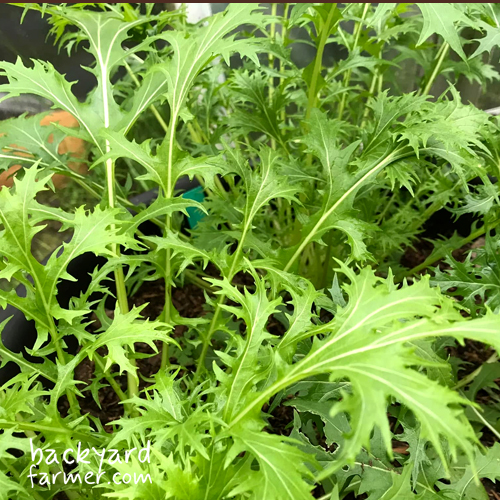
Mizuna is a fast-growing Japanese salad green with mildly peppery leaves, ideal for vegetable beds, raised beds and containers. It thrives in the UK’s cooler weather, with successive sowings providing fresh leaves from spring into winter under suitable conditions.
When to Sow Mizuna in the UK
Mizuna can be sown outdoors from March to August, with additional autumn sowings possible under protection. It prefers cool, moist conditions, making spring and late summer particularly useful growing periods.
Hot, dry weather can encourage premature flowering, so summer crops benefit from light shade and consistent watering.
| Season | Sowing and Growing Advice |
|---|---|
| Spring (March–May) | Start indoors early or sow directly outdoors when conditions allow. |
| Summer (June–July) | Sow in light shade during hot weather and maintain soil moisture. |
| Autumn (August–October) | Establish plants in August or September for autumn harvesting and overwintering under protection. |
| Winter (November–February) | Harvest established plants where conditions allow. Fresh growth is much slower. |
For a continuous supply, sow small batches every two to three weeks rather than one large crop.
Autumn sowings are particularly worthwhile because cooler conditions generally favour tender leaf production with less risk of heat-induced bolting.
Use the UK Vegetable Planting Calendar to plan mizuna alongside your other crops.
My pick: Mizuna ‘Waido’
A fast-growing, cold-tolerant variety producing tender, mild-flavoured leaves for salads and stir-fries. A reliable choice for repeated cut-and-come-again harvesting in UK gardens and allotments.
How to Grow Mizuna from Seed
Mizuna can be sown directly into prepared soil or started in modules before transplanting.
Direct sowing is simplest during spring and summer, while modules are useful for protecting young seedlings and establishing autumn crops before planting under cover.
- Prepare the soil: Remove weeds and rake the surface to a fine texture. Add well-rotted garden compost if needed.
- Make a shallow drill: Create a row 0.5–1 cm deep. For leaf crops, space rows approximately 23 cm apart.
- Sow the seeds: Scatter thinly, cover lightly with soil and water gently.
- Keep moist: Maintain moisture until germination, which usually takes around a week in suitable conditions.
- Thin the seedlings: Remove overcrowded plants to achieve the spacing needed for your intended harvest.
For module sowing, place two or three seeds in each cell of peat-free seed compost, thinning to the strongest seedling after germination.
Keep seedlings somewhere bright and sheltered, then gradually acclimatise them to outdoor conditions before transplanting.
Mizuna Plant Spacing
Spacing depends on whether you want tender salad leaves or larger plants for repeated harvesting.
| Harvest Type | Plant Spacing |
|---|---|
| Baby salad leaves | 10–15 cm |
| Larger leaves | Around 20 cm |
| Full-sized plants | 30–40 cm |
Closer spacing works well for young leaves harvested regularly. Larger plants need more room to develop their spreading rosettes.
Growing Mizuna in Pots and Raised Beds
Mizuna grows well in containers, making it useful for patios, balconies and smaller gardens.
Choose a pot at least 30 cm wide with drainage holes and fill it with peat-free multipurpose compost.
A container this size can accommodate several closely spaced baby-leaf plants, while full-sized mizuna plants need considerably more growing space.
Position containers somewhere sunny in cooler weather, with light afternoon shade during hot spells.
Raised beds are equally suitable, particularly for short rows or small blocks of mizuna grown alongside other vegetables.
Its quick growth also makes mizuna useful for filling temporary gaps between slower-growing crops.
Planning your growing space? Use the free BYF Allotment Planner to organise your vegetable beds, plan crop spacing and make room for successive sowings.
Caring for Mizuna Plants
Mizuna needs relatively little maintenance once established, although steady moisture is important for producing tender leaves.
Watering and Feeding
Keep the soil evenly moist, particularly during dry weather and while young plants are establishing.
Container-grown mizuna may need more frequent watering because compost dries out faster than garden soil.
In reasonably fertile soil improved with garden compost, additional feeding is rarely necessary. Fresh compost between container crops can help maintain growing conditions.
A light mulch around larger plants helps retain moisture and suppress weeds, while regular weeding prevents competition around younger crops.
Check plants regularly for pest damage, particularly during their early growth.
When and How to Harvest Mizuna
Mizuna is a quick-growing salad crop, with young leaves often ready approximately four weeks after sowing in suitable conditions.
Larger plants generally take six to eight weeks, although growth slows during colder weather.
Harvesting Baby Leaves
Begin harvesting when the plants are established and the leaves are approximately 8–10 cm tall.
Pick a few healthy outer leaves from each plant, leaving the central growing point intact so fresh foliage can develop.
Regular, light harvesting allows plants to continue producing tender leaves without removing too much growth at once.
Cut-and-Come-Again Harvesting
For a larger harvest, cut the foliage approximately 5 cm above soil level, taking care not to damage the growing centre.
Healthy plants may produce several flushes of new leaves, particularly during mild spring and autumn weather.
Alternatively, harvest the entire plant when it reaches the desired size.
Larger mizuna leaves develop a stronger mustard flavour and firmer texture, making them suitable for stir-fries, soups and lightly cooked dishes.
For seasonal harvesting information, see the UK Harvest Calendar.
Growing Mizuna Through Winter in the UK
Mizuna is relatively cold-tolerant and can provide fresh leaves during autumn and winter, particularly when plants are established before temperatures fall.
However, surviving winter and producing new growth are not the same thing.
As daylight and temperatures decrease, growth slows considerably. Established plants may remain harvestable for weeks without producing substantial new foliage.
Outdoor Winter Growing
In mild or sheltered UK gardens, established mizuna plants can survive outdoors through much of winter.
Some UK allotment growers report successful outdoor overwintering, although results vary depending on local weather, drainage and exposure.
To improve your chances:
- Sow during August or early September to establish strong plants before winter.
- Choose a sheltered position with well-drained soil.
- Protect plants with horticultural fleece during colder weather.
- Harvest sparingly when growth slows.
- Remove damaged or decaying leaves.
Severe or prolonged frost can damage or kill plants, so outdoor overwintering is not guaranteed.
Growing Mizuna Under Cover
A polytunnel, unheated greenhouse or cold frame provides more reliable winter protection.
Late-summer and early-autumn sowings can be transplanted into these spaces as summer crops finish, making mizuna a useful follow-on crop after tomatoes and other warm-season vegetables.
Fleece or cloches can also extend harvesting from outdoor beds.
The key is establishing healthy plants before winter. Seeds sown during December or January may grow too slowly to provide a worthwhile harvest until conditions improve.
Overwintered plants often produce stronger growth as spring approaches, although they may begin flowering as daylight increases.
Common Mizuna Growing Problems
Although mizuna is generally straightforward to grow, pests and premature flowering can reduce the harvest.
| Problem | Likely Cause | Practical Solution |
|---|---|---|
| Small holes in leaves | Flea beetles | Protect plants early with fine insect-proof mesh. |
| Seedlings disappearing | Slugs or snails | Inspect regularly and protect young plants. |
| Premature flowering | Heat, drought, cold stress or seasonal changes | Maintain moisture and make replacement sowings. |
| Slow winter growth | Low temperatures and limited daylight | Establish crops earlier and harvest sparingly. |
| Yellowing or stunted plants | Watering, drainage, nutrient or root problems | Check soil conditions and inspect plant roots. |
Flea Beetles and Slugs
Flea beetles are particularly troublesome because they create numerous small holes in mizuna leaves, especially during warmer, drier weather.
Fine insect-proof mesh, with openings around 0.8 mm or smaller, can help prevent damage. Fit it early, secure the edges and check that pests are not already underneath.
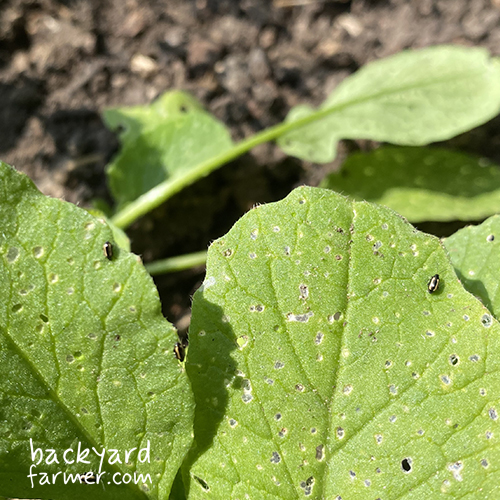
Slugs and snails are more likely to damage young seedlings, sometimes removing entire plants before they establish.
Starting seeds in modules gives seedlings a head start, although transplanted plants still need protection.
Mizuna Bolting Too Early
Bolting occurs when mizuna starts producing flower stems rather than concentrating on leaf growth.
Heat, drought, cold stress and increasing spring daylight can all contribute.
Keeping plants watered, providing light shade during summer and making regular sowings helps maintain a supply of tender leaves.
Once flowering begins, leaf production and quality generally decline, so replacing older plants with a fresh crop is often the most productive approach.
As mizuna belongs to the brassica family, include it in crop rotation planning, particularly where clubroot has previously affected the soil.
Frequently Asked Questions
Yes. Mizuna grows well in partial shade, particularly during hot weather when protection from strong afternoon sun can reduce stress. Deep shade, however, slows growth and reduces leaf production.
No. Mizuna is generally grown as an annual leafy vegetable, although it can behave as a biennial. Most gardeners replace plants once they flower or stop producing worthwhile leaves.
Yes. The leaves remain edible, although they may become stronger in flavour and less tender. Mizuna flower buds and flowers are also edible and can be used in salads or lightly cooked dishes.
Both are closely related Japanese brassicas. Mizuna produces deeply serrated, feathery leaves, while mibuna has long, narrow, smooth-edged leaves. Both have a mild mustard flavour and can be grown for salad leaves or cooking.