
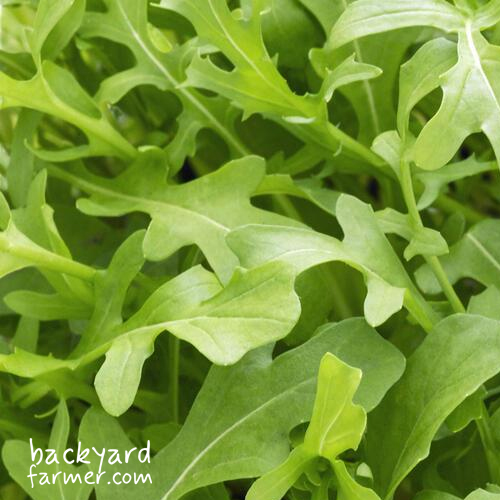
Rocket is one of the easiest salad leaves to grow in the UK, producing fresh, peppery leaves in around four to six weeks.
It grows well in vegetable beds, allotments, raised beds and containers, making it suitable for gardens of almost any size.
Rocket performs particularly well during the cooler conditions of spring and autumn. With regular sowing and a little protection from pests, you can enjoy repeated harvests throughout much of the growing season.
Salad Rocket vs Wild Rocket
There are two main types of rocket grown in the UK: salad rocket and wild rocket.
Both produce peppery, edible leaves, but they differ in growth rate, flavour and lifespan.
| Feature | Salad Rocket | Wild Rocket |
|---|---|---|
| Botanical name | Eruca vesicaria subsp. sativa | Diplotaxis tenuifolia |
| Lifespan | Annual | Perennial |
| Growth | Fast | Slower |
| Flavour | Mild to peppery | Stronger, more peppery |
| Leaves | Broad and tender | Narrow and deeply divided |
| Harvesting | Several cuts before flowering | Repeated harvests over a longer period |
| Winter survival | Usually grown as a short-term crop | Established plants often survive winter |
Salad rocket is ideal for quick crops and regular sowing, although it tends to flower during hot weather.
Wild rocket takes longer to establish but can remain productive for several years. It is also more tolerant of poorer, drier soils once established.
When to Sow Rocket in the UK
Rocket prefers mild growing conditions, making spring and early autumn the most reliable times for sowing.
Seeds can generally be sown directly outdoors from April to early September. Earlier crops can be started indoors, while autumn sowings can be grown under protection.
| Month | Sowing and Growing |
|---|---|
| January | Maintain established protected crops; limited harvesting |
| February | Sow indoors for early crops |
| March | Continue sowing indoors or under protection |
| April | Begin outdoor sowing |
| May | Sow outdoors and begin harvesting |
| June | Continue sowing and harvesting |
| July | Sow in partial shade during hot weather |
| August | Sow outdoors and establish autumn crops |
| September | Early outdoor sowing; later sowings under protection |
| October | Harvest autumn crops; early protected sowing may be possible |
| November | Harvest protected crops where conditions allow |
| December | Maintain overwintering plants; limited harvesting |
In colder parts of the UK, outdoor sowing may need to begin later in spring. Any October sowings should be made under protection and will depend on suitable temperatures and available light.
Successional Sowing for Continuous Harvests
Rather than sowing one large crop, sow a short row or container every two to three weeks during suitable weather.
This keeps younger plants coming through as older ones finish producing leaves.
During particularly hot weather, rocket may bolt before providing a worthwhile harvest. Moving sowings into partial shade can help, although waiting until late summer may be more productive.
Use the UK Vegetable Planting Calendar to plan sowing and harvesting throughout the year.
Recommended Variety: Rocket ‘Apollo’
For UK gardeners wanting a reliable supply of fresh salad leaves, Rocket ‘Apollo’ is a particularly useful choice. D.T. Brown describes it as a productive, quick-growing variety with large, peppery leaves suitable for repeated harvesting in vegetable beds, raised beds and containers.
Where to Grow Rocket
Sunlight and Position
Rocket grows well in full sun or partial shade.
A sunny position is ideal during spring and autumn, while some afternoon shade can help protect plants from excessive heat during summer.
Wild rocket is generally more tolerant of poorer, drier soils once established, although both types benefit from adequate moisture.
Soil Preparation
Rocket prefers fertile, well-drained soil that retains some moisture.
Before sowing:
- Remove weeds and large stones.
- Rake the surface to create a fine seedbed.
- Incorporate well-rotted garden compost if the soil is particularly sandy or dry.
- Water the soil if conditions are dry.
Rocket is a relatively undemanding crop and generally needs little additional feeding in reasonably fertile soil.
How to Sow Rocket Seeds
Rocket is usually easiest to grow by sowing directly into its final position.
- Prepare the soil: Rake the growing area to create a fine, level surface.
- Make a shallow drill: Create a row approximately 1cm deep, or follow the depth specified on your seed packet.
- Sow the seeds: Scatter seeds thinly along the row, leaving enough space between rows for plants to develop and for harvesting.
- Cover and water: Cover lightly with soil, firm gently and water using a fine rose.
- Thin the seedlings: Once large enough to handle, thin to approximately 15cm apart for mature plants, unless your chosen variety specifies otherwise.
Seeds normally germinate within one to two weeks, often sooner when soil temperatures are suitable.
For baby leaves, rocket can be grown more closely together and harvested before plants reach their full size.
Follow the packet instructions where varieties differ. For example, D.T. Brown recommends sowing ‘Apollo’ approximately 1.5cm deep, with 30cm between rows and seedlings thinned to around 10cm apart.
Starting Rocket Indoors
Rocket can also be started indoors during February and March, or in late summer for protected autumn crops.
Sow seeds into small modules filled with moist, peat-free seed compost and place them somewhere bright.
Once established, gradually acclimatise seedlings to outdoor conditions before planting them out.
Starting in modules can help protect young plants from slugs and provide an earlier crop, although direct sowing is generally simpler during the main growing season.
If you’re growing several crops in the same bed, the free BYF Allotment Planner can help you organise your growing space.
Growing Rocket in Pots
Rocket is particularly well suited to containers, making it useful for patios, balconies and smaller gardens.
Choose a pot at least 30cm wide, with drainage holes, and fill it with peat-free multipurpose compost.
Sow the seeds thinly, cover lightly and water gently.
Place the container somewhere bright, with some afternoon shade during hot weather.
The main challenge with container-grown rocket is keeping the compost consistently moist. Pots dry out faster than garden soil, particularly during summer.
Larger containers retain moisture for longer and are generally easier to manage.
You can also grow several small batches in separate pots, replacing older plants as they finish cropping.
How to Care for Rocket
Rocket requires relatively little maintenance once established.
Watering
Keep the soil evenly moist, particularly during dry spells and while seedlings are establishing.
Allowing the soil to become excessively dry can slow growth, affect leaf quality and encourage premature flowering.
Container-grown plants may need more frequent watering during warm weather.
Avoid waterlogging, which can damage the roots.
Thinning and Feeding
Thin overcrowded seedlings to provide enough room for developing plants.
Young thinnings can be eaten as baby salad leaves rather than discarded.
Rocket generally needs no additional fertiliser when grown in reasonably fertile soil.
For repeated container sowings, replacing tired compost between crops can help maintain healthy growth.
Common Rocket Growing Problems
Although rocket is relatively easy to grow, several problems can affect leaf quality and harvesting.
Rocket Bolting Too Early
Bolting occurs when rocket starts producing flower stems rather than concentrating on leaf growth.
It is particularly common with annual salad rocket during hot, dry weather.
To reduce bolting:
- Sow mainly during spring and autumn.
- Provide partial shade during summer.
- Keep the soil consistently moist.
- Avoid overcrowding.
- Make regular replacement sowings.
Removing developing flower stems may delay flowering slightly, but it will not permanently prevent an annual plant from completing its lifecycle.
Once salad rocket has flowered heavily, replacing the plants is usually the simplest option.
Flea Beetle Damage
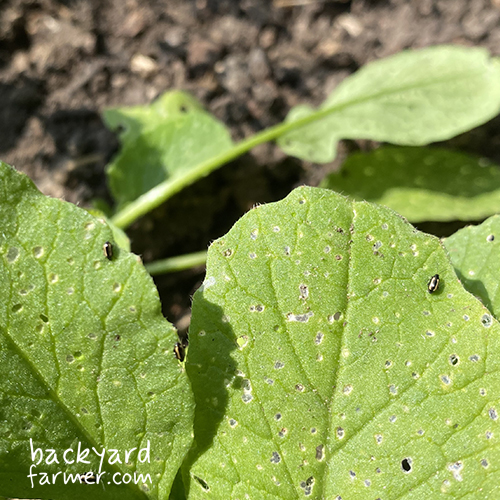
Flea beetles are among the most troublesome pests affecting rocket in UK gardens.
They feed on the leaves, leaving numerous small, rounded holes.
Established plants often tolerate minor damage, but young seedlings can be badly affected.
The most reliable prevention is fine insect mesh, ideally with openings of approximately 0.8mm, fitted immediately after sowing and secured around the edges.
Ordinary butterfly netting is not fine enough to exclude flea beetles.
Damage is often worse during warm, dry weather. In areas near oilseed rape fields, beetle activity may also increase following harvesting.
Slugs and Snails
Slugs and snails can damage young rocket seedlings, particularly during damp weather.
Inspect vulnerable plants regularly and remove slugs or snails where necessary.
Starting seeds in modules before planting out can help protect seedlings during their earliest stages.
Weak or Leggy Seedlings
Rocket seedlings may become tall, thin and weak when they receive insufficient light.
This is particularly common when plants are kept on poorly lit windowsills for too long.
Move seedlings into brighter conditions and avoid excessive indoor warmth.
Once established and properly hardened off, growing outdoors often produces stronger plants.
When and How to Harvest Rocket
Rocket is usually ready for its first harvest approximately four to six weeks after sowing, depending on the growing conditions.
Young leaves are generally more tender and milder than older foliage.
For regular harvesting:
- Wait until plants have produced several healthy leaves.
- Pick a few larger outer leaves from each plant.
- Leave the central growing point undamaged.
- Allow plants to recover and produce new growth.
- Continue harvesting while leaves remain tender.
This is known as cut-and-come-again harvesting.
Salad rocket generally provides several harvests before flowering, while perennial wild rocket can remain productive over a much longer period.
Rocket flowers are also edible and have a peppery flavour, although flowering annual plants usually produce fewer tender leaves.
Growing Rocket Through Winter
Rocket can be grown during the colder months in the UK, although winter growth is considerably slower than during spring and summer.
For protected crops, sow during August or September and allow plants to establish before temperatures and daylight levels fall.
Suitable growing locations include:
- An unheated greenhouse
- A polytunnel
- A cold frame
- A sheltered bed covered with fleece or cloches
Harvesting may continue during mild periods, but growth can slow almost completely during December and January.
Established perennial wild rocket is generally hardier than annual salad rocket and may survive winter outdoors, particularly in well-drained soil.
Remove damaged foliage in late winter or early spring as fresh growth begins.
For growing salad leaves inside your home, see our guide to growing salad leaves indoors.
What to Grow After Rocket
Rocket is a useful short-season crop that can free up growing space for another vegetable.
Spring crops can be followed by beetroot or French beans, while beds cleared in late summer may be suitable for spinach, winter lettuce or spring onions.
Choose the next crop according to the season and local growing conditions.
As rocket belongs to the brassica family, consider crop rotation where clubroot or other brassica-related soil problems have occurred.
Frequently Asked Questions
Rocket usually takes around four to six weeks from sowing to the first harvest. Growth is quicker during mild weather and slower in colder conditions. Baby leaves may be picked sooner.
Yes. Rocket produces new leaves after harvesting, provided the central growing point remains intact. Annual salad rocket usually provides several cuts, while perennial wild rocket can continue producing for much longer.
Rocket often bolts during hot, dry weather, although flowering is also part of its natural lifecycle. Partial summer shade, consistent watering and sowing during cooler conditions can help extend the harvest.
Yes. Rocket can be grown indoors in containers with sufficient light. A bright windowsill may be suitable during spring and summer, while a grow light can help during darker months. Baby-leaf crops are particularly practical indoors.
Established wild rocket can often survive winter outdoors, although growth slows considerably. Annual salad rocket can also be grown under protection, but continuous winter harvesting is not guaranteed.
It depends on the type. Salad rocket is an annual that normally completes its lifecycle within one growing season. Wild rocket is perennial and can survive for several years, producing fresh leaves each spring.