

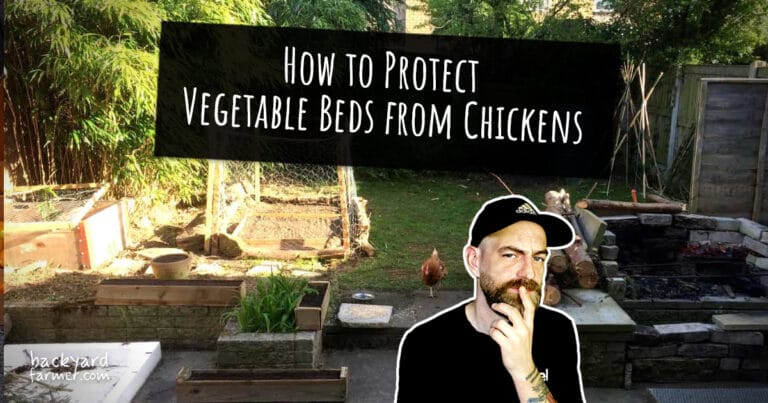
Introduction
Free-range chickens are brilliant for the garden. They reduce pests naturally, add fertility to the soil and, if we’re honest, bring real character to the space. However, once you start growing salads, seedlings or tender leafy greens alongside them, the balance can shift quickly.
If you’ve kept hens for any length of time, you’ll know they can undo weeks of careful planting in a single afternoon. As a result, many gardeners begin searching for a practical chicken proof fence or a reliable way to protect vegetable beds from chickens without restricting their birds.
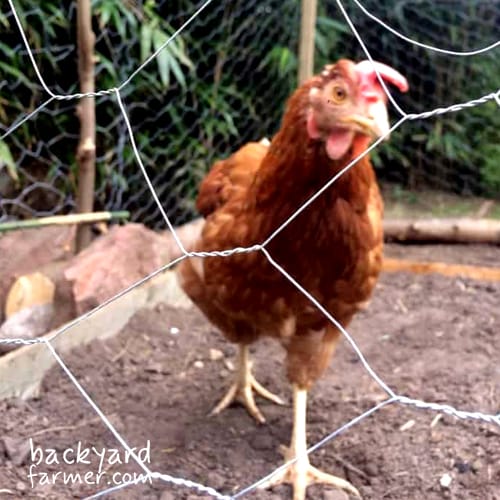
The Problem
The issue isn’t bad behaviour — it’s instinct.
- Scratching is completely natural.
- Pecking at soft leaves is hardwired.
- Freshly prepared raised beds look like a five-star buffet.
Consequently, young plants get uprooted, compost gets scattered, and neatly spaced rows turn into chaos. In other words, without proper raised bed protection from chickens, your garden plan disappears fast.
The Realisation
After learning this the hard way, I had to rethink the setup. At first, I assumed I needed to confine the chickens. However, the real solution wasn’t to fence in the birds — it was to protect the crops instead.
So, rather than limiting their freedom, I built a simple chicken proof garden fence around the beds. By creating a clear boundary, I kept the hens free-ranging while stopping them scratching through the soil.
In this guide, I’ll show you:
- How I built a straightforward chicken proof fence using mostly reclaimed materials
- How to keep chickens out of raised beds without locking them up
- What I would improve if I were building it again today
Ultimately, if you want productive raised beds and happy hens, you need clear boundaries. When you design around natural behaviour, the garden stays open, practical and manageable — without turning it into a fortress or a permanent chicken run.
Continue your chicken & garden care journey
- What can I feed my backyard chickens – A practical guide to healthy feeding for backyard flocks — useful for readers protecting veggie beds who also want to keep their chickens well-nourished without letting them destroy crops.
- Apple cider vinegar for chickens: How to use it safely – A natural method to support chicken digestion and wellbeing, which pairs nicely with a post about managing chickens around garden beds.
- This week at the Backyard Farm: Chickens, compost & DIY – Seasonal updates that include chicken care, DIY run builds, and compost use — perfect context for readers who want practical farm-style solutions alongside garden protection tips.
Why Free-Range Chickens Wreck Vegetable Beds
Let’s get one thing straight — chickens aren’t being destructive. They’re just being chickens.
When hens free-range, they spend most of the day foraging. In the wild, they scratch through leaf litter, flick soil backwards and hunt for insects, seeds and anything remotely edible. Therefore, a freshly prepared vegetable bed looks like prime real estate.
If you’ve ever wondered how to keep chickens out of raised beds, this behaviour is the reason. Without a chicken proof fence or some form of garden barrier, the beds quickly become a target.
Natural Scratching Behaviour
Chickens scratch backwards with surprising force. As a result, even a short foraging session can:
- Uproot newly planted seedlings
- Scatter compost and mulch everywhere
- Expose delicate roots
- Flatten carefully spaced rows
In fact, raised beds often make things worse. The soil is loose, nutrient-rich and easy to move, which makes it even more attractive to a curious hen. Consequently, if you don’t actively protect vegetable beds from chickens, damage happens fast.
Tender Leaves Are Irresistible
On top of that, leafy greens don’t stand a chance. Lettuces, spinach, kale and young brassicas are soft, juicy and easy to tear. Once a hen gets a taste, she will come back for more.
This is why many gardeners start searching for ways to stop chickens eating plants. If you’re growing salads or spring crops, you’ll often find the chickens harvesting them before you do. Unfortunately, they rarely show restraint.
Digging and Dust Bathing
Then there’s dust bathing. Chickens dig shallow craters, fluff soil into their feathers and settle in. While this behaviour keeps them healthy, it can flatten a newly planted bed in minutes.
Although chickens don’t burrow deeply like predators, they will scratch persistently along edges. So if you’re asking, “Do chickens dig under fences?”, the practical answer is no — but they will test weak ground-level gaps.
Therefore, protecting vegetable beds from chickens isn’t about limiting freedom. Instead, it’s about understanding natural behaviour and designing around it. Once you accept that scratching and pecking are instinctive, the solution becomes clearer: create strong crop boundaries — ideally with a simple chicken proof garden fence — rather than confining the birds.
Chicken Run vs. Crop Protection: What I Learned
When I first brought the chickens home, my thinking was simple: build a run and keep them contained.
Like most new keepers, I assumed the safest and most sensible option was to fence the birds in. So I attached a basic run to the coop, believing it would protect both the hens and the garden. At the time, that felt responsible.
However, I soon realised that fencing the birds wasn’t actually solving the real problem.
The Reality
Once the hens settled and found their confidence, things shifted. They clearly preferred roaming. The garden already had decent perimeter fencing, and they showed little interest in escaping. Instead, they explored, scratched, hunted insects and quickly claimed their favourite corners.
As a result, keeping them confined started to feel unnecessary — and, if I’m honest, a bit unfair. Free-range chickens thrive when they can move naturally.
The Unexpected Problem
The real issue wasn’t the chickens leaving the garden. It was the chickens discovering the vegetable beds.
As soon as I planted seedlings, the raised beds became high-interest zones. Within days, the neat rows were disturbed and tender plants were tested. If you’ve ever searched for how to keep chickens out of raised beds or how to stop chickens eating plants, you’ll recognise this stage immediately.
At that point, I realised I had a clear choice:
- Restrict the chickens and limit their freedom
- Redesign the garden to protect the crops instead
The Shift in Thinking
That moment changed everything.
Free-ranging hens are generally healthier, more stimulated and easier to manage in small garden setups. Therefore, instead of expanding the run or constantly moving temporary fencing, I stepped back and reconsidered the layout.
Ultimately, it made far more sense to protect what was vulnerable — the crops.
By fencing the raised beds rather than the birds, I was able to:
- Keep the hens free-ranging
- Reduce stress on the flock
- Maintain steady vegetable production
- Avoid turning the whole garden into a permanent enclosure
In practical terms, this meant installing a simple chicken proof fence around the growing beds. Instead of building a larger chicken enclosure, I created a clear crop boundary — effectively a chicken proof garden fence — that protected vegetable beds from chickens while still allowing them to roam freely.
In the end, that small shift in approach solved the problem. Rather than fighting natural behaviour, I designed around it. As a result, the garden became easier to manage and far more productive.
The Simple Solution: A Chicken-Proof Fence Around Raised Beds
After weighing up the options, the solution turned out to be refreshingly simple: instead of fencing in the chickens, fence off the vegetable beds.
In practice, that meant installing a straightforward chicken proof fence around the raised beds rather than building a larger enclosure for the hens.
In smaller gardens especially, this approach makes far more sense. The hens can still roam safely, scratch for insects and behave naturally. Meanwhile, the crops stay protected during the most vulnerable growing stages. In other words, you protect vegetable beds from chickens without restricting free-range behaviour.
Why Fencing the Beds Works Better
When you protect the beds rather than the birds, everything feels more balanced.
- The chickens continue to free-range and forage for pests
- Seedlings remain undisturbed
- You only fence what actually needs protecting
- The garden stays open instead of feeling boxed in
Raised beds make this even easier. They already define clear growing areas. Therefore, adding a lightweight but secure chicken proof garden fence simply strengthens the boundary.
There’s no need for heavy construction or major structural changes. Instead, you create targeted crop protection exactly where it’s needed.
For anyone searching for how to keep chickens out of raised beds, this approach tackles the root of the problem rather than the symptom.
Keeping It Simple and Scalable
Importantly, the aim wasn’t to build a fortress. It was to create a barrier high and secure enough to stop scratching and pecking, while still allowing easy access for planting, weeding and harvesting.
By using reclaimed wood, home-grown bamboo and standard galvanised chicken wire, the fence became:
- Low-cost
- Adaptable
- Easy to repair or tweak
- In keeping with a practical, reclaimed garden setup
As the seasons shift, this kind of chicken wire fence for the garden can expand, move or come down entirely. Consequently, it offers far more flexibility than a permanent poultry enclosure while still acting as effective raised bed protection from chickens.
In the next section, I’ll walk through exactly what materials I used and how the structure came together.
Materials Used (Mostly Reclaimed)
One of the best things about building a chicken proof fence like this is that you don’t need expensive materials or specialist tools. In fact, I built most of it using what I already had lying around, with only a couple of small purchases.
Importantly, keeping it simple was deliberate. The goal wasn’t perfection — it was practical crop protection. If you’re trying to protect vegetable beds from chickens, the structure simply needs to be secure, stable and reliable.
Core Materials
To build this simple chicken proof garden fence, I used:
- Reclaimed fence panels – To form the basic frame and corner supports
- Home-grown bamboo poles – Lightweight but surprisingly strong uprights and cross supports
- Chicken wire (galvanised mesh) – The main barrier to stop scratching and pecking
- Galvanised staples or fencing nails – To secure the mesh firmly in place
- Wire ties – For reinforcing joins and tightening corners
Altogether, it’s a straightforward list. Most of it can be sourced cheaply — or even free — if you’re willing to reuse materials. As a result, this approach works well for gardeners looking for a low-cost chicken wire fence for the garden rather than building a full poultry enclosure.
Preventing Digging Underneath
However, height alone isn’t enough. Chickens naturally test weak spots, especially along the bottom edge. If you’ve ever asked, “Do chickens dig under fences?”, the practical answer is that they don’t burrow deeply — but they will scratch persistently at ground level.
To stop them pushing underneath, I:
- Placed logs and reclaimed timber along the base
- Built soil up slightly against the mesh
At the time, this worked well enough. Nevertheless, if I were building it again, I would bury the mesh 10–15cm into the soil from the start. That small adjustment creates stronger raised bed protection from chickens and prevents gradual loosening over time.
Optional Upgrades (If Starting From Scratch)
If you want something more permanent, you can upgrade a few elements:
- Heavier gauge welded mesh for durability
- Hinges and a simple gate panel for easier access
- Treated timber posts for extra strength
- Ground staples for added stability in softer soil
Ultimately, using reclaimed materials kept costs down and suited the overall feel of the garden. At the same time, it allowed the fence to evolve. You can swap panels out, replace bamboo and adjust sections as the layout changes. Consequently, this type of chicken proof fence remains adaptable as your garden grows.
In the next section, I’ll walk through the build step by step so you can see exactly how it came together.
Step-by-Step: How I Built the Chicken Proof Fence
This wasn’t a complicated build — and that was intentional. I wanted a secure but lightweight chicken proof fence, something I could install quickly to protect vegetable beds from chickens and adjust later if needed.
If you’re searching for how to keep chickens out of raised beds, this simple structure does the job without turning your whole garden into a permanent poultry enclosure.
1. Measure the Raised Beds
First, measure the full perimeter of the beds you want to protect.
- Work out the total length required
- Decide on the fence height (60–90cm is usually enough for most hens)
- Plan where your access point will go
Importantly, think about access early. Otherwise, you’ll end up climbing over your own chicken proof garden fence mid-season — which gets old fast.
2. Install Corner Supports
Next, set your corner posts. These give the whole fence its strength and stability.
- Position reclaimed timber or thicker bamboo at each corner
- Push them firmly into the soil or secure them against the bed frame
- Check they’re upright before moving on
If the soil is loose, tamp it down well around the base. A solid corner makes everything else easier and keeps your garden fence stable over time.
3. Add Uprights Along the Length
Then, add additional bamboo uprights every 1–1.5 metres.
This prevents the mesh from sagging and keeps the chicken wire fence for the garden looking tidy and functional. Fortunately, bamboo is easy to cut and reposition. Therefore, adjustments stay simple if you need them.
4. Attach the Chicken Wire
Now roll out the galvanised chicken wire one side at a time.
- Pull it tight before fixing it in place
- Use galvanised staples or fencing nails on wooden posts
- Secure mesh to bamboo with wire ties
Take your time here. Small gaps — especially at corners or along the base — are exactly what curious hens will test first. If you want reliable raised bed protection from chickens, this step matters.
5. Secure the Base
Chickens don’t just peck — they investigate. Consequently, ground level is always the weak point.
To prevent digging or pushing underneath:
- Place logs or reclaimed timber along the base
- Build soil up slightly against the mesh
- Or, ideally, bury 10–15cm of mesh into the soil
If you’ve ever asked, “Do chickens dig under fences?”, this is where the answer becomes practical. While they don’t burrow deeply, they will scratch persistently at weak edges. Therefore, burying the mesh adds long-term reliability and keeps your chicken proof fence secure.
6. Create an Access Panel
Finally, leave one section easy to open or remove.
This could be:
- A simple tied panel
- A lightweight hinged wooden frame
- A removable bamboo section
Either way, keep it practical. During peak growing season, you’ll be in and out constantly. As a result, easy access saves time and prevents frustration — especially when you’re harvesting or replanting.
Final Check
In the end, the fence doesn’t need to look perfect. It simply needs to be secure enough to stop scratching and pecking.
Over time, you can strengthen weak points, upgrade materials or adapt sections as the garden evolves. Meanwhile, your vegetable beds stay protected, and your hens keep their freedom.
That balance — freedom for the birds and protection for the crops — is exactly what a well-built chicken proof fence should achieve.
What I’d Do Differently (2026 Reflection)
Looking back, the chicken proof fence did exactly what I needed it to do — it protected vegetable beds from chickens while allowing the hens to roam freely. However, like most first builds, it also taught me a few useful lessons.
Experience changes how you design. Once you’ve lived with a chicken proof garden fence through wind, rain, fast-growing crops and determined hens, weak spots quickly reveal themselves. Therefore, if I were building this again today, I’d make a few deliberate upgrades to improve strength, access and long-term reliability.
1. Use Heavier Gauge Mesh
Standard chicken wire works well for basic crop protection. However, over time it can bend, sag and lose tension — especially when birds regularly test it.
If I were starting from scratch, I would choose:
- Thicker welded mesh for durability
- Slightly smaller gauge spacing for added strength
As a result, the chicken wire fence for the garden would hold its shape better and cope with multiple growing seasons without constant tightening. For anyone serious about raised bed protection from chickens, this upgrade makes a noticeable difference.
2. Bury the Bottom Edge Properly
At the time, weighting the base with logs and soil worked well enough. Nevertheless, partially burying the mesh would have made the chicken proof fence more secure from day one.
Sinking 10–15cm into the soil helps to:
- Stop persistent scratching at ground level
- Prevent birds testing weak sections
- Reduce gradual loosening over time
If you’ve ever wondered, “Do chickens dig under fences?”, this is the practical answer. While they don’t burrow deeply, they will scratch repeatedly at weak edges. Therefore, burying the mesh adds long-term stability and keeps vegetable beds properly protected.
3. Build a Proper Hinged Access Panel
Access doesn’t seem important until the raised beds are full and you’re harvesting daily. Then it suddenly matters.
Although a tied section works, a lightweight hinged panel with a simple latch makes maintenance far easier. In particular, during peak growing season, easy access saves time and frustration. If you’re constantly stepping over fencing, the setup quickly becomes inefficient.
4. Allow More Clearance for Growth
As crops mature, leaves naturally press against the mesh. Of course, chickens will peck anything within reach.
If building again, I would:
- Leave slightly wider spacing around the beds
- Angle the top section outward for extra clearance
That extra breathing room prevents damage once plants move beyond the fragile seedling stage. Consequently, overall crop protection improves without needing a taller fence.
5. Think Modular
Originally, I built the structure as one continuous fence. In hindsight, modular panels would offer far more flexibility.
With removable sections, you can:
- Adjust protection as crops rotate
- Remove fencing once plants toughen up
- Reposition panels for new growing areas
Gardens evolve constantly. Therefore, fencing systems that adapt tend to last longer and reduce ongoing maintenance.
Final Reflection
Ultimately, the principle still stands: protect the crops, not the chickens.
With a few thoughtful refinements, a simple chicken proof fence can serve you for years. Meanwhile, your vegetable beds stay safe, your hens remain free-ranging, and the whole system works with nature rather than against it.
Using Bamboo in the Garden (Beyond Fencing)
One unexpected benefit of building the chicken proof fence was rediscovering just how useful bamboo is in the garden. If you’ve got home-grown bamboo — or even a bundle of basic garden canes — you already have one of the most versatile materials available.
It’s lightweight, surprisingly strong and easy to cut. As a result, it fits perfectly into an edible garden where layouts shift, crops rotate and structures need to adapt. When you’re trying to protect vegetable beds from chickens while still supporting climbing crops, flexible materials make a real difference.
Plant Supports for Climbing Crops
First and foremost, bamboo makes excellent plant supports.
It works particularly well for:
- Peas
- Beans
- Tomatoes
- Cucumbers
You can quickly build A-frames, teepees or horizontal rails using string or wire ties. Because bamboo has natural texture, climbing plants grip onto it easily. Consequently, you spend less time retying stems and more time managing healthy growth.
In gardens where a chicken proof garden fence surrounds raised beds, vertical growing also keeps foliage slightly higher and further from pecking range. Therefore, you reduce the chance of curious hens reaching through the mesh.
Temporary Frames and Seasonal Structures
Unlike permanent timber builds, bamboo structures stay flexible.
You can:
- Install them quickly
- Move them as beds rotate
- Replace them cheaply if something snaps
As a result, they suit crop rotation systems and evolving garden layouts far better than rigid constructions. When the season changes, the structure can change with it.
This adaptability complements a simple chicken wire fence for the garden, because you can adjust both plant support and crop protection at the same time. Instead of overbuilding, you create a system that evolves naturally.
Sustainable and Low-Cost
Another clear advantage is sustainability. Bamboo regenerates quickly, so if you’re cutting from your own patch, it becomes a renewable building material.
At the same time, using what you already have reduces waste and keeps costs down. In a mixed garden with free-range hens and vegetables, that practicality matters. Materials that are easy to repair and adapt tend to outperform anything too permanent or overbuilt.
Ultimately, strong plant supports and a well-built chicken proof fence work together. While the fence protects vegetable beds from chickens at ground level, bamboo structures maximise vertical space and keep crops productive above it.
In the next section, I’ll show how I used bamboo to build a simple bramble support. As it turns out, that small structure made harvesting far easier later in the season.
Building a Bamboo Support Frame for Brambles
Brambles are generous plants. They crop well, they’re tough and, once established, they don’t ask for much. However, they can turn into a tangled mess surprisingly quickly — especially in a smaller garden where space already competes with raised beds and a chicken proof fence.
If you leave them unsupported, they sprawl across beds, hook into neighbouring plants and make harvesting far harder than it needs to be. After letting them grow wild for a season, I realised some structure wasn’t optional — it was essential.
When you’re working to protect vegetable beds from chickens, organisation matters. Clear pathways and defined growing zones make both crop protection and day-to-day maintenance much easier.
The Bamboo “Trapeze” Frame
So, I kept it simple.
Using seven bamboo poles and a handful of wire ties, I built a raised support frame — essentially a horizontal trapeze. This lightweight structure complemented the surrounding chicken proof garden fence without adding bulk or permanent construction.
The aim was straightforward:
- Lift fruiting canes off the ground
- Improve airflow through the plant
- Reduce the risk of rot and mildew
- Make picking easier and cleaner
I secured two upright supports firmly into the ground and ran cross poles between them. From there, I guided the bramble growth along the frame as it developed.
Training the Canes
As new shoots appeared, I gently fed them along the structure and tied them loosely where needed.
Consequently, I was able to:
- Separate old and new growth
- Keep fruit off damp soil
- Maintain clear access around the beds
This organisation becomes even more important in gardens where a chicken wire fence for the garden protects nearby crops. By keeping brambles lifted and controlled, you reduce the chance of canes leaning into protected beds and creating weak spots along the fence line.
When harvest came around, the difference was obvious. The fruit was easier to see, easier to reach and far less tangled. As a result, picking became enjoyable instead of frustrating.
Why Structure Matters With Soft Fruit
Bramble canes grow with enthusiasm. Left alone, they prioritise expansion over accessibility.
However, with a lightweight bamboo framework in place, the plant stays productive while remaining manageable. You guide it rather than fight it. At the same time, you maintain clearer boundaries between soft fruit, raised beds and any chicken proof fence protecting your vegetables.
Ultimately, it’s a simple solution. Nevertheless, over the course of a growing season — particularly in compact gardens where you’re balancing free-range hens and food production — that bit of structure makes a real difference.
Do Chickens Like Mirrors? (Enrichment & Behaviour)
While protecting the vegetable beds was the main priority, keeping the chickens mentally stimulated mattered just as much. After all, if you’ve gone to the effort of installing a chicken proof fence to protect vegetable beds from chickens, it makes sense to support the birds properly too.
Free-range hens are naturally curious. However, if they don’t have enough to explore, they’ll create their own entertainment — which often means scratching near raised beds or testing weak spots along a chicken proof garden fence.
So, as a small experiment, I fixed a secure mirror to part of the run area.
How Chickens React to Mirrors
Chickens don’t recognise themselves the way we do. Nevertheless, they respond strongly to movement and visual stimulation.
A simple mirror can:
- Spark curiosity
- Encourage exploratory behaviour
- Break up boredom in confined spaces
In this case, the hens noticed it straight away. At first, they approached cautiously. Then they vocalised, circled back and returned several times throughout the day to inspect the “new arrival.”
It wasn’t complicated. However, it clearly held their attention. As a result, they seemed less interested in hovering around the edges of the garden beds.
Why Enrichment Matters
When chickens get bored, problems tend to follow. Feather pecking, frustration and minor aggression can creep in — particularly if space is limited or boundaries are unclear.
Therefore, small additions can make a noticeable difference. Simple options include:
- Mirrors
- Perches at varying heights
- Proper dust bathing areas
- Hanging greens or vegetable scraps
Protecting crops with a chicken wire fence for the garden is only half the equation. At the same time, a balanced garden setup looks after the wellbeing of the flock.
Once the vegetable beds were protected and enrichment was in place, the whole system felt more settled. The plants were safe, the hens stayed stimulated and the garden worked with their natural behaviour instead of against it.
Ultimately, when you combine thoughtful enrichment with a solid chicken proof fence, you create a setup that supports both productivity and animal welfare.
Frequently Asked Questions
In most backyard setups, 60–90cm is enough for an effective chicken proof fence to stop casual hopping and persistent scratching. However, if you keep lighter or more flighty breeds, you may need closer to 1 metre. Ultimately, the right height depends on how determined your hens are and how thoroughly you want to protect vegetable beds from chickens.
Most hens prefer walking rather than flying. That said, if they can clearly see something tempting on the other side — especially fresh greens — they may attempt a short hop. Therefore, pairing sensible fence height with a well-positioned chicken proof garden fence usually prevents problems before they start.
Chickens don’t burrow deeply like foxes. Nevertheless, they will scratch repeatedly at weak edges. If you’ve ever asked, “Do chickens dig under fences?”, the practical answer is that they test ground-level gaps. Burying 10–15cm of mesh or firmly weighting the base strengthens your chicken wire fence for the garden and prevents them gradually working underneath.
For basic crop protection, galvanised chicken wire is generally sufficient. In other words, it works well when your goal is raised bed protection from chickens. However, if you’re building for predator protection rather than vegetable protection, heavier welded mesh provides a stronger long-term solution.
In the early stages, lightweight mesh covers, cloches or simple removable panels work well. As plants mature and toughen up, they become far less vulnerable to scratching damage. Nevertheless, if hens have full access to the garden, a permanent chicken proof fence remains the most reliable way to protect vegetable beds from chickens.
Final Thoughts: Protect the Crops, Not the Chickens
Free-range chickens and productive vegetable beds can absolutely coexist — but only when you create clear, practical boundaries.
Instead of restricting the birds, protect the growing areas. By installing a simple chicken proof fence, you allow hens to forage naturally while keeping crops intact. Consequently, you solve the common problem of how to keep chickens out of raised beds without sacrificing free-range behaviour.
A straightforward chicken proof garden fence built from reclaimed materials offers a practical, low-cost solution that fits neatly into a sustainable garden setup. At the same time, it acts as dependable raised bed protection from chickens throughout the growing season.
Over time, you can strengthen, adjust or expand the structure as your layout evolves. Gardens change, seasons shift and your crop protection system should adapt with them.
Ultimately, the principle is simple: design around natural behaviour. When you do that, the garden becomes easier to manage, the hens stay content and you spend far less time firefighting problems.
If you’re keeping rescue hens or building an edible garden from scratch, small structural decisions — such as installing a well-built chicken proof fence — make a real difference over the course of a growing season.