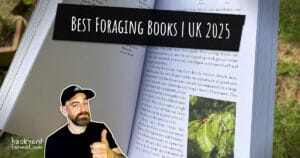

The Forager’s Calendar by John Wright is a month-by-month guide to wild food in Britain, covering everything from mushrooms and berries to coastal plants and seasonal greens. Rather than acting as a quick identification manual, it helps you understand what is likely to be available throughout the year and when to start looking for it.
I’ve used the book both at home when planning foraging trips and out on walks, and its biggest strength is the way it encourages you to think seasonally. In this review, I’ll look at what it does well, where it falls short, and whether it deserves a place in a UK forager’s collection.
What Makes The Forager’s Calendar Stand Out
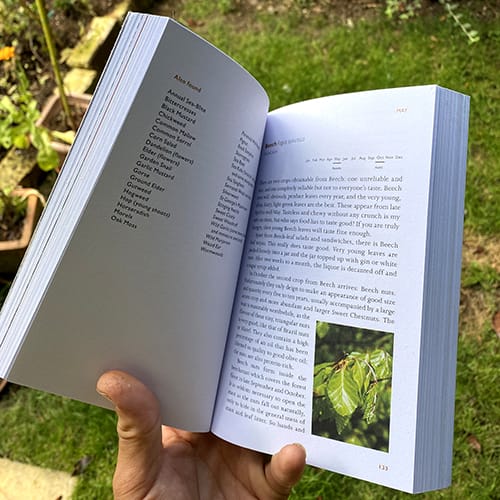
The biggest strength of The Forager’s Calendar is its month-by-month structure. Rather than organising wild foods by type, John Wright follows the seasons, showing what you’re likely to find at different points throughout the year.
That makes it particularly useful for planning walks and learning how Britain’s wild food changes with the seasons.
Month-by-Month Format
Each chapter covers a different month, making it easy to check what may be available before heading out. It encourages you to think seasonally rather than simply searching for individual plants or fungi.
Strong UK Focus
The book is firmly rooted in the British landscape, covering familiar hedgerows, woodland, coastlines and countryside. That makes the advice far more relevant to UK foragers than a general international field guide.
Engaging Writing
John Wright mixes practical information with folklore, observations and humour. It feels more like reading an experienced forager’s notebook than working through a traditional identification manual.
Clear Illustrations
The illustrations are attractive and useful for supporting identification, although I’d still pair the book with a dedicated field guide when identifying unfamiliar species.
Suitable for Beginners
The seasonal structure makes the book particularly approachable if you’re new to foraging. More experienced foragers may already recognise many of the species, but there’s still plenty of seasonal context and detail to enjoy.
The Forager’s Calendar works best as a seasonal companion rather than a pocket identification guide — helping you understand what to look for, when to look for it and how the landscape changes throughout the year.
Best For
- Seasonal UK foraging
- Beginners
- Planning foraging trips
Pros
- Month-by-month format
- Strong UK focus
- Engaging writing
- Useful illustrations
Cons
- Too bulky for a pocket
- Not waterproof
- Slower for quick ID
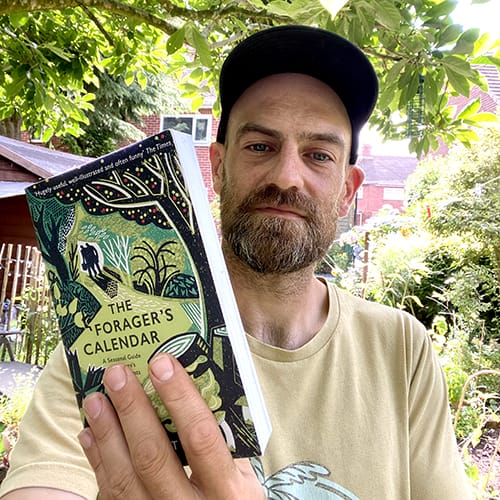
BYF experience: I forage regularly for both work and pleasure, and The Forager’s Calendar is usually the first thing I check before heading out. I use it more as a seasonal planning guide than an identification book, flipping to the current month to see what wild foods are likely to be available.
How It Compares With Other UK Foraging Books
The Forager’s Calendar is best used as a seasonal planning guide, while other books are better suited to quick identification or specialist subjects.
| Book | Best For | Main Strength | Format |
|---|---|---|---|
| The Forager’s Calendar | Seasonal planning | Month-by-month approach | Hardcover |
| Foraging Pocket Guide | Field identification | Compact, waterproof reference | Softcover |
| Edible Mushrooms (UK) | Mushroom identification | Detailed fungi coverage | Large paperback |
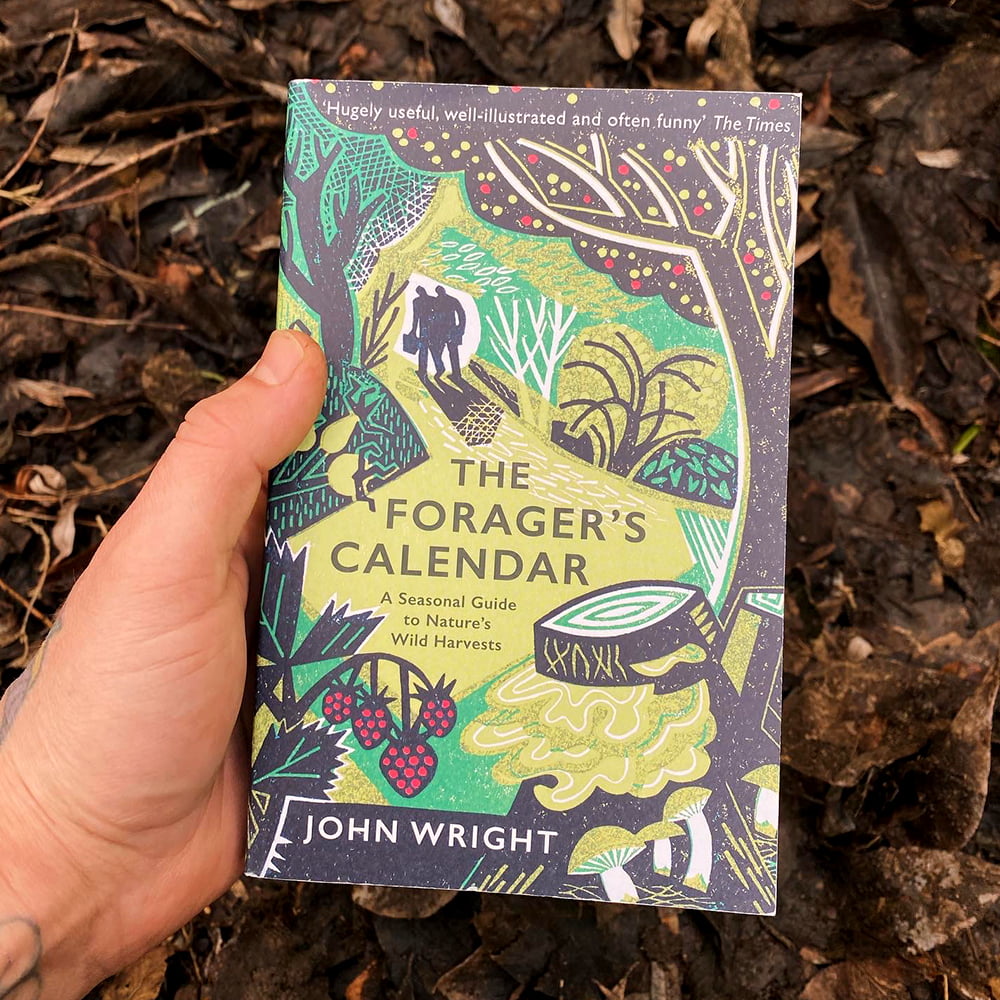
The Forager’s Calendar is the one I’d reach for when deciding what to look for and when. A pocket guide is more practical for quick identification in the field, while a dedicated mushroom guide makes more sense if fungi are your main interest.
Frequently Asked Questions
Yes. The month-by-month structure makes it easy to understand what to look for and when, without overwhelming you with hundreds of species at once.
It covers a broad range of seasonal wild foods found around Britain, including plants, berries, fungi and coastal edibles, organised around the time of year you’re most likely to encounter them.
No. It’s a hardcover book rather than a waterproof field guide, so I find it better suited to planning before a walk than carrying around in wet conditions.
I’d pair it with a dedicated identification guide. The Forager’s Calendar is excellent for learning what is in season, but a field guide is more practical when you need detailed identification information outdoors.