
A dedicated foraging bag keeps your hands free and makes muddy, damp or delicate finds easier to carry than a normal rucksack. The Barebones Harvesting & Gathering Bag is the strongest all-round option here, while the Earth Biome Waxed Canvas and Mesh Foraging Bag is better suited to mushrooms and lighter harvests. The Forest Fundamentals Artisan Forager Pouch is the compact budget choice for small finds.
The comparison below covers carrying style, liners and the main drawbacks of each option. If you are new to collecting wild food, my Beginner’s Guide to Foraging in the UK explains the basics of safe and sustainable gathering.
Best Foraging Bags Reviewed
These three options cover larger harvests, versatile everyday use and compact belt carry. The best choice depends mainly on how much you collect and whether you need ventilation, a washable liner or a bag that packs away when empty.
Barebones Harvesting & Gathering Bag
Best Overall Foraging Bag
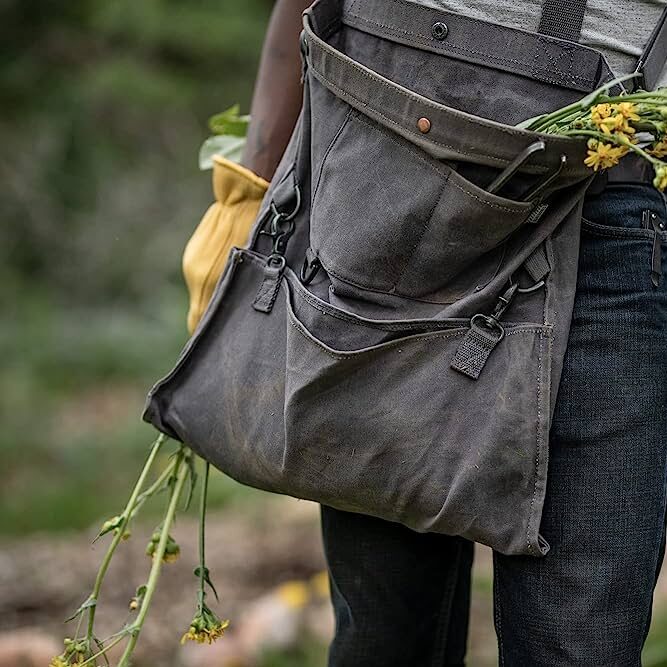
The Barebones Harvesting & Gathering Bag is the most capable option if you expect to bring home more than a handful of herbs, berries or nuts. Its structured waxed-canvas shell is water-resistant, while the multi-way straps allow it to be carried on the front or back, leaving both hands free while picking.
The removable watertight liner is particularly useful for damp produce, muddy roots or juicy fruit because it can be removed and cleaned separately. A drop-out bottom also allows a full bag to be emptied without turning the whole thing upside down.
At around 0.9kg empty, this is the heaviest option and more bag than most people need for a short walk. Its soft sides will not protect very delicate mushrooms as well as a rigid basket, either. For larger harvests and regular use, however, it is the strongest all-round choice here.
Key features:
- Water-resistant paraffin-waxed canvas
- Removable watertight liner
- Multi-way front or back carry
- Drop-out bottom for easier unloading
- Metal hardware
Best for: Larger harvests, fruit, nuts, herbs and garden produce.
What to watch: It is heavier and more expensive than the smaller options.
Earth Biome Waxed Canvas and Mesh Foraging Bag
Best For Mushrooms
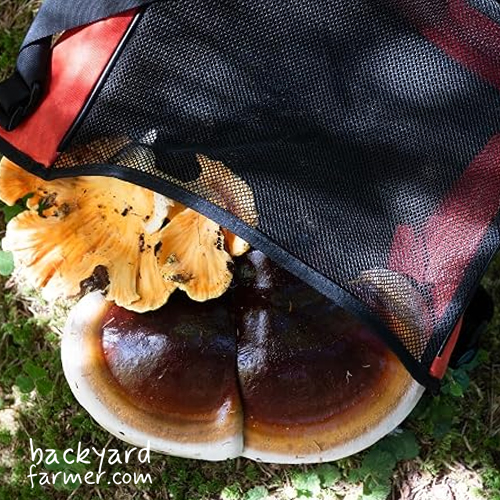
The Earth Biome Waxed Canvas and Mesh Foraging Bag is a more specialised option for mushrooms and lighter harvests. Its combination of waxed canvas and open mesh provides better airflow than a conventional tote, while the firm base helps support the contents from underneath.
An adjustable padded shoulder strap leaves both hands free, and the internal pocket and D-ring provide somewhere to keep a phone, identification guide or small foraging tool. The medium size should also be easier to carry through woodland than the larger Barebones Harvesting & Gathering Bag.
The mesh construction is its main advantage, but it also limits how the bag can be used. There is no watertight liner for leaking berries or muddy produce, and the soft sides will not protect delicate mushrooms as well as a rigid basket. It is best treated as a breathable bag for mushrooms, herbs and modest collections rather than an all-purpose harvesting bag.
Key features:
- Waxed-canvas and breathable mesh construction
- Firm base to support the contents
- Adjustable padded shoulder strap
- Internal storage pocket
- D-ring for attaching a knife or small tool
Best for: Mushrooms, herbs and lighter foraging trips.
What to watch: No waterproof liner, no UK-specific written reviews and less protection than a rigid mushroom basket.
Forest Fundamentals Foraging Bag
Best Budget Belt Pouch
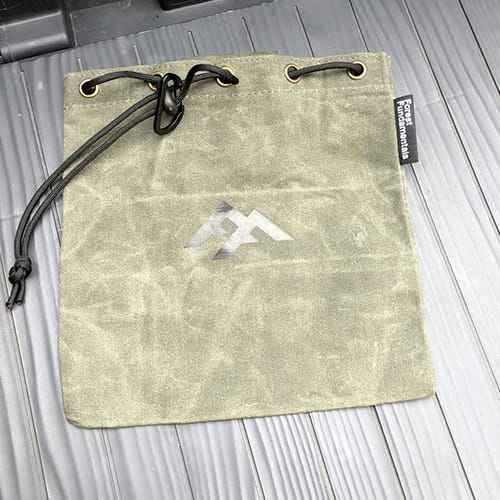
The Forest Fundamentals Artisan Forager Pouch is a compact belt pouch rather than a full shoulder bag. It folds and snaps closed when empty, opens when something is found and has a drawstring that can be tightened around its contents.
Forest Fundamentals describes it as handmade from waxed cotton canvas with brass fittings and reinforced stitching. Its compact design makes it a useful choice for herbs, nuts, berries and other small finds collected during an ordinary walk.
This is not the right option for a large mushroom or fruit harvest. It has no removable liner or ventilated mesh insert, so wet berries and muddy finds may need a separate washable bag inside. Its small size is also its main advantage, however: it can remain on your belt without carrying a larger bag throughout the walk.
Key features:
- Folding belt-mounted design
- Waxed cotton canvas
- Adjustable drawstring closure
- Brass fittings and reinforced stitching
- Made using recycled canvas
Best for: Small finds, occasional foraging and people who want a pouch that remains out of the way.
What to watch: Limited capacity with no removable or breathable liner.
Foraging Bag Comparison Table
| Product | Best for | Carry style and liner | Main drawback |
|---|---|---|---|
| Barebones Harvesting & Gathering Bag | Larger harvests and regular use | Multi-way front or back carry; removable watertight liner | Heavier and more expensive |
| Earth Biome Waxed Canvas and Mesh Foraging Bag | Mushrooms, herbs and lighter harvests | Adjustable padded shoulder strap; waxed canvas and breathable mesh | No watertight liner and limited UK review history |
| Forest Fundamentals Artisan Forager Pouch | Small finds and occasional foraging | Folding belt pouch with drawstring closure; no removable liner | Too small for larger hauls |
What to Look for in a Foraging Bag
The right foraging bag depends more on what you collect than the number of features it has. Capacity, airflow, cleaning and carrying style are the main points to consider.
- Match the Bag to What You Collect
- Mushrooms: Look for airflow and enough room to avoid crushing the contents. A mesh insert is useful, although a rigid basket offers better protection for particularly delicate mushrooms.
- Berries: A removable watertight liner is easier to clean if fruit is crushed or starts leaking.
- Herbs and leafy plants: Choose a bag with enough room to prevent the leaves from being tightly compressed.
- Nuts and larger fruit: Strong stitching, comfortable straps and a stable base are more important than ventilation.
Avoid keeping mushrooms or leafy plants sealed inside a watertight liner for longer than necessary. Damp, enclosed conditions encourage the contents to deteriorate more quickly.
Choose the Right Carrying Style
A belt pouch works well for small finds collected during an ordinary walk. Cross-body and waist bags provide more capacity without feeling cumbersome, while front or backpack-style carrying is better for heavier harvests.
Whichever style you choose, make sure it can be opened and used without having to remove it completely. Both hands are often needed for careful picking and identification.
Water-Resistant Is Not the Same as Waterproof
Waxed canvas repels light rain and damp vegetation, but the outer fabric should not automatically be treated as completely waterproof. On the Barebones bags, it is the removable PEVA liner that provides the watertight section.
A removable liner is also easier to rinse after collecting berries, wet plants or muddy produce.
Check the Construction
Look for:
- Reinforced stitching around the straps and base
- Hardware that can be operated with cold or muddy hands
- A liner or insert that can be removed for cleaning
- Enough structure to stop the bag collapsing while in use
- Straps that remain comfortable once the bag is full
A simple, properly made bag is generally more useful than one with numerous small compartments that are difficult to clean.
How to Clean and Maintain a Foraging Bag
Empty the bag as soon as you return home and shake out any soil, leaves or loose debris. Remove washable liners and rinse them separately, particularly after carrying berries, damp plants or muddy produce.
Waxed canvas should normally be brushed clean or carefully washed by hand with cold water. Avoid machine washing or dry cleaning, as this can remove the wax treatment and affect the shape of the bag. Allow the canvas and every insert to air-dry completely before storing them.
When water stops beading on the canvas, apply a suitable canvas wax according to the wax manufacturer’s instructions. Pay particular attention to the seams and base, which receive the most wear.
Frequently Asked Questions
No. A basket, canvas tote or reusable produce bag can be sufficient for occasional foraging. A dedicated bag becomes more useful when you want hands-free carrying, better ventilation or a liner that can be removed and cleaned.
Yes, provided the mushrooms have airflow and are not packed too tightly. A mesh insert is useful for carrying them, but a rigid basket provides better protection for soft or easily damaged specimens. Avoid leaving mushrooms in a sealed waterproof liner.
Waxed canvas is generally water-resistant rather than completely waterproof. It can cope with light rain and damp plants, but a removable watertight liner provides better protection for wet or leaking contents.
Final Verdict
The Barebones Harvesting & Gathering Bag is the best overall choice for larger harvests and regular use. It offers the most capacity, several carrying positions and a removable liner that is easier to clean after damp or messy collections.
Choose the Earth Biome Waxed Canvas and Mesh Foraging Bag if mushrooms are your main focus and you want better airflow than a conventional canvas bag. Its padded shoulder strap and firm base make it practical for lighter woodland trips, although a rigid basket will still provide better protection for particularly delicate mushrooms.
No soft bag is ideal for every harvest. A rigid basket remains a sensible choice for very delicate mushrooms, while a watertight liner is more useful for berries and damp produce.