
Introduction
March sits right in the middle of the UK’s “hungry gap” — that stretch where winter crops are winding down but true spring abundance hasn’t quite arrived. However, that doesn’t mean your beds are empty. In fact, there are still plenty of vegetables ready to harvest in March UK gardens, especially if you’ve grown hardy winter varieties.
If you’re wondering what to harvest in March UK plots, this guide breaks it down clearly. You’ll see exactly which crops are ready, how to tell when they’ve reached their best, and what varies between the North and South of the country. Because temperatures and soil conditions differ, timing can shift by a week or two. Therefore, it’s always best to judge by the plant — not just the calendar.
Below, we cover the main UK seasonal vegetables in March, plus fruit and herbs you can still pick. If you’d like a broader overview of the full year, see our UK harvest calendar, then use this page to go deeper into March specifically.
Continue your seasonal harvest & growing journey
- Spring vegetable planting guide UK – What to sow in March–May – Perfect for readers who are harvesting in March and ready to plant their next crops, especially greens and root veg.
- How to grow kale – Kale is a key cool-season crop that’s commonly harvested in early spring — this link helps readers grow more of what they’re harvesting.
- What to plant each month in the UK – A broader calendar that complements the March harvest list and helps readers plan forward through the growing year.
Vegetables Ready to Harvest in March (UK)
March is still dominated by hardy winter crops. Although growth remains slow, it is steady and dependable. In many cases, frost actually improves flavour, especially in brassicas and root vegetables. Therefore, when looking at vegetables ready in March UK gardens, focus on overwintered crops and cold-tolerant varieties that have been sitting patiently through winter.
Below are the main March harvest UK vegetables you can expect to pick, along with clear signs of readiness.
Leeks
Leeks are one of the most reliable vegetables ready to harvest in March UK plots. If you sowed in spring or early summer last year, they should now be well established.
Signs leeks are ready:
- Stems are thick (roughly thumb-sized or larger)
- Leaves are dark green and firm
- Plants feel solid when gently rocked
In March, leeks often reach their best size before temperatures rise. You can lift them as needed rather than harvesting the whole row at once. However, if warm weather arrives early, plants may begin to toughen or move towards flowering later in spring.
To harvest, loosen the soil with a fork and lift carefully to avoid snapping the stem. Leeks store well in the ground for several weeks, provided soil isn’t waterlogged.
Kale & Winter Brassicas
Kale and other hardy brassicas are classic hardy greens in March UK gardens. In fact, many taste better now than they did in autumn.
Frost converts starches into sugars, which improves flavour. Therefore, March can be an excellent time to harvest outer leaves while the plant continues growing.
How to harvest:
- Pick outer leaves first
- Leave the central growing tip intact
- Harvest regularly to encourage fresh growth
Watch for signs of bolting as daylight increases. If the central stem begins to stretch and flower buds appear, flavour can decline quickly.
Purple Sprouting Broccoli (PSB)
For many growers, March is peak harvest time for purple sprouting broccoli. If you planted it last summer, you should now see multiple side shoots forming.
When PSB is ready:
- Spears are 10–15cm long
- Buds are tight and unopened
- Colour is deep purple or green depending on variety
Cut spears regularly to encourage side shoots. If you leave them too long, flowers will open and quality drops. Because March is often the heaviest cropping period, check plants every few days.
Spring Cabbage
Spring cabbage bridges the gap between winter and early summer crops. Heads are usually smaller than maincrop varieties but tender and sweet.
How to tell spring cabbage is ready:
- Heads feel firm when gently squeezed
- Outer leaves remain healthy and unblemished
- Plants have reached expected size for the variety
Cut at the base with a sharp knife. In some cases, smaller secondary heads may develop if you leave the stump in the ground.
Spinach (Overwintered)
If you sowed spinach in late summer or early autumn, it should still be producing in March.
Harvest before temperatures rise too much. As days lengthen, spinach becomes prone to bolting.
Pick outer leaves regularly while they remain thick and glossy. If stems begin to elongate or a central flower spike forms, harvest the remaining leaves promptly before flavour turns bitter.
Fruit in Season in March (UK)
Although March is still lean compared to summer, there are a few reliable options when it comes to fruit in season March UK gardens. Most fresh fruit is limited at this time of year; however, forced crops and well-stored produce can still provide quality harvests.
Forced Rhubarb
Rhubarb is the standout UK seasonal fruit in March. If you forced crowns earlier in winter, you should now see tender, pink stalks ready to pull.
When rhubarb is ready to harvest in March:
- Stalks are 20–30cm long
- Colour is vibrant pink or red (depending on variety)
- Stems feel firm but snap cleanly
Rather than cutting, pull stalks gently from the base with a slight twist. This prevents rotting at the crown. However, avoid harvesting too heavily. As a general rule, never remove more than a third of the plant at one time, especially with newly established crowns.
Forced rhubarb is typically ready earlier than outdoor rhubarb. If your plants are growing naturally outside, harvest may begin late March in milder southern regions, while northern gardens may need to wait until April.
Stored Apples & Pears
While not freshly picked, stored apples and pears are still part of the seasonal fruit UK March growers rely on. If you harvested and stored fruit properly in autumn, good-quality specimens should remain usable.
Check for:
- Soft spots
- Mould around the stalk
- Wrinkling or shrivelling skin
Remove any fruit showing signs of rot immediately, as decay spreads quickly in storage.
Proper autumn storage allows you to extend your harvest well into early spring, bridging the gap before fresh fruit returns later in the growing season.
Herbs to Harvest in March (UK)
Although vegetables dominate the March harvest UK landscape, a few hardy herbs are still cropping well. In fact, evergreen and overwintered herbs often provide some of the freshest flavours at this time of year.
Parsley
Parsley is one of the most reliable herbs to harvest in March.
How to harvest parsley in March:
- Cut outer stems first
- Leave the central growth intact
- Avoid stripping the whole plant at once
Regular harvesting now helps extend its useful life before plants bolt later in spring.
Thyme
Thyme remains evergreen in most UK gardens, which makes it another dependable option when deciding what to harvest in March UK plots.
Snip small sprigs as needed, but avoid cutting into thick woody stems. Gentle trimming now encourages fresh growth as the season progresses.
Chives (Late March in Milder Areas)
Chives begin to reappear as daylight increases. In milder southern regions, you may see fresh shoots by mid to late March, while colder northern gardens may need to wait slightly longer.
Harvest young leaves once they reach 10–15cm tall. Cut cleanly with scissors rather than pulling to protect the crown.
Crops Not Ready to Harvest in March (UK)
One of the most common early-spring mistakes is harvesting too soon. Although March feels like a turning point, several crops are still bulking up. Therefore, knowing what is not ready is just as important as knowing what to harvest in March UK gardens.
Broad Beans (Autumn-Sown)
Plants may look strong by March, but pods are rarely mature yet. Allow flowers to set and pods to swell fully before harvesting, usually from late May onwards.
Garlic
Garlic planted in autumn is actively growing, but bulbs are still developing underground. Harvest typically begins from late June to July once lower leaves begin to yellow.
Early Carrots (Under Cover)
Top growth can look impressive, yet root size often remains small. Gently check thickness before pulling and allow extra time if needed.
Patience in March pays off later in the season.
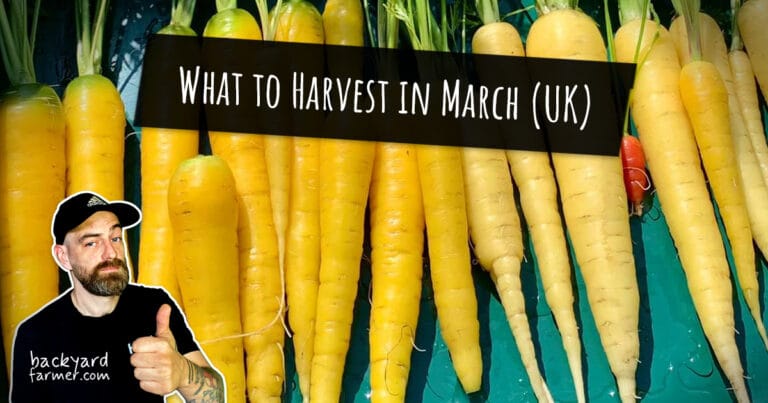
Most carrots won’t be ready this early in the year, but you can learn exactly when they reach harvest size in my guide to when to harvest carrots in the UK.
March Harvest Tips for UK Growers
March can be unpredictable. Therefore, small adjustments in how and when you harvest make a noticeable difference to quality and yield.
Harvest on Dry Days
Lift root crops on dry days where possible. Shake off excess soil and allow crops to dry briefly before storing to reduce rot risk.
Watch for Waterlogging
If soil feels heavy and sticky, loosen gently with a fork before lifting crops. Good drainage improves flavour and keeping quality.
Protect from Late Frost
Keep fleece or cloches nearby for vulnerable plants. A simple mulch layer can help regulate soil temperature and protect the early spring harvest.
Avoid Disturbing New Growth
March marks renewed activity in the UK growing season. Harvest carefully and avoid repeatedly treading on wet beds to protect developing roots.
By combining steady picking with careful handling, you make the most of your March harvest UK vegetables and prepare your beds for the productive months ahead.
What to Sow in March for Later Harvests (UK)
March isn’t just about harvesting — it’s also about planning ahead. While you’re picking hardy greens and late winter produce, you can begin sowing crops that will carry you into late spring and early summer.
Carrots
Direct sow once soil is workable. Keep soil moist during germination for reliable early crops.
Beetroot
Sow directly in rows and thin seedlings once established for tender late-spring roots.
Lettuce
Start hardy varieties outdoors under fleece or in modules. Sow little and often for succession.
Peas
Sow directly once soil is workable, or start indoors in colder regions for an early start.
Early Potatoes
Plant chitted seed potatoes once severe frost risk reduces. Protect emerging shoots if cold weather returns.
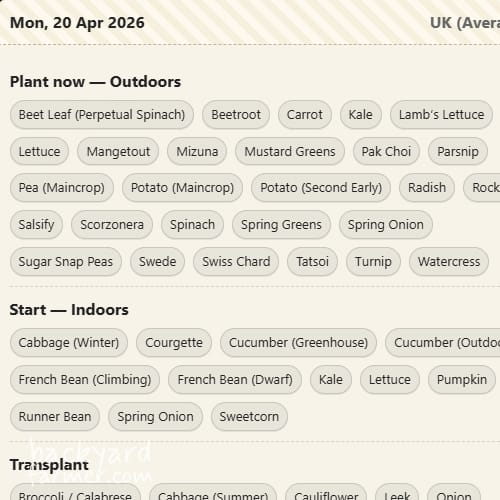
Ready to plant your next crops?
Use the free Veg-O-Matic Planting Calendar to see exactly what you can sow this month in the UK and keep your beds productive.
By combining harvesting with timely sowing, you keep your garden productive throughout the UK growing season. For a full overview of the year, see our what to plant each month in the UK guide, or explore our spring vegetable planting guide for more detailed advice.