

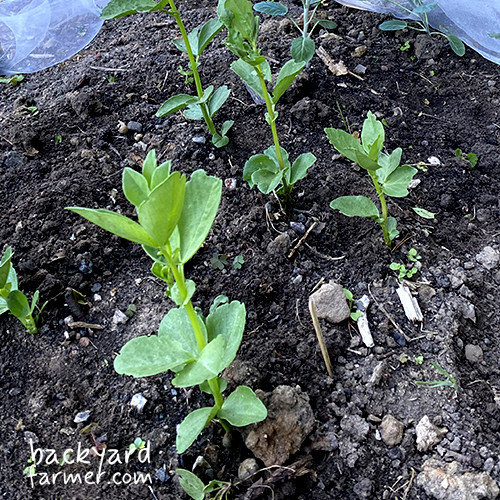
For most UK gardeners, spring is the safest time to sow broad beans. You can start them under cover from February, or sow directly outdoors from March to April.
There is another option, though. Hardy varieties can be sown in October or November and left to overwinter, potentially giving you an earlier crop the following year.
Autumn sowing isn’t automatically better. Whether it’s worthwhile depends largely on your soil, location and the variety you’re growing.
Broad Bean Sowing Quick Guide
| Sowing time | Where to sow | Best for | Likely harvest |
|---|---|---|---|
| October–November | Direct outdoors | Mild, sheltered plots and hardy varieties | May–June |
| February | Pots, modules or a cold greenhouse | An early but lower-risk crop | May–July |
| March–April | Direct outdoors or under cover | Most gardens and allotments | June–July |
As a general rule, sow autumn broad beans only if your soil is free-draining and your site is not too exposed. Otherwise, start seeds under cover in February or wait until the soil is workable in spring.
When Is the Best Time to Sow Broad Beans?
For most growers, spring sowing is the default. Start seeds under cover in February for an earlier crop, or sow directly outdoors from March to April once the soil is workable.
Autumn sowing in October or November is an alternative for suitable hardy varieties. It can bring the harvest forward and spread the workload, but only if plants have a good chance of surviving winter.
Your local climate matters too. Gardeners in southern and coastal areas may have more success with autumn sowing than those in colder inland or northern locations, although a sheltered garden can behave very differently from an exposed allotment in the same region.
Autumn vs Spring Sowing: Which Is Better?
| Autumn sowing | Spring sowing | |
|---|---|---|
| Typical timing | October–November | February under cover, March–April outdoors |
| Main advantage | Earlier harvest | Safer and more reliable |
| Main risk | Winter wet, cold and wind | Slightly later harvest |
| Best suited to | Mild, sheltered, free-draining sites | Most UK gardens and allotments |
| Variety choice | Hardy varieties | Much wider choice |
Neither method is automatically better.
If your plot regularly sits wet through winter or is particularly exposed, there is little point pushing broad beans through several difficult months just to gain a few weeks. A failed autumn sowing can leave you behind, whereas spring sowing gives you a dependable second chance.
Spring sowing also gives you a wider choice of varieties, while autumn sowing is mainly about finding a hardy type that can cope with winter.
Sowing Broad Beans in Autumn
Broad beans can be sown outdoors in October or November using a hardy variety intended for overwintering.
The main reason to do it is simple: the plants establish before winter, then get moving again as temperatures rise in spring. This can bring the first harvest forward to around May or June.
Autumn sowing works best in free-draining soil on a reasonably sheltered site. Avoid sowing into waterlogged ground, where seeds may rot before establishing, and be aware that mice can take newly sown beans. Young plants can also struggle on exposed or saturated plots.
If those conditions sound familiar, waiting until spring is usually the better option.
Which Broad Beans Can You Sow in Autumn?
Choose a variety specifically described as suitable for autumn sowing or overwintering.
Aquadulce Claudia is one of the traditional choices for this job and is widely grown for autumn sowing in the UK. Other varieties may also be suitable, so check the seed packet for descriptions such as “hardy”, “suitable for autumn sowing” or “overwintering”.
Not every broad bean variety is equally suitable for spending winter outdoors. If a variety is recommended only for spring sowing, it is better not to assume it will cope well through winter.
Sowing Broad Beans in Spring
Spring sowing is the most reliable option for most UK gardens and allotments.
You can start broad beans under cover from February, giving you an early crop without exposing young plants to an entire winter outdoors. Alternatively, sow directly outdoors from March to April once the soil is workable.
Direct sowing from March is simple and avoids transplanting. In colder areas, sowing in April can still produce a good crop.
If your soil is very cold or wet early in the season, there is no rush. Broad beans establish quickly once conditions improve.
Is Autumn Sowing Actually Much Earlier?
Sometimes — but not always.
Autumn-sown broad beans can produce the earliest crop, particularly when they come through winter strongly.
However, the difference can be surprisingly small if spring-sown broad beans are started under cover in February. A healthy February sowing may catch up with an autumn crop that has been checked by cold weather, pests or waterlogged soil.
On a difficult winter site, autumn plants may spend months barely growing or suffer losses, while February-sown plants can establish quickly once conditions improve.
So I wouldn’t autumn-sow broad beans purely because it sounds earlier.
The real question is whether your plot gives them a good chance of overwintering successfully. If it does, autumn sowing can be a useful way to get an early crop. If it does not, the extra risk may outweigh the small gain in harvest time.
Can You Sow Broad Beans in Winter?
December and January aren’t normally the main outdoor sowing months for broad beans in the UK.
If you missed the October–November autumn window, it is generally better to wait and start them under cover from February rather than sowing into cold, saturated ground in the middle of winter.
In very mild conditions you may occasionally get away with later sowing, but it isn’t the standard recommendation. Winter sowing can be slow and uneven, and seeds may remain vulnerable to rot or pests for several weeks.
Should You Sow Broad Beans in Autumn or Spring?
For most growers:
Sow in spring.
It is simpler, more reliable and gives you a much wider choice of varieties.
Consider autumn sowing if:
- your soil is free-draining
- your plot is mild or sheltered
- you have a hardy overwintering variety
- an earlier crop is useful to you
- you can protect seeds and young plants from pests
If your plot is wet, exposed or particularly cold through winter, February sowing under cover can give you much of the same advantage with less risk.
You can also use both methods. Sow a small batch of hardy broad beans in autumn, then make a second sowing under cover in February or outdoors in March. This spreads the risk and can extend the harvest period rather than relying on one sowing date.
Broad Bean Sowing FAQs
April is a good general endpoint for the main spring sowing period. Later sowings are possible, depending on variety and local conditions, but harvest will be pushed further into summer.
Yes. November is within the normal autumn sowing window for hardy varieties, provided the soil is free-draining and the site is suitable for overwintering plants. Avoid sowing if the ground is waterlogged, frozen or too wet to work without compacting it.
Yes. February is particularly useful for starting broad beans under cover before planting them outside once conditions improve. In mild areas, you may also be able to sow directly outdoors if the soil is workable.
Choose hardy varieties specifically sold for autumn sowing. Aquadulce Claudia is one of the best-known traditional options. Always check the seed packet, as suitability can vary between varieties.
Usually, yes, provided they overwinter successfully. However, February-sown plants started under cover can sometimes catch up surprisingly quickly, particularly after a cold or wet winter.
What to Do Next
Once you’ve decided whether to sow in autumn or spring, the rest of the crop is straightforward.
See our complete guide to growing broad beans in the UK for sowing depth, spacing, support, feeding and harvesting.