
Broad beans are one of the earliest productive crops of the year and are well suited to UK gardens, raised beds and allotments. They’re hardy and reliable, with the option to sow in autumn for an earlier crop or in spring for a safer start.
They’re not difficult to grow, but timing, support and harvesting make a big difference. Get those right and you’ll usually have strong plants and plenty of tender beans through early summer.
When to Plant Broad Beans in the UK
Getting the timing right makes a big difference with broad beans. Unlike many vegetables, they can be sown very early in the year, or even in autumn where conditions are suitable.
In the UK, there are three main sowing windows:
- Autumn (October to November) – best for milder areas with free-draining soil
- Early spring (February to April) – the most reliable option for most gardeners
- Late sowing (May) – possible, but more likely to run into blackfly and dry weather
If your soil is heavy, wet or slow to warm, spring is usually the safer option. Autumn-sown beans can struggle in cold, waterlogged ground.
On lighter soil in a sheltered spot, autumn sowing can give you a useful head start and an earlier harvest.
Try not to sow too late. Broad beans prefer cooler growing conditions, and later crops are more likely to flower as heat and blackfly pressure increase.
Should You Sow Broad Beans in Autumn or Spring?
| Situation | Best Option |
|---|---|
| Mild area with free-draining soil | Autumn sowing |
| Heavy clay or wet winter soil | Spring sowing or modules |
| Exposed allotment | Spring sowing or dwarf varieties |
| Mouse problems | Start in modules |
| Want the earliest crop | Autumn sowing |
| Beginner and unsure | Spring sowing |
BYF Variety Pick: Broad Bean ‘Superaguadulce’
I’ve grown Superaguadulce myself and found it very easy and reliable. It’s a particularly good choice for autumn sowing, with excellent winter hardiness and an early crop the following year.
For most UK gardeners, early spring is the safest place to start. Once you know how broad beans perform in your soil and local conditions, autumn sowing is worth trying for an earlier crop.
For a more detailed breakdown, see our article ‘When to Sow Broad Beans‘.
Where to Grow Broad Beans
Broad beans are fairly forgiving, but they do best in a spot that is:
- sunny, though light shade is usually fine
- moisture-retentive but well-drained
- not prone to winter waterlogging
- reasonably sheltered from strong winds
They suit allotments and raised beds particularly well, where spacing and support are easy to manage.
If you have heavy clay soil, avoid autumn sowing into cold, wet ground. Either wait until spring or start plants in modules and plant them out once conditions improve.
Wind is worth thinking about too. Taller plants can rock in exposed conditions, which weakens stems and makes them more likely to need support.
Can You Grow Broad Beans in Pots?
Yes. For the best results:
- choose a compact variety such as ‘The Sutton’
- use a deep pot of around 30cm or more
- keep watering consistent, especially during flowering
- add simple support in exposed spots
Broad beans are generally easier in the ground, but containers work well where space is limited.
How to Plant Broad Beans
Broad beans are straightforward to plant. In most UK gardens, direct sowing is the easiest option, while modules are useful where soil conditions or pests make outdoor sowing less reliable.
Direct Sowing Broad Beans
If the soil is workable and not waterlogged:
- sow seeds 5–7cm deep
- space plants 20–25cm apart
- leave around 45–60cm between rows
- for larger plantings, double rows with a central gap make support and harvesting easier
Module Sowing Broad Beans
Modules are useful if:
- the soil is heavy, cold or very wet
- mice or birds are a problem
- you want a more controlled early start
Sow one seed per module, then plant out once the roots have filled the cell and outdoor conditions improve.
Planting Tips
Prepare the ground by clearing weeds and loosening the surface. Add compost if the soil is poor, but avoid heavy nitrogen feeding.
The main mistakes to avoid are sowing into waterlogged soil, planting too shallowly and overcrowding plants. Add support early too, particularly with taller varieties, rather than waiting for stems to start leaning.
Watering, Feeding, and Support
Broad beans are fairly low-maintenance, but consistent watering and early support make a noticeable difference once plants start flowering.
Watering
Broad beans are fairly forgiving early on, but need steady moisture during flowering and pod development.
- keep soil evenly moist, not waterlogged
- water consistently during flowering and pod swell
- containers will need more frequent watering than beds
Drying out at this stage can reduce pod set.
Feeding
Broad beans usually need very little additional feeding.
- add compost before planting if the soil is poor
- avoid high-nitrogen feeds, which encourage leafy growth
- mulch around plants to help retain moisture
Weeding and General Care
Keep weeds down while plants are young, then avoid disturbing the roots once plants are established.
Do Broad Beans Need Support?
Most taller varieties benefit from support, particularly on exposed plots.
- dwarf varieties usually need only light support
- taller varieties can be held upright with canes and string
- add support early, before plants begin to lean
- use a simple frame in windy spots
Early support helps prevent plants from leaning, tangling or snapping.
Pinching Out Broad Bean Tops
Once the lower pods have set, pinch out the soft growing tips.
This can:
- reduce blackfly build-up
- encourage the plant to focus on pod development
- give you edible tips that can be cooked like greens
It’s a simple job and particularly useful on later crops.
Common Broad Bean Problems
Broad beans are generally easy to grow, but a few problems crop up regularly. Most are straightforward to manage if caught early.
| Problem | Likely cause | What to do |
|---|---|---|
| Blackfly on growing tips | Soft new growth, particularly on later crops | Pinch out the tops once lower pods have set, check plants regularly and encourage ladybirds and hoverflies. Avoid high-nitrogen feeds. |
| Plants leaning or flopping | Wind, tall growth or support added too late | Support plants early with canes and string, especially on exposed plots. |
| Flowers but few beans | Dry soil during flowering, cold weather or exposure | Keep soil evenly moist during flowering and grow plants in a reasonably sheltered position. |
| Poor or patchy germination | Cold, waterlogged soil, mice or birds | Avoid sowing into wet ground and start seeds in modules where pests or poor soil conditions are a problem. |
When and How to Harvest Broad Beans
Harvest time depends on when you sowed:
- Autumn sowings – usually from late spring into early summer
- Spring sowings – usually from early to mid-summer
When Are Broad Beans Ready to Pick?
Look for pods that are well filled, firm and still green.
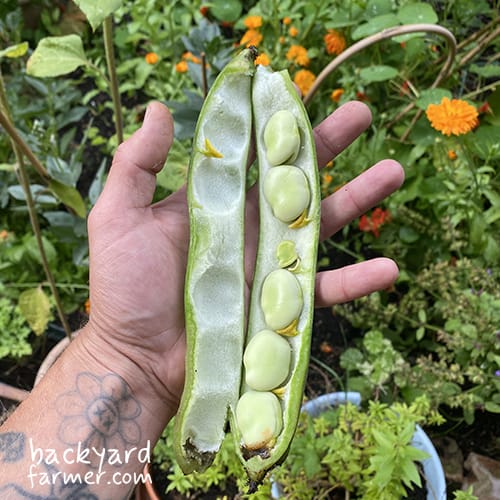
Open one if you’re unsure. The beans should be smooth, bright and tender. If they’re very large with thick, pale skins, they’ve been left a little too long.
How to Harvest Broad Beans
- pick little and often
- hold the stem and snap pods off carefully
- check plants every few days as the crop develops
Regular picking helps stop too many pods becoming over-mature at once.
Young vs Mature Beans
- Younger beans are sweeter and softer
- Larger beans are more starchy with thicker skins
Broad beans are usually better picked slightly early rather than slightly late. Older beans are still useful for soups, stews or double-podding.
For storage, use fresh beans soon after picking or blanch and freeze them for longer-term use.
What to Grow After Broad Beans
Broad beans free up space relatively early in the season, so there’s often time for a second crop in the same bed.
After harvest, cut plants off at ground level, clear the stems and leave the roots in place.
Good follow-on crops include:
- Brassicas – cabbage, kale or broccoli
- Salads – lettuce, rocket or spinach
- Beetroot
- Carrots – where the soil is suitable
- Fast growers – radish or turnips
An early harvest gives you more choice, while later crops are better followed with something quick to mature. Use the planting calendar to check what is still worth planting at the time.
Broad beans are legumes and can contribute to soil fertility, but they’re not a substitute for feeding the next crop. Add compost or organic matter where needed before replanting.
Plan Your Broad Beans
Want to see where broad beans fit into your plot? Use the free BYF Allotment Planner to plan your beds, spacing and follow-on crops.
Broad Bean FAQs
Yes. Choose a compact variety such as ‘The Sutton’, use a deep container and keep watering consistent once plants start flowering.
You can still sow in May, but later crops are more likely to run into blackfly, dry weather and heat during flowering. Earlier spring sowings are usually more reliable.
Yes, once the lower pods have set. Pinching out the soft growing tips can help reduce blackfly and directs more energy into developing pods.
Poor pod set is often caused by dry soil during flowering, cold weather or exposure. Keep plants evenly moist and grow them in a reasonably sheltered position.
No. Broad beans are generally grown as annual crops, so you’ll need to sow fresh plants each season.