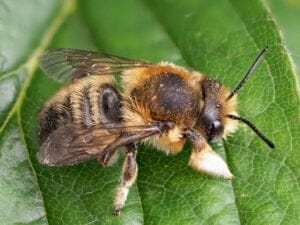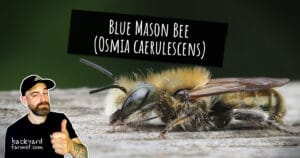

If you have spotted a black-and-yellow bee in the garden and your first thought was, is that a wasp?, the Wool Carder Bee is one of the first species worth checking.
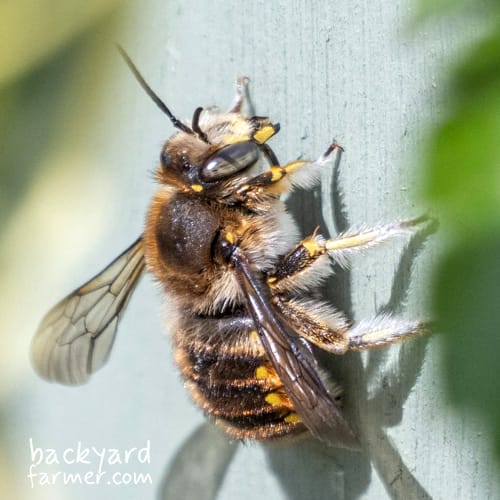
It catches people out all the time. At a glance, it has that sharp black-and-yellow look, but once you slow down and get a proper look, it usually seems too chunky, too hairy, and a bit too bee-like to be a wasp.
The clues that usually stand out are:
- Yellow side markings on the abdomen
- A pale hairy thorax
- A more solid, compact build than a wasp
It is often easiest to notice when:
- A male is hovering and patrolling the same sunny patch of flowers
- A female is scraping fluff from woolly leaves such as Lamb’s-ear
That is what this guide is here to help with. We will keep it practical and focus on the clues that actually help in a real garden or from a phone photo.
You will learn:
- The main ID features to check first
- How to tell it from a wasp and other lookalikes
- Which behaviour, plants and timing help confirm the ID in a UK garden
Quick ID Table: What to Look For
If you want the quickest way to check a sighting, start here.
You do not need every single clue to match. However, the more of these you can tick off, the more likely it is that you are looking at a Wool Carder Bee rather than a wasp or another garden bee.
| Feature | What to look for |
|---|---|
| Size | A fairly large solitary bee, usually around 9–17mm, with males larger than females |
| Body shape | Chunky, compact and strong-looking, not slim like a wasp and not fluffy like a bumblebee |
| Abdomen pattern | A mostly dark abdomen with yellow spots or markings along the sides, rather than clean full stripes |
| Thorax | Usually looks pale, buff or slightly ginger-haired rather than smooth and shiny |
| Face | Often shows yellow face markings if you get a close view |
| Hairiness | Clearly hairier than a wasp, but not as shaggy as a bumblebee |
| Flight style | Often quick, darting and patrol-like, especially in males |
| Typical garden setting | Sunny flower borders, herb beds, allotments, parks and other flower-rich gardens |
| Best plant clues | Often seen around Lamb’s-ear, lavender, woundwort, horehound and other sunny flower patches |
| Best beginner clue | A black-and-yellow bee with yellow side markings, a pale hairy thorax, and either territorial hovering or carding behaviour |
Key Identification Features
The easiest mistake with this bee is stopping at black and yellow and deciding it must be a wasp. That is usually where people go wrong.
A Wool Carder Bee makes more sense when you look at the pattern, the shape, and the overall feel of it. In the garden, that matters far more than colour on its own.
The main things to check first
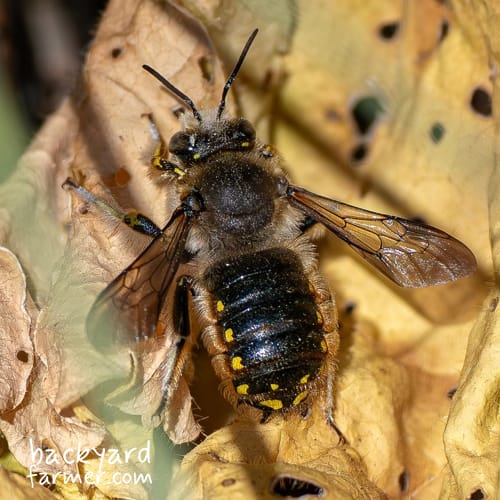
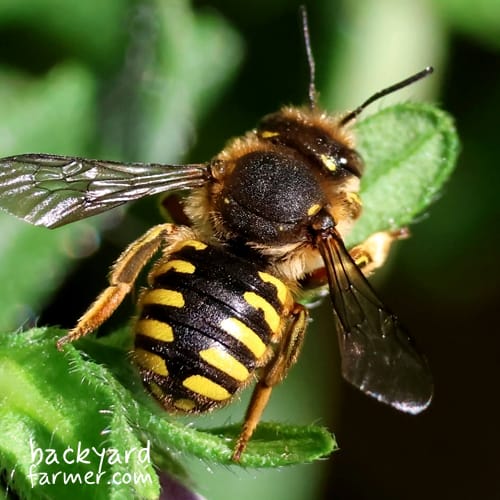
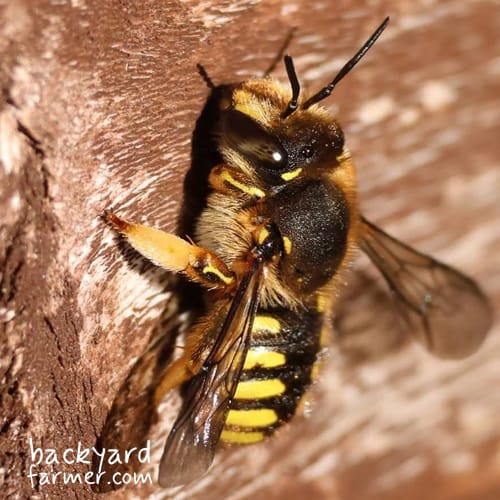
- Yellow side spots or patches on the abdomen, rather than clean full stripes
- A pale, buff or slightly ginger-haired thorax
- Yellow face markings if you get a close enough look
- A chunky, compact bee shape
- A look that feels wasp-like at first, but hairier and heavier once you slow down
Yellow side spots, not clean stripes
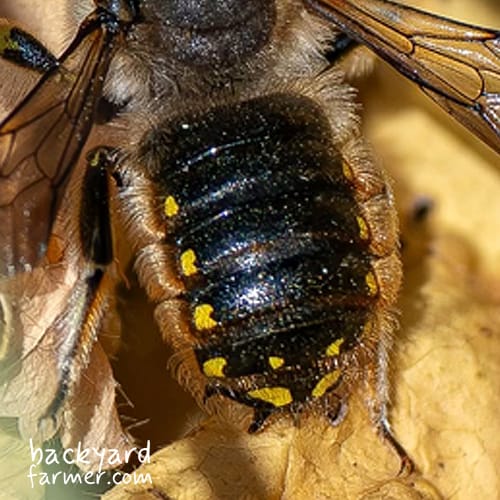
This is one of the best clues to start with.
Look for:
- A mostly dark abdomen
- Yellow markings along the sides
- Markings that can look like short bars or broken patches
- A pattern that usually feels less neat and tidy than a wasp’s stripes
That difference sounds small, but in real life it is often what shifts the insect from “probably a wasp” to “hang on, that looks more like a Wool Carder Bee.”
This is especially useful in photos. If the markings look more spotted or broken at the sides than fully banded across the abdomen, Wool Carder Bee becomes a much better fit.
Pale-haired thorax
The thorax often looks:
- Pale, buff or slightly ginger-haired
- Softer and more textured than the abdomen
- Less smooth and shiny than a wasp
It is not the flashiest clue, but it is a very useful one. Quite often, this is the detail that makes the insect look more bee-like once you get a proper view.
Yellow face markings
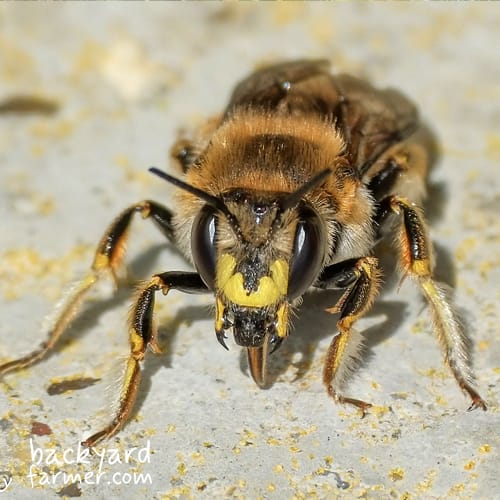
If you get a good front or angled view, look for:
- Yellow markings on the face
- A face pattern that supports the black-and-yellow look elsewhere on the body
This is a strong supporting clue, although it is not always easy to see in quick garden sightings. It helps most in clear photos or when the bee pauses in good light.
Chunky solitary bee shape
Wool Carder Bees usually look:
- Compact and strong-bodied
- More solid than a wasp
- Less fluffy than a bumblebee
That in-between look is actually quite helpful. A lot of the time, the bee just feels a bit too thick-set for a wasp, yet not soft and furry enough for a bumblebee.
Wasp-like at first glance, but hairier up close
This is probably the simplest beginner way to think about it.
A Wool Carder Bee can give a wasp-like first impression, especially when it is moving quickly. However, once you see it well, it usually looks:
- Hairier
- Bulkier
- More obviously bee-like
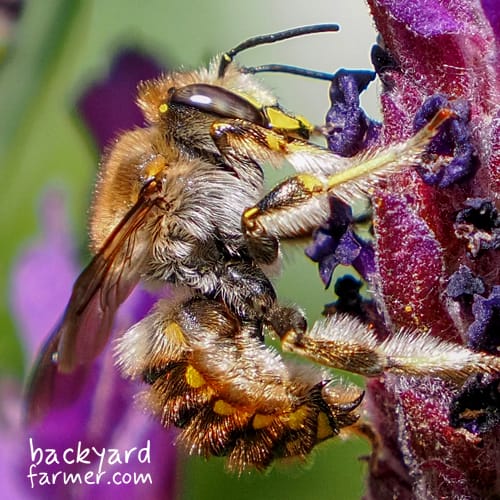
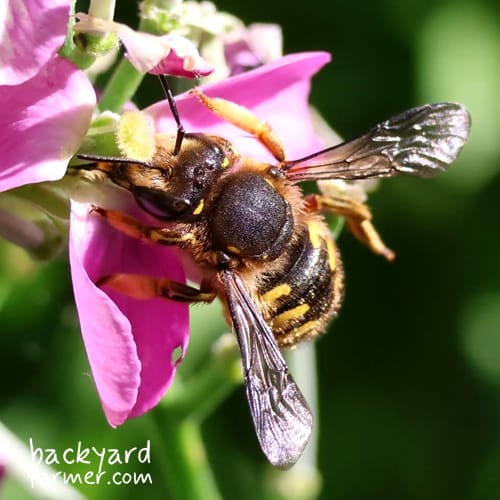
Male Wool Carder Bee
Male Wool Carder Bees are often the ones people notice first. They are larger than the females, and they tend to make a bit of a scene once the weather is warm enough.
What makes a male stand out?
- Larger size than the female
- Hovering, patrolling and darting around one sunny patch of flowers
- Chasing away other bees, hoverflies or insects that drift into that patch
- A chunky black-and-yellow body with yellow side markings
- A pale hairy thorax and often yellow face markings
- Abdominal spines at the tip of the abdomen
Female Wool Carder Bee
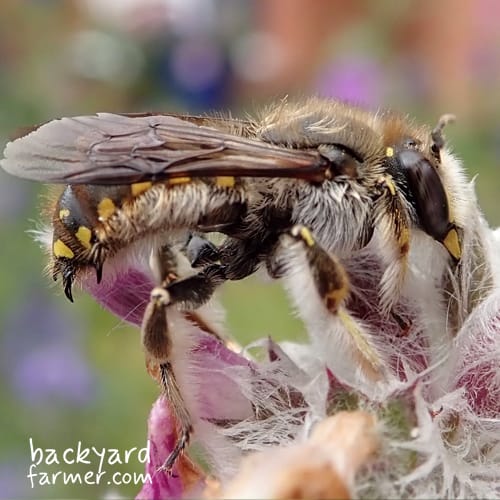
Female Wool Carder Bees are smaller than the males and often easier to overlook at first. However, once you notice what they are doing, they can actually be simpler to identify.
What makes a female stand out?
- More likely to be seen working flowers rather than guarding them
- May stop on woolly leaves and seem to scrape or gather fluff
- Usually smaller and less bulky than the male
- Still shows the main species features: yellow side markings, a pale hairy thorax, and often yellow face markings
Behaviour That Helps You Identify It
Behaviour is one of the handiest parts of Wool Carder Bee identification. If the markings already look close, the way the bee moves and uses plants will often help tip the balance.
The main behaviour clues
- Males patrol flower patches and chase off other insects
- Females scrape fibres from woolly leaves such as Lamb’s-ear
- The movement often looks quick, alert and purposeful rather than slow and bumbling
Territorial patrol behaviour
A male Wool Carder Bee often behaves less like a relaxed flower visitor and more like he is on guard duty.
Look for a bee that:
- Hovers over one sunny patch
- Works back and forth through the same small area
- Suddenly darts at anything that comes too close
- Keeps returning to the same flowers again and again
That repeated patrol behaviour is one of the strongest real-world clues for this species. If you keep seeing the same black-and-yellow bee guarding one flower patch and chasing off other insects, Wool Carder Bee becomes much more likely.
Carding from woolly leaves
This is one of the best confirmation clues for a female.
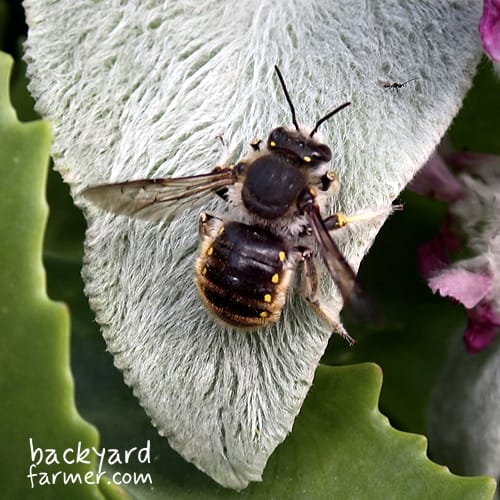
Look for a bee that:
- Lands on soft, hairy leaves
- Seems to scrape or gather fluff from the surface
- Spends time on Lamb’s-ear or other woolly plants, not just flowers
That “carding” behaviour is what gives the bee its common name. If you see a female working over Lamb’s-ear or another woolly plant and seeming to lift fibres from it, that points strongly toward Wool Carder Bee.
Flower-patch movement
Even when you do not catch obvious chasing or fibre collecting, the movement can still tell you a lot.
Wool Carder Bees often look:
- Quick and purposeful
- Alert rather than relaxed
- Faster and more patrol-like than a bumblebee
- Less sleek and restless than a typical wasp
That mix of a chunky bee body with fast, patrol-like movement is part of what makes the species stand out once you have seen it a few times.
When You’re Most Likely to See One in the UK
Wool Carder Bees are mainly a summer bee in the UK, so the time of year can be a handy extra clue when you are trying to confirm what you have seen.
The main timing clues
- Usually seen from late May to early August
- Often easiest to spot in June and July
- Most active in warm, bright weather
- More often recorded in England and Wales than further north
Peak months
In most gardens, you are most likely to notice Wool Carder Bees from late May to early August, with June and July usually being the best months.
If you are checking a black-and-yellow bee well outside that window, it does not rule Wool Carder Bee out on the spot. Still, it is a good reason to slow down and look harder at the other clues.
Best weather for sightings
Warm, sunny weather tends to make them much easier to notice.
You are more likely to spot them when:
- Flower patches are busy and fully in the sun
- Males are actively patrolling territories
- Females are moving between flowers and woolly plants
On dull or cooler days, they can be much less obvious, so timing and weather really do help.
Where in the UK are they most likely?
In UK terms, they are most often recorded in England and Wales, and are generally less often seen further north.
For most BYF readers, that means they are a realistic bee to watch for in:
- Sunny borders
- Urban gardens
- Parks
- Allotments with plenty of flowers
Where to Look in a Garden
If you are trying to spot a Wool Carder Bee, start in the warmest, sunniest parts of the garden rather than scanning everywhere at random.
The best places to check first
- Sunny borders with lots of flowers open at once
- Herb beds and other warm, sheltered planting areas
- Patches of lavender, woundwort, horehound and other mint-family flowers
- Clumps of Lamb’s-ear or other woolly-leaved plants
- Allotments, courtyard gardens and urban flowerbeds that stay warm and flower-rich through summer
Where males are easiest to spot
Male Wool Carder Bees are often easiest to notice around one small patch of flowers that they seem to guard.
Look for a bee that:
- Keeps hovering over the same area
- Returns to the same flowers again and again
- Chases other insects away from that patch
If you see that kind of behaviour, stay there for a minute and watch rather than moving on.
Where females are easiest to spot
Females are often easier to find by checking woolly plants as well as flowers.
Good places to inspect closely include:
- Lamb’s-ear
- Mullein
- Other soft, hairy leaves in a sunny border
If a black-and-yellow bee keeps landing on woolly leaves and seems to scrape or gather fluff, that is a strong clue.
Best Plants to Check
Certain plants make Wool Carder Bees much easier to spot, especially if you already have a suspicion one is using part of the garden.
The main thing to remember
Plant choice can support an identification, but it does not prove it on its own.
That said, some plants are far more useful than others because they either:
- Draw in the adults regularly
- Give females the soft fibres they need for nesting
Good plants for spotting adults
If you are scanning for adult Wool Carder Bees, these are some of the best plants to check first:
- Lamb’s-ear
- Lavender
- Woundworts
- Horehound
- Other mint-family flowers in warm, sunny spots
These plants are useful because they often keep the bee in one place long enough for you to get a proper look.
That makes it easier to notice:
- The yellow side markings
- The pale hairy thorax
- The hovering or patrol behaviour of males
Best woolly plants for confirming behaviour
If you want the strongest plant-based clue, focus on woolly or hairy leaves.
The best plants to check include:
- Lamb’s-ear
- Mullein
- Yarrow
- Houseleek
- Other soft or hairy-leaved plants in sunny borders
Why woolly plants matter
These are the plants where a female may stop and scrape off fibres to line her nest cells.
If you see that happening clearly, it tells you far more than simply finding the bee on a flower. In real garden sightings, this is often the moment the ID starts to click.
The standout plant
In practical terms, Lamb’s-ear is the one to watch most closely.
If you have it growing in the garden, it is one of the best places to check for this species, especially in warm weather when the bees are active.
Most Likely Confusion Species
Wool Carder Bees are distinctive once you know what you are looking for, but they are still easy to misread at first glance.
The biggest beginner mistake
The most common mistake is assuming that any black-and-yellow insect must be a wasp.
That is understandable, but it is also where a lot of IDs go off course. The best way to avoid that is to compare:
- Pattern
- Hairiness
- Body shape
- Behaviour
Wasps
Wasps are easily the biggest confusion risk, especially in summer when both are active in gardens.
A Wool Carder Bee usually looks:
- Chunkier and more solid
- Hairier overall, especially on the thorax
- Marked with yellow side spots or broken side markings rather than neat full stripes
- More likely to be seen patrolling flowers or using woolly plants
A wasp usually looks:
- Slimmer and shinier
- Less hairy
- More cleanly striped across the abdomen
- More obviously wasp-like in shape and posture
Quick takeaway:
If the insect looks black and yellow but also seems hairier, bulkier and more spot-marked than striped, Wool Carder Bee is the better fit.
Mason Wasps
Mason wasps can also give a black-and-yellow impression, but they usually look more obviously wasp-like once you get a decent view.
Compared with a Wool Carder Bee, a mason wasp is usually:
- Sleeker and less hairy
- More sharply patterned
- Less bulky through the thorax
- Less likely to show the soft, hairy, bee-like texture that Wool Carder Bees often have up close
Leafcutter Bees
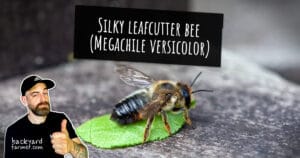
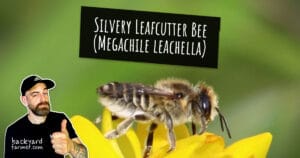
Leafcutter bees are a more realistic bee comparison because they also use ready-made cavities and may turn up in the same kind of garden.
The clearest differences are:
- Leafcutter bees usually do not show the same bold yellow side spotting
- They are better known for cutting neat pieces from leaves, not scraping woolly fibres
- They often look different in photos, with a plainer upper body pattern and a different overall feel
Mason Bees
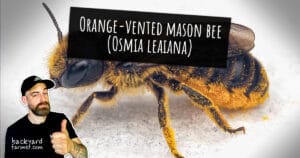
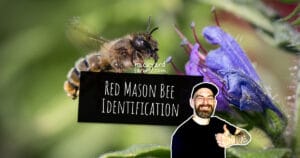
Mason bees can overlap in size and may also use bee hotels, but most common garden species look quite different once you compare them properly.
Mason bees are often:
- More rusty, gingery or brownish in tone
- Seen more often in spring than high summer
- Lacking the clear yellow-spotted black abdomen that makes Wool Carder Bees stand out
Hoverflies
Hoverflies can fool people in quick sightings, especially if the insect is fast-moving and flower-loving.
The clearest clues against Wool Carder Bee are:
- Much larger-looking eyes
- Only one pair of wings
- A different face shape
- A neater, more suspended hovering style
Common Carder Bumblebee
This is more of a name confusion than a strong visual one.
A Common Carder Bumblebee is usually:
- Much fluffier overall
- Warmer ginger-brown or buff in tone
- More obviously a bumblebee shape
- Lacking the sharper black-and-yellow side-marked look of a Wool Carder Bee
How to Tell a Wool Carder Bee from a Wasp
This is one of the most useful comparisons in the whole guide because Wool Carder Bees regularly get written off as wasps at first glance.
That is fair enough. From a distance, they have that same sharp black-and-yellow look. However, once you stop and check the details, the difference is usually clearer than people expect.
Abdomen pattern
A Wool Carder Bee usually shows:
- Yellow side spots or broken side markings
- A pattern that looks more spotted than cleanly striped
A wasp is more likely to show:
- Bold, clean stripes
- Markings that run more clearly across the abdomen
This is often the first thing that shifts the ID. If the markings feel broken, side-set or a bit less tidy than a wasp’s stripes, Wool Carder Bee starts to make more sense.
Body texture and hairiness
A Wool Carder Bee usually appears:
- Hairier, especially on the thorax
- Pale, buff or slightly ginger-haired at the front
- Softer and more textured overall
A wasp usually appears:
- Smoother and shinier
- Cleaner-lined
- Less obviously hairy
Quite often, this is the clue that gives it away. The insect just looks too soft and too furry to be a proper wasp.
Body shape
A Wool Carder Bee is usually:
- Chunky and compact
- Sturdier and more solid-looking
- More obviously bee-like once seen well
A wasp is usually:
- Slimmer and more streamlined
- Sharper in shape
- More obviously wasp-like in posture
If it looks too thick-set for a wasp, that is worth paying attention to.
Behaviour clues
Behaviour can make the difference much easier.
A Wool Carder Bee may:
- Patrol one flower patch
- Hover and chase other insects
- Use woolly plants such as Lamb’s-ear
- Appear to scrape off soft fibres if female
A wasp is not going to show that carding behaviour, and it is not likely to work a flower patch in quite the same way either.
| Check | Wool Carder Bee | Wasp |
|---|---|---|
| Abdomen pattern | Yellow side spots or broken markings | Cleaner full stripes |
| Thorax | Hairy, often pale or buff-looking | Smoother and shinier |
| Body shape | Chunky and compact | Slimmer and more streamlined |
| Overall feel | Bee-like, solid, textured | Sharper, cleaner-lined, wasp-like |
| Behaviour | May patrol flowers or card woolly leaves | More general wasp behaviour, without carding |
Frequently Asked Questions
A Wool Carder Bee is a chunky black-and-yellow solitary bee with yellow side markings, a pale hairy thorax, and often yellow face markings. At first glance, it can look a bit wasp-like. Once you get a better view, though, it usually seems bulkier, hairier and more bee-like.
Mostly because it has that sharp black-and-yellow look and it often moves quickly. The difference is that a Wool Carder Bee usually has side spots or broken yellow markings rather than clean stripes, a hairier thorax, and a more solid, thick-set shape.
Yes. Males are usually larger than females, and that is a genuinely useful clue. They are also often the ones people notice first because they tend to patrol flower patches and chase other insects.
Start with Lamb’s-ear, lavender, woundwort, horehound, and other sunny mint-family flowers. If you have woolly-leaved plants in a warm border, they are especially worth checking.
Look for yellow side spots instead of clean stripes, a pale hairy thorax, and a more chunky, compact shape. Behaviour helps as well. Wool Carder Bees may patrol flower patches or scrape fibres from woolly leaves, which wasps do not do.
A female Wool Carder Bee may scrape soft fibres from Lamb’s-ear leaves and use them to line her nest cells. If you see that happening clearly, it is one of the best behaviour clues for confirming the species.
They are most often seen from late May to early August, with June and July usually being the peak months.
Yes, especially if the photo shows the side of the abdomen, the thorax, the face, and the plant the bee is using. Several angles are far more useful than one neat top-down shot.
They are a fairly large solitary bee, usually around 9–17mm long. Males are generally larger than females.
Final Thoughts
Once you know what to look for, Wool Carder Bees are not as awkward to identify as they first seem.
The main clues to remember
- Yellow side markings on the abdomen
- A pale hairy thorax
- A chunky bee-like shape
- The right behaviour
Why behaviour helps so much
A male charging around one flower patch, or a female scraping fibres from Lamb’s-ear, will often tell you more than a quick flash of colour ever will.
That is usually the point where the insect stops looking vaguely wasp-like and starts making much more sense as a Wool Carder Bee.
The best way to confirm the ID
The strongest identifications usually come from combining:
- Appearance
- Behaviour
- Plant choice
- Season
One clue on its own can send you the wrong way. However, when those clues start lining up together, the picture usually becomes much clearer.