
Introduction
The Red-shanked Carder Bee (Bombus ruderarius) is a scarce and declining bumblebee species in the UK, most often associated with warm, flower-rich grasslands and lightly managed countryside. It is typically active from late spring through summer and is known for its subtle colouring and preference for traditional meadow habitats.
Unlike some of the more familiar garden bumblebees, this species is rarely encountered in urban settings. Instead, it favours unimproved grassland, coastal grassland, and countryside edges where wildflowers are abundant. Where it persists, it contributes quietly but effectively to the pollination of a range of flowering plants.
Due to habitat loss, changes in farming practices, and declining flower diversity, the Red-shanked Carder Bee has suffered significant declines. In this guide, you’ll learn how to identify Bombus ruderarius, distinguish it from similar carder bees, and understand why protecting flower-rich habitats is essential for its survival.
Continue your bee species identification journey
- Bee species profile – Common carder bee – A close relative with warm tones and a more widespread UK presence
- Bee species profile – Buff-tailed bumblebee (Bombus terrestris) – One of the most familiar bumblebees in gardens, great for comparison
- Bee species profile – Heath bumblebee – Learn how this species differs in markings and habitat from the red-shanked carder bee
Identification & Key Facts
| Attribute | Details |
|---|---|
| Common Name | Red-shanked Carder Bee |
| Latin Name | Bombus ruderarius |
| Size | Queens: ~18–20 mm, Workers: ~11–15 mm |
| Location | Southern and central England (scattered populations) |
| Active Months | May to September |
| Habitat | Flower-rich grassland, meadows, coastal grassland |
| Nesting Behaviour | Surface or shallow nests in grass tussocks |
| Social Behaviour | Social |
| Flora | Red clover, vetches, knapweed, meadow flowers |
| UK Status | Rare / Declining |
How to Identify the Red-shanked Carder Bee
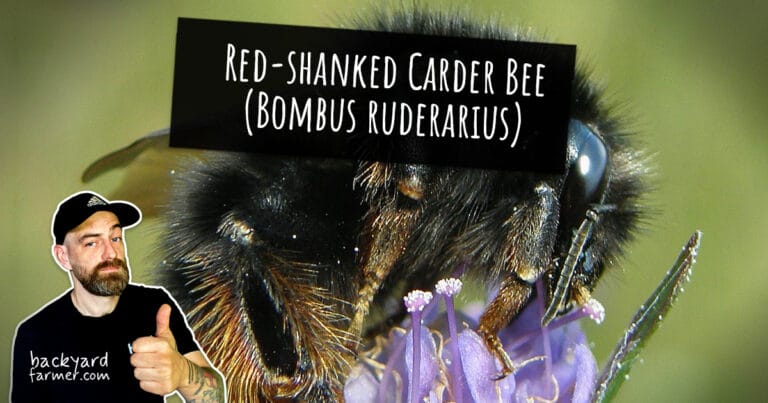
The Red-shanked Carder Bee is a small to medium-sized bumblebee with a generally dark appearance and muted colouring. Its body hair is relatively short and even, giving it a smoother outline compared to fluffier bumblebee species.
A key feature—though often subtle in the field—is the reddish colouring on the legs, which gives the species its common name. It is most often seen foraging low over flowers in grassland and meadow habitats.
Physical Characteristics
- Queen – Medium-sized with dark brown to black body hair and faint reddish tones on the legs.
- Worker – Smaller and similarly coloured, often appearing quite dark overall.
- Male (Drone) – Similar in size to workers, sometimes showing lighter facial hair and longer antennae.
Similar Species
The Red-shanked Carder Bee can be confused with other carder bees and dark bumblebee species:
- Common Carder Bee (Bombus pascuorum) – Much shaggier with warmer ginger-brown colouring.
- Brown-banded Carder Bee (Bombus humilis) – Paler and more yellow-brown, with clearer banding.
- Moss Carder Bee (Bombus muscorum) – Larger and noticeably fluffier with a softer, golden appearance.
If you’re unsure which bee you’ve spotted, our Bee Identification guide can help you narrow down UK species by size, colour, and behaviour.
Why the Red-shanked Carder Bee Matters
The Red-shanked Carder Bee plays an important role in pollinating wildflowers associated with traditional grassland ecosystems. Its presence is often a sign of high-quality habitat with good plant diversity.
Because it relies on flower-rich meadows and low-intensity land management, this species is particularly vulnerable to agricultural intensification and habitat fragmentation. Protecting these environments helps safeguard many other declining insects as well.
FAQs
No. This species is generally docile and focused on foraging, and it is unlikely to sting unless threatened.
It is usually active from late spring through summer, with peak sightings between June and August.
Yes. It is considered rare and has declined significantly from its former range.
Yes, females can sting, but stings are uncommon and typically occur only in defence.
How You Can Help
Supporting the Red-shanked Carder Bee means protecting and restoring flower-rich grassland habitats:
🌿 Plant Bee-Friendly Flowers
- Red clover, vetches, knapweed, meadow wildflowers
🚫 Avoid Harmful Pesticides
- Avoid insecticides and herbicides that reduce flowering plants and forage availability
🏡 Provide Nesting Spaces
- Leave areas of long grass and undisturbed tussocks where surface nests can form
By maintaining wildflower-rich landscapes and reducing chemical inputs, you help support the Red-shanked Carder Bee and other threatened pollinators.