
Introduction
The Heath Bumblebee (Bombus jonellus) is a small, fluffy bumblebee that most people notice by its three yellow bands, usually white tail, and short, rounded face.
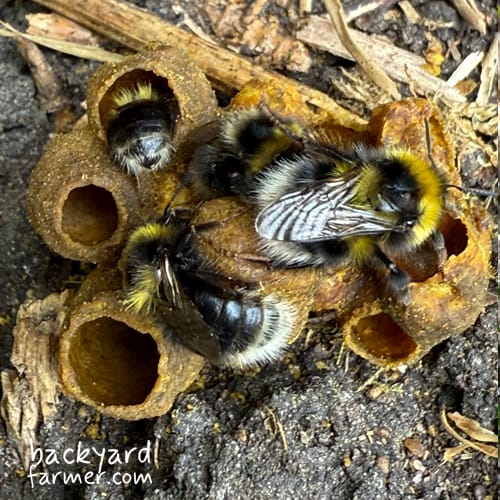
In the UK, it is most often seen around heathland, moorland, coastal habitat and other flower-rich places, although it can still turn up in gardens and parks.
Where people usually get caught out is with the Garden Bumblebee. At a glance, the two can look pretty similar. However, Heath Bumblebees are normally smaller, more compact, and much shorter-faced. In practice, that face shape is one of the best clues you can use.
This guide keeps the focus on practical identification. Below, you will learn the main field marks, how queens, workers and males differ, and how to tell a Heath Bumblebee from similar species without overcomplicating it.
Heath Bumblebee Species Profile
The Heath Bumblebee (Bombus jonellus) is one of the UK’s smaller bumblebees.
For most people, the easiest way to recognise it is by this mix of features:
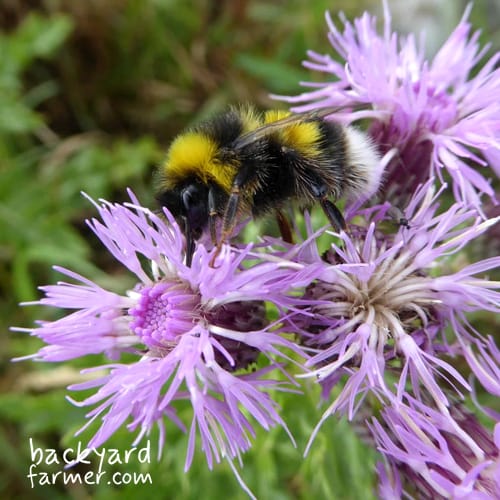
- A compact, fairly fluffy body
- Three yellow bands
- A usually white tail
- A short, rounded face
In the UK, it is most strongly associated with heathland, moorland, coastal habitat and other flower-rich open places. That said, it can still turn up in gardens and parks, so habitat is helpful, but it should not be doing all the work for you.
One thing worth keeping in mind is that the tail is usually white, not always. Some northern and island forms can show warmer buff, peachy or more orange-toned colouring.
Because of that, the safest approach is to look at the full picture — pattern, size and face shape — rather than trying to force the ID from tail colour alone.
How To Identify a Heath Bumblebee
The easiest way to identify a Heath Bumblebee is to get the overall impression first, then check the details.
In most cases, you are looking for:
- A small, compact-looking body
- A fairly fluffy appearance
- Three yellow bands
- A usually white tail
- A short, rounded face
The banding pattern is one of the best places to start. Most Heath Bumblebees show:
- One yellow band at the front of the thorax
- One yellow band at the back of the thorax
- One yellow band at the front of the abdomen
However, the real giveaway is often the face. Heath Bumblebees have a short, rounded face, which helps separate them from longer-faced lookalikes such as the Garden Bumblebee. If you only check one extra feature, make it that.
For a reliable ID, use a few clues together rather than forcing it from one detail. Size, shape, banding pattern, tail colour and face shape all matter.
It is also worth remembering that the tail is usually white, not always. Some northern and island forms can look warmer, with buff, peachy or even slightly orange-toned colouring. So, while tail colour is useful, it is better treated as part of the picture than the final answer on its own.
Queen Heath Bumblebee
The queen Heath Bumblebee is the largest caste in the colony, although she is still quite a small, compact-looking queen compared with bulkier spring bumblebees.
The main things to look for are:
- Three yellow bands
- A usually white tail
- A short, rounded face
- A smaller, less bulky build than species such as the Buff-tailed Bumblebee
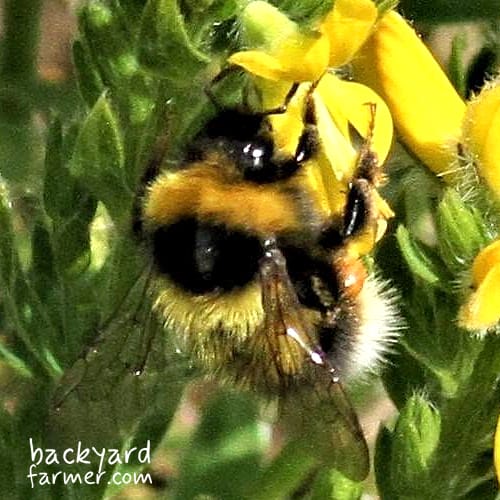
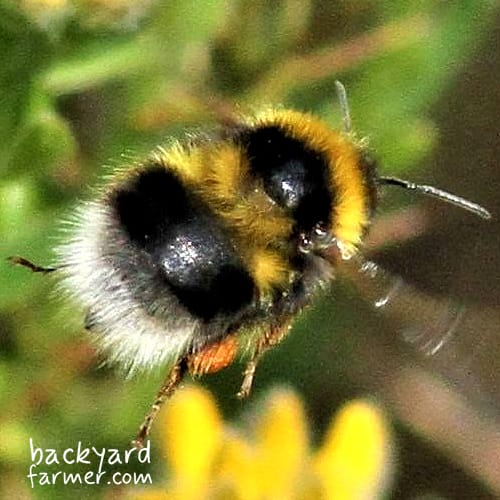
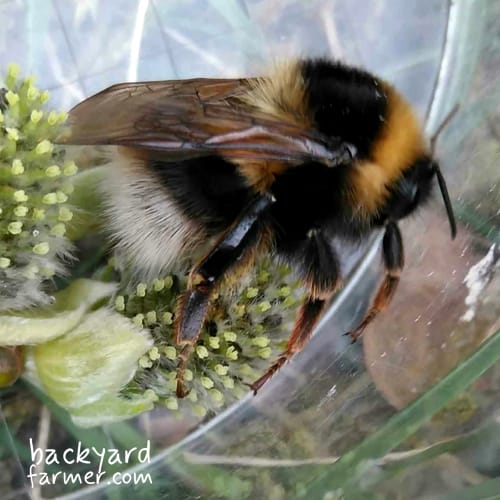
Queens are usually the first Heath Bumblebees people notice each year. You are most likely to see them in early spring, when they are out feeding and looking for somewhere to nest.
The main confusion risk is the Garden Bumblebee queen, because the colour pattern can look very similar at first glance. In practice, the best separator is still the face. A Heath Bumblebee queen has a noticeably shorter face, while a Garden Bumblebee queen looks longer-faced and a bit more drawn out.
There is also one extra clue worth knowing. Female Heath Bumblebees can show peach-coloured hairs fringing the pollen basket on the hind legs. That can be useful in a good view, although it is better treated as a supporting detail than the thing you build the whole ID around.
Female Worker Heath Bumblebee
The female worker Heath Bumblebee is smaller than the queen, although it keeps the same overall look.
The main things to look for are:
- Three yellow bands
- A usually white tail
- A short, rounded face
- A smaller size than the queen
- Pollen being carried on the hind legs in a good view
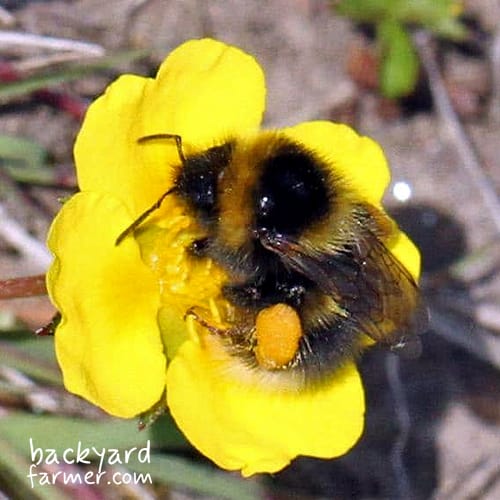
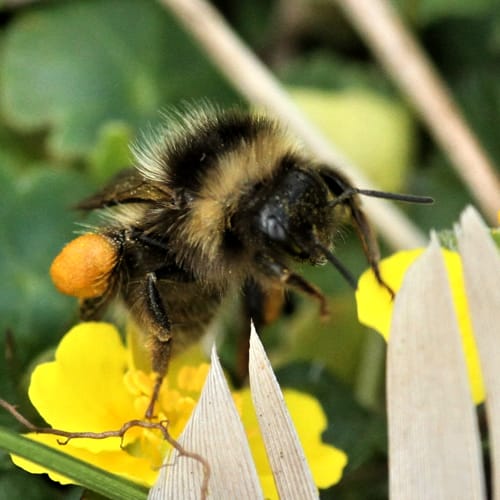
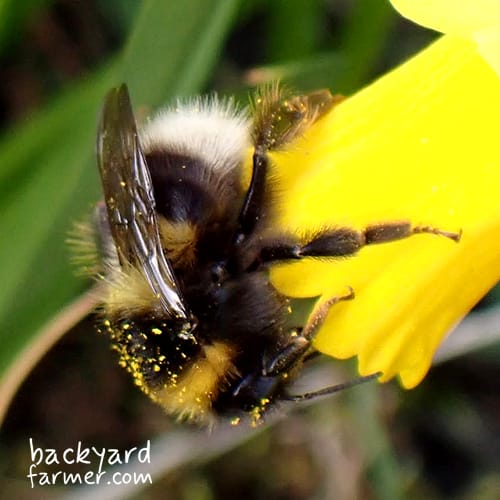
Workers appear after the queen has established a nest and are the Heath Bumblebees people are most likely to see foraging through the main part of the season.
In real life, workers can be one of the trickier forms to judge from quick photos, especially when the face is hidden. That is usually where the uncertainty starts.
If it looks like a small Garden-type bumblebee, the best next step is to check the face length rather than relying on the colour pattern alone.
Male Heath Bumblebee
The male Heath Bumblebee keeps the same basic three-band pattern as the female, but it has a few extra clues that can make life easier when you get a decent view.
The main things to look for are:
- Three yellow bands
- A usually white tail
- Yellow facial hair in many individuals
- Longer antennae than females
- Hairier hind legs with no pollen basket
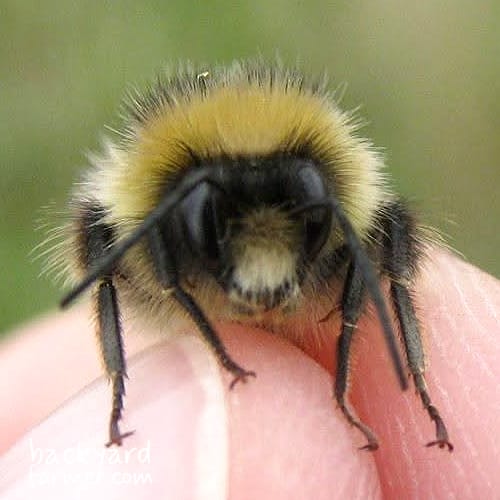
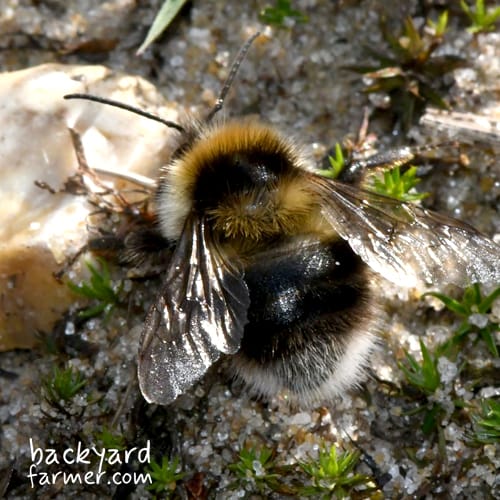
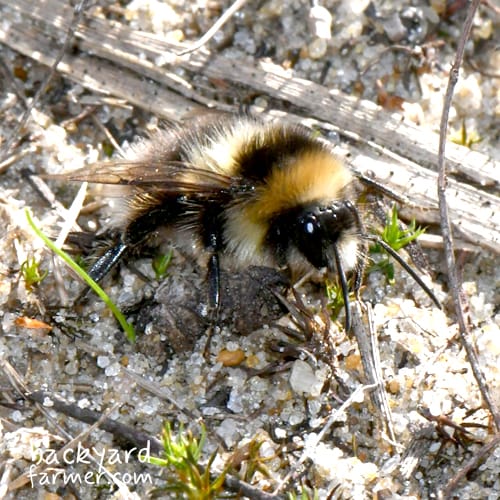
The yellow face is one of the most useful male clues. Still, it is not something to lean on too heavily. A yellow face does not automatically mean you have a Heath Bumblebee, because some other male bumblebees can look similar there too.
Season can help a bit as well. In some southern areas, males can appear earlier than people expect. Further north and in upland areas, they are more often noticed later in the season.
In practice, the best approach is to use the full mix of features together — especially the banding pattern, face shape, antennae and hind legs — rather than trying to decide it from facial colour alone.
Male or Female Heath Bumblebee?
If you are trying to work out whether a Heath Bumblebee is male or female, colour will only get you so far. The most useful clues are the antennae, hind legs and whether the bee is carrying pollen.
| Feature | Male Heath Bumblebee | Female Heath Bumblebee |
|---|---|---|
| Antennae | Longer | Shorter |
| Hind legs | Hairier, with no pollen basket | Smoother hind leg with a pollen basket |
| Pollen | Does not carry pollen | May carry pollen on the hind legs |
| Sting | Cannot sting | Can sting if handled or trapped |
| When you are most likely to notice them | Often more obvious later in the season, though timing can vary | Queens first in spring, then workers through the main season |
In a good photo, the hind legs are often the most practical place to check. If the bee is carrying pollen, you are looking at a female.
Heath Bumblebee Identification and Key Facts
If you want a quick reference before comparing similar species, this is the easiest place to check the basics.
| Fact | Heath Bumblebee details |
|---|---|
| Common name | Heath Bumblebee |
| Scientific name | Bombus jonellus |
| Best beginner clue | A small, fairly fluffy bumblebee with three yellow bands, a usually white tail, and a short, rounded face |
| Queen size | Around 16 mm |
| Worker size | Around 12 mm |
| Male size | Around 12 mm |
| Tail colour | Usually white, although some northern and island forms can look warmer buff, peachy or more orange-toned |
| Main banding pattern | A yellow band at the front of the thorax, one at the back of the thorax, and one at the front of the abdomen |
| Active months | Queens appear in early spring. The species can be seen through summer and into September, and a partial second generation may occur in the south |
| Habitat | Most strongly associated with heathland, moorland, coastal habitat and other flower-rich open places, but it can also turn up in gardens and parks |
| Nesting behaviour | Usually nests in old rodent nests or among surface litter such as leaf litter |
| Social behaviour | A social bumblebee with queens, workers and males |
| Useful flowers | Often associated with heather and other flower-rich habitats |
| UK status | Common and widespread, though often described as less frequent in parts of eastern England |
Use the table as a guide, not a checklist on its own. For a solid identification, it is still better to combine the overall pattern with face shape, size and the comparison clues from similar species.
Similar Species
This is where Heath Bumblebee identification usually gets a bit more realistic, because the overall pattern can overlap with a few other UK bumblebees.
If you are trying to avoid the usual mistakes, compare these things first:
- Face shape
- Overall size and build
- Tail colour
- Where the yellow bands sit
Garden Bumblebee
The Garden Bumblebee is the main lookalike and, for most people, the one that causes the most confusion.
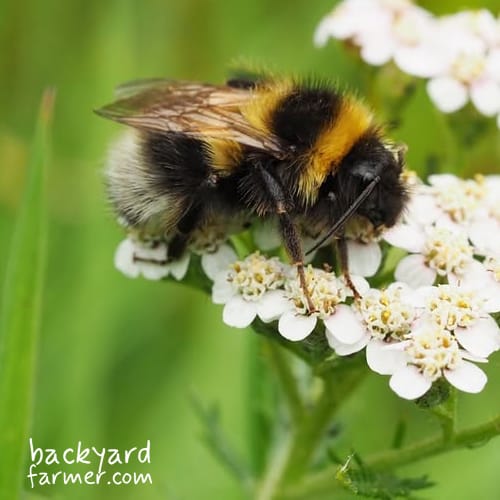
The key points are:
- Why they get mixed up: both usually show three yellow bands and a pale tail
- Best separator: the face — Garden Bumblebees have a much longer face
- Overall impression: Heath Bumblebees look smaller, shorter-faced and more compact
- Male clue: male Heath Bumblebees often have yellow facial hair, while male Garden Bumblebees have black facial hair
If you are stuck between the two, check the face before anything else. It is usually the quickest way out of the confusion.
White-tailed Bumblebee Complex
The White-tailed Bumblebee complex is mainly a problem with males and with photo ID.
The key points are:
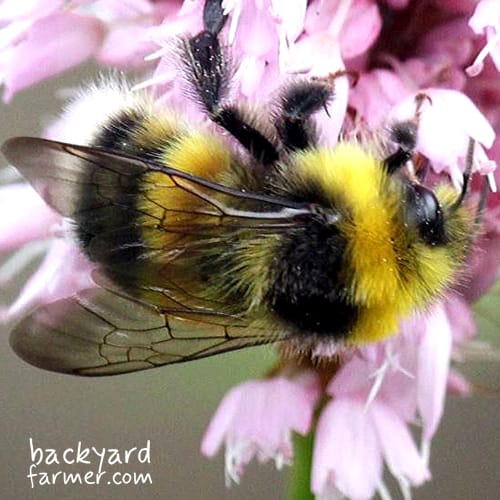
- Why they get mixed up: some White-tailed males can also show yellow facial hair and a pale tail
- Best separator: in male Heath Bumblebees, the yellow is strongest on the first abdominal segment and fades onto the second
- White-tailed pattern: in White-tailed males, the main yellow band is on the second abdominal segment
- Important caution: the White-tailed group is a species complex, so some views are simply not strong enough for a confident field ID
This is one of the clearest examples of why a single photo can only take you so far.
Buff-tailed Bumblebee
The Buff-tailed Bumblebee is usually less confusing in a good view, although it can still catch people out when the bee is worn or only partly seen.
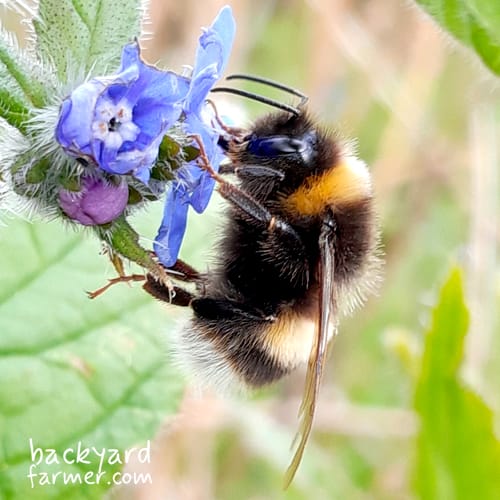
The key points are:
- Overall build: Buff-tailed Bumblebees usually look bulkier and heavier-set
- Banding pattern: they usually show two yellow bands rather than the cleaner three-band Heath pattern
- Queen clue: Buff-tailed queens often have a buff-toned tail rather than the cleaner white tail most people expect on a Heath Bumblebee
Most of the time, size and build will help before the finer details do.
Early Bumblebee
The Early Bumblebee can confuse beginners because it is also a small species, and males can show yellow facial hair too.
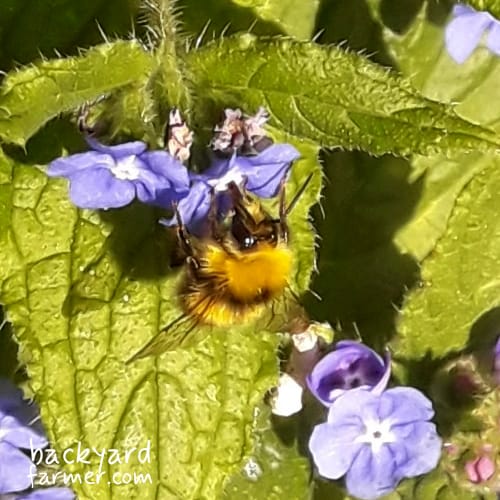
The key points are:
- Best separator: Early Bumblebees have an orange-red tail
- Heath difference: Heath Bumblebees are usually white-tailed
- Seasonal clue: Early Bumblebees are more strongly associated with the earlier part of the year
For most readers, tail colour is still the quickest way to separate these two.
Bilberry Bumblebee
The Bilberry Bumblebee is more relevant because of habitat overlap than close visual similarity.
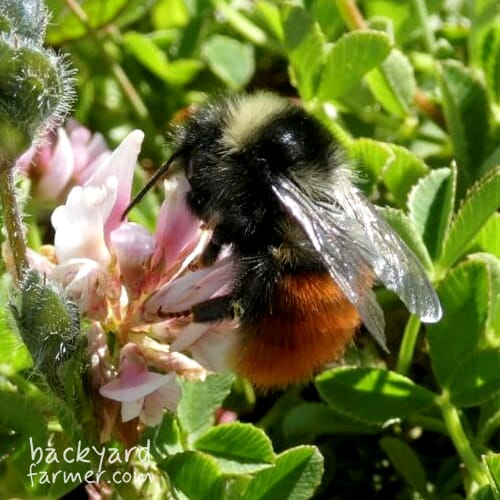
The key points are:
- Why they get mixed up: both species can occur in upland, moorland or heath-like places
- Best separator: Bilberry Bumblebees have a much larger red tail covering a bigger section of the abdomen
- Heath difference: Heath Bumblebees do not show that large red tail
If the tail is clearly visible, confusion is usually fairly low.
Ruderal Bumblebee
The Ruderal Bumblebee is worth mentioning as a secondary comparison because the overall banding pattern can look similar.
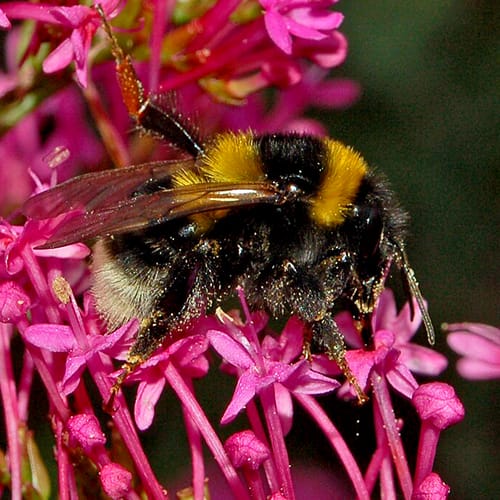
The key points are:
- Best separator: Ruderal Bumblebees are larger and much longer-faced
- Heath difference: Heath Bumblebees look smaller, more compact and shorter-faced
- How important it is: this is usually a less likely confusion species than the Garden Bumblebee, but still worth knowing about
Again, the face is one of the most reliable ways to separate them.
Where To See Heath Bumblebees
If you are trying to identify a Heath Bumblebee in the UK, these are the places most worth keeping in mind:
- Heathland
- Moorland
- Coastal habitat
- Flower-rich open places
That is where the species feels most at home, especially where there is a strong heathland feel and plenty of forage.
That said, Heath Bumblebees do not only turn up in wild-looking places. You can also see them in:
- Gardens
- Parks
- Suburban spaces with suitable flowers
So, you do not need to be out on open moorland to come across one. Habitat is a useful clue, but it works best when you use it alongside the bee’s size, pattern and face shape.
Across the UK, the Heath Bumblebee is common and widespread, although it is often described as less frequent in parts of eastern England.
Why the Heath Bumblebee Matters
The Heath Bumblebee is worth noticing for more than identification alone.
It matters because:
- It helps pollinate flowers in heathland, moorland, coastal habitat and other flower-rich places
- It forms part of the wider pollinator picture in the UK
- Its presence can suggest that an area still offers good forage and suitable nesting conditions
That does not make it a perfect indicator species on its own, but it does show why this is a bumblebee worth paying attention to.
In simple terms, it is not just another lookalike to tick off. It is part of what keeps these habitats working.
How You Can Help Heath Bumblebees
If you want to help Heath Bumblebees, the best thing you can do is make your space more flower-rich and a bit less overmanaged.
The most useful steps are:
- Provide reliable nectar and pollen sources through the season
- Include heather where it suits your soil and setting
- Leave patches of leaf litter, rough grass or undisturbed ground
- Avoid spraying flowering plants when bees are active
In most cases, a range of nectar-rich flowers will do more good than focusing too heavily on one plant.
For this species especially, the biggest gains usually come from improving the overall habitat rather than trying to do anything clever.
Frequently Asked Questions
These quick answers cover the most common Heath Bumblebee identification questions.
No. The Heath Bumblebee is generally considered common and widespread in the UK, although it is often described as less frequent in parts of eastern England.
Check the face first. A Heath Bumblebee has a shorter, rounder face, while a Garden Bumblebee looks much longer-faced. Heath Bumblebees are also usually smaller and more compact.
No. The tail is usually white, but some northern and island forms can show warmer buff, peachy or more orange-toned colouring. That is why tail colour is best used alongside face shape, size and banding pattern.
It is most strongly associated with heathland, moorland, coastal habitat and other flower-rich open places. It can also appear in gardens and parks where the surrounding habitat is suitable.
Females can sting if handled or trapped. Males do not sting.
Look for a small, fairly fluffy bumblebee with three yellow bands, a usually white tail, and a short, rounded face.
No. Yellow facial hair is a helpful clue, but it is not enough on its own because some other male bumblebees can show similar colouring as well. It is safer to use it alongside banding pattern, face shape, antennae and hind leg features.