
The Common Carder Bee (Bombus pascuorum) is one of the most familiar bumblebees in UK gardens. It is usually a warm ginger-brown, slightly scruffy-looking bee with a fluffy thorax, buff-orange tones on the abdomen, and at least some darker hairs mixed through the body.
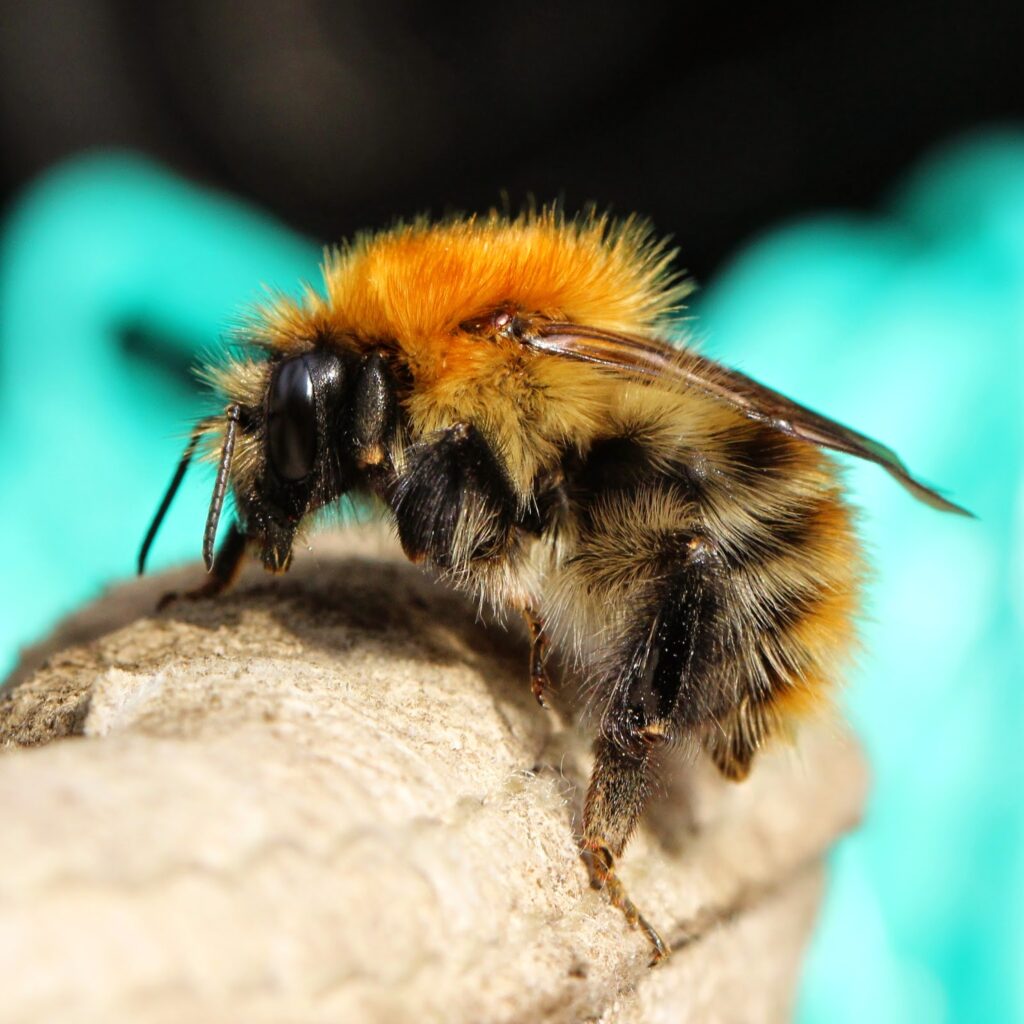
At first glance, it can look like a simple “ginger bee”, but this species is more variable than many beginners expect. Some individuals look pale and sandy, while others appear darker, rustier, or more heavily marked with black hairs.
The easiest beginner clue is this:
A fluffy ginger-brown bumblebee with no white tail, a slightly untidy carder-bee look, and some black hairs on the body.
Common Carder Bees are widespread across the UK and are often seen in gardens, allotments, meadows, hedgerows, rough grass, and flower-rich edges from spring through to autumn.
How to Identify Bombus pascuorum
Common Carder Bee identification is usually based on a combination of features rather than one perfect marking.
Look for:
- A ginger-brown or orange-brown thorax
- A fluffy, slightly untidy appearance
- A buff, ginger, or mixed dark abdomen
- Some black hairs on the abdomen or thorax
- No clean white tail
- A long-tongued feeding style on flowers like clover, dead-nettle, vetch, comfrey, and foxglove
This bee can vary a lot, so do not rely on colour alone. Instead, look at the full pattern, body shape, tail colour, and, where possible, the hind legs.
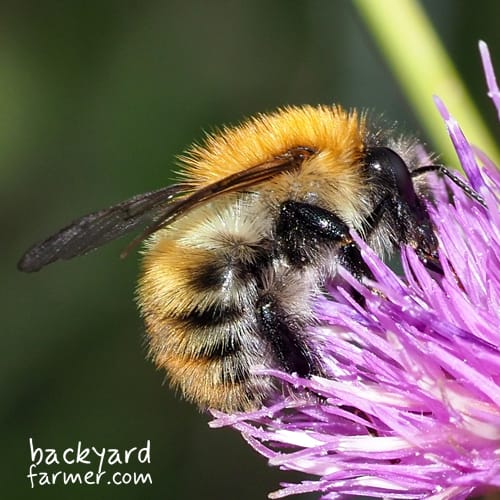
Queen Common Carder Bee
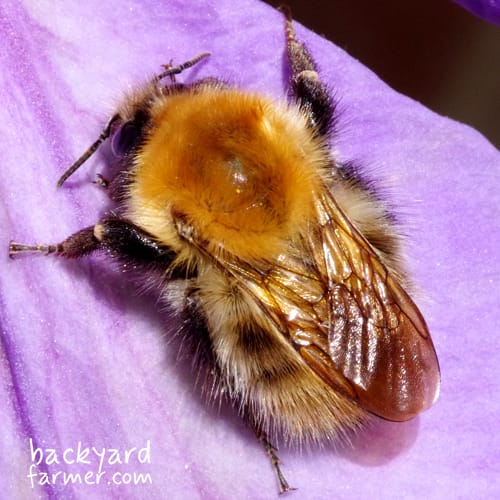
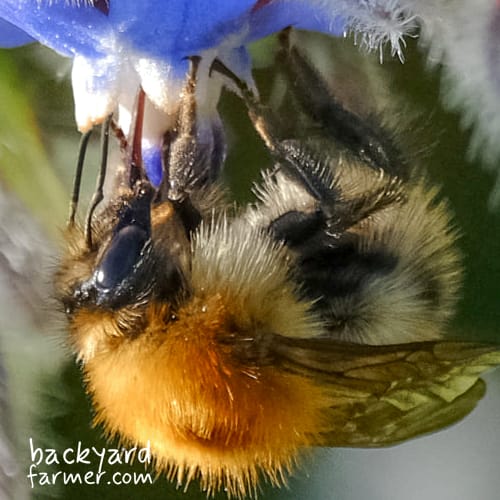
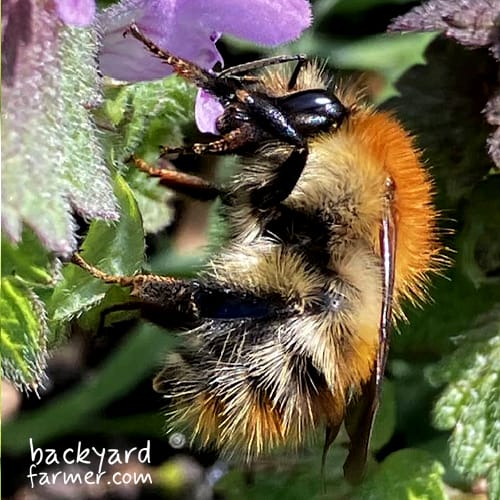
The largest caste, usually with a warm ginger-brown thorax and a mixed buff, orange-brown and darker abdomen. Queens are most often seen in spring when searching for nest sites.
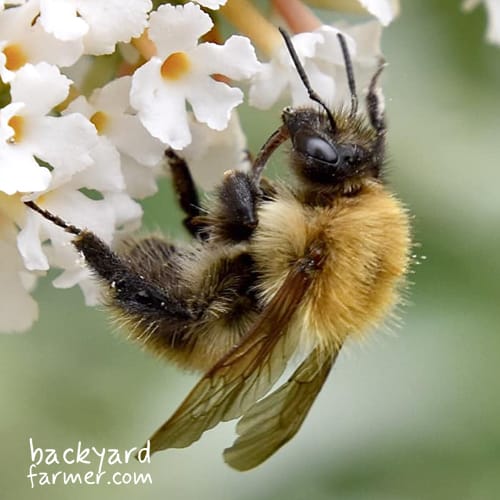
Female Common Carder Bee
Smaller than the queen, but usually similar in colour. Workers often look fluffy, ginger-brown and slightly variable, with some darker hairs mixed through the body.
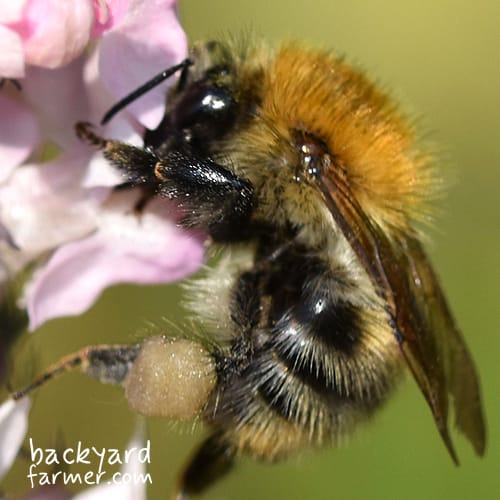
Male Common Carder Bee
Males usually appear later in the season. They often look fluffier, may seem paler around the face, and have noticeably longer antennae than females.
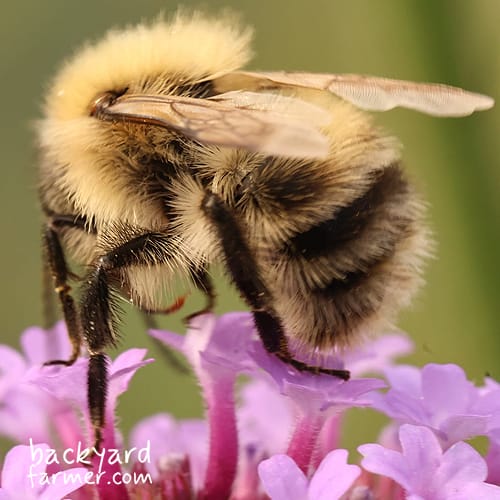
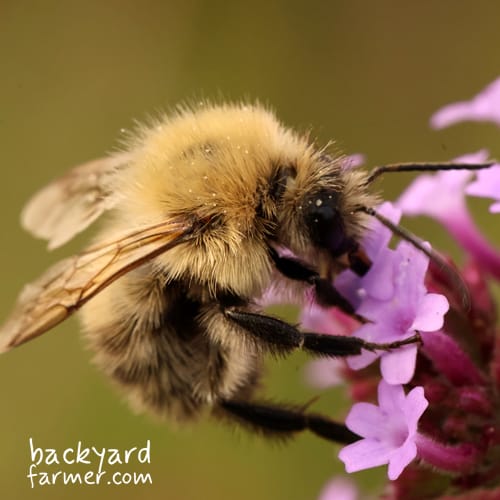
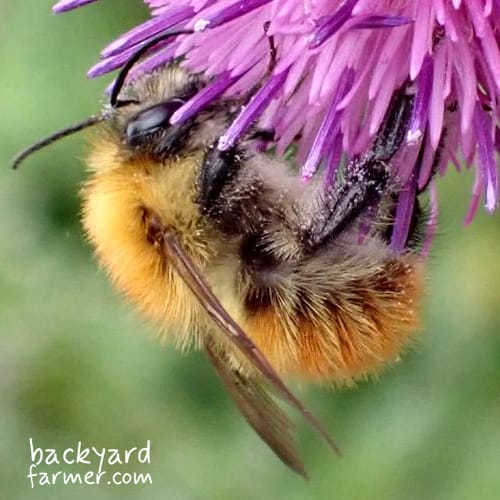
Male or Female Common Carder Bee?
A useful way to separate male and female Common Carder Bees is to look at the antennae and hind legs.
Female queens and workers have shorter antennae and a modified hind tibia that forms a pollen basket. If the bee is carrying pollen, this is easy to spot on the back legs.
Males have longer antennae and do not have pollen baskets. Their hind tibia looks hairier rather than smooth and basket-like. Males also cannot sting and do not collect pollen for the nest.
| Feature | Female Queen / Worker | Male |
|---|---|---|
| Antennae | Shorter | Longer |
| Hind legs | Smooth pollen basket on hind tibia | Hairier hind tibia, no pollen basket |
| Pollen loads | Often seen on workers | Never present |
| Sting | Can sting if trapped or handled | Cannot sting |
| Season | Queens in spring, workers spring to autumn | Mostly late summer to autumn |
Identification & Key Facts
| Attribute | Details |
|---|---|
| Common name | Common Carder Bee |
| Scientific name | Bombus pascuorum |
| Best beginner clue | Fluffy ginger-brown bumblebee with no white tail and some black hairs on the body |
| Queen size | Around 16–18 mm |
| Worker size | Around 10–15 mm |
| Male size | Around 10–14 mm |
| Active months | Usually March to October, sometimes later in mild autumns |
| Habitat | Gardens, allotments, meadows, hedgerows, grasslands, woodland edges, rough verges and flower-rich areas |
| Nesting behaviour | Usually nests on or just above the ground in long grass, moss, plant litter, hedge bases or tussocks |
| Social behaviour | Social bumblebee with queens, workers and males |
| Colony size | Often small to medium, commonly up to around 150 workers |
| Tongue length | Long-tongued, useful for deeper flowers |
| Useful flowers | Clover, vetch, dead-nettle, bird’s-foot trefoil, comfrey, foxglove, bramble, lavender, knapweed and thistles |
| UK status | Common and widespread |
Similar Species
The Common Carder Bee is one of the easier ginger bumblebees to spot, but several UK species can be confusing, especially from quick photos.
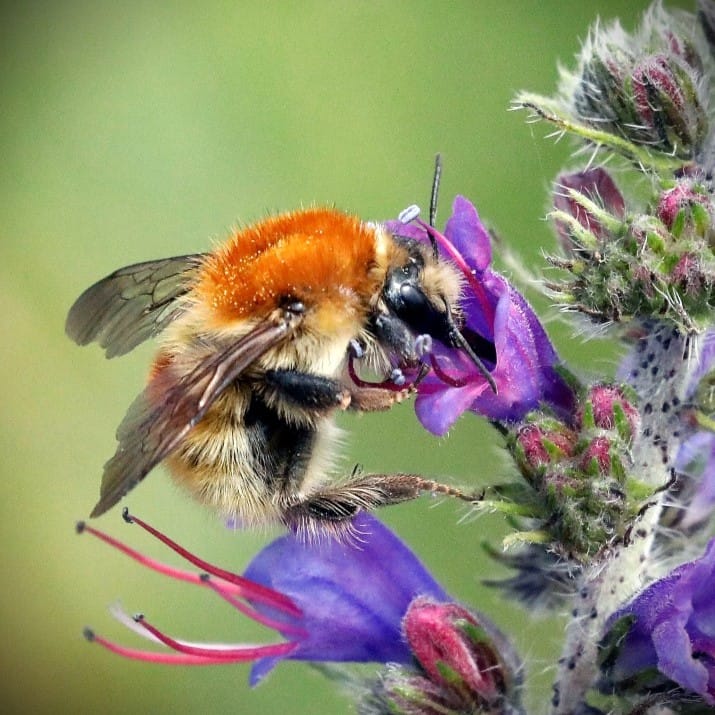
Brown-Banded Carder Bee (Bombus humilis) – Similar in colour, but usually more even-toned with a clearer brown abdominal band. It is also much less common than the Common Carder Bee.
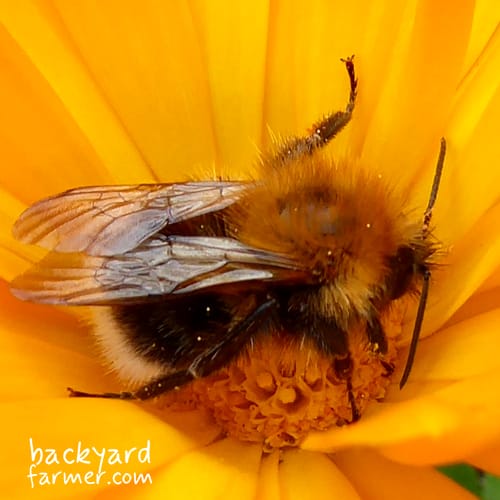
Tree Bumblebee (Bombus hypnorum) – Usually cleaner, paler and more golden-looking. Common Carder Bees often show more obvious black hairs mixed through the body.
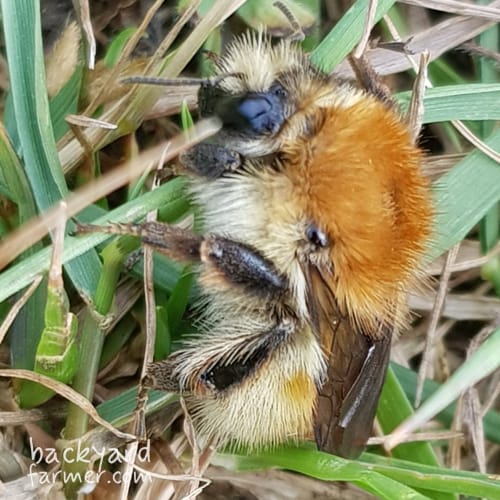
Moss Carder Bee (Bombus muscorum) – Has a ginger-brown thorax, but the abdomen is black with a clear white tail. Common Carder Bees do not have a white tail.
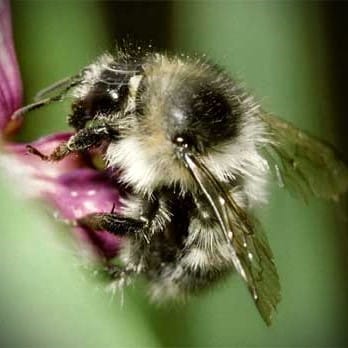
Shrill Carder Bee (Bombus sylvarum) – Much rarer and more habitat-specific. It is usually paler, greyer-yellow, and has a clearer dark band between the wing bases.
Discover more about identifying UK bees in our comprehensive Bee Identification Guide here.
Quick Carder Bee ID Tip
As a rough beginner rule:
Common Carder Bees usually have some black hairs. Moss and Brown-Banded Carder Bees often look cleaner and more evenly golden-brown.
This is not foolproof, but it helps narrow things down before checking habitat, tail colour and overall pattern.
Why Is It Called a Carder Bee?
Carder bees get their name from their nesting behaviour. Females gather, comb, and arrange dry grass, moss and plant fibres around the nest, almost like carding wool.
This makes rough grass, mossy edges, hedge bottoms and untidy corners especially useful. A garden that is too tidy can remove exactly the kind of habitat this bee needs.
Why the Common Carder Bee Matters
The Common Carder Bee is an important pollinator because it has a long active season and visits a wide range of flowers. Its longer tongue allows it to feed from deeper flowers that shorter-tongued bees may not use as easily.
In gardens and allotments, it is often seen on clover, comfrey, dead-nettle, bramble, lavender, foxglove, vetches and thistles. This makes it useful for both wildflowers and garden plants.
Although it is still widespread, it still depends on connected flower-rich habitats, pesticide-free gardens, and safe nesting corners.
How You Can Help Common Carder Bees
You can support Common Carder Bees by making your garden useful from spring through to autumn.
Plant Bee-Friendly Flowers
Good choices include:
- Clover
- Vetches
- Bird’s-foot trefoil
- Dead-nettle
- Comfrey
- Foxglove
- Bramble
- Lavender
- Knapweed
- Thistles
- Borage
- Honeysuckle
Try to include flowers across the whole season. Early flowers help queens after hibernation, while summer and autumn flowers support workers, males and new queens.
Leave Rough Nesting Corners
Common Carder Bees often nest in rough, grassy or mossy places.
Helpful areas include:
- Long grass around edges
- Mossy lawn patches
- Hedge bottoms
- Wildflower corners
- Leaf litter and plant debris
- Undisturbed tussocks
You do not need a messy garden everywhere. Even one quiet corner can make a difference.
Avoid Spraying Flowering Plants
Avoid insecticides wherever possible, especially on plants in flower. Even weed flowers such as dandelions, dead-nettle and clover can be valuable food sources for bees.
If you manage a lawn, consider leaving some flowering patches instead of mowing everything short.
Encouraging pollinator-friendly gardening ensures that the Common Carder Bee and other beneficial species continue to thrive. Explore these WWF tips on creating a bee-friendly garden to support pollinators like the Common Carder Bee.
Frequently Asked Questions
No. The Common Carder Bee is widespread and common across much of the UK. However, it still benefits from flower-rich gardens, rough nesting areas and pesticide-free spaces.
Males usually have longer antennae and no pollen baskets on the hind legs. Females, including queens and workers, have a modified hind tibia that forms a pollen basket and may carry pollen loads.
Queens and workers can sting if trapped or handled, but they are not aggressive. Males cannot sting.
No. If the bee has a ginger thorax, black abdomen and a clear white tail, it is more likely to be a Tree Bumblebee.
This species is naturally variable. Some individuals look pale and sandy, while others are darker and more heavily marked with black hairs. Age, wear, lighting and pollen dust can also change how they appear.
They usually nest on or just above the ground in long grass, moss, hedge bottoms, plant litter, tussocks or other sheltered vegetation. They may occasionally use cavities such as old bird nests or similar sheltered spaces.
Look for a fluffy ginger-brown bumblebee with no white tail and some black hairs mixed into the body. For males, also look for the longer antennae and lack of pollen baskets.