
White patches on courgette, pumpkin and squash leaves are often one of two things: natural silver markings or powdery mildew.
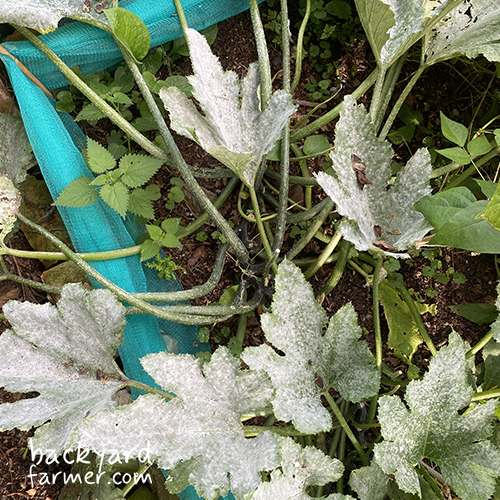
The easiest way to tell the difference is to look at where the white actually is. Natural markings look like they are in the leaf, often following the veins in a fairly regular pattern. Powdery mildew looks like it is on the leaf, more like somebody has dusted the surface with flour.
If it is mildew, don’t panic. It is extremely common on courgettes and squash, particularly later in the growing season, and plants can often continue cropping perfectly well.
Natural Markings or Powdery Mildew?
Some courgettes, pumpkins and squash naturally develop striking silver or white markings on their leaves. These can easily be mistaken for disease, especially if you haven’t grown that variety before.
Before cutting anything off, look closely at the white areas.
| What you see | Most likely cause |
|---|---|
| Silver or white pattern in the leaf, often following the veins | Natural markings |
| Flat colouring that doesn’t rub away | Natural markings |
| Dusty white patches on the leaf | Powdery mildew |
| Irregular patches that spread and join together | Powdery mildew |
If the plant otherwise looks healthy and the silver colouring forms a neat pattern within the leaf, there is probably nothing wrong with it.
What Does Powdery Mildew Look Like?
Powdery mildew usually starts as small, irregular white patches on the surface of the leaf.
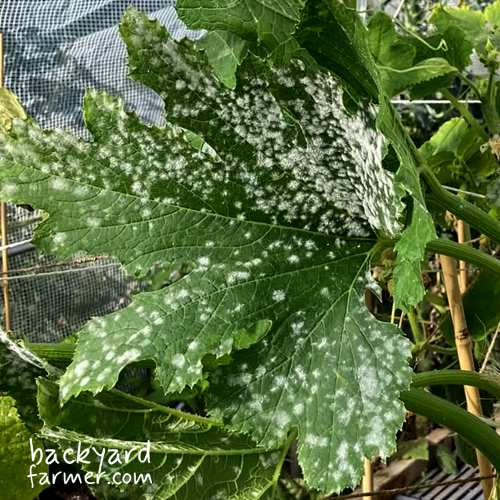
Unlike natural silver markings, the white looks as though it is sitting on top of the green leaf rather than being part of it. The patches gradually spread and may eventually join together, giving older leaves a dusty or floury appearance.
It often becomes most noticeable on mature courgette, pumpkin and squash plants in late summer.
What Should I Do About Powdery Mildew?
A small amount of mildew doesn’t mean you need to pull the plant out.
Start with the basics:
- Check the soil. If it is dry, give the plant a thorough watering around the roots.
- Keep moisture consistent. Courgettes and squash are thirsty plants and can become stressed surprisingly quickly in warm weather.
- Remove badly affected leaves. Take off older leaves that are heavily covered, yellowing or dying.
- Don’t strip the plant bare. Leaves with only a little mildew are still helping the plant.
- Improve airflow where you can. Dense, overlapping foliage creates still air around the plant.
- Keep harvesting. If your courgette is still producing healthy fruit, there is usually no reason to stop picking it.
How much attention the mildew needs also depends on when it appears.
A young plant becoming heavily affected in July is worth paying attention to. A courgette developing a bit of mildew in September after producing fruit all summer is much less concerning.
Should I Remove Leaves With Powdery Mildew?
Yes, but only the worst ones.
First make sure you are actually looking at mildew. If the white is natural silver colouring within the leaf, leave it alone.
Where mildew is present, prioritise leaves that are heavily coated, yellowing, damaged or starting to die.
There is no need to remove every leaf showing a small white patch. This is particularly important with pumpkins and winter squash that still have fruit ripening, as they benefit from retaining useful green foliage.
Use clean secateurs or a knife and remove affected leaves cleanly at the stem.
Can I Still Eat Courgettes, Pumpkins and Squash From an Affected Plant?
Yes.
Powdery mildew affects the foliage and does not make otherwise healthy courgettes, pumpkins or squash unsafe to eat.
Continue harvesting courgettes normally while the plant remains productive. Pumpkins and winter squash can also continue developing on an affected plant, so keep as much healthy foliage as reasonably possible while the fruit finishes ripening.
Judge the fruit itself separately and avoid anything that is rotten or badly damaged.
Why Does Powdery Mildew Appear on Courgettes, Pumpkins and Squash?
Courgettes, pumpkins and squash produce a huge amount of foliage and need plenty of water. If the soil repeatedly dries out, the plant can become stressed and more susceptible to powdery mildew.
Overcrowding can also contribute.
A few small courgette plants can look miles apart when they are first planted, but by midsummer their leaves may be overlapping heavily. Dense foliage reduces airflow around the plant.
As the season progresses, older leaves also begin to decline naturally and plants may already have spent weeks producing fruit. That is one reason powdery mildew becomes particularly common later in summer and into autumn.
It is worth clearing up one common misconception too: powdery mildew is not simply caused by getting the leaves wet.
Watering around the base is still the most practical approach because it puts moisture where the plant needs it, but rain or a splash of water on the foliage does not by itself cause powdery mildew.
If it is September and your courgette is still producing well, some mildew is often more unsightly than serious.
How to Reduce Powdery Mildew
You cannot guarantee a completely mildew-free plant, but good growing conditions can reduce the chances of a severe early attack.
- Give courgettes, pumpkins and squash enough room for their mature size.
- Keep the soil consistently moist during dry weather.
- Mulch around plants to slow moisture loss.
- Pay particular attention to courgettes growing in containers, which can dry out quickly.
- Remove genuinely dying foliage where this improves airflow.
- Consider mildew-resistant varieties if it is a regular problem.
Courgettes are particularly easy to plant too closely because young plants take up very little room. By midsummer, one plant can occupy a surprisingly large space.
You can use the free Backyard Farmer Allotment Planner to lay crops out at their mature spacing before planting, which makes it easier to avoid overcrowding later in the season.
What If It Doesn’t Look Like Powdery Mildew?
If the white areas are neither a neat natural pattern nor a dusty coating on the surface, look for other symptoms.
- Distorted, puckered or badly stunted growth: this could point towards a virus or another problem.
- Yellow or discoloured patches with growth underneath the leaf: this may be downy mildew rather than powdery mildew.
- Young leaves turning pale after planting out: cold weather, strong sun or poor hardening off can also damage young plants.
If the plant is growing strongly and the silver colouring sits within the leaf tissue in a regular pattern, it is much more likely to be natural.
Frequently Asked Questions
The two most common explanations are natural silver markings and powdery mildew. Natural colouring looks like it is in the leaf, while powdery mildew looks like a dusty coating on the leaf.
Remove leaves that are heavily affected, yellowing or dying, but don’t strip the plant of useful green foliage just because a few white patches have appeared.
Yes. Powdery mildew affects the foliage and does not make normal, healthy courgettes unsafe to eat.
A severe early infection can reduce the amount of healthy foliage available to support developing fruit, but pumpkins can continue ripening while the plant still has useful green leaves.
Diluted milk is a common home remedy for powdery mildew, but results reported by gardeners are mixed and the RHS does not recommend homemade plant-protection mixtures.
It also won’t repair an already damaged leaf.
For most courgettes and squash, start with consistent watering, decent airflow and removing only badly affected foliage.
Powdery mildews tend to affect particular groups of plants. Mildew on a courgette may also affect other susceptible squash-family crops nearby, but it does not mean every unrelated vegetable on the plot will develop the same problem.
The Simple Check
White in the leaf is usually natural; white sitting on the leaf is more likely to be powdery mildew.
If it is mildew, keep the plant watered, remove only badly affected foliage and keep harvesting while it remains productive.