
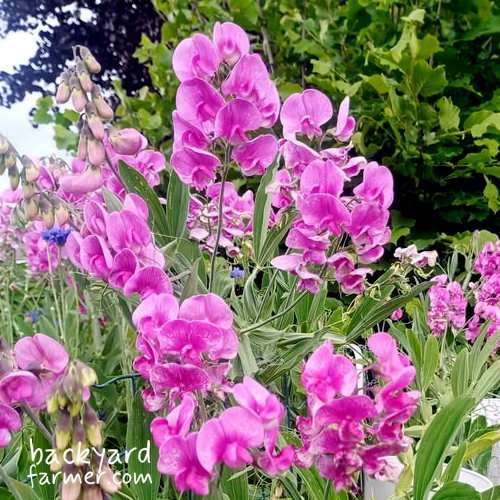
Everlasting sweet peas (Lathyrus latifolius) are hardy perennial climbers that return year after year. They produce masses of pink, white or reddish flowers through summer and typically reach around 1.5–2.5m with support.
Unlike annual sweet peas, they have little or no scent, but established plants are tough, long-lived and relatively easy to care for. Grow everlasting sweet peas in sun or light shade, provide sturdy support and cut the dead stems back to ground level once dormant.
Important: the pods and seeds are not edible.
Everlasting Sweet Pea at a Glance
| Botanical name | Lathyrus latifolius |
| Common names | Everlasting sweet pea, perennial sweet pea |
| Plant type | Hardy herbaceous perennial climber |
| Height | Around 1.5–2.5m |
| Spread | Around 0.5–1m |
| Position | Full sun or partial shade |
| Soil | Fertile, moist but well-drained |
| Flowering | Summer |
| Hardiness | Very hardy in UK gardens |
| Support | Required |
| Scent | Little or none |
| Edible? | No |
What Is an Everlasting Sweet Pea?
Everlasting sweet pea is the common name most often used for Lathyrus latifolius, a perennial relative of the annual sweet pea.
Annual sweet peas (Lathyrus odoratus) are usually grown from seed each year and are well known for their fragrance. Everlasting sweet peas die back over winter, survive underground and produce fresh growth again in spring.
They are generally more vigorous and longer lived than annual sweet peas, but the flowers have little or no scent.
Where to Plant Everlasting Sweet Peas
Choose a sunny position if possible. Everlasting sweet peas will tolerate partial shade, but flowering is usually better with more light.
They prefer fertile soil that drains reasonably well. The ground does not need to stay constantly moist, but prolonged drought can reduce flowering.
Give the plant plenty of space. Everlasting sweet peas are vigorous climbers and their tendrils can scramble into nearby shrubs and perennials if left unchecked.
They work particularly well against fences, trellis, arches and other sturdy supports.
If planting beside a wall or fence, avoid putting the rootball right against the base, where the soil is often unusually dry. Plant slightly further out and train the young shoots back towards the support.
When and How to Plant Everlasting Sweet Peas
Spring and autumn are both good times to plant container-grown everlasting sweet peas.
Water the pot first, then plant at roughly the same depth it was growing in the container. Firm the soil gently around the roots and water well.
Improve poor soil with garden compost or other well-rotted organic matter if needed, then mulch around the base to help conserve moisture.
Install the support at planting time so the young shoots have somewhere to climb straight away.
How to Grow Everlasting Sweet Peas From Seed
Everlasting sweet peas can be grown from seed, although germination can be uneven.
The seeds have a hard outer coat, which means some may take longer than others to absorb water and begin growing.
When to Sow Everlasting Sweet Pea Seeds
Spring is the simplest time to sow everlasting sweet pea seeds.
Some suppliers also recommend autumn sowing, but spring sowing under cover is a straightforward option for most UK gardeners.
How to Sow Everlasting Sweet Pea Seeds
Sow the seeds in peat-free seed compost in small pots or root trainers.
Cover with around 1cm of compost and keep them somewhere cool but protected, at roughly 15°C if possible.
Keep the compost damp rather than saturated.
Once the seedlings are growing strongly, gradually acclimatise them to outdoor conditions before planting them into their final position.
Do Everlasting Sweet Pea Seeds Need Soaking?
Not necessarily.
Because the seed coat is hard, helping the seed absorb water can encourage germination. One option is to place the seeds on damp tissue until they begin to swell before sowing.
You can also soak them overnight, but sow them promptly afterwards because soaked seed can rot if left for too long.
Germination may still be uneven, so don’t discard the pot just because some seeds appear before the others.
How to Support Everlasting Sweet Peas
Everlasting sweet peas are vigorous climbers, so give them a sturdy trellis, fence, arch or obelisk.
Loosely tie young shoots in until the tendrils find the support. Once established, the plant will largely climb for itself.
Avoid very lightweight supports because mature plants can produce a considerable amount of growth by midsummer.
Watering and Feeding
Water regularly while newly planted and during prolonged dry spells once established.
Ground-grown everlasting sweet peas generally need little feeding in reasonable garden soil. An annual mulch of compost or other organic matter is usually enough.
Plants in containers dry out faster and may benefit from occasional feeding during active growth.
Do You Need to Deadhead Everlasting Sweet Peas?
Deadheading isn’t essential, but it can help prolong flowering and, more importantly, prevent unwanted seed pods from forming.
If you want to collect seed, leave some flowers alone and allow their pods to mature.
If you don’t want the plant self-seeding around the garden, remove the pods before they ripen.
When and How to Cut Back Everlasting Sweet Peas
Cut everlasting sweet peas back to ground level once the top growth has died back.
The plant is herbaceous, so its stems and leaves naturally die at the end of the growing season while the perennial root system remains alive underground.
You can cut the dead growth down in autumn or leave it standing through winter and clear it away before new growth starts.
Leaving the stems until late winter can also provide a little extra shelter for insects and other wildlife.
How Hard Should You Cut Back Everlasting Sweet Peas?
Cut the old stems right back to ground level.
There is no need to leave a framework of stems. Fresh shoots emerge from the perennial base the following year.
What Do You Do With Everlasting Sweet Peas After Flowering?
Deadhead faded flowers if you want to extend the display or reduce seed formation.
Later in the year, allow the stems and foliage to die back naturally before cutting the dormant growth down.
Don’t be alarmed if the plant seems to disappear completely over winter. That’s normal for a herbaceous perennial.
Everlasting Sweet Pea Seed Pods
Everlasting sweet peas produce pea-like seed pods after flowering.
Leave some pods to mature if you want to collect seed. Once they have ripened and dried, the seeds can be gathered and stored for sowing.
If you don’t want seedlings appearing elsewhere in the garden, remove the pods before they mature.
Are Everlasting Sweet Pea Pods Edible?
No. Do not eat everlasting sweet pea pods or seeds.
Despite their pea-like appearance, Lathyrus latifolius is grown as an ornamental plant and its pods and seeds should not be eaten.
This is particularly important in vegetable gardens and allotments, where the pods could be mistaken for an edible crop.
How to Propagate Everlasting Sweet Peas
Everlasting sweet peas are most commonly propagated from seed.
Established plants can also be divided in spring or autumn. Separate a healthy rooted section from the parent plant, replant it promptly and water it well while it establishes.
Can You Grow Everlasting Sweet Peas From Root Cuttings?
Root cuttings are not the usual method recommended for everlasting sweet peas.
Growing from seed or dividing an established plant are the simpler options.
Can You Grow Everlasting Sweet Peas in Pots?
Yes, but these vigorous, long-lived plants generally perform better in the ground.
If you want to grow one in a container, use a large, deep pot and provide a sturdy support from the start.
Container-grown plants will also need more regular watering and may require occasional feeding during summer.
Common Problems
Everlasting sweet peas are generally tough plants, but a few problems can occur.
Powdery Mildew
A white, powdery coating can develop on the foliage, particularly when plants are stressed by dry conditions or the growth becomes very congested.
Water during prolonged dry weather and thin excessive growth if airflow is poor.
Aphids
Aphids sometimes gather around young shoots and flower buds.
Small colonies can usually be squashed by hand or washed off with water.
Slugs and Snails
Fresh spring shoots and young seedlings are the most vulnerable.
Established plants usually grow strongly enough to tolerate minor damage, but young plants may need protecting if slugs and snails are causing serious problems.
Poor Flowering
Poor flowering can have several causes, including:
- too much shade
- prolonged drought
- a newly planted specimen still establishing
- heavy competition from surrounding plants
Avoid assuming that poor flowering automatically means the plant needs fertiliser.
My Everlasting Sweet Pea Has Disappeared
This is usually normal during winter.
Everlasting sweet peas die right back and can leave almost nothing visible above ground.
Established plants can also be surprisingly slow to reappear in spring, so give them time before assuming the plant has died or digging up the root area.
Frequently Asked Questions
Yes. Everlasting sweet peas are herbaceous perennials. The top growth dies back in winter and fresh shoots emerge again the following year.
Usually very little or none. If strong fragrance is your main reason for growing sweet peas, annual Lathyrus odoratus varieties are a better choice.
Yes. Cut the dead stems right back to ground level once the plant is dormant.
Cut them right back to ground level. Fresh shoots will emerge from the perennial base the following season.
They flower mainly through summer, although exact timing varies with weather, location and cultivar.
They can tolerate partial shade, but flowering is generally better in a sunnier position.
Yes. Lathyrus latifolius is very hardy and does not normally need winter protection in UK gardens.
No. The pods and seeds should not be eaten.