
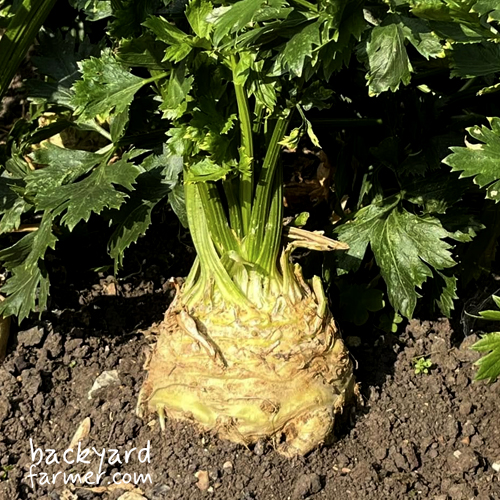
Celeriac is a slow-growing vegetable grown for its knobbly, swollen stem base rather than its leaves. It’s a useful crop for UK allotments and vegetable gardens, providing harvests from autumn through winter.
Growing good celeriac takes patience. The key is to start seeds early, keep the soil consistently moist and give the plants enough time to develop before winter.
When to Sow and Plant Celeriac in the UK
Celeriac needs a long growing season, so start seeds indoors during March or April.
Young plants are sensitive to prolonged cold, which can trigger premature flowering, known as bolting. Once established outdoors, however, celeriac tolerates much cooler conditions.
The UK growing calendar is straightforward:
- March–April: Sow seeds indoors in a warm propagator or on a bright windowsill.
- April–May: Grow seedlings on in individual modules or pots.
- Late May–June: Harden off and plant outdoors once conditions are suitable.
- June–September: Keep plants watered, mulched and weed-free.
- October–March: Harvest mature celeriac as required, depending on winter conditions.
In northern England, Scotland and colder inland areas, planting may need to wait until early June.
Avoid rushing young plants outdoors during a cold spring. An extra week or two under suitable protection is preferable to exposing them to prolonged chilling.
Best Celeriac Varieties to Grow in the UK
Several celeriac varieties perform well in British conditions. Modern varieties are often selected for smoother roots, good storage qualities and resistance to bolting.
| Variety | Characteristics |
|---|---|
| Ilona F1 | Relatively quick to mature, slow to bolt and stores well |
| Prinz AGM | Large white-fleshed roots with good bolting resistance |
| Monarch AGM | Relatively smooth roots with a mild, nutty flavour |
| Ibis AGM | Fast-growing variety with smooth roots and good disease resistance |
Choosing a dependable variety helps, but soil preparation, watering and growing conditions remain important for producing a worthwhile harvest.
BYF Variety Pick: Celeriac ‘Ilona F1’
A reliable choice for UK growing, ‘Ilona F1’ is described by D.T. Brown as quicker to mature than older varieties, slow to bolt and capable of producing large, firm roots with good storage qualities.
Where to Grow Celeriac
Celeriac grows best in fertile, moisture-retentive soil that drains well.
Choose a position in full sun or light shade. A bed that holds moisture during summer can be preferable to an exposed position where the soil dries out quickly.
Before planting:
- Incorporate well-rotted garden compost where needed.
- Remove perennial weeds and loosen compacted soil.
- Ensure the ground drains without drying out rapidly.
- Allow sufficient space for the mature foliage.
Celeriac can grow well in heavier soils, provided they aren’t permanently waterlogged.
In no-dig beds, plant into established soil enriched with a surface layer of compost.
The most important consideration is maintaining steady growth throughout summer, particularly as the swollen base begins to develop.
How to Sow Celeriac Seeds
Celeriac seeds are tiny and germination can be slow. Starting them indoors provides the warmth and growing time they need.
- Prepare the trays: Fill seed modules or small pots with peat-free seed compost and gently firm the surface.
- Sow the seeds: Scatter seeds thinly and cover with only a very light sprinkling of compost.
- Provide warmth: Maintain a temperature of approximately 15–20°C using a propagator or suitable indoor location.
- Keep moist: Water gently so the compost stays evenly moist without becoming waterlogged.
- Allow time: Germination usually takes two to three weeks, sometimes longer, and may be uneven.
- Provide good light: Once seedlings emerge, move them somewhere bright and keep temperatures above approximately 10°C.
- Prick out seedlings: When large enough to handle, transfer seedlings into individual pots or thin modules to one plant each.
Continue growing the seedlings under protection until outdoor conditions improve.
A warm greenhouse is suitable, but avoid leaving young plants in an unheated greenhouse during prolonged cold weather.
Growing tip: Celeriac seeds need only a very light covering. Burying them too deeply can reduce germination.
When and How to Plant Celeriac Outside
Plant celeriac outdoors from late May to early June, once frost risk has passed and temperatures have settled.
Harden off seedlings over approximately 7–10 days, gradually increasing their exposure to outdoor conditions.
To plant celeriac:
- Water seedlings before removing them from their pots.
- Prepare planting holes in fertile, moist soil.
- Space plants 30cm apart, with 40–45cm between rows.
- Set each plant at its previous growing depth, keeping the crown level with the soil surface.
- Gently firm the soil around the roots.
- Water thoroughly after planting.
Where space allows, increasing the distance between plants to 40–45cm can give them more room to develop, although wider spacing does not guarantee larger roots.
Avoid burying the crown. The swollen base develops around the lower stem and should remain clear of surrounding soil as it expands.
Temporary horticultural fleece can provide protection during unsettled late-spring weather.
Planning Your Celeriac Bed
Celeriac occupies growing space for much of the year, so it helps to plan where it will grow alongside other vegetables.
Our free Allotment Planner lets you allocate growing space, arrange crops and plan your beds around seasonal harvests.
Growing Celeriac in Pots and Containers
Celeriac can be grown in containers, although garden beds are generally easier to manage because the plants need consistent moisture throughout summer.
Choose a generously sized container with good drainage. Around 30–40cm in width and depth is a practical starting point for a single plant, rather than a strict minimum.
Fill it with fertile, moisture-retentive compost and position it in full sun or light shade.
Check moisture regularly, particularly during warm or windy weather. Container compost dries out faster than garden soil, and repeated drying can restrict development.
For several plants or larger harvests, growing directly in a prepared bed is usually more practical.
Caring for Celeriac Plants
Once established, celeriac needs regular watering, occasional weeding and enough space for its foliage and swollen base to develop.
Watering
Consistent soil moisture is particularly important during summer and early autumn.
Celeriac may continue producing healthy-looking leaves even when dry conditions are restricting development of the swollen base.
During dry weather:
- Check moisture a few centimetres beneath the soil surface.
- Water thoroughly to reach the root zone.
- Avoid repeated cycles of very dry and very wet soil.
- Check container-grown plants more frequently.
A good soaking when needed is generally more useful than frequent light sprinklings.
Feeding and Mulching
Celeriac benefits from soil enriched with well-rotted compost before planting.
Once established, apply an organic mulch to help retain moisture, suppress weeds and reduce the need for watering.
Keep mulch away from the crown so it doesn’t cover the developing swollen base.
Where the soil has been prepared with plenty of compost, additional feeding is often unnecessary.
Should You Remove Celeriac Leaves?
As celeriac matures, older outer leaves gradually spread horizontally and may begin to yellow.
Gradually remove older outer leaves when they fall horizontally, but leave healthy upright foliage intact.
Damaged leaves and unwanted side shoots can also be removed carefully.
The plant needs its healthy foliage to capture sunlight and support growth. Heavily pruning healthy leaves is not a proven way to produce larger celeriac.
Common Celeriac Growing Problems
Most problems with celeriac relate to poor development, early cold exposure or unsuitable growing conditions.
Why Is My Celeriac Not Growing a Large Root?
Celeriac can produce plenty of healthy foliage while developing only a small swollen base.
This doesn’t necessarily mean anything is wrong. The edible base enlarges gradually, with substantial development often occurring during late summer and autumn.
However, consistently poor growth may indicate a problem.
| Possible cause | What to do |
|---|---|
| Insufficient growing time | Start seeds indoors early and allow growth into autumn |
| Irregular watering | Keep soil consistently moist, especially during summer |
| Overcrowding | Maintain appropriate spacing between plants |
| Planting too deeply | Keep the crown at soil level |
| Poor soil conditions | Improve fertility, drainage and moisture retention |
| Early cold exposure | Protect seedlings and avoid planting out too soon |
If plants appear healthy but the swollen bases are small during summer, leave them growing rather than harvesting prematurely.
Once autumn arrives, growth will slow as temperatures and daylight decrease.
Celeriac Bolting
Bolting occurs when celeriac prematurely produces a flowering stem instead of developing a worthwhile swollen base.
It is commonly triggered by prolonged cold exposure while plants are young.
Once flowering begins, the plant is unlikely to produce a good harvest.
Prevent bolting by maintaining suitable temperatures during propagation, hardening off carefully and waiting for settled conditions before planting outdoors.
Slugs and Snails
Slugs and snails can damage young celeriac leaves and occasionally feed on developing swollen bases.
Inspect plants during damp weather, remove nearby hiding places and encourage natural predators.
Where damage is significant, use appropriate slug controls.
Celery Leaf Miner
Celery leaf miner larvae tunnel through the leaves, producing pale patches that eventually turn brown and papery.
Remove badly affected leaves where practical. Insect-proof mesh can help protect crops where leaf miner is a recurring problem.
Celery Leaf Spot
Celery leaf spot is a fungal disease that produces brown spots and damaged areas on the foliage.
It spreads more readily in prolonged damp conditions.
Improve airflow, avoid unnecessary overhead watering and remove heavily infected plant material.
Good garden hygiene and crop rotation can help reduce problems in subsequent years.
When and How to Harvest Celeriac
Celeriac is generally ready to harvest from October, although early varieties may produce usable roots sooner.
The swollen base gradually becomes visible above ground. Harvest when the roots have reached a useful size rather than waiting for a particular diameter.
To harvest:
- Choose a mature plant with a well-developed swollen base.
- Insert a garden fork a short distance from the plant.
- Loosen the soil carefully to avoid damaging the base.
- Lift the plant and remove excess soil.
- Trim the fine roots and foliage before preparing or storing.
Celeriac can remain in the ground after reaching maturity, allowing you to harvest individual plants as needed.
However, the condition of the soil and severity of winter weather will determine how long this remains practical.
Storing Celeriac Through Winter
Mature celeriac tolerates cooler conditions than young seedlings, making it useful for autumn and winter harvesting.
However, a plant surviving frost does not always mean the swollen base will remain in good eating condition.
Leaving Celeriac in the Ground
In mild areas with well-drained soil, celeriac can often remain outdoors through much of winter.
Harvest individual plants when required rather than lifting the entire crop at once.
In colder conditions, straw around the plants can help insulate the ground and make harvesting easier.
Prolonged severe frost, repeated freezing and thawing, or winter waterlogging can damage the roots.
If these conditions are likely, lifting and storing the crop is safer than leaving it exposed.
Storing Harvested Celeriac
Celeriac can also be lifted and stored somewhere cool and protected from frost.
For longer storage:
- Select healthy, undamaged roots.
- Remove the foliage and brush away loose soil.
- Place the roots in boxes of slightly moist sand, coir or peat-free compost.
- Store somewhere cool, dark and frost-free.
- Check occasionally for softening or signs of rot.
A suitable cool shed, garage or cellar can work well, provided temperatures remain above freezing.
Avoid allowing stored roots to dry out completely.
What to Grow After Celeriac
Celeriac occupies the ground for much of the growing season, so what follows depends on when you harvest.
Beds cleared during autumn may be suitable for garlic or overwintering broad beans, depending on local conditions and planting dates.
Beds cleared during winter or early spring can be prepared for the next growing season.
Celeriac belongs to the same plant family as celery, carrots, parsnips and parsley. Avoid repeatedly growing closely related crops in the same soil, particularly where pests or diseases have occurred.
For more ideas on planning your next crop, explore our UK Plant Library.
Frequently Asked Questions
Celeriac is moderately challenging because it requires a long growing season and consistently moist soil. However, it grows successfully in UK conditions when started indoors during spring and planted into fertile ground after the risk of damaging cold weather has passed.
Celeriac generally needs at least six months to mature. Seeds are normally started indoors in March or April, with the main harvesting period beginning in October. The exact timing depends on variety and growing conditions.
Yes. A polytunnel can provide protection during spring, although additional warmth may be necessary for germination and young seedlings. Mature celeriac usually grows well outdoors, so a polytunnel isn’t essential once conditions are suitable for planting out.
Celeriac may continue developing slowly during mild November weather, but growth reduces as temperatures and daylight fall. Most root development should occur during summer and autumn, making November primarily a harvesting period.
Yes, mature celeriac can often remain in well-drained ground during a mild UK winter. However, prolonged severe frost and waterlogging can damage the swollen base. In colder or wetter conditions, lifting and storing the crop is the safer option.
Small celeriac may result from insufficient growing time, irregular watering, overcrowding, poor soil conditions or planting too deeply. The swollen base develops gradually, so plants that appear small during summer may still produce a worthwhile harvest by autumn.