

Raspberries are one of the easiest soft fruits to grow in the UK. Once established, a healthy row can crop for years with relatively little work beyond pruning, mulching and keeping unwanted suckers under control.
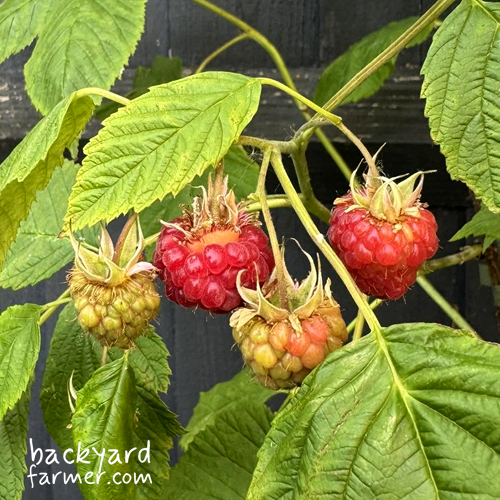
The main thing to get right is whether you’re growing summer-fruiting or autumn-fruiting raspberries, because they fruit on different-aged canes and need different pruning.
Plant them in fertile, moisture-retentive but well-drained soil. Full sun gives the heaviest crops, although partial shade is perfectly workable. Avoid ground that stays waterlogged.
Summer or Autumn Raspberries?
This is the most important distinction to understand before planting.
Summer-fruiting raspberries produce their crop on canes that grew the previous year. Autumn-fruiting raspberries produce most of their fruit on fresh canes grown that same season.
| Summer-Fruiting | Autumn-Fruiting | |
|---|---|---|
| Fruits on | Previous year’s canes | Current year’s canes |
| Main harvest | June–September | August–October |
| Pruning | Remove only canes that have fruited | Cut all canes down |
| Support | Usually needs wires | Often needs less support |
| First crop | Usually later | Can fruit in the first year |
| Beginner friendly | Fairly easy | Very easy |
The easiest way to remember it is:
Summer raspberries keep this year’s new canes to fruit next year. Autumn raspberries fruit on the canes they grow that same year.
You may also see summer raspberries described as floricane varieties and autumn raspberries as primocane varieties.
If you have enough room, growing some of each can keep fresh raspberries coming from early summer well into autumn.
UK Raspberry Growing Calendar: When to Plant, Prune and Harvest
Exact timings vary by variety, region and weather, but this is a useful UK guide.
| Job | Typical Time |
|---|---|
| Plant bare-root raspberry canes | November–March |
| New cane growth | Spring onwards |
| Mulch established plants | Late winter–spring |
| Harvest summer raspberries | June–September |
| Prune summer raspberries | After harvesting |
| Harvest autumn raspberries | August–October |
| Prune autumn raspberries | February |
Bare-root raspberries are best planted while dormant, provided the ground isn’t frozen or waterlogged.
Where to Grow Raspberries
Raspberries are fairly adaptable, which is one reason they work so well on allotments and in UK gardens.
A sheltered position in full sun is ideal, but they cope with partial shade better than many fruit crops.
Can Raspberries Grow in Shade?
Yes. Raspberries can crop successfully in partial shade.
Full sun generally gives stronger plants and larger harvests, though, so don’t confuse shade tolerant with shade loving.
A position receiving direct sun for part of the day is still perfectly usable. Deep, permanent shade is much less suitable.
What Soil Do Raspberries Need?
The ideal raspberry soil is:
- fertile
- moisture-retentive
- well drained
- slightly acidic to neutral
A pH of roughly 6.0–6.7 is suitable.
If your soil is poor, incorporate some well-rotted garden compost or other organic matter before planting. If it is already reasonably fertile, there’s no need for an elaborate soil-preparation routine.
Can Raspberries Grow in Clay Soil?
Yes.
Clay itself isn’t the problem. Its ability to retain moisture can actually suit raspberries well.
The problem is clay that remains saturated for long periods, particularly through winter. Persistent waterlogging increases the risk of root problems.
If water regularly sits around the planting area, improve the drainage or grow the raspberries in a slightly raised bed.
Give Raspberries Room to Spread
A row of five small raspberry canes won’t stay that size.
Raspberries spread through underground suckers, and established plants will gradually widen beyond the original planting line.
Give them a permanent position where unwanted shoots can be dug out without causing problems in neighbouring beds, paths or lawns.
Choosing Raspberry Plants
Raspberries are commonly sold as bare-root canes or container-grown plants.
Bare-root raspberries are usually available during the dormant season and are an economical way to establish a full row.
Container-grown raspberries can be planted over a wider part of the year, although plants put in during warmer weather need closer attention to watering.
Whichever you choose, start with healthy planting material from a reputable supplier.
Raspberries can carry virus diseases, so taking suckers from a very old or unhealthy patch isn’t always the bargain it appears to be.
Raspberry Varieties Worth Growing in the UK
There is no single best raspberry variety. Flavour is subjective, and even experienced growers often disagree about their favourites.
| Variety | Type | Useful For |
|---|---|---|
| Glen Ample | Summer | Heavy crops and large fruit |
| Tulameen | Summer | Well-regarded flavour |
| Malling Jewel | Summer | Reliable, relatively compact growth |
| Joan J | Autumn | Large fruit, thornless canes and easy pruning |
| Polka | Autumn | Reliable upright growth |
| All Gold | Autumn | Yellow berries |
| Ruby Beauty | Summer (compact) | Containers and smaller spaces |
For a first raspberry planting, an autumn-fruiting variety such as Joan J or Polka is particularly straightforward because the pruning is difficult to get wrong.
How to Plant Raspberry Canes
If you’re creating a summer raspberry row, install the posts and wires before planting. It’s much easier than working around an established root system later.
- Clear perennial weeds and improve poor soil with well-rotted organic matter if needed.
- Dig a wide planting hole or shallow trench and spread bare roots naturally.
- Plant at roughly the same depth the cane was previously growing. Avoid burying the roots deeply.
- Space plants 40–60cm apart, with around 1.5–2m between rows.
- Backfill and firm the soil gently around the roots.
- Water thoroughly.
- Apply a 5–7.5cm organic mulch around the row, keeping it slightly away from the cane bases.
Should You Cut Raspberry Canes Back After Planting?
Most newly planted raspberry canes can be shortened to around 25cm above ground level to encourage strong new shoots.
There is an important exception.
If you have bought long-cane summer raspberries specifically to produce fruit that season, don’t automatically cut them down or you’ll remove the fruiting wood you paid for.
Check how your plants were supplied before pruning them.
Planning your raspberry row? You can add raspberries to the free Backyard Farmer Allotment Planner to check spacing and see how the row fits alongside your other crops.
Caring for Raspberry Plants
Once established, raspberries aren’t particularly demanding.
The main ongoing jobs are watering during genuinely dry conditions, mulching, controlling suckers and pruning correctly.
Watering Raspberries
Keep newly planted raspberries reliably moist while they establish.
Established plants growing in open ground usually cope well with normal UK rainfall, but water during prolonged dry spells, especially while berries are forming and swelling.
Don’t water simply because the surface looks dry. Check whether the soil below is actually short of moisture.
Raspberries in containers need much more regular watering.
Mulching Raspberries
Apply around 5–7.5cm of organic mulch in late winter or spring.
Mulching helps:
- retain moisture
- suppress weeds
- improve soil structure
- reduce competition around the shallow roots
Keep wet mulch slightly clear of the cane bases.
Do Raspberries Need Feeding?
Not always.
Raspberries growing in reasonably fertile soil that receives an annual organic mulch may need very little additional fertiliser.
If growth is weak, cropping is consistently poor or the plants show signs of deficiency, feeding can help. Avoid routinely applying excessive fertiliser simply because the calendar says spring.
Too much nitrogen encourages soft, dense growth and can increase some cane-disease problems.
Supporting Raspberry Canes
Summer raspberries normally benefit from a permanent post-and-wire support.
A simple setup uses posts around 1.8m tall, with horizontal wires running along the row at roughly 60cm intervals.
Tie the canes loosely to the wires.
One useful method is to keep the older fruiting canes on one side of the row and the new green canes on the other. After harvesting, it’s much easier to see which stems need removing.
Do Autumn Raspberries Need Support?
Often they need less support, but not necessarily none.
Some autumn varieties remain upright without help. Others grow tall or become top-heavy with fruit.
On an exposed allotment, a couple of wires or lengths of string may be enough to stop the plants flopping across paths.
How to Stop Raspberries Spreading
Raspberry suckers are normal.
Fresh shoots can appear away from the original crowns as the underground root system spreads.
Dig or pull out unwanted shoots while they’re still manageable. Keeping a defined row each year is much easier than allowing the patch to spread unchecked for several seasons.
Root barriers are possible, but most growers won’t need one.
Will Raspberry Canes Grow Through Weed Membrane?
Weed membrane isn’t a reliable way to contain raspberries.
Suckers can emerge through planting holes and gaps or appear beyond the edges of the membrane.
It may help suppress weeds around the row, but expect to remove unwanted raspberry shoots manually.
How to Prune Raspberries
Summer and autumn raspberries should not be pruned in the same way.
Before reaching for the secateurs, make sure you know which type you’re growing.
Not Sure Whether Your Raspberries Are Summer or Autumn Fruiting?
This is common when taking on an allotment with an established raspberry patch.
Don’t guess and cut everything down.
Leave the healthy canes in place for one growing season and watch how they fruit.
If older canes produce an early crop while fresh green canes develop alongside them, you’re likely dealing with summer-fruiting raspberries.
If new canes grow and then flower and fruit towards late summer or autumn, they’re likely autumn-fruiting.
Mixed plantings are also possible where different varieties have been allowed to sucker together.
How to Prune Summer-Fruiting Raspberries
After the summer harvest, identify the canes that have just produced fruit.
They usually look browner and woodier than the fresh green canes produced that season.
Cut the old fruited canes right down to ground level.
Keep the strongest new green canes because those will carry next year’s crop.
Thin weak or badly positioned growth, keeping roughly six to eight strong new canes per plant, then tie them onto the support wires.
The simple rule is:
Old cane that has fruited = cut it out.
Fresh green cane = keep it for next year.
How to Prune Autumn-Fruiting Raspberries
Autumn raspberries are much simpler.
In February, cut every cane down close to ground level.
Fresh shoots emerge in spring, grow through summer and produce that year’s autumn crop.
If the patch becomes very congested, weaker shoots can be thinned later so the remaining canes have more room.
Optional: Double-Cropping Autumn Raspberries
Established autumn raspberries can be encouraged to give a smaller second crop.
Instead of cutting every cane completely down, retain the lower section of a few strong canes after removing the part that fruited. These can produce an earlier summer crop the following year.
Remove those canes after the summer harvest while the fresh new shoots continue towards their normal autumn crop.
Varieties such as Joan J and Polka can be grown this way, although the extra summer crop may reduce the later autumn harvest.
When to Harvest Raspberries
Summer-fruiting raspberries generally crop from June to September, depending on variety.
Autumn raspberries normally begin from around August and can continue into October.
These are broad windows rather than fixed dates. Variety, weather and location all affect ripening, and cooler areas may see autumn crops starting noticeably later.
How to Tell When Raspberries Are Ripe
A ripe raspberry should be:
- fully coloured
- plump
- easy to pull away from the central core
If you have to tug at it, leave it a little longer.
Pick regularly once the crop starts, preferably when the berries are dry.
Don’t judge a new raspberry row by its first crop. Summer raspberries in particular may spend their first season producing the canes that will fruit the following year.
Growing Raspberries in Pots
Raspberries can be grown successfully in containers, although they need more attention than plants growing directly in the ground.
Compact varieties are the easiest choice.
Use a container at least around 40cm wide and 30cm deep, although larger is better if you intend to keep the plant for several years.
Plant one raspberry per pot using a good peat-free growing medium with some loam content.
Container-grown raspberries need regular watering because their roots can’t search beyond the compost for moisture.
They also need more regular feeding than raspberries growing in open ground. A general-purpose liquid feed around once a month through the growing season is usually sufficient.
Provide support if the canes become tall or unstable.
If you have suitable open ground available, planting raspberries directly into it is usually easier and gives the roots much more space.
Propagating Raspberries
Raspberries make propagation simple by producing their own suckers.
Healthy suckers can be separated from the parent plant during dormancy and replanted with as much root attached as possible.
Only propagate from vigorous, healthy plants. Avoid repeatedly taking suckers from an old raspberry bed showing poor growth, unusual leaf mottling or persistent disease.
Common Raspberry Problems
| Problem | Possible Cause |
|---|---|
| Lots of leaves but little fruit | Young plants, wrong pruning, excessive nitrogen or too much shade |
| Canes dying back | Cane blight, spur blight, damage or root problems |
| Small larvae inside berries | Raspberry beetle |
| Mottled or distorted leaves | Aphids, mites or possible virus |
| Plants declining in wet ground | Possible root rot |
| Fruit disappearing | Birds or squirrels |
| Row getting wider every year | Normal suckering |
Raspberry Beetle
Raspberry beetle larvae feed inside developing fruit.
Summer raspberries tend to be more affected, while later autumn crops often escape the worst of the problem.
Keep the raspberry area tidy and harvest regularly. If damage becomes severe, more targeted control may be worthwhile.
Raspberry Cane Diseases
Cane blight and spur blight can cause raspberry canes to weaken or die back, while raspberry rust affects the foliage.
Avoid letting the row become a dense thicket.
Remove old fruited canes promptly, thin overcrowded growth and cut out obviously infected material. Good airflow and avoiding excessive nitrogen both help reduce disease pressure.
Raspberry Root Rot
Persistent wet ground is one of the biggest risk factors for raspberry root problems.
Affected plants may gradually lose vigour, produce weak canes and eventually die.
If raspberries repeatedly struggle in a wet position, deal with the drainage rather than continually replacing the plants.
Birds and Wildlife
Birds and squirrels will take ripe raspberries, but not every raspberry row needs to be covered automatically.
If losses are significant, netting or a fruit cage can protect the crop.
Keep netting tight and properly secured so birds and other wildlife cannot become tangled in loose material.
How Long Do Raspberry Plants Last?
A healthy, well-managed raspberry bed can remain productive for around ten years, sometimes longer.
Eventually, plants may lose vigour or accumulate pest and disease problems.
If an old row seriously declines, establishing new plants in a different suitable position is preferable to immediately planting another full row in exactly the same ground.
Restoring an Old Raspberry Patch
If you’ve inherited a neglected raspberry patch on an allotment, don’t assume it needs ripping out.
Start by:
- Removing completely dead or badly diseased canes.
- Clearing severe weed competition.
- Working out whether the plants are summer- or autumn-fruiting before hard pruning.
- Thinning badly congested growth.
- Removing suckers spreading into paths or neighbouring beds.
- Applying an organic mulch.
- Watching how the plants respond over the following season.
An untidy raspberry patch can often be brought back into useful production without replacing it.
Frequently Asked Questions
Plant bare-root raspberry canes between November and March while they’re dormant, provided the soil isn’t frozen or waterlogged.
Yes. Raspberries will crop in partial shade, although full sun normally produces stronger plants and larger harvests.
Yes. Clay can suit raspberries well if it drains adequately. Persistent waterlogging is the main problem.
Autumn-fruiting raspberries can produce fruit in their first season. Summer-fruiting raspberries normally need to grow canes one year before those canes fruit.
Yes. Raspberries naturally spread through underground suckers. Remove unwanted shoots annually to keep the row under control.
They can emerge through gaps and planting holes or appear beyond the edge of the membrane, so membrane isn’t a reliable way to contain raspberries.
Not necessarily. Plants growing in fertile soil with an annual organic mulch may need very little additional fertiliser.
Summer varieties generally crop from June to September, while autumn varieties usually crop from August into October.
A well-managed raspberry bed can remain productive for around ten years.