Leaf mould is a free soil conditioner that can improve vegetable beds, conserve moisture and provide an ingredient for homemade potting compost.
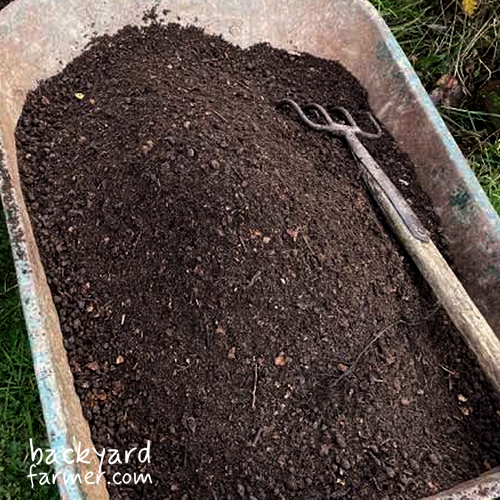
The best way to use leaf mould depends on how far it has decomposed. Partly rotted leaves are useful for mulching and covering soil, while dark, crumbly leaf mould can improve growing conditions and be added to potting mixes.
Unlike garden compost, leaf mould is relatively low in nutrients. Its main value is improving soil structure and supporting soil life.
Quick Guide: Uses for Leaf Mould
| Leaf Mould Condition | Best Uses | Preparation |
|---|---|---|
| Partly decomposed, recognisable leaves | Mulching and soil covering | Remove weeds and debris |
| Dark, crumbly leaf mould | Improving vegetable beds and mulching | Spread over soil |
| Fine, fully decomposed leaf mould | Homemade potting compost | Sieve if necessary |
| Very fine, mature leaf mould | Seed-sowing mixes, with precautions | Sieve and use clean equipment |
The basic rule: Coarser leaf mould is useful on the soil surface. Save your finest, most mature material for homemade growing mixes.
Is Your Leaf Mould Ready to Use?
You don’t need to wait until every leaf has completely decomposed before using it.
The best guide is its appearance and texture rather than how many months it has been stored.
Partly Decomposed Leaf Mould
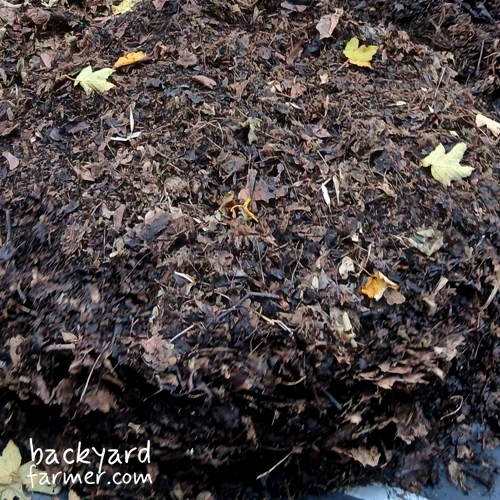
After roughly a year, many leaves will have softened and started breaking apart, although their original shapes may still be recognisable.
This material is useful for mulching and covering bare soil, where it can continue decomposing naturally.
There’s no need to sieve it or wait for a fine texture when using it as a surface covering.
Fully Mature Leaf Mould
Well-rotted leaf mould is dark brown, crumbly and contains few recognisable leaf fragments.
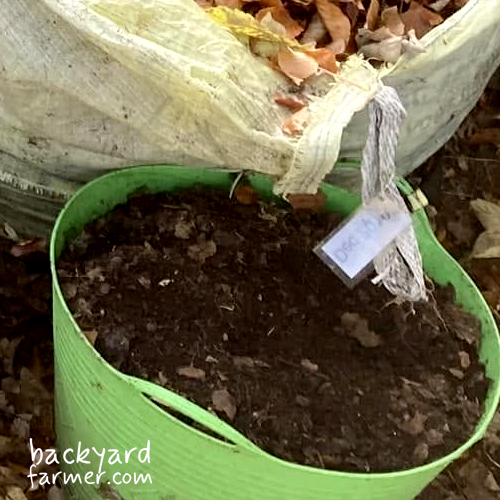
It commonly takes around two years to reach this stage, although decomposition varies with leaf type, moisture and conditions.
Mature leaf mould can be used directly on vegetable beds or as an ingredient in homemade growing mixes. Sieving is only necessary when a finer texture is needed.
If you’re still preparing your first batch, our How to Make Leaf Mould in the UK guide explains the collection and decomposition process.
How to Use Leaf Mould in Vegetable Beds
Leaf mould adds organic matter and helps improve soil structure and moisture management over time.
There are two main ways to apply it, depending on whether your priority is improving the soil or maintaining a protective mulch.
Improving Soil Structure
Leaf mould benefits both heavy clay and lighter, sandy soils.
Clay soil: Organic matter gradually improves soil structure and workability, helping water and air move through the soil more effectively.
Sandy soil: Leaf mould improves moisture retention, helping the soil hold water for longer between rainfall or watering.
These improvements develop gradually. Leaf mould won’t immediately correct serious compaction or poor drainage.
How to apply leaf mould as a soil conditioner:
- Remove persistent weeds from the vegetable bed.
- Spread mature leaf mould evenly over the soil surface.
- Leave it for earthworms and other soil organisms to process naturally.
- Add further organic matter as needed over subsequent growing seasons.
There’s no need to dig leaf mould into established beds, making surface application particularly suitable for no-dig growing.
However, well-rotted leaf mould can also be incorporated when preparing soil if that suits your gardening method.
If you have a limited supply, prioritise areas where soil structure or moisture retention needs the most improvement.
Using Leaf Mould as a Mulch
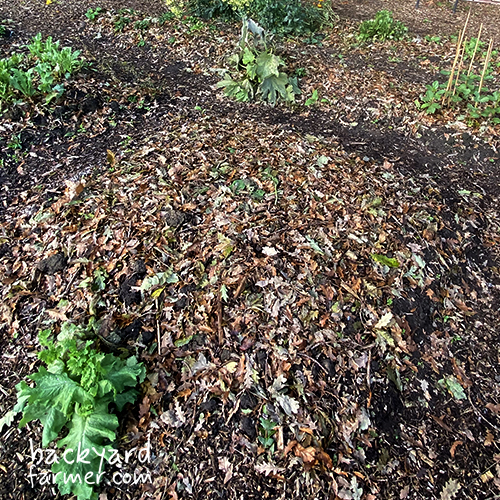
Leaf mould also makes an effective surface mulch around established vegetables.
A sufficient covering helps conserve moisture, protect exposed soil and suppress emerging weeds.
How to mulch with leaf mould:
- Remove established weeds before applying the mulch.
- Apply when the soil is moist but not waterlogged or frozen.
- Spread leaf mould evenly over the exposed surface.
- Keep stems, crowns and vulnerable young growth clear.
- Top up the mulch as it gradually decomposes.
For substantial weed suppression and moisture conservation, the RHS generally recommends organic mulch around 5–7.5 cm deep.
This isn’t a compulsory depth for every application of leaf mould. A thinner dressing can still contribute organic matter and improve soil conditions, although it won’t suppress weeds as effectively.
If you’re using freshly fallen leaves rather than decomposed material, see our Leaf Mulch for Vegetable Gardens guide.
Making Potting Compost With Leaf Mould
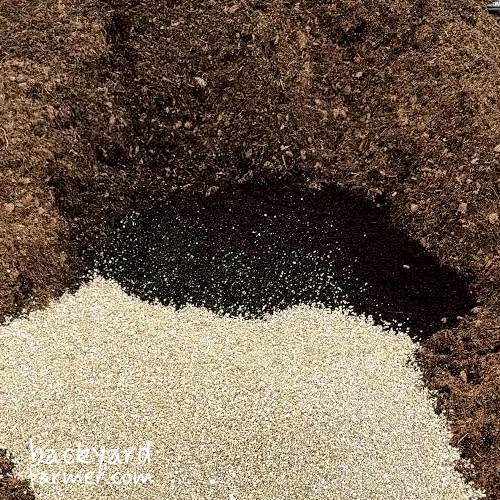
Fully decomposed leaf mould can improve the moisture retention and structure of homemade potting compost.
However, leaf mould is relatively low in nutrients, so it works best as one ingredient in a growing mixture rather than being used alone for established container plants.
Simple Homemade Potting Mix
Garden Organic recommends combining four ingredients in equal proportions.
| Ingredient | Quantity | Purpose |
|---|---|---|
| Mature leaf mould | 1 part | Moisture retention and structure |
| Well-rotted garden compost | 1 part | Organic matter and nutrients |
| Suitable loam or garden soil | 1 part | Body and mineral content |
| Horticultural sharp sand | 1 part | Drainage and aeration |
Measure by volume, not weight, using the same bucket or container for each ingredient.
How to prepare the mixture:
- Use fully decomposed leaf mould and mature garden compost, removing obvious weeds, rubbish and coarse fragments.
- Sieve the ingredients where necessary to achieve a suitable texture.
- Measure equal volumes of each ingredient.
- Mix thoroughly until evenly distributed.
- Moisten lightly if required and check that the mixture drains freely.
Use horticultural sharp sand suitable for growing media, not builders’ sand.
This is a general homemade potting mixture, not a universal substitute for specialist seed or propagation composts.
Homemade mixes vary in fertility, texture and drainage, so monitor plants and adjust watering accordingly.
Container-grown vegetables may also need additional feeding, particularly long-season crops such as tomatoes and peppers.
Can You Use Leaf Mould for Seed Sowing?
Fully mature, finely sieved leaf mould has traditionally been used in homemade seed-sowing mixes.
Garden Organic recommends it either alone or mixed with horticultural sharp sand. However, homemade materials can contain weed seeds and disease-causing organisms, including those responsible for damping off.
If you want to experiment, use thoroughly decomposed, finely sieved material, clean containers and careful moisture management. Start with a small batch to assess the results.
Leaf mould’s low nutrient content also means seedlings will need a suitable growing medium as they develop.
A fresh, commercially prepared peat-free seed compost is generally the more predictable option when reliable germination is the priority.
Leaf Mould vs Garden Compost
Although both materials contribute organic matter, they have different strengths.
| Leaf Mould | Garden Compost |
|---|---|
| Made mainly from decomposed leaves | Made from a wider mixture of organic materials |
| Generally low in plant nutrients | Usually provides more plant nutrients |
| Particularly useful for improving soil structure and moisture retention | Contributes to soil fertility and structure |
| Useful for mulching and homemade growing mixes | Useful for enriching productive beds |
Leaf mould is primarily a soil conditioner, not a concentrated fertiliser.
Both materials can improve growing conditions, but nutrient-hungry vegetables may still require compost or other suitable nutrient sources.
Common Mistakes When Using Leaf Mould
Most problems arise from using leaf mould before it’s sufficiently decomposed or expecting it to replace other growing materials.
| Common Mistake | Better Approach |
|---|---|
| Using coarse leaf mould in fine potting mixes | Allow further decomposition or sieve mature material |
| Treating leaf mould as fertiliser | Combine it with appropriate nutrient sources |
| Assuming homemade seed mixes are free from pathogens | Consider hygiene and use suitable growing media |
| Piling mulch against stems and crowns | Maintain clearance around vulnerable plants |
| Using dense, waterlogged material in pots | Check texture, drainage and aeration |
| Expecting immediate improvements to clay soil | Build organic matter gradually over time |
If your leaf mould is still coarse, there’s no need to discard it. Use it on the soil surface or allow it to decompose further.
Frequently Asked Questions
Yes. Partly decomposed leaf mould works well as a surface mulch or soil covering, where it can continue breaking down naturally. Save finer, mature material for homemade growing mixes.
Check its texture. If the leaves are still recognisable, use them as mulch or allow further decomposition. Dark, crumbly material can also be spread over vegetable beds to improve soil condition.
Yes. Leaf mould adds organic matter, helps improve soil structure and supports moisture retention. It’s particularly useful for improving heavy clay and sandy soils over time.
Leaf mould can replace garden compost for some mulching and soil-conditioning purposes, but it generally provides fewer nutrients. For demanding vegetable crops, the two materials are better used together.
Fully mature, finely sieved leaf mould has traditionally been used for seed sowing. However, homemade material may contain weed seeds or pathogens, and seedlings need additional nutrients as they develop. Fresh peat-free seed compost is generally the more reliable option.