
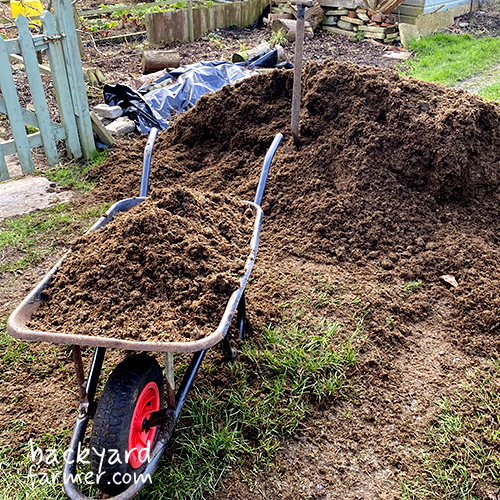
Horse manure is a useful way to improve vegetable beds, adding organic matter and nutrients that support healthy soil. Autumn and winter are popular times to apply it, but that doesn’t mean every bed needs a fresh covering.
At Backyard Farmer, I prefer to feed the soil rather than constantly feeding individual plants. The trick is knowing when manure is ready, which crops will benefit and how to apply it without wasting nutrients.
Here’s how to get it right.
Can You Put Horse Manure on Vegetable Beds Over Winter?
Yes, well-rotted horse manure can be spread over vegetable beds during autumn and winter, provided it’s from a safe source and the ground isn’t frozen or waterlogged.
However, autumn isn’t always the best time to apply it. Heavy winter rainfall can wash away nutrients, particularly on lighter, sandy soils. The RHS generally favours late winter or early spring for applying organic mulches, although autumn applications can work well on heavier soils.
| When | What to do |
|---|---|
| Autumn | Prepare beds and apply mature manure where appropriate, particularly on heavier soils. |
| Midwinter | Store manure if the ground is frozen, saturated or unsuitable for spreading. |
| Late winter / early spring | Often the preferred time to apply well-rotted manure before planting. |
If you’ve collected fresh manure in autumn, compost it separately rather than relying on winter weather to break it down on your beds.
And if it hasn’t finished decomposing by spring, leave it in the heap until it’s ready.
Fresh vs Well-Rotted Horse Manure
Before adding horse manure to your allotment, check whether it’s properly rotted.
Fresh manure contains recognisable droppings, straw or other stable bedding. It may also feel warm as microorganisms actively break down the material.
Well-rotted manure is usually darker, more uniform and smells earthy rather than strongly of manure.
| Fresh horse manure | Well-rotted horse manure |
|---|---|
| Recognisable droppings and bedding | Darker, more uniform appearance |
| Strong manure smell | Mild, earthy smell |
| May be warm or steaming | Cool and stable |
| Still actively decomposing | Mostly decomposed |
| Best composted before use | Suitable for improving vegetable beds |
Some fibrous material may still be visible in mature manure, particularly where straw bedding was used.
Fresh manure can cause problems through ammonia, soluble salts, pathogens and active decomposition, especially around young plants. It’s generally better to compost it before use.
If your manure contains large amounts of wood shavings, expect decomposition to take longer.
Check for Weedkiller Contamination
Horse manure can contain residues from persistent agricultural weedkillers, particularly aminopyralid and clopyralid.
These can enter manure through treated grass, hay or forage and remain active even after the material has decomposed.
Sensitive vegetables include tomatoes, potatoes, peas and beans. Symptoms can include twisted leaves, distorted growth and stunted plants.
Before collecting manure, ask the stable whether its grazing or hay supply has been treated with persistent weedkillers.
If you’re unsure about the source, carry out a simple plant test before spreading it:
- Take representative samples from different parts of the manure heap. Prepare two test pots using the suspect manure mixed with clean growing compost, and two control pots containing only clean compost.
- Sow four broad bean seeds into each pot.
- Keep the compost slightly moist in a greenhouse or on a warm windowsill. Prevent drainage from the test pots reaching the control pots.
- After three weeks, compare the seedlings. Poor germination, stunted growth, distorted leaves or fern-like shoots in the test pots may indicate contamination.
This is a useful screening method, but a healthy result doesn’t guarantee that manure is completely free from residues.
For more information, see the RHS guides to weedkiller contamination in manure and testing for weedkiller damage.
If the manure is suspected or known to be contaminated, don’t use it on your vegetable beds.
Which Vegetables Benefit from Horse Manure?
Not every vegetable bed needs the same amount of organic matter.
Some crops benefit from richer ground, while others grow well in soil that has already been improved during previous seasons.
| Vegetables | Horse manure advice |
|---|---|
| Courgettes, pumpkins and squash | Benefit from fertile, moisture-retentive soil. Good candidates for well-rotted manure. |
| Cabbages, broccoli and cauliflower | Appreciate fertile ground with plenty of available nutrients. |
| Potatoes | Can benefit from well-rotted manure, particularly where soil structure needs improving. Avoid excessive applications. |
| Onions, garlic and shallots | Prefer fertile, well-drained soil. Avoid fresh manure and excessive nitrogen. |
| Carrots and parsnips | Avoid fresh or coarse manure immediately before sowing. Stones, compaction and poorly prepared seedbeds can also cause distorted roots. |
| Peas and beans | Often need less additional nitrogen in already fertile soil. |
For example, a bed intended for courgettes or pumpkins might be a good place to concentrate your manure.
A bed intended for carrots may only need a little mature garden compost, or nothing at all if the soil is already in good condition.
Onions are another good example. They don’t dislike organic matter, but fresh manure, excessive nitrogen and poorly drained conditions can cause problems.
The aim isn’t to manure every bed. It’s to improve the soil where it’s actually needed.
Before spreading manure, it helps to know what you’re planting next year. Use the free Backyard Farmer Garden Planner to organise your vegetable beds and work out which areas need improving.
How to Apply Horse Manure to Vegetable Beds
For most allotments, applying well-rotted manure to the soil surface is a simple way to improve growing conditions without unnecessary digging.
- Clear the bed. Remove spent crops and persistent weeds, leaving the soil otherwise undisturbed where practical.
- Check the manure. Make sure it’s well rotted and from a safe source.
- Choose the right beds. Prioritise areas that need improving or will be growing demanding crops.
- Spread it evenly. Apply an appropriate amount over the soil surface, avoiding unnecessarily thick piles.
- Leave it to settle. Allow soil organisms to gradually break down and incorporate the organic material.
- Prepare for spring. Plant larger crops through suitable mature mulch, or move coarse material aside when preparing a fine seedbed.
How Much Horse Manure Should You Use?
The amount depends on your soil’s existing fertility, how often you’ve added manure and what you’re planning to grow.
The RHS gives a general soil-improvement rate of around 5–10kg of organic matter per square metre. However, this is a guide for improving soil, not an amount of horse manure that every vegetable bed needs each year. Previously manured beds may need considerably less.
A bed that’s been regularly manured may need very little additional material. Where soil fertility is already good, mature garden compost or another suitable mulch may be enough.
The RHS also recommends thicker layers of organic matter for effective weed-suppressing mulches. However, this doesn’t mean every vegetable bed needs a thick layer of nutrient-rich manure.
For more detail, see the RHS guide to using organic matter.
Should You Dig Horse Manure Into the Soil?
Not usually.
Well-rotted manure can be left on the surface, where earthworms and other soil organisms gradually help incorporate the organic matter.
This is one of the principles behind no-dig gardening, but you don’t need to follow a strict no-dig system to benefit.
If cultivation is necessary for another reason, mature manure can be incorporated where appropriate. For routine bed maintenance, though, I prefer keeping things simple: spread it where it’s needed and avoid unnecessary disturbance.
What Happens When Horse Manure Breaks Down?
Horse manure doesn’t simply disappear into the soil. As it decomposes, bacteria, fungi and other organisms break down the organic material and recycle the nutrients it contains.
Microorganisms use some of the carbon as energy. During decomposition, nutrients are gradually released into forms that plants can absorb.
However, nutrient release isn’t always immediate. Where manure contains plenty of straw or woody bedding, microorganisms may temporarily use available nitrogen while breaking down the carbon-rich material.
Earthworms and other soil animals also help process and redistribute decomposing material, contributing to the formation of soil aggregates.
Over time, appropriate additions of organic matter can improve:
- Soil structure: Helping create a more workable soil with better aggregation.
- Moisture management: Supporting water retention, drainage and aeration depending on the soil.
- Nutrient cycling: Encouraging the organisms responsible for decomposition and nutrient release.
- Root growth: Improving the physical conditions in which vegetable roots develop.
These improvements happen gradually, but they can make a considerable difference to long-term soil fertility.
Feed the Soil, Not Just the Plants
That’s why I focus on feeding the soil first. Rather than constantly adding fertiliser to individual plants, I want to build soil that holds moisture, cycles nutrients and supports strong root growth.
Is the soil compacted? Does it hold moisture properly? Is there enough organic matter? Are we replacing the nutrients removed when we harvest our crops?
By looking after the soil, we support the natural processes that help make nutrients available to plants.
That doesn’t mean additional feeds are never necessary. Some crops and growing conditions will still require them.
But healthy, fertile soil should be the foundation of productive vegetable growing, rather than something we try to compensate for later.
Horse Manure FAQs
It’s generally better to compost fresh horse manure separately before using it on vegetable beds. Although some gardeners spread it in autumn, leaving it outside over winter doesn’t guarantee that it will decompose properly or become safe for growing vegetables.
Horse manure can take several months to a year or longer to become well rotted. Temperature, moisture, oxygen and the type of bedding all affect decomposition. Judge the material by its condition rather than relying on a fixed number of months.
It’s usually better to plant into soil improved with well-rotted manure rather than manure alone. Fresh or incompletely decomposed material can create unsuitable conditions for young roots. Apply mature manure to the bed and plant into the soil beneath it.
Both benefit from healthy soil, but avoid applying fresh manure immediately before growing them. Onions prefer fertile, well-drained ground without excessive nitrogen, while carrots can develop distorted roots in coarse or poorly prepared seedbeds. Mature compost is often a better choice where only light improvement is needed.
If you’re storing fresh manure, covering the heap can help prevent excessive rainwater entering and reduce nutrient runoff. Allow sufficient air and moisture for decomposition. Well-rotted manure already applied as a surface mulch doesn’t normally need a separate cover, although timing applications to avoid heavy winter nutrient losses is preferable.