Fallen autumn leaves make an excellent free mulch for vegetable gardens. They protect exposed soil from winter weather, help moderate soil temperatures and gradually contribute organic matter as they decompose.
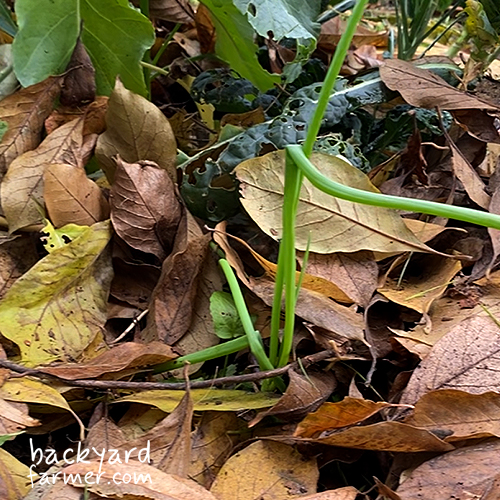
Fresh autumn leaves are useful for protecting established vegetables, while older, partly decomposed leaves can cover empty beds and support soil life through winter. The key is using enough to protect the soil without creating a thick, soggy layer.
Quick Guide: Leaf Mulch for Vegetable Gardens
| Established Plants | Prepared Empty Beds | |
|---|---|---|
| Best material | This year’s fallen leaves | Partly decomposed leaves |
| Main purpose | Insulate the soil around plants | Protect soil and support decomposition |
| Application | Spread loosely around established crops | Cover the exposed soil |
| Thickness | Light, airy covering | Even layer without heavy compaction |
| Avoid | Burying stems and young seedlings | Thick, waterlogged layers |
| Spring care | Adjust around growing plants | Pull aside before sowing |
The basic rule: Cover the soil, but don’t bury it beneath an unnecessarily thick layer of leaves.
How to Use Leaf Mulch in a Vegetable Garden
There are two straightforward ways to use leaf mulch over winter, depending on whether your vegetable beds are planted or empty.
1. Fresh Autumn Leaves Around Established Vegetables
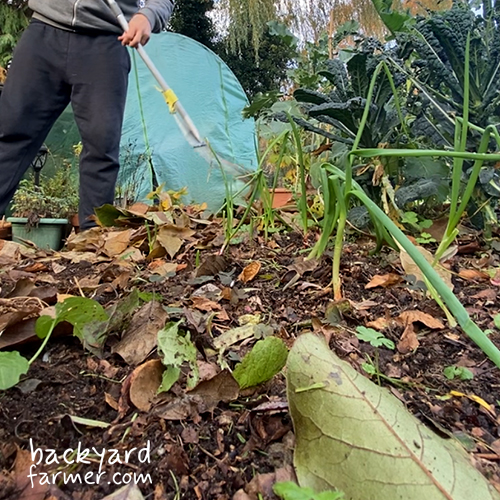
This year’s freshly fallen leaves are particularly useful around established overwintering vegetables such as kale, Brussels sprouts and other hardy brassicas.
Their intact structure creates small pockets of air within the mulch, helping insulate the soil and moderate temperature changes around the root zone.
Leaf mulch won’t make tender plants frost-proof, but it can help protect the soil beneath established crops.
How to apply fresh leaf mulch:
- Collect recently fallen leaves from lawns, paths or other areas that need clearing.
- Remove litter and avoid material from potentially contaminated locations, such as busy roadside gutters.
- Spread the leaves loosely over exposed soil around established vegetables.
- Keep stems, crowns and low-growing foliage clear.
- Check after strong winds or prolonged rain, redistributing or loosening leaves where necessary.
There’s no need to shred the leaves or press them down. A loose covering is the aim.
Take care around young seedlings. Mild, damp autumn weather favours slug activity, and newly emerged plants are particularly vulnerable.
Where possible, allow autumn crops to establish before the wetter weather arrives, or plant out sturdy transplants. Keep mulch away from vulnerable seedlings and inspect susceptible crops regularly.
2. Partly Decomposed Leaves for Empty Vegetable Beds
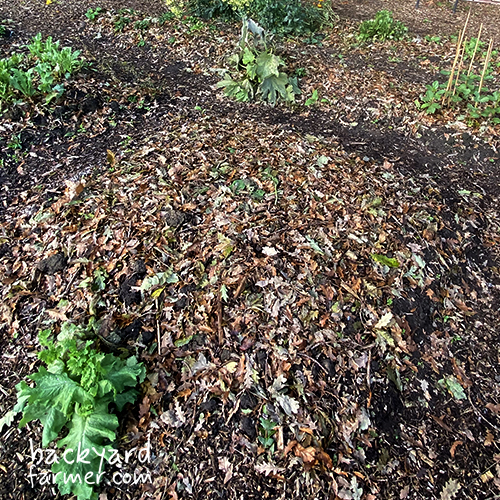
Once the final crops have been harvested, prepared vegetable beds can be covered with older, partly decomposed leaves.
This material has already begun breaking down and makes a useful surface covering for beds that will remain empty until spring.
It helps protect the soil from heavy rainfall and erosion while supplying organic material for fungi, bacteria, earthworms and other decomposers.
How to mulch an empty bed:
- Remove persistent weeds and clear any unwanted material.
- Check that the bed isn’t already waterlogged.
- Spread partly decomposed leaves evenly across the exposed soil.
- Leave them on the surface without digging them in or compacting the layer.
- Check occasionally for excessive matting or persistent wetness.
As conditions allow, soil organisms gradually break down the material, recycling nutrients and contributing organic matter to the soil.
Fresh leaves can also be used on empty beds. Partly decomposed material is simply a useful option if you’ve already been collecting leaves.
See our How to Make Leaf Mould in the UK guide if you’d like to prepare and store leaves for future use.
How Thick Should Leaf Mulch Be?
More isn’t necessarily better.
For winter protection, aim to cover most of the exposed soil while keeping the leaves reasonably loose.
Fresh leaves naturally overlap and settle as they become wet. That’s part of the decomposition process and isn’t automatically a problem.
However, an excessively thick layer can collapse into a dense, soggy mat, retaining moisture and providing additional shelter for slugs.
A good covering protects the soil without burying plants or forming deep accumulations.
There isn’t a single ideal depth for all whole-leaf mulches because leaf size, moisture and decomposition vary considerably.
Check the mulch after prolonged wet weather. If it has become heavily compacted, loosen it or remove some of the excess.
Why Leaf Mulch Benefits Vegetable Gardens
Protects Soil from Winter Weather
Bare soil is exposed to heavy rainfall, erosion and temperature fluctuations.
Leaf mulch creates a protective surface covering, reducing direct exposure to the weather and helping conserve moisture.
Fresh, loosely arranged leaves can also help insulate the soil around established plants, although they cannot guarantee protection against severe frost.
Supports Soil Life
Fallen leaves provide organic material for the organisms responsible for decomposition.
Fungi, bacteria, earthworms and other soil organisms gradually process the leaves, contributing to nutrient cycling and soil structure.
This activity generally slows during cold conditions and becomes more active again when temperatures are favourable.
Leaf mulch supports the soil ecosystem rather than acting as an immediate replacement for compost or fertiliser.
Provides Wildlife Habitat
Leaf litter provides shelter for insects and other small creatures, including species that overwinter among fallen leaves.
Where possible, leave established leaf litter beneath hedges and shrubs undisturbed.
Collecting recently fallen leaves from areas that need clearing allows you to reuse the material without unnecessarily disturbing existing habitat.
Shredding isn’t essential for winter mulching, particularly when whole leaves are serving as a protective covering.
Common Leaf Mulch Problems
Leaf mulch is straightforward to use, but a little attention to conditions helps prevent problems.
| Problem | Likely Cause | What to Do |
|---|---|---|
| Leaves become soggy and compacted | Excessive depth and prolonged wet weather | Loosen or reduce the covering |
| Slug damage increases | Damp shelter near vulnerable plants | Keep mulch clear of seedlings and inspect crops |
| Leaves blow away | Exposed position and loose, dry material | Redistribute or lightly dampen to help them settle |
| Soil remains waterlogged | Poor drainage, sometimes worsened by a dense covering | Reduce mulch and address drainage |
| Weeds grow through | Established weeds beneath the covering | Remove persistent weeds before mulching |
| Plants become buried | Leaves piled against stems and crowns | Pull mulch back from the plants |
Does Leaf Mulch Encourage Slugs?
Slugs favour moist, sheltered environments, particularly during mild, damp autumn weather.
A thick layer of wet, compacted leaves can provide additional shelter, especially around young or vulnerable vegetables.
This doesn’t mean leaf mulch automatically causes slug problems. Many slugs feed on decaying organic matter and contribute to decomposition.
The important distinction is between providing useful soil cover and creating unnecessarily damp conditions around susceptible crops.
Use a modest covering, avoid burying seedlings and keep an eye on plants during wet weather.
Established vegetables are generally more resilient than newly emerged seedlings, although they aren’t immune to damage.
Leaf Mulch or Cardboard for Winter Beds?
For an established vegetable bed that’s already reasonably free from weeds, fallen leaves can provide useful winter protection without adding cardboard.
Cardboard serves a different purpose. It’s particularly useful when preparing new growing areas or suppressing existing grass and weeds by excluding light.
Whole leaves alone are unlikely to control persistent perennial weeds such as couch grass or bindweed.
If your bed is already prepared, a covering of leaf mulch may be all that’s needed until spring.
It keeps the process simple while returning organic material to the growing area.
What to Do With Leaf Mulch in Spring
As spring approaches, vegetable beds need to become suitable for sowing and planting again.
You don’t necessarily need to remove every leaf. However, a covering of mulch can slow soil warming and make direct sowing more difficult.
Before preparing your beds:
- Check for compacted leaves or excessively wet areas.
- Gently pull mulch aside from the rows or planting spaces you intend to use.
- Allow the exposed soil to warm and become suitable for sowing.
- Leave suitable remaining material around established crops where appropriate.
- Move surplus leaves to a leaf-mould bin or another sheltered area.
There’s no fixed date for removing leaf mulch. Let the weather, soil conditions and planned crops guide your decision.
If you’ve collected more leaves than you can use, see our DIY Leaf Mould Bin guide for a simple wire-mesh storage cage.
Frequently Asked Questions
Yes. Leaf mulch protects exposed soil, helps moderate temperature changes and contributes organic matter as it decomposes. Fresh leaves are useful around established plants, while partly decomposed material works well on empty beds.
Yes. Whole leaves are suitable for winter soil protection. Shredding isn’t essential, although smaller pieces generally break down faster and can be easier to manage.
Use enough to cover the exposed soil without creating deep, compacted layers. Keep fresh leaves reasonably loose and remove excess material if it becomes heavily matted.
Leaf mulch can provide moist shelter for slugs, particularly when applied thickly around vulnerable plants. Use a modest covering and keep mulch clear of young seedlings to reduce unnecessary shelter close to susceptible crops.
It’s better to be cautious. Young seedlings are particularly vulnerable to slug damage during mild, damp autumn weather. Keep their immediate growing area clear until they’re stronger.
Not necessarily. Move mulch aside where you need exposed soil for sowing or where the covering is delaying soil warming. Remaining leaves can continue decomposing around suitable crops or be added to a leaf-mould bin.