
Introduction
A healthy lawn still matters, but lawn care in hot weather is getting harder.
A lawn still earns its place in plenty of gardens. It frames the space, gives children and dogs somewhere to play, softens hard landscaping, and generally makes everything feel more settled and looked after.
The trouble is that lawns are being asked to cope with more than they used to. Longer dry spells, sudden downpours, compacted soil, and more unpredictable seasons can all leave grass struggling.
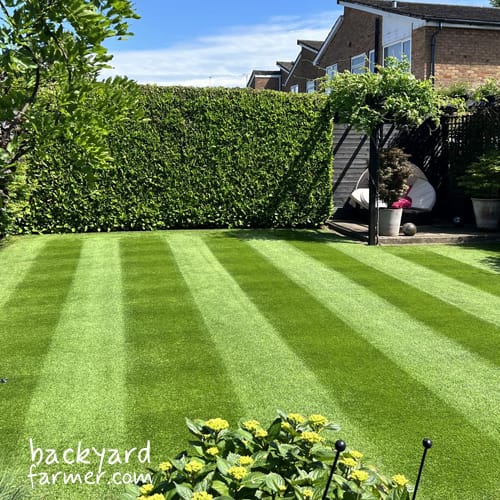
One month it is baked hard and going brown. The next it is soggy, patchy, and looking sorry for itself.
If you have ever wondered how to keep a lawn green in summer without wasting water or fighting nature every weekend, you are not the only one. A lot of people are finding that the old approach is starting to fall short.
For years, the goal was a perfect lawn at any cost. Keep it short, keep it green, keep correcting it. However, that mindset looks less realistic now.
In most gardens, the better target is a lawn that stays useful, reasonably green, and tough enough to cope with real weather.
That means building resilience into the grass from the ground up instead of relying on:
- Constant watering
- Close mowing
- Quick-fix feeds
- Endless correction
This is where tropical and subtropical gardens offer a useful lesson. In hotter, wetter, more humid parts of the world, lawns already have to cope with:
- Intense sun
- Heavy seasonal rain
- Fast growth
- Fungal pressure
- Regular stress
Because of that, gardeners in those climates have to pay close attention to turf choice, mowing height, drainage, soil health, and recovery after extreme weather.
UK gardens are not tropical, of course, but the broader lesson still applies. As the climate becomes less predictable, it makes sense to stop treating every lawn the same and start matching grass care to the conditions you actually have.
In this guide, I will look at what tropical lawns can teach us about tough turf, better summer lawn care, and building a more weather-resilient lawn without losing sight of practicality.
Can You Still Keep a Lawn Green in a Warming Climate?
Yes, but the way you get there is changing.
For years, a good lawn was treated as something you could force into shape with enough mowing, watering, feeding, and effort. That was fine when conditions were kinder and the weather was a bit more predictable. However, it gets much harder when summers are hotter, rainfall is less reliable, and the garden keeps swinging between baked ground and sudden heavy rain.
That is why so many lawns now struggle in ways that feel familiar. Grass turns brown faster during dry spells, worn areas thin out under regular use, and compacted soil makes everything worse by stopping water, air, and roots from moving properly through the ground.
Even when rain finally arrives, it does not always put things right. If the surface has become hard, shallow-rooted, or badly drained, the lawn can still look rough and recover slowly.
A big part of the problem is that many lawns were never built for resilience in the first place. They were managed for appearance.
That often means a cycle of:
- Close mowing
- Shallow watering
- Overuse
- Poor soil
- Quick surface fixes
A lawn handled like that can look tidy when conditions are easy, then fall apart as soon as the weather turns against it. In reality, a greener lawn in summer usually starts below ground with stronger roots, better soil structure, and more realistic expectations.
That last point matters more than people sometimes admit. Trying to keep every lawn looking like a golf course through a hot, dry summer is expensive, high-maintenance, and, in my view, not how most real gardens work anyway.
For most people, the better goal is simpler. Aim for a lawn that stays:
- Useful
- Reasonably green
- Able to recover well after stress
That is a far more realistic standard for family gardens, back gardens, and everyday outdoor spaces.
So yes, you can still keep a lawn looking good in a warming climate, but not by treating it the same way all year round. The gardeners who usually get the best results are the ones who adapt. They mow a little higher, water more thoughtfully, improve the soil, ease up on perfection, and work with the conditions they actually have rather than the ones they wish they had.
What Tropical Lawns Can Teach UK Gardeners
Tropical lawns deal with pressures that many UK gardeners are only starting to think about properly.
In hotter parts of the world, grass has to cope with:
- Intense sun
- Long periods of humidity
- Heavy bursts of rain
- Fast summer growth
- Fungal pressure
- Regular heat stress
That means gardeners have to stay on top of the basics. You cannot assume a lawn will keep ticking along just because it looked fine a few weeks ago.
One of the biggest lessons is that weather stress rarely comes in one neat form. A lawn can be scorched by sun, then hammered by rain. It can dry out quickly on the surface, yet stay poorly drained underneath.
In humid conditions, grass may grow fast but still become more vulnerable to disease, especially if:
- Airflow is poor
- The lawn is cut too low
- The grass is already under stress
That combination of heat, moisture, and pressure makes a few things much more important:
- Turf choice
- Drainage
- Mowing height
- Recovery time
There is also a useful mindset shift here. In tropical and subtropical gardens, people are often quicker to accept that not every grass will thrive in every setting.
A lawn in full sun, a shaded patch near a fence, and a worn strip by a path may all need slightly different treatment. To be honest, that is a sensible way to think about lawns anywhere. The more extreme the weather becomes, the less sense it makes to expect every patch of grass to behave the same.
For UK gardeners, the value is not in copying tropical lawn care word for word. Our climate is different, our grass mixes are different, and most gardens are still dealing with cool-season conditions rather than true tropical heat.
The useful lesson is broader than that:
- Match your lawn to the conditions you actually have
- Manage sunny areas differently from damp ones
- Sort out drainage instead of repeatedly throwing seed at the same weak patch
That is really what weather-resilient lawn care comes down to. Tropical gardens show how quickly grass can struggle when the weather becomes more intense or unpredictable. Just as importantly, they show that better results usually come from adapting early rather than waiting for the lawn to fail.
That is a lesson UK gardeners can use now, even without tropical temperatures.
Start With the Right Grass or Turf for Your Climate
A lot of lawn problems start with a mismatch between the grass and the garden.
People often blame watering, feeding, or mowing when the bigger issue is that the lawn was never well suited to the site in the first place.
Different parts of a garden put different kinds of pressure on grass. Full sun, heavy use, poor drainage, thin soil, shade from fences or trees, and exposed windy spots all change how a lawn performs. One seed mix or turf choice will not suit all of them equally well.
This is where it helps to step back a bit. Instead of chasing the idea of a perfect lawn, look at the conditions you are actually working with. In the UK, most lawns are based around cool-season grasses, which makes sense for our climate. Even so, there is still a big difference between a lawn that bakes in open sun and one that stays damp for days after rain.
Some areas need:
- Better drought tolerance
- Stronger wear resistance
- Faster recovery after stress
If you start with the wrong grass, the lawn will always feel like hard work.
In hotter and more humid parts of the world, choosing the right turf matters because grass has to cope with intense sun, heavy rain, humidity, and regular wear.
The same principle applies in the UK too. Choose grass, turf, or ground cover for your real conditions, not just the neatest-looking lawn on the packet.
A back garden used by children and dogs may need something tougher than a decorative front patch. A dry south-facing lawn may need a mix with better drought tolerance. Meanwhile, a wetter area may need the drainage sorting first, otherwise reseeding can become a repetitive waste of time.
It also helps to accept that one garden may need more than one approach. In my experience, the best-looking lawns are usually the ones managed realistically rather than uniformly.
A sunny strip by a wall, a worn route to the shed, and a shady patch under a tree do not all need the same expectations. In some places, better grass is the answer. In others, it makes more sense to reduce foot traffic, improve the soil, or swap part of the area to clover or another ground cover.
If you get the starting point right, everything else becomes easier. Watering works better, mowing stress is lower, and recovery after heat or heavy rain is stronger.
Before throwing more seed, feed, or effort at a struggling lawn, ask a simple question first: is this actually the right grass for the conditions I am asking it to live in?
Improve the Soil Before Blaming the Grass
A struggling lawn is often a soil problem before it is a grass problem.
It is easy to focus on what is happening above ground because that is the bit you can actually see. Thin patches, brown areas, weak growth, moss, and worn edges all catch your eye first.
However, the real issue is often underneath. Compacted ground, poor drainage, thin topsoil, and low organic matter all make it harder for roots to do their job properly.
Compacted soil is one of the biggest problems. When the ground is tight and squeezed down, water struggles to soak in, air movement drops, and roots stay shallow.
That leaves the lawn far more vulnerable in hot weather because the grass cannot reach moisture deeper in the soil. It also causes trouble during wet spells, because rainfall may sit near the surface or run off instead of draining through.
If your lawn dries out fast in summer and turns soggy in heavy rain, that is often a sign the soil structure needs attention.
This is why strong roots matter more than surface colour. A lawn can look green for a while and still be weak underneath, especially if it is being propped up by:
- Frequent watering
- Quick-feed products
- Short-term surface fixes
while the soil below stays poor.
A tougher lawn usually comes from improving the ground so roots can:
- Go deeper
- Spread better
- Recover faster after stress
Once that starts happening, the grass becomes less dependent on constant intervention.
Simple physical improvements often make the biggest difference. Aerating compacted ground helps open the soil and lets water, air, and roots move more freely. Top dressing can also help, especially where the surface has become uneven or tired.
In some gardens, lightly brushing in compost or a sandy loam can improve the upper layer and support better structure over time, although the right material still depends on the soil you already have.
The main point is not to keep throwing seed at a lawn that has nowhere healthy to grow. If the soil is compacted, starved, or badly drained, new grass will usually struggle for the same reasons the old grass did.
Before blaming the turf, look at whether the root zone is actually fit for a resilient lawn. In many cases, improving the soil is the step that makes watering, mowing, and recovery work properly again.
Water Deeply, Not Constantly
When a lawn starts to look stressed, the first instinct is often to water little and often.
It feels sensible because the surface looks dry, but shallow daily sprinkling usually creates more problems than it solves.
The main issue is that it encourages roots to stay near the top of the soil, which is the first place to dry out in hot weather. That leaves the lawn even more dependent on regular watering every time temperatures climb.
A tougher lawn usually responds better to deeper, less frequent watering. The aim is to get moisture down into the root zone so the grass has a reason to grow deeper and search for water below the surface.
That helps the lawn:
- Cope better during hot spells
- Avoid the stop-start cycle of surface watering
- Stay steadier between watering and rain
Timing matters too. Early morning is usually the best time to water a lawn in hot weather because less moisture is lost to evaporation, and the grass has time to dry off through the day.
By contrast, watering in the middle of the afternoon is less efficient, while watering late in the evening can sometimes leave the surface damp for too long, especially in still or humid conditions.
It is also worth being selective. In a long dry spell, you may not need to fight to keep every inch of lawn looking bright green. Established grass can often brown off and recover when conditions improve, especially if the roots are reasonably healthy.
The areas usually worth prioritising first are:
- New turf
- Newly seeded patches
- The most-used parts of the garden
That is a much more practical approach than trying to keep the whole lawn in peak condition through every hot week of summer.
Where possible, use stored rainwater rather than treating lawn watering as endless hose work. More importantly, see watering as one part of the system rather than the full answer.
If the soil is compacted, the grass is cut too short, or the roots are shallow, more water will only mask the weakness for a while.
Deep watering works best when it sits alongside:
- Better soil
- Sensible mowing
- More realistic expectations
Mow Higher During Hot, Dry Weather
Cutting a lawn very short in summer might look tidy at first, but it usually makes hot-weather stress worse.
Scalping the grass exposes more soil to the sun, speeds up moisture loss, and puts the plant under extra pressure just when it is already struggling.
A closely cut lawn may:
- Look neat for a day or two
- Dry out faster
- Turn pale and brittle more quickly
- Recover more slowly in heat
Leaving the grass a little longer gives the lawn more protection. The extra leaf growth helps shade the soil, which slows evaporation and keeps the root zone cooler.
That usually helps the lawn:
- Hold on to moisture for longer
- Protect roots during dry spells
- Cope better between watering and rain
Mowing higher also supports stronger roots over time. Grass that is repeatedly cut too low has less leaf area to feed itself, so it becomes weaker and more dependent on ideal conditions.
By contrast, a lawn with a bit more top growth usually handles drought stress better, recovers more steadily after heat, and copes better with wear. That does not mean letting it turn into a rough patch. It just means easing off the ultra-short finish while the lawn is under pressure.
Timing matters too. Try not to mow during the hottest part of the day, when the grass is already losing moisture and the ground is at its driest.
In hot weather, better mowing habits include:
- Cutting when conditions are cooler
- Avoiding taking too much off in one go
- Keeping mower blades sharp
- Giving stressed grass time to recover
Sharp blades are especially important because clean cuts heal more easily than torn, ragged tips.
This is one of the simplest changes you can make in summer lawn care, but it makes a real difference. If the weather is hot, dry, or generally all over the place, a slightly higher cut helps the lawn stay greener, protect the soil, and remain more resilient through stressful periods.
Deal With Heavy Rain and Poor Drainage
Climate resilience is not only about drought. A lawn can suffer just as much from too much water as too little.
This is one of the most useful lessons from tropical and subtropical gardens. In those climates, grass often has to cope with intense downpours, strong sun, and fast weather swings, sometimes in the same week. That is why drainage matters just as much as drought tolerance.
When a lawn stays wet for too long, a few familiar problems tend to follow:
- The soil compacts even further under foot traffic
- Oxygen levels around the roots drop
- Worn areas turn muddy or thin
- Water sits on the surface instead of soaking in properly
- The grass becomes more vulnerable to disease and general decline
A lot of people respond by throwing more seed at the lawn, but that rarely fixes the real issue if the ground underneath is still holding too much water.
Before repairing the surface, it makes more sense to ask a few basic questions first is:
- The soil compacted?
- There a heavy clay layer underneath?
- The lawn being walked on constantly when wet?
- Runoff from a roof, path, or slope pushing too much water into that area?
Aeration is often one of the best first steps because it helps break up the surface and improves the movement of water and air through the soil.
In some gardens, that alone makes a noticeable difference. In others, the answer may also involve improving the level, adjusting nearby drainage, reducing traffic on wet ground, or simply accepting that certain low spots need a different solution altogether.
The key point is that a weather-resilient lawn needs to handle both extremes. If you plan only for dry weather, the grass may still fail during summer storms or wet periods.
Tropical gardens make this obvious because lawns there are tested hard from both directions. UK gardeners can take the same lesson. Healthy roots, open soil, and sensible drainage all matter if you want a lawn that stays strong, not just one that survives until the next weather swing.
Use Clover, Ground Cover and Lawn Alternatives Where Grass Struggles
Not every part of a garden needs to be traditional grass. One of the smartest ways to build resilience is to stop forcing a full lawn where it clearly does not want to thrive.
Some areas struggle for good reason. Dry banks, awkward shady corners, worn routes, thin strips by fences, and compacted patches near gates often keep failing because the conditions are against them from the start.
Instead of repeatedly reseeding the same weak spots, it can make more sense to use:
- Ground cover
- Mixed planting
- A more flexible lawn approach
Clover is one of the most useful options here. A mixed grass-and-clover lawn can stay greener in dry conditions, cope well with lower-input gardening, and soften the look of patchy summer grass.
Micro-clover is often suggested if you want a tidier finish. Even so, a more natural mixed lawn can still work well if your main goal is resilience rather than strict uniformity.
It also fits the broader BYF approach because it supports pollinators better than a tightly managed, chemical-heavy lawn.
Other alternatives can earn their place as well. Chamomile and creeping thyme usually work better as lawn-edge or light-traffic options than full replacements, but they can still suit awkward sunny spots where grass always struggles.
You can also use:
- Wildflower edges to reduce mowing
- Bark mulch in problem areas
- Gravel or stepping stones on heavy-use routes
- Defined paths where grass is always under pressure
This is not about giving up on lawns. It is about using them more intelligently. In practice, a resilient garden often comes from working with the site instead of trying to make every area behave the same way.
If part of the lawn constantly bakes, puddles, or wears out, that patch may be telling you it wants a different solution.
The result is often better than forcing grass everywhere. You end up with a garden that is easier to manage, more tolerant of weather extremes, and usually more interesting to look at as well.
A mixed approach of lawn, clover, mulch paths, and ground cover can look intentional and attractive while asking far less of you than a full lawn that is always on the edge of failure.
The New Lawn Goal: Tough, Green and Useful
For a long time, the ideal lawn was treated as a flawless, tightly cut green carpet. That standard is becoming less realistic in modern gardens.
It often depends on high inputs, constant correction, predictable weather, and a fair bit of ongoing effort. In real gardens, especially as conditions become hotter, drier, wetter, and more erratic, that version of success is not always practical or even desirable.
A better goal now is a lawn that can actually live with the garden around it. That means something strong enough to handle:
- Foot traffic
- Summer stress
- Sudden rain
- Dry spells
- Everyday use
without constantly tipping into decline.
It may not look like a golf course every week of the year, but it should still feel healthy, useful, and good to live with.
That shift in thinking changes how you manage the lawn as well. Instead of chasing instant surface colour, focus on what supports long-term resilience:
- Better soil
- Deeper roots
- Sensible mowing
- Decent drainage
- Grass that suits the site
You water more thoughtfully, not automatically. You stop treating every weak patch as a failure and start asking what the conditions are actually telling you.
This is where the tropical comparison becomes useful again. Lawns in hotter, wetter climates cannot survive for long on appearance alone. They have to be built for stress.
UK gardens can borrow that principle without copying the climate exactly. The lesson is simple enough:
- Manage for recovery
- Build for adaptability
- Work with real conditions rather than perfection
In the end, the best lawn is not always the one that looks the most polished in a photograph. It is the one that still works after a heatwave, still recovers after a storm, and still earns its place in the garden without demanding endless rescue.
That is a much stronger target for modern lawn care, and a far more realistic one for most gardeners.
FAQs
Sometimes. Established lawns can often brown off for a while and recover later. If you do water, do it deeply and focus on new turf, new seed, and the busiest areas.
There is no fixed schedule. Water thoroughly enough to reach the roots, then let the surface dry before watering again.
Yes, but be gentler with it. Keep the cut a bit higher, avoid the hottest part of the day, and do not take too much off at once.
Usually because of drought stress, shallow roots, compacted soil, or cutting it too short. Brown does not always mean dead.
Often, yes. If the lawn has only gone dormant, it can recover once cooler, wetter weather returns.
The best choice is one that suits your site. In UK gardens, look for mixes with better drought tolerance and decent recovery.
It can be. Clover helps keep a lawn greener in dry weather and suits a lower-input, more wildlife-friendly approach.
Improve the soil, reduce compaction, mow a little higher, water deeply rather than often, and use a grass mix that suits the site.
Mainly that lawns do better when you match them to real conditions. Grass choice, drainage, mowing height, and recovery all matter more in tougher weather.