Heavy rain can wash valuable topsoil out of vegetable beds, particularly on sloping ground or where water runs off paths and roofs. You might notice exposed roots, muddy water flowing between crops or soil collecting at the bottom of a bed.
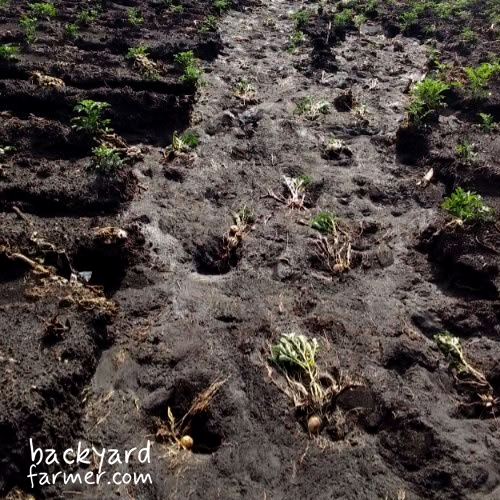
The best way to stop soil erosion is to keep the ground covered, slow surface runoff and protect soil structure. Most minor problems can be managed without major landscaping work, provided you identify where the water is coming from.
Here’s how to protect your vegetable beds, repair existing damage and prevent soil from washing away again.
Quick Guide: How to Stop Soil Washing Away
Different erosion problems need different solutions. Start by identifying what’s happening in your garden.
| What you’re seeing | What to do |
|---|---|
| Bare soil washing away after rain | Protect exposed soil with organic mulch |
| Small channels forming through beds | Find where runoff enters and slow the flow |
| Soil moving downhill on a slope | Protect the surface and consider beds across the slope |
| Water sitting on the soil | Investigate waterlogging or compaction |
| Soil slipping from a steep bank | Check stability and seek professional advice if necessary |
Start by identifying where the water comes from. Adding more compost or topsoil won’t solve erosion if the same runoff continues to wash through your beds.
How to Recognise Soil Erosion in Your Garden
Soil erosion often begins with small changes that are easy to overlook. After heavy rain, check your vegetable beds for:
- Small channels or grooves where flowing water has removed loose soil.
- Exposed roots around vegetables and young plants.
- Muddy runoff leaving beds and flowing onto paths.
- Soil collecting against edging or at the bottom of a slope.
- Seedlings leaning or losing support where the surrounding soil has moved.
Inspect the garden during or shortly after rainfall, provided it’s safe. Look along the upper edges of your beds, particularly where paths, roofs or higher ground could be directing water into them.
Following the route of runoff is often the easiest way to identify what’s causing the damage.
Soil Erosion vs Waterlogging
Soil erosion and waterlogging are different problems, although they can occur together.
Erosion happens when moving water carries soil particles away. Waterlogging occurs when the ground becomes saturated and water cannot drain away quickly enough.
A vegetable bed on heavy clay soil may experience both, particularly where runoff collects from higher ground.
If your soil remains saturated rather than washing away, our guide to fixing waterlogged soil explains how to identify the cause and improve growing conditions.
Why Does Soil Wash Away from Vegetable Beds?
Erosion occurs when rainfall dislodges soil particles and moving water carries them elsewhere. Several conditions make vegetable beds particularly vulnerable.
Heavy rainfall and runoff: During intense rain, water may reach the soil faster than it can soak in. Excess water flows across the surface, carrying loose particles downhill. Roofs, paths and patios can add to the problem.
Bare or recently cultivated soil: Uncovered ground receives the full impact of rainfall. Freshly disturbed soil can be especially vulnerable before plants establish or the surface becomes protected.
Sloping ground: Water naturally travels downhill. As runoff gathers, it can form channels that carry soil towards the lowest part of the garden.
Compacted soil: Repeated foot traffic and working wet ground can reduce the spaces through which water enters the soil. More rainfall then flows across the surface instead of soaking in.
These factors often work together. A bare vegetable bed on compacted, sloping ground is particularly exposed during prolonged wet weather.
How to Prevent Soil Erosion in Vegetable Beds
The most effective approach combines soil protection with sensible water management.
Start with simple methods that keep growing soil in place, then address any concentrated runoff entering the beds.
Cover Exposed Soil with Organic Mulch
Mulching is one of the easiest ways to protect vegetable beds against heavy rainfall.
Organic mulch shields the soil from direct raindrop impact, reduces exposed ground and helps maintain the conditions needed for healthy soil structure.
Suitable materials include:
- Fallen leaves: Useful for protecting empty beds during autumn and winter.
- Leaf mould: A decomposed material that helps protect and condition the soil.
- Mature homemade compost: Provides surface protection while contributing organic matter.
- Clean straw: Can cover exposed soil around established vegetables.
The RHS generally recommends organic mulch around 5–7.5 cm deep, but the appropriate depth depends on the material and what you’re growing.
For example, a loose covering of autumn leaves around established vegetables may be more suitable than a thick layer that becomes wet and matted. Small seedlings and newly sown areas may need much lighter coverage or space left uncovered.
Apply mulch when the soil is moist, keeping it clear of plant stems and crowns.
On sloping beds, loose leaves or fine compost can move downhill during heavy rain. Coarser materials may stay in place better, but mulch alone won’t stop a concentrated stream of water.
If you have plenty of autumn leaves, our guide to leaf mulch for vegetable gardens explains how to use them to protect growing beds.
Grow Green Manures to Protect Bare Soil
Green manures are plants grown primarily to improve and protect the soil rather than provide a harvest.
Their foliage reduces the amount of bare ground exposed to rainfall, while their roots help hold soil particles together.
Suitable options for UK vegetable gardens include:
- Winter grazing rye: Provides living soil cover through colder months.
- Winter tares: A leguminous green manure suitable for autumn sowing.
- Winter field beans: Hardy field bean varieties grown as green manure can provide winter cover when established at the appropriate time.
Green manures are particularly useful when a bed will remain empty for several months.
However, they need time to establish before the coldest weather. Consider when you’ll need the bed again, as some green manures require cutting down and allowing time for residues to decompose before planting.
They won’t instantly repair compacted soil, but they can help reduce erosion while supporting longer-term soil improvement.
Protect Soil Structure and Avoid Compaction
Healthy soil structure allows rainfall to move into the ground instead of immediately running across the surface.
You can help protect it by:
- Keeping foot traffic on designated paths.
- Avoiding walking directly on growing beds.
- Leaving saturated soil alone until conditions improve.
- Reducing unnecessary digging and cultivation.
- Maintaining organic matter through mulching and compost applications.
Heavy clay soil needs particular care during wet weather. Walking or digging when it’s saturated can compress and damage the structure.
A no-dig approach can help preserve soil structure by limiting disturbance and keeping the surface protected.
However, even healthy soil may struggle to absorb large amounts of runoff arriving from roofs or hard surfaces. Where water is concentrated, you’ll also need to manage its flow.
Slow Rainwater Before It Reaches Your Beds
If water regularly runs through your vegetable beds, look for where it enters.
After rainfall, inspect the upper edge of the affected area and identify the highest point where water begins flowing towards the bed. Follow the route uphill where possible, checking for compacted paths, overflowing downpipes, hard surfaces or runoff from neighbouring ground.
The aim is to slow or safely manage that water before it gathers enough force to carry soil away.
Depending on the site, suitable options may include managing roof runoff through an appropriate drainage system, establishing vegetation along runoff routes or using a properly designed shallow swale to slow surface water.
A rain garden may also help manage runoff where the soil conditions, location and drainage arrangements are suitable.
Water must have somewhere safe to go. Avoid directing runoff towards neighbouring properties, foundations or public paths.
On heavy clay soils, simply digging a channel or filling a hole with gravel may leave water trapped rather than improve drainage.
If substantial runoff continues despite basic measures, investigate the drainage conditions before making larger changes.
How to Protect Vegetable Beds on a Slope
Sloping gardens are more vulnerable to soil washing downhill, particularly where the ground is bare or water follows the same route during every storm.
The best solution depends on how steep the ground is and whether you’re dealing with surface erosion or an unstable bank.
Position Beds Across the Slope
On gentle slopes, arranging vegetable beds across the contour rather than straight downhill can help interrupt surface runoff.
This means the beds run across the slope, reducing the distance water can travel uninterrupted through cultivated soil.
Keep access paths stable and consider where excess water will go. Poorly positioned edging can trap water or concentrate it at one end of a bed, creating another erosion problem.
For a gentle incline, changes to bed layout and surface protection may be enough. Steeper slopes can require more substantial work.
Establish Ground Cover on Exposed Banks
Areas that are too steep or awkward for regular cultivation can often be protected with established vegetation.
Suitable ground-cover plants, grasses and low-growing shrubs provide foliage that shields the soil, while their roots help stabilise the surface.
Choose plants suited to the site’s sunlight, moisture and soil conditions. Avoid aggressive spreaders that could invade nearby vegetable beds.
New planting takes time to establish, so a bare slope may still need temporary protection.
Biodegradable coir matting can help hold surface soil in place while plants develop. Avoid erosion-control products containing persistent plastic mesh.
When Are Retaining Walls Necessary?
Where a steep bank needs structural support or level growing areas are required, properly designed retaining walls can help create stable planting terraces.
Unlike ordinary bed edging, retaining walls must withstand the weight of the soil behind them.
Drainage is essential because trapped water increases pressure against the structure. Poor design or inadequate drainage can lead to cracking, leaning or eventual failure.
Steep embankments, significant retaining walls and unstable boundaries should be assessed by a suitably qualified professional.
In the UK, planning or other permissions may be necessary depending on the work and location. Allotment holders should also check their tenancy agreements before making structural changes.
If an existing wall is bulging, cracking or leaning, avoid disturbing the surrounding ground until its stability has been assessed.
For ordinary surface erosion on a gentle slope, soil cover, vegetation and runoff management are usually more proportionate starting points.
How to Repair an Eroded Vegetable Bed After Heavy Rain
If rainfall has already washed soil away, wait until the ground is safe and workable before attempting repairs.
1. Identify the source of erosion
Look for runoff channels, overflowing paths or water arriving from higher ground. Work out how to prevent further soil loss before replacing what has disappeared.
2. Check affected vegetables
Inspect plants for exposed roots, damaged stems or seedlings that have lost support.
Gently replace suitable soil around exposed roots, taking care not to bury crowns or stems more deeply than the crop tolerates.
3. Restore the growing surface
If clean soil has collected against bed edging or nearby paths, you may be able to return it once conditions improve.
Only reuse soil that is suitable for growing food. Avoid returning sediment that may have been contaminated by runoff from roads, chemicals or other potentially polluted areas.
Where substantial topsoil has been lost, add suitable replacement growing soil to restore the bed’s depth.
Avoid working saturated ground, which can cause further compaction.
4. Protect the repaired area
Apply appropriate mulch around established plants or cover empty sections of soil.
If concentrated runoff caused the damage, address its source rather than relying on mulch to hold everything in place.
5. Check after the next rainfall
Look for fresh channels, displaced mulch or muddy water leaving the bed.
If erosion continues, reassess the runoff route before carrying out further repairs.
How to Protect Vegetable Beds from Winter Rain
Autumn and winter are important periods for soil protection in UK vegetable gardens, particularly on sloping ground and where beds have recently been cultivated.
Once summer crops have finished, consider how you’ll protect the soil until spring.
- Keep suitable winter crops growing. Their roots provide living cover, although exposed ground between plants may still need protection.
- Establish green manures early. Autumn-sown varieties need enough time to develop useful coverage before colder weather.
- Use fallen leaves on empty beds. A suitable covering helps protect exposed soil against repeated rainfall.
- Avoid unnecessary winter digging. Saturated clay soil is particularly vulnerable to compaction and structural damage.
Check leaf-covered beds occasionally and redistribute any thick, wet mats that could smother plants or prevent smaller crops from growing.
Protecting the soil after harvesting is generally easier than repairing beds that have lost their topsoil over winter.
Frequently Asked Questions
Fallen leaves, mature compost and straw can protect soil against rainfall. The best choice depends on your crops, slope and runoff conditions. Loose mulch may wash downhill on steep ground, so managing water flow is equally important.
Raised-bed edging can help contain growing soil, but it won’t automatically prevent erosion. Water entering from higher ground can still wash soil away. On steeper slopes, properly designed terraces may be more suitable than ordinary raised beds.
Yes, but correct the cause of erosion first. Otherwise, replacement topsoil may wash away during the next storm. Once conditions are suitable, restore the growing surface, protect exposed areas and check for further runoff.
Established grasses, ground-cover plants and suitable shrubs can help stabilise slopes through their foliage and root systems. Choose plants appropriate for the site and avoid aggressive species near vegetable beds. Newly planted banks may need temporary protection until roots establish.