
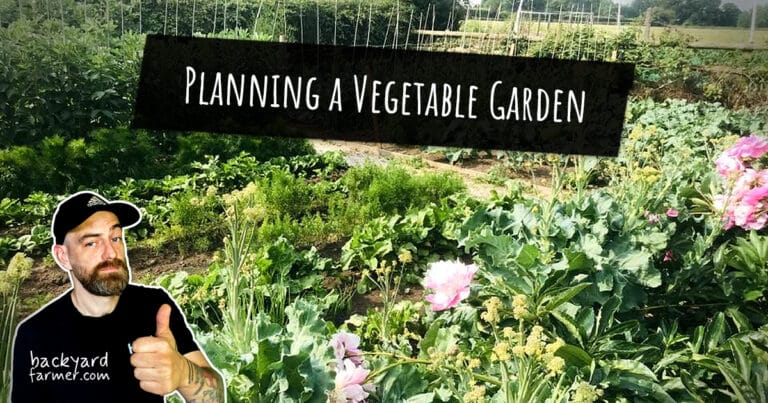
Introduction
If you’ve ever stood in front of a tray of seeds in March and thought, “I’ll just grow a bit of everything,” you’re not alone.
In fact, most of us start a vegetable garden full of enthusiasm. However, by late summer, we’re often staring at overcrowded beds, a mountain of courgettes, and awkward empty gaps where something should be growing.
That’s exactly why planning a vegetable garden properly makes such a difference.
When you take the time to plan a vegetable garden in the UK climate, you move from guesswork to structure. Instead of reacting week by week, you create a clear vegetable garden plan that guides the entire growing season.
Rather than planting randomly, productive growers design a yearly vegetable garden plan first — and then they sow.
They:
- Decide what they genuinely want to eat
- Map out a practical vegetable garden layout
- Build crop rotation into the structure
- Plan succession planting so crops follow each other smoothly
As a result, the garden feels calmer, more productive, and far easier to manage.
Less waste. Healthier soil. A steady harvest instead of feast‑or‑famine chaos.
In this step‑by‑step guide, I’ll show you exactly how to plan a vegetable garden in the UK — whether you’re working with raised beds, a small veg patch, or a full allotment.
Along the way, we’ll cover:
- Vegetable garden layout planning for raised beds and allotments
- Choosing crops that actually earn their space
- Building a simple yearly vegetable garden plan that works in UK conditions
- Using crop rotation and succession planting to keep harvests moving
If you’re looking for detailed month‑by‑month sowing dates, you’ll find those in my UK planting calendar.
However, this guide focuses on the bigger picture of vegetable garden planning:
How to design and organise your vegetable garden layout before you sow a single seed.
By the end, you’ll have a clear planning framework you can reuse year after year — a structured vegetable garden plan that supports crop rotation, succession planting, and long‑term soil health.
In short, you won’t just be growing vegetables.
You’ll be running a system.
If you want the month-by-month sowing dates too, see my guide on what to plant each month in the UK.
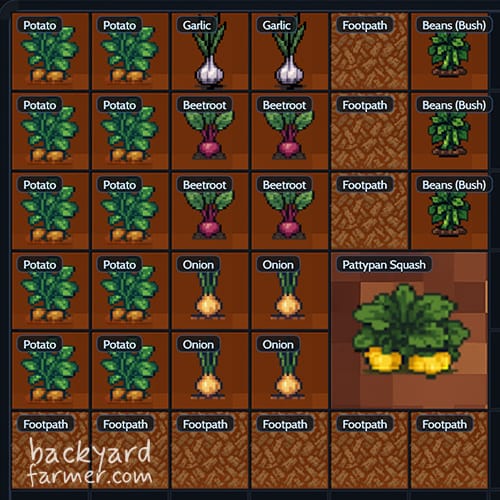
Plan Your Garden Layout the Easy Way
Design your veg plot, test spacing, and build a productive layout in minutes with the free BYF Allotment Planner.
Why Planning a Vegetable Garden Matters More Than You Think
At first, planning a vegetable garden can feel unnecessary. After all, seeds grow, plants crop, and nature seems to handle most of it… right?
However, in reality, most problems in a veg patch don’t come from poor growing — they come from weak vegetable garden planning.
When you skip creating a clear vegetable garden plan, the same three issues show up year after year.
1. The Spring Panic Problem
As soon as the weather warms up, it’s tempting to sow everything at once.
Beds fill quickly with early crops. Seed trays overflow. Every spare corner gets planted.
Then summer arrives — and suddenly you realise:
- Crops are competing for space
- Harvests mature at the same time
- There’s no room left for follow‑on planting
As a result, enthusiasm turns into overcrowding.
Without a structured vegetable garden plan, you react to the moment instead of guiding the season with intention. Instead of running a system, you manage a scramble.
2. The Late‑Summer Gap
Another common result of not properly planning a vegetable garden is what I call the “August dip.”
Early potatoes are lifted.
Peas finish.
Salad bolts.
Before you know it, large sections of your veg patch sit empty.
This usually happens because the garden was planned around sowing, not around long‑term vegetable garden planning and harvest flow.
Instead, a simple yearly vegetable garden plan maps crops in phases. You decide what replaces each bed before it’s empty — not after. Consequently, your vegetable garden layout stays productive for longer and your soil stays active.
3. Rotation Chaos and Soil Fatigue
Planting the same crop in the same bed year after year might seem harmless at first. However, it’s one of the quickest ways to reduce yields and weaken soil health.
- Brassicas attract repeat pests
- Onions draw down the same nutrients
- Potatoes increase the risk of recurring soil diseases
When you design your vegetable garden layout in advance, crop rotation becomes part of the overall vegetable garden plan — not an afterthought you try to fix later.
As a result, your garden improves over time instead of slowly declining.
Planning Turns a Veg Patch Into a System
The difference between a struggling garden and a productive one is rarely effort.
More often, it’s structure.
When you take the time to plan your vegetable garden layout and build a yearly vegetable garden plan, you:
- Increase overall yield
- Protect long‑term soil health
- Reduce pest and disease pressure
- Avoid gluts and hungry gaps
- Make better use of raised beds, allotments, or small veg patches
In short, strong vegetable garden planning creates consistency.
Planning doesn’t remove the joy of gardening.
Instead, it removes the chaos.
And once you put a clear vegetable garden plan in place, you can reuse it, refine it, and improve it every single year.
Decide What You Actually Want to Grow and Eat
Before you design your vegetable garden layout, buy seeds, or start digging beds, pause for a minute.
When planning a vegetable garden, the most important decision isn’t spacing, succession planting, or crop rotation.
It’s deciding what you genuinely want to eat.
Too often, beginners copy what they see online or grow whatever looks exciting in the seed catalogue. However, a productive vegetable garden plan always starts in your kitchen — not in your compost bin.
If you want to successfully plan a vegetable garden in the UK, begin with demand, not novelty.
Start With High-Use Crops
First, ask yourself a simple question:
What vegetables do we buy every single week?
For most UK households, that usually includes:
- Potatoes
- Onions
- Carrots
- Salad leaves
- Courgettes
- Tomatoes
These crops earn their space because you actually use them.
When you build your vegetable garden plan around high-use crops, your layout immediately becomes practical. As a result, your vegetable garden feels productive rather than experimental — which keeps motivation high.
In short, strong vegetable garden planning focuses on everyday staples first.
Choose Crops That Suit Your Space
Of course, not every vegetable garden is a full allotment. Some are compact raised beds or small urban veg patches.
So, when planning a vegetable garden layout, match your crop choices to your available space.
If space is limited, prioritise:
- High-yield crops per square metre
- Cut-and-come-again varieties (like salad leaves)
- Vertical growers such as beans, peas, and cucumbers
This is where small veg patch ideas become powerful. A well-structured vegetable garden layout can easily outperform a larger but poorly organised plot.
In other words, effective vegetable garden planning depends more on structure than size.
Balance Quick Wins With Long-Term Crops
At the same time, a smart yearly vegetable garden plan mixes fast and slow crops.
For example:
- Radishes mature in weeks
- Lettuce gives repeated harvests
- Parsnips take most of the season
- Sprouting broccoli occupies space through winter
If you only grow long-season crops, beds can feel slow and static. On the other hand, if you only grow quick crops, you’ll constantly feel pressure to replant.
Instead, balance both within your vegetable garden plan. That way, harvests roll through the year rather than arriving all at once.
Consequently, this phased approach strengthens your overall yearly vegetable garden plan and supports better succession planting later on.
Keep It Realistic
Finally, keep things realistic.
It’s far better to grow five crops well than fifteen badly.
When planning a vegetable garden in the UK, start slightly smaller than you think you need. Then, once your vegetable garden layout and rotation system are running smoothly, you can expand next season with confidence.
A clear vegetable garden plan grows with you.
Once you’ve chosen your core crops, you’re ready for the next stage:
Designing your vegetable garden layout so every crop has a defined place from day one.
Plan Your Vegetable Garden Layout (Raised Beds or Allotment)
Once you’ve decided what to grow, the next step in planning a vegetable garden is designing your vegetable garden layout.
This is where strong vegetable garden planning really begins. Without a clear layout, even the best vegetable garden plan can fall apart once the season gets busy.
Many beginners rush this stage. They prepare the soil, plant seeds, and only later realise the spacing doesn’t work, the paths are too narrow, or tall crops block the sun.
However, a well-thought-out vegetable garden layout plan prevents those problems before they start.
Start With Structure, Not Plants
Before choosing exact planting positions, step back and define the structure of your vegetable garden layout.
Ask yourself:
- Where will the main beds sit?
- How wide should each bed be?
- Where will the access paths run?
- Which direction does the sun travel across the plot?
In most UK gardens, beds around 1–1.2 metres wide allow you to reach the centre without stepping on the soil. Meanwhile, paths should be wide enough for a wheelbarrow and comfortable movement.
When planning a vegetable garden layout for raised beds, keep bed sizes consistent. Uniform beds make crop rotation, succession planting, and long-term vegetable garden planning much easier year after year.
In other words, structure first — crops second.
Designing a Vegetable Garden Layout for Raised Beds
Raised beds are ideal for beginners because they create instant structure within your vegetable garden plan.
When designing a vegetable garden with raised beds:
- Keep beds parallel to simplify crop rotation
- Avoid awkward shapes that complicate crop group movement
- Place taller crops (sweetcorn, climbing beans) on the north side where possible
- Leave one flexible bed for succession planting or experiments
As a result, separate beds start working together as a coordinated system rather than random planting spaces.
Consequently, this approach strengthens your overall yearly vegetable garden plan and makes future adjustments far easier.
For a simple spacing system in raised beds, my Square Foot Gardening UK guide shows how to plan crops square-by-square.
Planning an Allotment Veg Patch Layout
If you’re working with a larger allotment plot, the principle stays the same — you’re simply scaling up your vegetable garden layout.
First, divide the space into clear sections for crop groups. For example:
- Roots
- Legumes
- Brassicas
- Fruiting crops
Straight away, future crop rotation becomes simple instead of confusing. Because your vegetable garden plan is structured from the beginning, you won’t need to redesign it each season.
At the same time, a well-designed veg patch layout should also consider:
- Water access
- Compost area placement
- Storage space
- Netting or protection zones
Good vegetable garden layout planning doesn’t just increase yield.
It reduces effort and supports long-term soil health.
Think One Year Ahead
Ultimately, the difference between casual gardening and properly planning a vegetable garden lies in thinking beyond this season.
When you design your vegetable garden layout with next year in mind, crop rotation becomes straightforward. Beds shift crop families smoothly. Succession crops slot into empty spaces without last-minute panic.
At this stage, you’re not worrying about exact sowing dates. Instead, you’re building a structured vegetable garden plan that supports your yearly vegetable garden plan as a whole.
Once your layout is mapped out, you’re ready to plan how crops move through the seasons within that structure.
Map Your Growing Seasons (Build a Yearly Vegetable Garden Plan)
Now that your vegetable garden layout is clear, it’s time to zoom out and think in seasons.
One of the biggest mindset shifts in planning a vegetable garden is moving from, “What do I plant this week?” to, “How will this bed perform across the whole year?”
In other words, a strong yearly vegetable garden plan works in phases — not in isolated planting dates.
When you plan a vegetable garden properly, you design flow. You don’t just schedule sowing.
Think in Four Growing Phases
Instead of focusing on individual months, break your vegetable garden plan into four simple seasonal blocks. This approach keeps things manageable while still giving your vegetable garden planning real structure.
1. Early Season (February–April)
Cool-weather sowing, early potatoes, peas, onions, hardy salads.
2. Main Season (May–July)
Tomatoes, courgettes, beans, sweetcorn, outdoor salads.
3. Late Season (August–September)
Follow-on crops, winter brassicas, autumn salads, overwinter onions.
4. Overwinter Period (October–January)
Garlic, broad beans, green manure, protected crops.
By organising your vegetable garden plan into seasonal phases, you stay flexible. At the same time, you maintain a clear framework that supports succession planting and crop rotation.
Plan Harvest Flow, Not Just Planting Dates
Many gardeners plan around sowing dates. However, effective vegetable garden planning focuses on harvest flow.
So, ask yourself:
- What will I actually be harvesting in early summer?
- What replaces it when it finishes?
- Will this bed sit empty in August if I don’t plan ahead?
For example:
- Early potatoes can be followed by leeks.
- Peas can give way to autumn carrots.
- Spring cabbage beds can later hold winter salads.
When you plan your vegetable garden this way, every bed in your vegetable garden layout has a purpose across multiple seasons — not just one short burst of activity.
As a result, your yearly vegetable garden plan feels continuous rather than fragmented. To check sowing windows for your region, use the UK vegetable planting calendar (interactive tool) alongside this yearly plan.
Avoid the “All at Once” Trap
A common beginner mistake in planning a vegetable garden is filling every bed in spring and hoping it sorts itself out.
However, gardens don’t sort themselves out. They follow the structure of your vegetable garden plan.
Instead, build movement into your yearly vegetable garden plan:
- Early crops transition into summer crops
- Summer crops transition into winter crops
- Some beds deliberately rest with green manure to protect soil health
Consequently, workload spreads more evenly and harvests roll through the year instead of arriving in one overwhelming wave. For a reliable UK reference on seasonal veg timings, the RHS vegetable calendar is a solid benchmark to sanity-check your plan.
Use the Calendar as a Reference — Not the Plan
Detailed sowing dates are useful. However, they should support your vegetable garden planning strategy — not replace it.
When you start with structure — vegetable garden layout first, seasons second — your planting calendar becomes a reference tool rather than the backbone of your vegetable garden plan.
In short, the calendar tells you when.
Your vegetable garden plan decides why, where, and what comes next.
Once your seasonal flow is mapped out, you’re ready to strengthen the system further by building in proper succession planting and long-term crop rotation.
Plan for Continuous Harvest (Succession Planting Strategy)
If you want a vegetable garden that feeds you steadily instead of overwhelming you all at once, succession planting must be built into your vegetable garden plan from the start.
When you’re planning a vegetable garden properly, you’re not just deciding what goes into each bed in your vegetable garden layout — you’re deciding what follows it.
Ultimately, that’s what transforms a simple veg patch into a structured, productive system that supports a strong yearly vegetable garden plan.
Why One Big Sowing Is a Mistake
It’s very tempting to sow a whole packet of lettuce or carrots in one go. You’ve got the space, the weather’s good, and motivation is high — so why not?
However, when you ignore succession planting in your vegetable garden planning, the result usually looks like this:
- Everything matures at the same time
- You can’t eat it quickly enough
- The bed sits empty once the crop finishes
As a result, harvests arrive in one heavy wave instead of a steady flow. You go from feast to famine almost overnight.
Without succession built into your vegetable garden plan, you end up reacting to empty beds instead of managing your vegetable garden layout strategically.
If you’re unsure what grows well together, try my free companion planting planner (UK) to check combinations quickly.
The Simple Succession Rule: Sow Little and Often
A strong yearly vegetable garden plan spreads sowings across time rather than cramming them into one ambitious weekend.
Instead of one large planting, build this into your vegetable garden planning routine:
- Sow small amounts every 2–3 weeks
- Stagger salad crops
- Divide carrot rows into phases
- Re-sow fast growers like radish regularly
This approach keeps beds productive for longer. At the same time, it prevents overwhelming gluts and keeps your vegetable garden plan balanced across the season.
Gradually, harvests become more predictable. Consequently, your overall vegetable garden layout works harder for you.
Plan Follow-On Crops in Advance
However, the real power of succession planting appears when you design it into your vegetable garden layout from the beginning.
For example:
- Early potatoes → leeks
- Spring peas → autumn carrots
- Garlic → courgettes
- Early salads → winter brassicas
When planning a vegetable garden, mark these follow-on crops directly onto your yearly vegetable garden plan before the season even begins.
That way, when one crop finishes, the next is ready to step in. No scrambling. No empty beds disrupting your vegetable garden plan.
Consequently, your vegetable garden planning becomes proactive instead of reactive.
Leave Space for Flexibility
At the same time, not every bed in your vegetable garden layout needs to be tightly packed all year.
In fact, smart vegetable garden planning usually includes one flexible area where you can:
- Trial new crops
- Replace failed plants
- Extend harvests
- Sow quick catch crops
A little breathing room keeps your vegetable garden plan realistic. Otherwise, an over-structured layout can start to feel rigid and difficult to manage.
Flexibility strengthens the overall system.
Continuous Harvest Is a Planning Decision
Many gardeners assume steady harvests come down to skill or luck.
In reality, they come down to structure.
When you build succession planting into your yearly vegetable garden plan, food keeps moving through the space. Beds stay active. Gaps shrink. Harvests spread out naturally instead of bunching together.
In short, succession planting makes your vegetable garden layout dynamic rather than static.
And once you’ve mapped that flow, you’re ready to strengthen the system further by protecting soil health through crop rotation — ensuring your vegetable garden plan improves season after season.
Build Crop Rotation Into Your Vegetable Garden Plan
By this stage, you’ve chosen your crops, designed your vegetable garden layout, and mapped your seasonal flow.
Now it’s time to make sure your vegetable garden plan works not just for this year — but for the years ahead.
That’s exactly where crop rotation becomes essential.
When planning a vegetable garden properly, crop rotation isn’t optional. Instead, it’s a core part of long‑term vegetable garden planning.
Why Crop Rotation Matters in Vegetable Garden Planning
If you grow the same type of vegetable in the same soil year after year, problems build up quietly in the background.
Over time, you’ll usually see:
- Nutrient depletion
- Pest build‑up
- Increased disease pressure
For example:
- Brassicas attract cabbage root fly and increase the risk of clubroot
- Potatoes raise the chance of soil‑borne diseases
- Alliums repeatedly draw down similar nutrients
At first, it might not seem obvious. However, yields gradually dip and issues become harder to manage.
That’s why a structured vegetable garden plan includes crop rotation from the beginning. Instead of reacting to problems later, you prevent them through smart layout design.
Divide Your Vegetable Garden Layout Into Crop Groups
The simplest way to build crop rotation into your vegetable garden layout is to organise crops into families.
A common UK vegetable garden plan uses four main groups:
- Roots (carrots, beetroot, parsnips)
- Legumes (peas, beans)
- Brassicas (cabbage, kale, broccoli)
- Fruiting crops (tomatoes, courgettes, sweetcorn)
Each year, these groups move to a new bed within your vegetable garden layout.
Because your layout is already structured, crop rotation becomes a simple shift rather than a complete redesign. As a result, your yearly vegetable garden plan stays organised and predictable.
A Simple 3–4 Year Crop Rotation Plan
If you’re new to planning a vegetable garden, keep your rotation plan manageable.
In a four‑bed vegetable garden layout, it works like this:
Year 1
- Bed 1 – Roots
- Bed 2 – Legumes
- Bed 3 – Brassicas
- Bed 4 – Fruiting crops
Year 2
- Each crop group moves one bed forward within the vegetable garden plan
By Year 5, you’re back where you started — but with healthier soil, fewer pest issues, and stronger overall growth.
Consequently, this type of vegetable garden planning protects long‑term productivity while keeping your vegetable garden layout stable.
Crop Rotation Strengthens the Whole System
When you build crop rotation into your yearly vegetable garden plan:
- Soil fertility improves more naturally
- Nitrogen‑fixing legumes support the crops that follow
- Pest and disease cycles are interrupted
- Record keeping becomes straightforward
Most importantly, your vegetable garden layout stays consistent while crops rotate through it.
The structure stays the same.
The crop groups move within it.
That’s the real key to planning a vegetable garden that improves over time instead of slowly declining.
Once layout, seasons, succession planting, and crop rotation all work together, your vegetable garden plan stops feeling reactive.
Instead, it becomes a long‑term system you can refine year after year.
Example: Planning a 10m x 5m Vegetable Garden Layout in the UK
To bring everything together, let’s walk through a practical example of planning a vegetable garden layout in the UK.
Imagine you’ve got a 10m x 5m allotment plot — not huge, but a solid, workable space. You divide it into four equal beds with clear access paths between them.
Straight away, that simple vegetable garden layout creates structure. At the same time, it supports crop rotation, succession planting, and a strong yearly vegetable garden plan without redesigning the whole plot each season.
Bed Structure Overview
For this example vegetable garden plan, we’ll split the plot into four clear crop groups within the vegetable garden layout:
- Bed 1 – Roots
- Bed 2 – Legumes
- Bed 3 – Brassicas
- Bed 4 – Fruiting Crops
Instead of treating each bed as a one-season space, you plan for it to perform across the entire growing year.
In other words, every bed plays a defined role within your overall vegetable garden plan.
Seasonal Flow Example (Yearly Vegetable Garden Plan in Action)
Now let’s see how this vegetable garden layout works across the seasons.
Bed 1 – Roots
- Early season: Carrots and beetroot
- Late season: Autumn carrots or parsnips
- Overwinter: Green manure to protect soil structure
Bed 2 – Legumes
- Early season: Peas
- Main season: French beans
- Late season: Overwinter broad beans
Bed 3 – Brassicas
- Spring: Spring cabbage
- Summer: Kale
- Winter: Sprouting broccoli
Bed 4 – Fruiting Crops
- Early season: Early potatoes
- Main season: Courgettes and sweetcorn
- Late season: Winter salads in cleared areas
As you can see, each bed in the vegetable garden layout stays active across multiple phases of the year. Nothing sits idle for long unless you deliberately rest it as part of your vegetable garden planning strategy.
That’s what a practical yearly vegetable garden plan looks like in real life — not just on paper.
If you’re working with less space, these small allotment layout ideas (10×10 and 4×4) will help you plan a productive plot without cramming it.
How Crop Rotation Works in Year Two
In the second year, you don’t redesign the vegetable garden layout. Instead, you rotate the crop groups forward one bed within the same structured vegetable garden plan.
- Roots move to the previous legume bed
- Legumes follow brassicas
- Brassicas move to fruiting crops
- Fruiting crops shift to the former root bed
The structure of your vegetable garden layout stays exactly the same.
Only the crop families move.
Because of that, long-term vegetable garden planning becomes predictable, organised, and far easier to manage.
Why This Vegetable Garden Layout Works
This type of vegetable garden layout works because it:
- Supports crop rotation naturally
- Makes succession planting easier
- Spreads harvests across the year
- Protects soil health long-term
- Works just as well for raised beds as it does for full allotments
You can scale this vegetable garden plan up or down depending on your available space. However, the core principle stays the same.
Create a stable vegetable garden layout.
Rotate crop groups through it.
Plan at least one year ahead.
That’s how you turn a simple veg patch into a reliable, productive system — and how proper planning a vegetable garden pays off year after year.
Common Vegetable Garden Planning Mistakes to Avoid
Even with the best intentions, it’s surprisingly easy to make mistakes when planning a vegetable garden — especially in your first year.
However, most problems don’t come from lack of effort.
They come from weak vegetable garden planning and a lack of structure in your vegetable garden plan.
So let’s look at the most common mistakes — and, more importantly, how to avoid them.
1. Planting Everything at Once
In early spring, it’s incredibly tempting to fill every bed in your vegetable garden layout. The soil feels ready. The seed packets are open. Motivation is high.
However, when you ignore succession planting and cram everything into your vegetable garden plan at once, three things usually happen:
- Harvests overlap heavily
- Beds empty at the same time
- Workload spikes instead of spreading evenly
As a result, you create a feast‑or‑famine cycle instead of a steady harvest.
Instead, build succession into your yearly vegetable garden plan from the start. Plan in waves, not in one big push. Consequently, that simple shift strengthens your overall vegetable garden planning strategy.
2. Ignoring Winter Crops
Many beginners design their vegetable garden layout around summer alone.
Then, by October, large sections of the veg patch sit bare — and soil health slowly declines.
A strong yearly vegetable garden plan includes winter crops from the beginning, such as:
- Overwinter garlic
- Broad beans
- Winter salads
- Green manure
When you plan a vegetable garden with winter in mind, you protect soil structure, maintain root activity, and keep productivity ticking over — even in colder months.
Consequently, your vegetable garden plan works year‑round rather than seasonally.
3. Forgetting Crop Rotation
If you don’t factor crop rotation into your vegetable garden layout early on, it becomes messy later.
Beds get reshuffled randomly.
Notes become confusing.
Pests and diseases return.
However, when you define crop groups as part of your vegetable garden plan from the beginning, they move smoothly from bed to bed each year.
That’s when planning a vegetable garden starts to feel structured instead of chaotic.
Crop rotation isn’t an optional extra — it’s central to long‑term vegetable garden planning.
4. Designing Without Considering Access
Overly wide beds and narrow paths might look efficient on paper. In practice, though, they quickly become frustrating within your vegetable garden layout.
- Stepping on soil compacts it
- Hard‑to‑reach beds lead to neglected crops
- Maintenance becomes inconsistent
Therefore, a practical vegetable garden layout should always prioritise:
- Comfortable access
- Clear, usable paths
- Enough room for tools and a wheelbarrow
When access works, consistency follows. And when consistency follows, your vegetable garden plan becomes easier to stick to. If your plot already has mature trees, it’s worth understanding the warning signs to watch for before you finalise paths, beds, or seating areas — this guide to tree health signs in the UK is a good place to start.
5. Growing Too Much, Too Soon
Enthusiasm is brilliant — but it can easily tip into overwhelm when planning a vegetable garden.
It’s far better to begin with:
- Fewer crop types
- Clear bed divisions
- A manageable crop rotation system
Then, once your vegetable garden layout and yearly vegetable garden plan run smoothly, you can expand with confidence next season.
Strong vegetable garden planning grows gradually.
Structure first. Expansion later.
Good Vegetable Garden Planning Reduces Stress
When you avoid these common planning mistakes, something shifts.
- The garden feels calmer
- Work becomes more predictable
- Harvests feel intentional rather than accidental
Planning a vegetable garden isn’t about rigid control.
Instead, it’s about creating a clear vegetable garden plan and layout framework that supports you throughout the season — so the garden works with you, not against you.
Turn Your Vegetable Garden Plan Into a Visual Layout (Free Tool)
By now, you’ve built the foundations of a strong vegetable garden plan:
- Chosen your core crops
- Designed a structured vegetable garden layout
- Mapped your seasons into a yearly vegetable garden plan
- Built in succession planting
- Planned crop rotation
So the final step in planning a vegetable garden is simple: turn that strategy into something visual, practical, and repeatable.
After all, a vegetable garden plan that only lives in your head — or on scraps of paper — is easy to forget, adjust randomly, or abandon halfway through the season.
Why Visual Vegetable Garden Planning Changes Everything
When you map your vegetable garden layout visually, your entire vegetable garden planning system becomes clearer and easier to manage.
You can:
- Check spacing before planting
- Spot overcrowding early in your vegetable garden layout
- Confirm crop groups for smooth crop rotation
- Plan follow-on crops as part of your yearly vegetable garden plan
- Keep clean records to improve your vegetable garden planning year after year
As a result, you reduce guesswork and make confident decisions.
At the same time, adjusting your vegetable garden plan becomes far easier as the season unfolds. Instead of reacting to problems, you refine your layout and improve your system.
If planning has felt clunky before, here’s why most allotment planners feel complicated (and how to avoid that headache).
Try the Free BYF Allotment Planner (Vegetable Garden Planner)
To make vegetable garden planning straightforward, I built a free interactive vegetable garden planner specifically for UK growers.
This vegetable garden planner helps you:
- Design your vegetable garden layout visually
- Drag and drop crops into position
- Check companion planting combinations
- Plan crop rotation across seasons
- Export your vegetable garden plan as a printable layout map
Whether you’re working with:
- Raised beds
- A small veg patch
- Or a full allotment plot
— the underlying vegetable garden planning structure stays the same.
If you’ve followed the steps in this guide, you already know how to plan a vegetable garden properly.
Now, it’s simply a case of mapping your vegetable garden layout clearly and sticking to the system you’ve designed.
Use the Free BYF Allotment Planner to design your vegetable garden layout, organise your yearly vegetable garden plan, and build a framework you can improve season after season.
Planning a vegetable garden doesn’t need to feel overwhelming.
Once you build structure into your vegetable garden plan, the layout becomes predictable.
And when your vegetable garden planning is predictable, it becomes productive.