
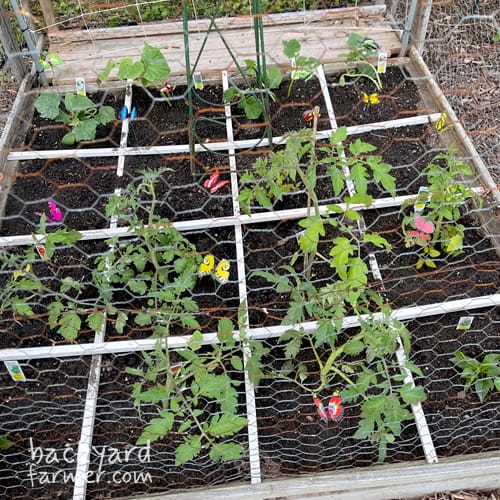
Square foot gardening divides a bed into 1 ft × 1 ft sections, with each square planted according to the space a crop needs. It is a simple way to organise a raised bed, avoid overcrowding and make the most of a small UK garden or allotment.
This guide covers suitable bed sizes, plant spacing, layout ideas and common mistakes. You can also build your own plan with the free Square Foot Garden Planner, which applies the crop spacing automatically.
Plan Your Bed With the Free Square Foot Garden Planner
Use the planner to choose a bed size, add crops and see how many plants fit within each square. It is designed around the square-foot method and works on desktop or mobile.
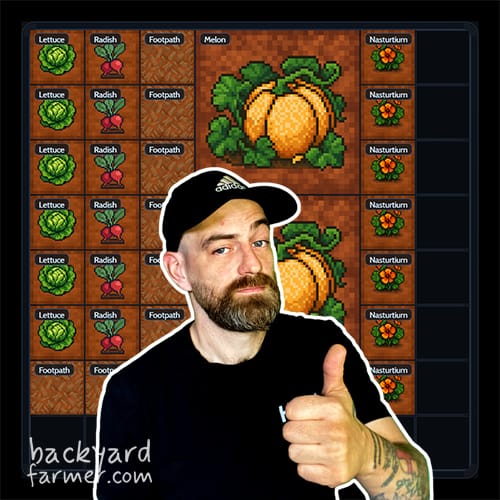
- A true square-foot grid
- Suggested spacing for each crop
- Simple tap-and-place controls
- PNG and PDF export
Build your layout before sowing so you can see where everything will go and make changes without redrawing it by hand.
Benefits of Square Foot Gardening in UK Gardens
Square foot gardening is particularly useful in small gardens, raised beds and allotments where every bit of growing space matters. The grid makes planting easier to organise without needing long rows or complicated measurements.
Makes Better Use of Small Spaces
Dividing a bed into squares helps you use the available space without filling it randomly. It works particularly well in compact gardens and smaller allotment beds.
Provides Clearer Plant Spacing
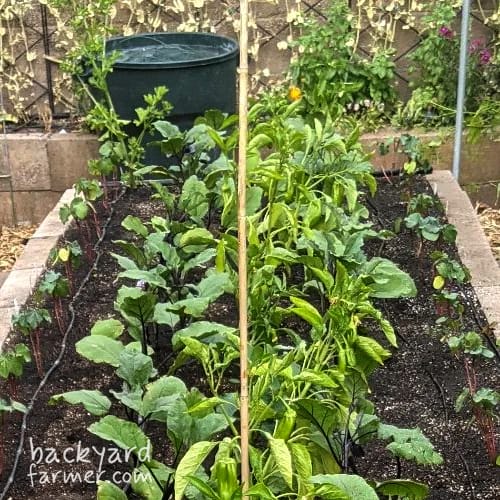
Each crop is given a suggested number of plants per square. This removes much of the guesswork and helps prevent beginners from squeezing in too many plants.

Keeps Weeding and Watering Manageable
Closely planted crops can leave less open soil for weeds, while the grid makes it easier to direct water where it is needed. Beds will still need regular checks during warm or wet weather.
Makes Succession Planting Easier
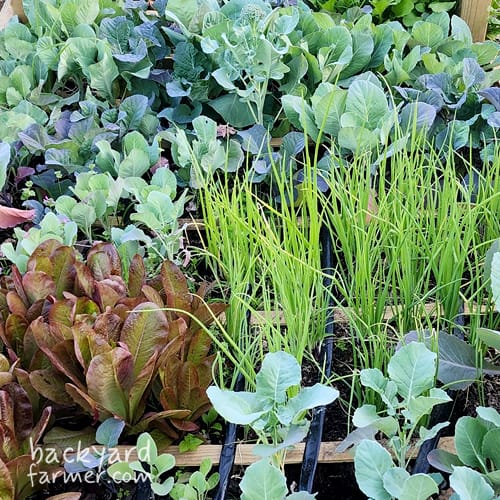
Once one square has been harvested, it can be cleared and replanted without disturbing the whole bed. This helps spread harvests across the season.
Best Crops for Square Foot Gardening (UK Climate)
Compact, quick-growing crops are generally easiest to manage in a square foot bed. Leafy salads, root vegetables, dwarf beans and herbs suit the method particularly well. Larger crops can also be grown, but they may need more than one square or vertical support.
Root Vegetables
Fruiting Crops
Peas and Beans
- Dwarf French beans
- Climbing French beans
- Runner beans
- Peas
Herbs
- Parsley
- Basil
- Coriander
- Chives
Choose compact varieties where possible and place climbing crops along the back or north side of the bed so they do not shade shorter plants.
Square Foot Spacing Guide: How Many Plants per Square
Each square is planted according to the mature size of the crop. The numbers below provide a useful starting point, although the variety and the size at which you plan to harvest can make a difference.
1 Plant per Square
These larger crops need plenty of room to mature, making them ideal for anchoring a square foot gardening layout.
- Kale
- Cabbage
- Broccoli
- Tomatoes (bush)
- Peppers
- Aubergine
- Chard
Best for: Larger leafy and fruiting crops.
9 Plants per Square
Perfect for smaller greens and compact root crops — ideal for maximising yield in raised beds.
Best for: Fast-growing greens and small root crops.
16 Plants per Square
Ideal for tiny, quick-growing crops that suit close spacing.
Best for: small-root veg that mature quickly and work brilliantly in compact square foot layouts..
Special Spacing Rules
Some crops don’t follow the standard square-foot spacing and need a slightly different approach.
Courgettes and bush squash
Allow at least two squares and often more for vigorous varieties
Pumpkins and trailing squash
Plant near the edge and train growth over a path or outside the bed
Climbing beans and peas
Grow against supports at the back or north side
Trained cucumbers
Grow vertically to reduce the amount of bed space required
You do not need to memorise every spacing rule. Select a crop in the Square Foot Garden Planner and it will show the suggested density automatically.
How to Build a Square Foot Bed: Step by Step
A square foot bed does not require specialist materials. The important points are keeping the bed within easy reach, using fertile soil and dividing the surface into a consistent grid.
Step 1: Choose Your Bed Size
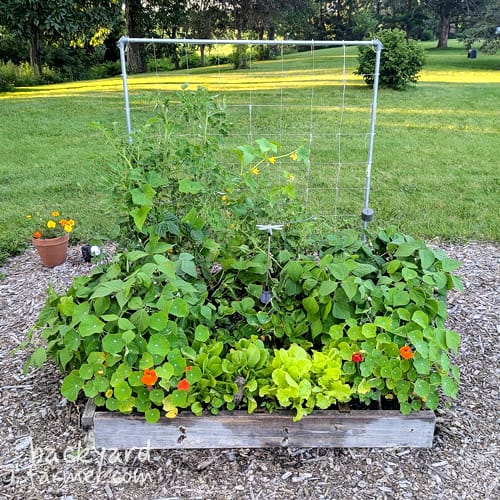
Choose a bed size that suits your space and supports a clean, efficient square foot layout. The most popular square foot bed sizes in the UK are:
| Bed size | Squares | Best for |
|---|---|---|
| 4 × 4 ft | 16 | Beginners and small gardens |
| 6 × 4 ft | 24 | More crop variety |
| 8 × 4 ft | 32 | Allotments and larger harvests |
Keep beds no wider than 4 ft if you can reach them from both sides. Use a narrower bed where access is only possible from one side.
Step 2: Build or Assemble Your Raised Bed

A frame is not essential, but it keeps the edges tidy and makes the grid easier to maintain.
- Timber sleepers
- Untreated scaffold boards
- Pre-made raised bed kits
- Reclaimed wood (food-safe only)
Learn how to make your own raised beds from pallets in our guide here!
Step 3: Fill with High-Quality Soil
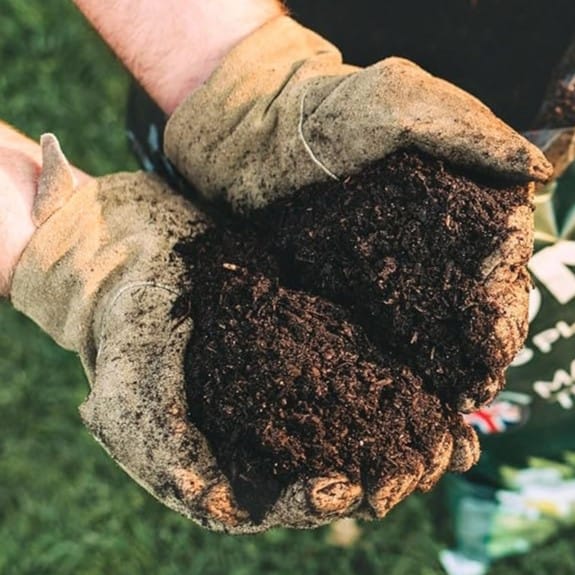
Closely spaced crops need loose, fertile soil that drains well. A practical starting mix is:
- 50% multipurpose compost
- 25% topsoil
- 25% well-rotted organic matter
Mix the ingredients thoroughly and add fresh compost before each main growing season. Avoid filling the bed entirely with dense garden soil, which can compact and drain poorly.
Step 4: Create the Grid
Divide the surface into squares measuring approximately 1 ft × 1 ft, or 30 cm × 30 cm. The measurements do not need to be exact, but the grid should remain consistent.
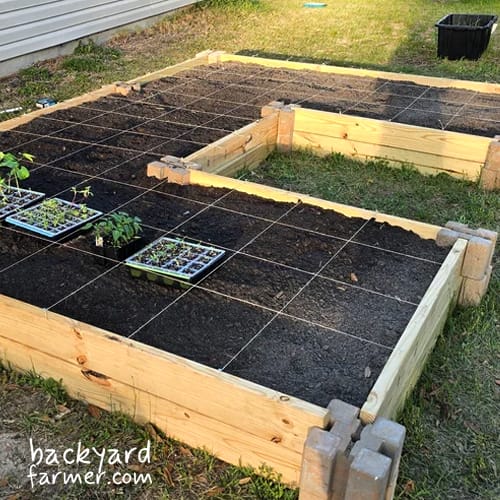
Make the grid using:
- Wooden battens
- Bamboo canes
- String across the bed
- Plastic laths or slats
Step 5: Position Your Bed for Sunlight
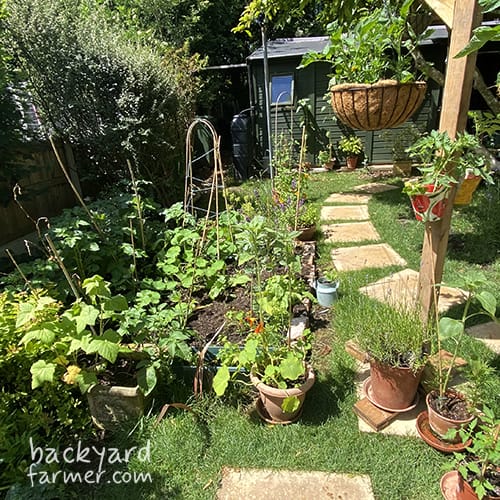
Choose the sunniest practical position, particularly if you plan to grow tomatoes, beans, cucumbers or peppers.
- Choose a south-facing spot where possible
- Avoid deep shade from buildings, sheds, or fences
- Leave space at the back (north side) for vertical supports
Step 6: Start Planning Your Layout
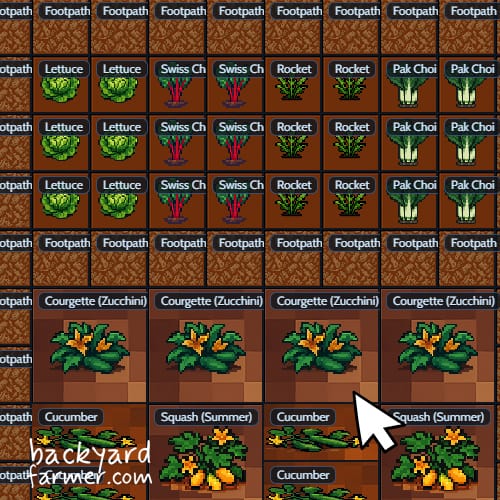
Add your crops to the planner before sowing or planting. You can adjust the layout, check spacing and export a PNG or PDF to take outside.
Four Beginner 4 × 4 Square Foot Planting Plans
Each of these plans fills a 4 × 4 ft bed containing 16 squares. Use them as starting points and swap crops according to what you eat, the season and the amount of sunlight your bed receives.
Easy Salad & Herb Bed (Fast, Continuous Harvests)
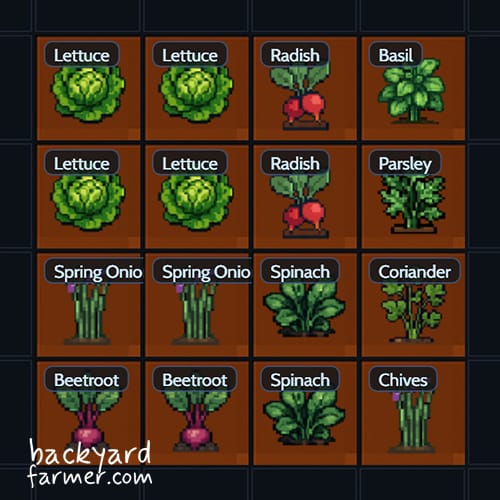
Suggested layout (example):
- 4 squares of lettuce (cut-and-come-again; 4 per square)
- 2 squares of radishes (16 per square)
- 2 squares of spring onions (16 per square)
- 2 squares of spinach (9 per square)
- 2 squares of beetroot (9 per square)
- 4 squares of herbs (basil, parsley, coriander, chives)
Why it works: These crops grow fast, reset quickly, and give you reliable harvests all season.
Family-Friendly Summer Veg Bed
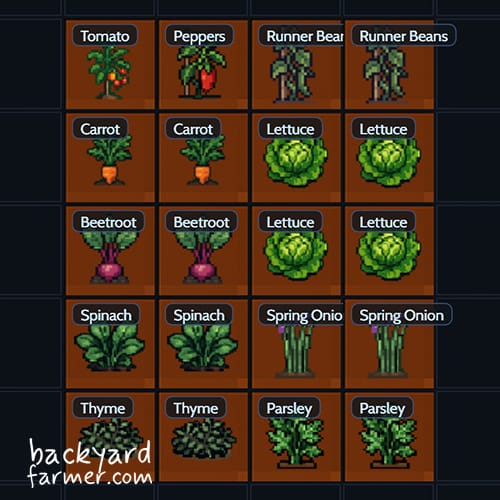
- 1 square bush tomato (1 per square)
- 1 square pepper (1 per square)
- 2 squares French beans (4 per square)
- 4 squares lettuce
- 2 squares carrots (16 per square)
- 2 squares beetroot
- 2 squares spinach or chard
- 2 squares spring onions
Why it works: You get a good mix of salads, staples, and family-friendly crops without overcrowding.
Autumn/Winter UK Bed (Cold-Hardy Crops)
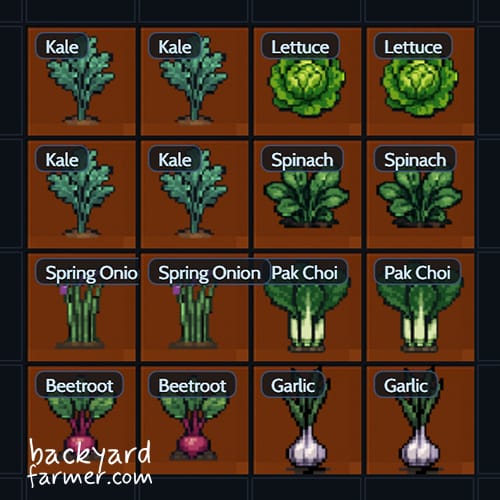
- 4 squares kale (1 per square)
- 2 squares winter lettuce
- 2 squares spinach
- 2 squares pak choi (4 per square)
- 2 squares spring onions
- 2 squares beetroot (young beets overwinter well)
- 2 squares garlic (4–9 per square depending on spacing)
Why it works: These cold-tolerant crops can keep the bed productive through autumn and milder winter weather. Growth will slow in cold conditions, and some crops may need fleece or a cloche.
Pollinator-Friendly Mixed Bed
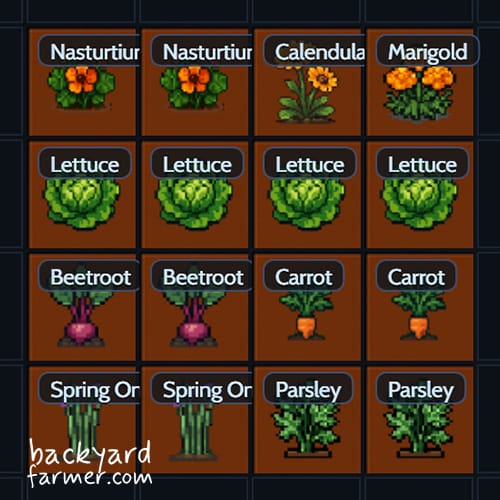
- 2 squares nasturtiums (edible flowers)
- 2 squares calendula or marigolds (useful insect forage)
- 4 squares lettuce
- 2 squares beetroot
- 2 squares carrots
- 2 squares spring onions
- 2 squares herbs (dill, parsley; keep mint in a pot nearby)
Why it works: Calendula, nasturtiums and flowering herbs add colour and insect forage without taking over the whole bed. They do not replace crop covers or regular pest checks.
Common Mistakes UK Gardeners Make (and How to Avoid Them)
The grid is simple, but it still needs sensible crop choices, spacing and timing. These are the mistakes most likely to reduce yields in a UK garden.
Overcrowding
Problem: Reduced airflow, mildew and weaker growth.
Fix: Follow the spacing for each crop and resist filling every small gap
Too many brassicas
Problem: Caterpillar damage can spread quickly through the bed
Fix: Limit the number grown together and protect them with fine insect mesh
Ignoring shade
Problem: Fruiting crops may grow slowly or fail to ripen
Fix: Put tomatoes, peppers and beans in the brightest squares; use partial shade for leafy crops
Poor soil preparation
Problem: Compacted or exhausted soil restricts roots
Fix: Add compost, improve drainage and avoid walking on the bed
Repeating the same crops
Problem: Pests, diseases and nutrient problems can build up
Avoid repeatedly growing the same plant family in one area; do not rely on rotating individual squares as complete protection
Planting everything together
Problem: The whole harvest becomes ready at once
Fix: Sow quick crops in smaller batches every two or three weeks
FAQs
For most beginners, a bed no wider than 4 ft is easiest to manage. A 4 × 4 ft bed provides 16 squares, while 6 × 4 ft and 8 × 4 ft beds provide more variety without becoming difficult to reach.
Lettuce, spinach, carrots, beetroot, radishes, spring onions, dwarf beans and herbs are particularly well suited. Larger crops such as tomatoes, courgettes and cucumbers need more room or vertical support.
A depth of 20–30 cm is enough for many salads and shallow-rooted vegetables. Deeper beds are useful for long carrots, parsnips and gardens with poor soil underneath.
No. You can mark a square-foot grid directly onto a prepared bed. A raised frame simply makes the edges, spacing and soil easier to manage.
Start Planning Your Square Foot Garden
Square foot gardening works best when you keep the grid simple, give larger plants enough room and sow a few squares at a time. Start with crops you already eat, then adjust the layout as you learn what performs best in your space.
Use the free Square Foot Garden Planner to build your layout, check the suggested spacing and export a copy for your garden or allotment.