
Introduction
Companion planting UK advice can feel confusing at first.
After all, much of the information online is written for warmer climates or larger gardens, which simply don’t reflect real British allotments. So if you’ve been searching for what grows well together in a UK vegetable garden — without the myths and magic fixes — you’re in the right place.
This guide focuses specifically on companion planting UK conditions: damp summers, tight bed spacing, carrot fly, cabbage white, and everything in between. Rather than repeating generic theory, we’ll focus on what actually works for UK veg growers.
What Is Companion Planting (In Simple Terms)?
Put simply, companion planting means growing certain crops side by side because they support each other in some way.
In practical vegetable companion planting UK terms, that usually involves:
- Improving space efficiency
- Managing pest pressure
- Increasing biodiversity in smaller beds
For example, one crop may help confuse pests. In other cases, plants use different root depths or grow at different speeds, which reduces direct competition. And occasionally, flowers attract beneficial insects that help keep the ecosystem balanced.
In most UK gardens, companion planting helps by:
- Confusing or deterring pests
- Attracting beneficial insects
- Making better use of limited bed space
- Reducing direct competition between crops
However, it’s important to stay realistic.
Companion planting supports a healthy garden ecosystem — but it does not replace the fundamentals. You still need:
- Proper spacing
- Sensible crop rotation
- Healthy, well-fed soil
- Netting against cabbage white butterflies
- Good airflow to prevent blight and mildew
In other words, use companion planting as a support strategy. Let it strengthen a well-managed bed rather than trying to fix underlying problems.
What You’ll Find in This Companion Planting Guide
In this article, you’ll find a practical companion plants chart designed specifically for UK veg growers. This companion planting chart shows clearly which vegetables grow well together — and which combinations are better kept apart. You’ll also get:
- A printable companion planting chart you can keep in the shed
- Clear, down-to-earth explanations of companion planting vegetables
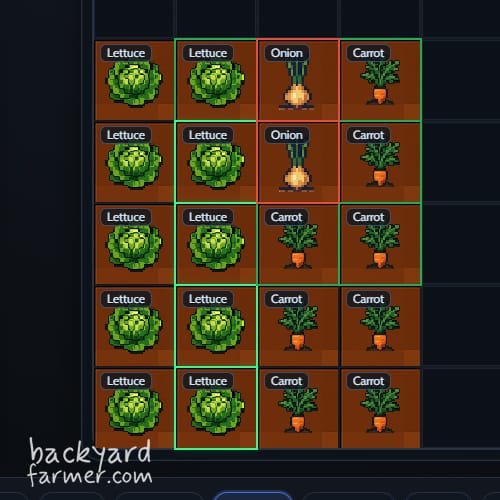
- Access to a free interactive companion planting planner inside the Backyard Farmer Allotment Planner
So rather than chasing perfect pairings, we’ll focus on what genuinely works in UK conditions. Keep it simple, keep it practical — and use companion planting UK-style to make your beds easier to manage, not harder.
What Is Companion Planting? (And Does It Actually Work?)
Companion planting means growing different crops close together because they benefit each other in some way.
In practical vegetable companion planting UK terms, that usually comes down to a few straightforward principles that work in real allotments — not just in theory.
For example, you might:
- Pair crops that help reduce pest pressure
- Mix root depths so plants don’t compete too heavily
- Use fast growers to fill gaps between slower crops
- Add flowers that attract beneficial insects like hoverflies and pollinators
In other words, companion planting is about making smarter use of space and boosting biodiversity in your vegetable garden.
However, not every companion planting claim you read online holds up in UK conditions.
For instance, planting basil with tomatoes is widely recommended in many companion planting guides. It can attract beneficial insects and help you use bed space efficiently. But it won’t magically prevent tomato blight during a damp British summer. Likewise, marigolds often appear in companion plants charts as a solution for brassica pests. In reality, netting remains far more reliable against cabbage white butterflies in most UK gardens.
That doesn’t mean companion planting vegetables doesn’t work.
Instead, it means you need to see it for what it is: a supporting tool within a wider growing strategy. Companion planting strengthens a healthy garden ecosystem — but it doesn’t replace solid gardening fundamentals.
However, not every companion planting claim you read online holds up in UK conditions. The Royal Horticultural Society (RHS) also notes that while some plant pairings can help, good cultivation practices remain more important than companion theory.
What Companion Planting Can Help With
When you use companion planting in the UK realistically, it can:
- Improve biodiversity in small allotment beds
- Reduce the impact of pests like carrot fly
- Help you manage space more efficiently in raised beds
- Support soil structure when crops have different root depths
As a result, you create more balanced beds where vegetables genuinely grow well together without excessive competition.
What Companion Planting Cannot Fix
Just as importantly, companion planting cannot:
- Fix overcrowded beds
- Stop blight during prolonged wet weather
- Replace crop rotation
- Repair poor soil structure
Therefore, companion planting UK-style works best when you layer it on top of good growing practice.
If you treat it as a practical support strategy rather than a miracle solution, it becomes far more useful — especially in the tighter spaces most UK veg growers are working with.
The Companion Plants Chart (UK Cheat Sheet)
If you’re looking for a clear answer to what grows well together, this companion plants chart focuses on the vegetables most UK allotment growers actually grow.
Rather than overwhelming you with every possible combination, this companion planting chart for UK vegetables keeps things practical. It covers the crops you’re most likely to plant, so you can make quick decisions without overthinking it.
Use it as a working reference while planning your beds. Then adjust based on spacing, sunlight, airflow, and crop rotation, because those fundamentals still matter more than any single companion pairing.
Companion Planting Chart for UK Vegetables
This vegetable companion planting UK cheat sheet shows clearly which crops grow well together — and which ones are better kept apart.
| Crop | Grows Well With | Avoid Planting Near | Quick Notes |
|---|---|---|---|
| Tomatoes | Basil, lettuce, carrots, marigolds | Potatoes, fennel | Prioritise airflow to reduce blight risk |
| Potatoes | Beans, cabbage family (spaced) | Tomatoes | Rotate yearly to reduce disease |
| Carrots | Onions, leeks, chives | Parsnips | Alliums may help reduce carrot fly |
| Onions | Carrots, beetroot, lettuce | Beans, peas | Alliums and legumes don’t mix well |
| Garlic | Brassicas, strawberries | Beans, peas | Works well as a defensive edging crop |
| Peas | Carrots, radish, spinach | Onions, garlic | Give support and allow good airflow |
| Beans (French/Runner) | Sweetcorn, squash | Onions, garlic | Protect young plants from slugs |
| Brassicas (Cabbage/Kale) | Onions, dill, nasturtium | Strawberries | Netting is usually more reliable than flowers |
| Cucumbers | Nasturtium, dill | Potatoes | Shelter and warmth improve UK results |
| Courgette / Squash | Sweetcorn, beans | Potatoes | Allow plenty of space at maturity |
| Sweetcorn | Beans, squash | Tomatoes | Plant in blocks for proper pollination |
| Lettuce | Radish, carrots, spring onions | Overcrowded brassicas | Ideal gap-filling crop |
| Spinach / Chard | Peas, beans | Potatoes | Performs better in spring and autumn |
| Beetroot | Onions, lettuce | Pole beans | Thin properly for larger roots |
| Radish | Lettuce, peas | Hyssop | Fast crop for succession sowing |
| Parsnips | Onions, radish | Carrots | Avoid fresh manure |
| Celery | Leeks, brassicas | Carrots | Needs consistent moisture |
| Strawberries | Chives, garlic | Brassicas | Mulch to keep fruit clean |
| Peppers / Chillies | Basil, onions | Fennel | Grow in sheltered UK spots |
| Leeks | Carrots, beetroot | Beans, peas | Firm soil around stems |
Download the Full Printable Companion Planting Chart
If you’d prefer a cleaner version to print and keep in the shed, the full printable companion planting chart expands on everything above.
In addition to the core companion planting UK vegetable table, it includes:
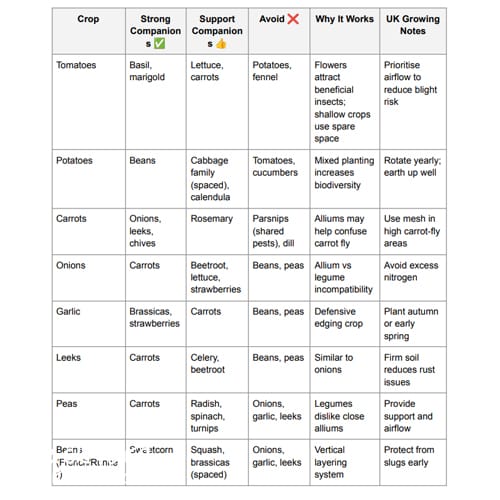
- An extended crop list
- Clear strength ratings (strong / support / avoid)
- Perennial crops
- Flower and herb companions
- Practical UK-specific notes
As a result, you can refer back to it whenever you’re planning beds or adjusting combinations mid-season.
👉 Download the printable companion planting chart and use it as your working reference throughout the growing season.
Alternatively, if you prefer a more visual approach, use the free interactive companion planting planner inside the Backyard Farmer Allotment Planner. It allows you to check companion planting combinations as you build your layout, which makes spotting clashes much easier before anything goes in the ground.
5 Simple Companion Planting Rules for UK Allotments
If you remember nothing else from this companion planting UK guide, remember these five rules.
They’ll help you decide what grows well together in real UK conditions. More importantly, they’ll stop you overcomplicating your vegetable beds or relying too heavily on theory.
1. Alliums and Legumes Don’t Mix
This is one of the most reliable companion planting rules — and it’s worth sticking to in any vegetable companion planting UK layout.
Alliums (onions, garlic, leeks, chives) generally don’t pair well with legumes (peas and beans). While the exact science is still debated, many experienced growers notice reduced vigour when they plant them too close together. Therefore, in practical companion planting terms, it’s usually best to keep them apart.
So if you’re asking, can you plant onions and beans together? — I wouldn’t recommend it.
Instead, try pairing:
- Carrots with onions
- Peas with carrots
- Beans with sweetcorn or squash
By separating alliums and legumes, you avoid one of the most common vegetable companion planting clashes.
2. Height and Shade Matter More Than Theory
Companion planting vegetables only works if light actually reaches your crops.
Tall plants like sweetcorn, Jerusalem artichokes, and climbing beans can quickly cast shade across a bed. As a result, lower-growing vegetables struggle, no matter how “good” the companion pairing looks on a companion plants chart.
For example, if you plant sun-loving crops like tomatoes or peppers in the wrong position, no clever combination will fix a lack of sunlight.
Before focusing on what grows well together, always check:
- Mature plant height
- Sun direction across the day
- Airflow between crops
In most UK gardens, poor light and restricted airflow cause more problems than bad companions ever will.
3. Netting Beats Flowers for Brassicas
Many companion planting charts recommend marigolds and nasturtiums for brassicas.
And yes, they can attract beneficial insects and improve biodiversity. However, if cabbage white butterflies are active — which they usually are in the UK — flowers alone won’t protect your crops.
Therefore, for reliable vegetable companion planting UK results:
- Use netting for cabbages, kale, and sprouts
- Then add flowers as a supporting layer
In other words, companion planting supports protection — it doesn’t replace physical pest control.
4. Fill Gaps With Fast Crops
One of the most practical uses of companion planting vegetables is improving space efficiency.
Fast-growing crops like lettuce, radish, and spring onions slot neatly between slower crops such as brassicas or tomatoes. Because they mature quickly, you harvest them before the larger plants need the space.
As a result, you make better use of your beds without overcrowding them.
This approach works especially well in smaller UK allotments, where space is limited and smart planting makes a real difference.
5. Airflow Is Critical in UK Summers
In damp British summers, airflow often matters more than companion choice.
Tomato blight, mildew on courgettes, and fungal diseases in dense beds are common issues. Unfortunately, overcrowding — even with “good companions” from a companion planting chart — increases humidity and disease risk.
So when deciding what grows well together, always leave enough space for:
- Air movement
- Easy access for harvesting
- Proper light penetration
Ultimately, healthy spacing and airflow support successful companion planting UK beds far more than clever combinations alone.
If you follow these five rules, companion planting becomes far more straightforward. Instead of chasing perfect pairings from every companion plants chart you find, you’ll build balanced, manageable vegetable beds that actually perform throughout the season.
Common Companion Planting Mistakes (And How to Avoid Them)
Even the best companion planting UK plans can fail if the fundamentals aren’t right.
Companion planting works best when you treat it as a support tool — not a shortcut. In reality, most problems in UK vegetable beds don’t come from “bad companions” at all. Instead, they usually come from poor spacing, too much shade, tired soil, or simply expecting too much from a companion plants chart.
So before blaming a pairing, always check the basics first.
Below are the most common companion planting mistakes I see on allotments — and how to avoid them.
1. Overcrowding the Bed
This is, without doubt, the biggest mistake in vegetable companion planting UK layouts.
It’s tempting to squeeze in extra crops because a companion planting chart says they grow well together. However, even vegetables that grow well together still need room to breathe.
When you overcrowd a bed, you create:
- Poor airflow
- Higher humidity
- Increased risk of tomato blight and mildew
- Smaller, weaker harvests overall
As a result, what looked like a clever companion planting strategy quickly turns into a management headache.
Before adding companions, always check the mature size of each crop. If you can’t comfortably fit your hand between plants, they’re probably too close — and they’ll let you know about it later.
2. Expecting Flowers to Solve Pest Problems
Marigolds, nasturtiums, and dill often appear in companion planting charts — and yes, they do have value within a broader companion planting system.
They attract beneficial insects and help improve biodiversity. However, they won’t stop a heavy infestation on their own.
For example:
- Cabbage white butterflies will still lay eggs on brassicas
- Slugs won’t suddenly avoid your courgettes just because flowers are nearby
So while flowers can support your companion planting UK strategy, they shouldn’t replace it.
In most UK gardens, netting, barriers, and physical protection work far more reliably. Therefore, use flowers as an extra layer — not your main defence.
3. Ignoring Crop Rotation
Companion planting and crop rotation are related — but they are not the same thing.
Even if two vegetables grow well together, planting them in the same spot year after year builds up soil-borne diseases and pests. That’s especially true with closely related crops.
Take potatoes and tomatoes, for example. They share similar disease risks, particularly blight. Companion planting doesn’t cancel that out, no matter what a companion plants chart suggests.
So always plan your companions within a sensible rotation system. Otherwise, you’re simply stacking problems for later.
4. Planting Fennel Anywhere
Fennel has a bit of a reputation in companion planting circles — and for good reason.
Unlike most vegetables, it doesn’t grow well together with many neighbours. In fact, it can inhibit the growth of nearby plants. As a result, experienced growers often keep it separate from the main vegetable beds.
If you grow fennel, give it proper space. Ideally, plant it in its own section or even its own bed. That way, you avoid unnecessary conflict before it starts.
5. Forgetting Root Competition
Not all competition happens above ground.
While we often focus on height and light when deciding what grows well together, roots tell a different story. Shallow-rooted crops like lettuce behave very differently from deeper-rooted crops like parsnips.
If you mix two heavy feeders with similar root depths, they’ll compete directly for nutrients and moisture. As a result, both crops underperform.
Instead, combine:
- Different root depths
- Different growth speeds
- Different canopy heights
That’s how you reduce competition rather than accidentally increasing it — and that’s where companion planting vegetables genuinely becomes useful.
If you avoid these five mistakes, companion planting becomes far simpler. Focus first on spacing, airflow, rotation, and realistic expectations. Then, once the fundamentals are right, use companion planting UK-style to fine-tune your beds — not to fix underlying problems.
Keep it practical, and your allotment will thank you for it.
FAQ – Companion Planting UK
Below are some of the most common questions UK veg growers ask about companion planting UK — answered in plain English and based on real allotment experience.
As a rule, avoid planting tomatoes next to potatoes or fennel.
Potatoes and tomatoes are closely related, and because of that they share similar disease risks — especially blight. If you grow them side by side, blight can spread much faster through the bed. Therefore, even if a companion plants chart suggests they tolerate similar conditions, it’s best to separate them.
Fennel is a different issue altogether. It tends to inhibit the growth of many nearby plants, so in most vegetable companion planting UK layouts, it’s safer to give fennel its own space.
On the other hand, tomatoes grow well together with basil, lettuce, carrots, and marigolds. However, even then, good airflow, spacing, and rotation matter far more than the companion itself.
Carrots grow particularly well with onions, leeks, and chives, which makes them a reliable pairing in many companion planting UK plans.
These alliums may help confuse carrot fly, a common pest in UK vegetable gardens. In addition, carrots sit quite happily alongside lettuce and radish, since those crops mature quickly and don’t compete too heavily for nutrients.
However, avoid planting carrots directly next to parsnips. They share similar pests, and because they root at a similar depth, they can end up competing rather than supporting each other.
Short answer: it’s better not to.
Alliums (onions, garlic, leeks) and legumes (peas and beans) are widely considered poor companions in companion planting vegetables. While the exact science is still debated, many growers notice reduced vigour when they plant them too close together.
So instead, keep onions with carrots or beetroot, and grow beans with sweetcorn or squash. That way, you follow one of the most consistent companion planting chart rules and avoid unnecessary clashes.
Yes — but only within reason.
Companion planting vegetables can improve biodiversity, reduce pest pressure slightly, and help you use space more efficiently. However, it won’t fix overcrowding, poor soil, or bad rotation practices.
In UK conditions especially, netting, sensible spacing, and good airflow usually make a bigger difference than plant pairings alone. Therefore, treat companion planting as a supporting strategy within a well-managed vegetable garden.
When you layer companion planting on top of solid fundamentals, vegetables genuinely grow well together. Without those basics, even the best companion plants chart won’t save the bed.
First and foremost, avoid planting tomatoes next to potatoes because of shared disease risks, particularly blight.
In addition, potatoes need space and airflow. If you plant them too close to large crops like squash, you increase humidity around the foliage, which raises disease pressure.
Instead, beans, brassicas (with proper spacing), and calendula tend to make better neighbours in companion planting UK vegetable beds.
If you’re ever unsure about a pairing, use the companion plants chart above as a quick reference. Alternatively, you can check combinations visually inside the free companion planting planner within the Backyard Farmer Allotment Planner before anything goes in the ground — which is usually the safest approach.
Conclusion: Companion Planting the Practical Way
Companion planting UK-style works best when you keep it simple and practical.
Rather than chasing perfect pairings from every companion planting chart you come across, focus on the fundamentals first: spacing, airflow, crop rotation, and healthy soil. Once those are firmly in place, companion planting becomes a genuinely useful tool. It can boost biodiversity, reduce pest pressure slightly, and help you make smarter use of the space you already have in your vegetable garden.
The companion plants chart above gives you a clear, practical reference for what grows well together in a UK vegetable garden. More importantly, this vegetable companion planting UK guide is built around real allotments, real weather, and real pest pressure — not idealised growing conditions you rarely see outside a magazine spread.
If you’d like something you can print and keep in the shed, download the full printable companion planting chart and use it as your working guide throughout the season. That way, when you’re planning or adjusting beds, you have a simple reference to hand rather than second-guessing combinations.
Alternatively, if you prefer to plan visually, our complete guide to using the Backyard Farmer Allotment Planner in the UK shows you how to test crop combinations, adjust spacing, and plan rotations before anything goes in the ground.
So keep it practical. Keep it realistic. Use companion planting UK methods to support your growing — not to complicate it.