
Knowing when to harvest onions in the UK can feel like a guessing game, especially when the usual advice is to “wait until the tops fall over.”
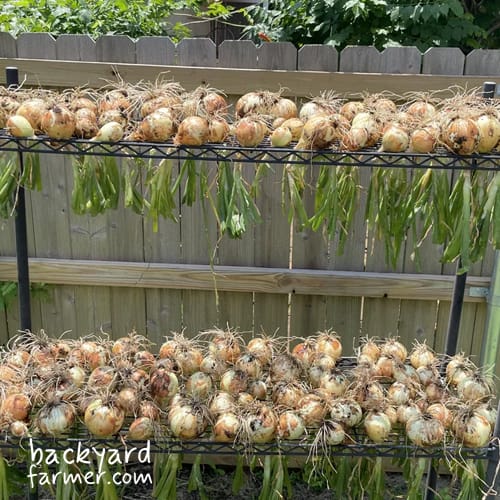
That advice is useful, but it is not the whole story. In a real bed, some onions flop early, others stand for longer, and a wet spell can ruin bulbs that were almost ready. The best approach is to read the plant, check the weather, and harvest in stages if needed.
In this guide, I’ll show you the main signs that onions are ready, when to lift them in UK conditions, and what to do after harvest so they store properly.
If you’re still working out how to get your crop established and growing well, see our full guide to How to Grow Onions in the UK for planting, spacing, feeding and common problems.
Ready vs Not Ready Onions (Quick Comparison)
| Sign | Ready to Harvest | Not Ready Yet |
|---|---|---|
| Tops | Mostly fallen over (50–70%) | Upright and firm |
| Leaves | Yellowing and drying | Fully green |
| Neck | Soft and narrow | Thick and stiff |
| Bulb size | Full-sized, pushing up | Still swelling |
| Skin | Starting to dry | Fresh and moist |
How to Know When Onions Are Ready to Harvest
One of the biggest traps is relying on just one sign — usually whether the tops have fallen over.
That helps, but it’s only part of the picture. If you’re wondering how to tell when onions are ready to harvest, you’re better off looking at a few things together rather than hanging everything on one signal.
1. Tops Fall Over (But Not All at Once)
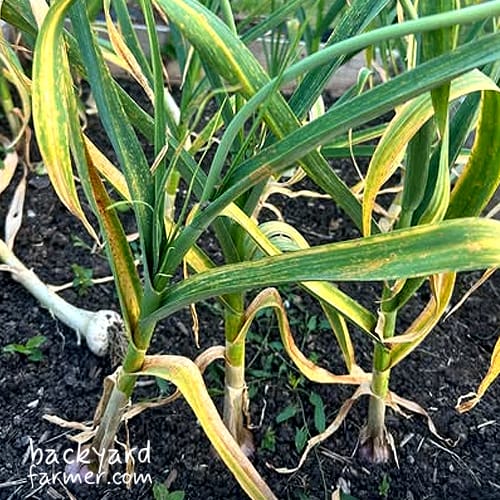
This is the one everyone mentions — although it’s often taken a bit too literally.
In most beds, onions don’t all go over together. A few will drop early, others will stand there stubbornly — and that’s normal, especially if the season’s been mixed.
As a rough guide, aim for around 50–70% of tops naturally flopped before you lift most of them.
If you wait for every last one, you’ll usually leave some in the ground too long — which, in a damp UK summer, is where problems start.
2. Leaves turn yellow and start to Die Back
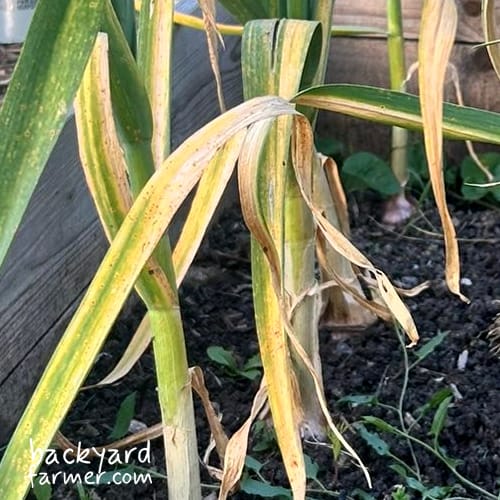
As onions finish up, the leaves lose that bright green and start to fade and dry.
- Bright green = still growing
- Fading/yellow = nearly there
It won’t happen evenly, so expect a bit of a mix across the row.
3. The Neck Softens (The Most Reliable Check)
If there’s one thing worth checking, it’s the neck — just above the bulb.
When they’re ready:
The neck feels soft and a bit floppy
It narrows and starts to collapse
When they’re not:
It stays thick, upright, and firm
If the neck still feels chunky, they usually need more time — and if you lift them too early, they don’t store well.
4. Bulbs Are Fully Swelled and Starting to Show
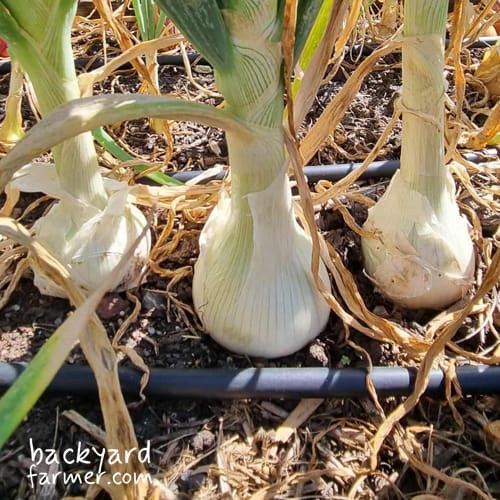
As they finish, onions often push up slightly out of the soil and feel firm when you give them a gentle squeeze.
If they still look small or tucked right in, they’ve probably got a bit more growing to do.
Quick readiness check
Your onions are ready to harvest when most of these signs line up:
- Most tops have naturally fallen over
- Leaves are yellowing and starting to dry
- Necks feel soft rather than thick and firm
- Bulbs look full and are starting to push up from the soil
In UK conditions, I would rather be slightly early than slightly late if rain is on the way. A smaller onion is still useful. A rotting one is not.
When to Harvest Onions in the UK
Plant signals matter most, but it helps to have a rough idea of the usual onion harvest window in the UK.
Treat these timings as a guide, not a rule. Some years everything finishes early, while other years the crop drags on. Weather, soil, variety, and planting time can all shift your onion harvest by a couple of weeks either way.
| Onion type | Typical harvest time UK |
|---|---|
| Autumn-planted sets | June–July |
| Spring-planted sets | July–August |
| Seed-grown onions | August–October |
“Lifting” simply means harvesting. You will often hear gardeners say they are going to lift their onions once the crop is ready.
In practice, lift onions when:
- Most tops have naturally fallen over
- The necks feel soft rather than stiff
- The bulbs look and feel properly filled out
- The weather is dry, or wet weather is on the way
Do not rely on dates alone. Two plots in the same area can be ready at slightly different times, and both can be right.
A better approach is to think in terms of a harvest window. Start checking once the first tops go over, lift the onions that are clearly ready, and let the smaller or later ones catch up.
I usually work through a bed over a week or so rather than pulling everything on one day. It is less stressful, and you usually end up with better onions overall.
As a quick guide:
- Early summer: Autumn-planted sets are often ready
- Midsummer: Most spring-planted onions are finishing
- Late summer: Seed-grown onions are usually catching up
Go by what the plants are doing and what the weather is about to do, not just the calendar.
If you want a wider view, see the full UK harvest calendar — it is handy for knowing what else is ready around the same time.
What to Do If Your Onions Aren’t Ready Yet
If your onions are not quite ready, don’t panic. It is normal for some to finish earlier than others, even in the same row.
If the tops are still upright and green, give them more time. They are probably still feeding the bulb.
If the bulbs look small, keep them lightly watered during dry spells and let them swell.
If the necks still feel thick and firm, they are not ideal for storage yet.
The exception is wet weather. If heavy rain is due and the onions are nearly ready, it is often better to lift the biggest ones slightly early than risk them rotting in the ground.
The Big Mistake: Waiting for the Perfect Moment
The biggest mistake is waiting for every onion in the bed to look perfect.
Onions rarely finish at the same time. If you wait for the slowest ones, the earliest bulbs can sit too long, especially in wet soil.
That can lead to:
- Soft or splitting skins
- Rot around the base
- Onions starting back into growth during mild weather
A better approach is to harvest in stages. Lift the onions that are clearly ready, check the rest every few days, and act early if wet weather is due.
How UK Weather Affects Onion Harvesting
UK weather is one of the main reasons onion harvest timing is never exact.
If the weather is dry, you can usually leave onions a little longer to finish and start drying naturally.
If heavy rain is coming, lift nearly-ready onions before the soil turns wet. Bulbs left sitting in damp ground can soften, split, or rot quickly.
Soil matters too. Heavy clay holds water for longer, so onions may need lifting slightly earlier. Raised beds and free-draining soil give you a bit more breathing room.
Simple rule: if it is dry, let them finish. If it is turning wet, get the ready ones out.
Common Mistakes to Avoid
Getting the timing roughly right is usually fine, but a few small mistakes can still affect how well your onions keep.
Harvesting too early
If onions are lifted too early, the necks often stay thick and firm. This means they may not seal properly during curing.
You may also notice:
- Thin skins that mark easily
- Necks that stay chunky
- Poor storage
- A higher chance of soft bulbs or rot later on
They are still usable, but they are better eaten fresh rather than stored.
If the neck still feels thick and firm, the onions usually need more time — unless wet weather is about to turn on you.
Leaving them too long
Leaving onions in the ground too long can cause just as many problems, especially in a damp UK summer.
You may see:
- Bulbs sitting in wet soil and starting to rot
- Outer skins splitting or going soft
- Onions starting back into growth during mild weather
This is the mistake I see most often. You wait for everything to be “just right”, then a wet week comes along and half the bed goes off.
In UK conditions, leaving onions too long is often worse than lifting slightly early.
Forcing the tops down
Do not bend onion tops over to make them ripen.
It can:
- Damage the plant
- Interrupt the natural finishing process
- Give disease an easier way into the bulb
It feels like you are helping, but it rarely works out that way.
Lifting roughly or pulling in heavy soil
If the ground is tight, loosen it first with a fork.
Pulling onions straight up from heavy or compacted soil can:
- Damage the base of the bulb
- Split the outer layers
- Lead to rot later in storage
A bit of care at harvest makes a big difference once the onions are curing.
The key principle
When you lift onions has a big impact on how well they keep.
If you harvest too early, they may not cure properly. If you harvest too late, wet soil and soft skins can ruin them before they ever reach storage.
Curing helps, but it cannot fully fix badly timed or damaged onions.
How to Harvest Onions Properly
Once your onions are ready, harvest them carefully so they cure and store well.
1. Choose a dry day
Lift onions in dry weather if you can. Avoid harvesting in wet conditions unless the crop is at risk.
2. Loosen the soil
Use a fork to ease the soil from underneath, especially in clay or compacted ground.
3. Lift gently
Pull from the base of the leaves if the soil is loose. If not, ease the bulbs out with a fork.
4. Brush off loose soil
Remove loose soil by hand, but do not wash the onions. Moisture at this stage can cause problems later.
5. Start drying straight away
Leave onions on the soil if the weather is dry, or move them under cover if rain is due.
What to Do After Harvest
After lifting, onions need to dry and cure before storage.
Curing helps the neck seal, toughens the outer skin, and improves how long the onions will keep.
Lay them somewhere dry, airy, and sheltered from rain. Do not pile them up. Give each bulb space so air can move around it.
Once the skins are papery and the necks are fully dry, they can be trimmed and stored.
Final Note
Harvesting onions is not about finding one perfect day.
Watch the tops, check the necks, look at the weather, and lift in stages if needed. That simple approach will give you better onions and fewer losses.