
Courgettes are one of those crops that can go from “nearly ready” to “where did that marrow come from?” almost overnight.
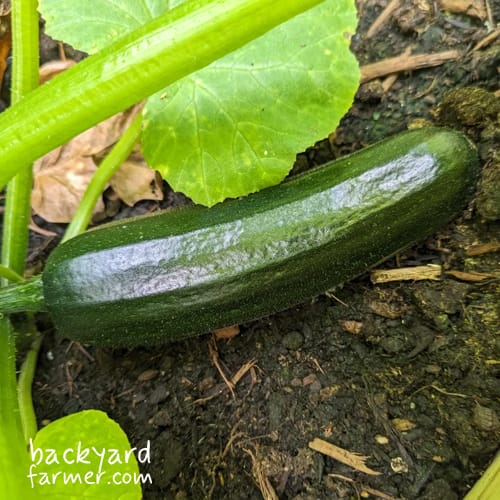
In the UK, the main courgette harvest usually runs from July to September, although greenhouse plants and early starts can crop sooner. The real cue, though, is not the calendar. It is the fruit itself. Pick courgettes when they are around 15–20cm long, firm, and slightly glossy.
Leave them too long and they quickly become bigger, seedier, and more watery. One hidden fruit can also slow the plant down, so regular picking makes a real difference.
This guide explains when to harvest courgettes in the UK, how to tell when they are ready, how often to check your plants, and what to do if one gets away from you.
When Are Courgettes Ready to Harvest in the UK?
Courgettes are usually ready to harvest in the UK from July onwards, although plants grown under cover can crop a little earlier.
The exact timing depends on your weather, location, and growing setup, so don’t rely on the calendar alone. A warm, sunny spell can push courgettes on quickly, while a cool or wet summer can delay harvesting by a couple of weeks.
If you are still getting your plants established, see my full guide on how to grow courgettes in the UK.
| Growing situation | Typical harvest timing |
|---|---|
| Greenhouse or early starts | Late June onwards |
| Outdoor plants | Usually July onwards |
| Peak season | July to August |
| Late harvests | September, sometimes early October in a mild year |
The most useful rule is simple:
Don’t wait for a month — watch the plant.
Courgettes can go from perfect picking size to oversized in just a few days, especially in the middle of summer. Once the plant starts cropping properly, check it often and look under the leaves where smaller fruits can easily hide.
Several things can affect how quickly courgettes are ready:
| Factor | How it affects harvest timing |
|---|---|
| Temperature | Warm weather speeds growth up |
| Sunlight | More sun usually means faster fruiting |
| Rainfall | Too much wet weather can slow growth or affect quality |
| Growing setup | Greenhouse plants often start earlier and crop for longer |
| Shelter | A warm, sheltered spot will usually crop ahead of an exposed garden |
In practice, you can usually expect your first courgettes around 8–10 weeks after planting, depending on the conditions. Early in the season, growth is steady. In mid-summer, it can feel almost relentless. By late summer and early autumn, production naturally slows again as temperatures drop.
Once you understand that rhythm, timing your courgette harvest becomes much easier. Check regularly, pick them young, and don’t let hidden fruits get away from you.
How to Tell When Courgettes Are Ready to Harvest
Knowing when courgettes are ready to harvest comes down to a mix of size, look, and feel. It is not just one sign.
Once you have picked a few, you will start to spot the right stage without thinking too much. For everyday eating, the best time to pick courgettes is when they are still young, firm, and glossy.
| Harvest cue | What to look for | What it tells you |
|---|---|---|
| Size | Around 15–20cm long | Best size for flavour and texture |
| Skin | Smooth and slightly glossy | Young and ready to pick |
| Feel | Firm when lightly squeezed | Fresh, solid, and not over-mature |
| Flower tip | Flower still attached | Very young and tender |
| Dull or matte skin | Less shine, tougher look | Usually past its best |
| Soft or spongy flesh | Gives too much when squeezed | Overgrown or starting to decline |
The main cue is size. A courgette around 15–20cm long, or roughly the length of your hand, is usually just right. Smaller courgettes are often sweeter, firmer, and less watery when cooked.
Skin is another useful clue. A ready courgette usually has a smooth, slightly glossy surface. If the skin starts to look dull, matte, or tough, it has probably been left too long.
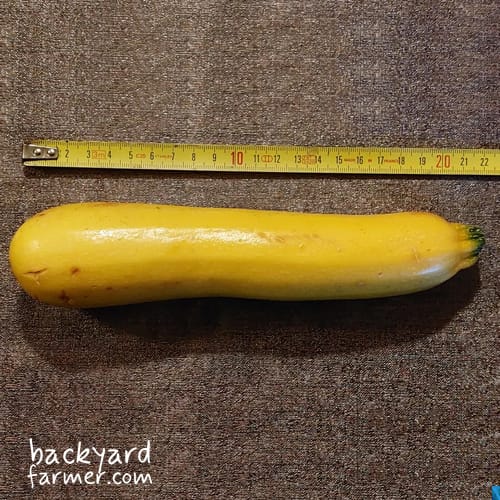
A quick firmness check also helps. The fruit should feel solid but not rock hard. If it feels soft, spongy, or hollow, it has already gone past the best picking stage.
If the flower is still attached, the fruit is still very young. That is fine if you like tender baby courgettes, but you do not need to wait until the flower drops before harvesting.
The best real-world rule is simple:
If you are unsure, pick it.
Courgettes do not improve by staying on the plant. They just get bigger, seedier, and more watery. A lot of people wait for them to “look big enough”, but by that point they are often already past their best.
Why Smaller Courgettes Usually Taste Better
Bigger courgettes might look like better value, but they rarely eat better.
As courgettes grow larger, the seeds bulk out, the skin thickens, and the flesh becomes softer and more watery. They can still be used, but they lose the fresh, firm texture that makes young courgettes so useful in the kitchen.
Courgettes picked at around 15–20cm are usually:
| Smaller courgettes are usually | Larger courgettes are more likely to be |
|---|---|
| Firmer | Watery |
| Sweeter | Bland |
| Less seedy | Full of larger seeds |
| Better when fried or grilled | Softer when cooked |
| Easier to use fresh | Better treated like marrows |
There are times when leaving them to grow makes sense. If you want marrows, stuffed courgettes, soup, chutney, or seed saving, then bigger fruits have their place.
For normal harvesting, though, bigger is usually a warning sign rather than a bonus.
Check under the leaves whenever you harvest. Courgettes hide more than you expect, and in warm weather they can size up quickly. A quick daily check in peak season is usually enough to stop them getting away from you.
The simple rule is: pick small, pick often, and don’t wait for bigger.
How Often Should You Harvest Courgettes?
How often you harvest courgettes has a big effect on both quality and yield.
Pick regularly, and the plant keeps producing. Leave fruits sitting on the plant for too long, and it starts putting energy into finishing those larger fruits instead of making new ones.
| Season stage | How often to check |
|---|---|
| Early season | Every 2–4 days |
| Peak summer | Every 1–3 days |
| Hot weather | Daily if possible |
| Late season | Every few days as growth slows |
Once courgettes get going, they do not hang about. You can check one day, skip the next, and come back to something much bigger than expected.
This is especially true in warm, sunny weather, when fruits can swell quickly under the leaves.
Why Regular Picking Matters
Courgettes will keep cropping for longer if you stay on top of harvesting.
When you leave a fruit to get too large, the plant puts more energy into that one courgette. As a result, new flowers can slow down and the rest of the plant may ease off for a while.
Regular harvesting helps to:
| Regular picking helps with | Why it matters |
|---|---|
| Better flavour | Smaller fruits are usually firmer and less watery |
| Steadier cropping | The plant keeps making new flowers |
| Higher overall yield | You get more usable courgettes over time |
| Less waste | Fruits are picked before they become oversized |
| Easier harvesting | Hidden fruits are less likely to turn into marrows |
In UK conditions, one healthy courgette plant can often produce 10–20+ courgettes over the season, sometimes more in a good summer. For most home growers, 2–3 plants is usually plenty. Any more than that and you may find yourself giving courgettes away.
What Affects Courgette Yield?
A few things make a difference, but harvesting frequency is one of the biggest.
| Factor | Effect on yield |
|---|---|
| Harvest frequency | Regular picking keeps the plant producing |
| Sunlight and temperature | Warm, bright weather speeds growth |
| Watering | Dry spells can slow fruit development |
| Soil fertility | Hungry plants need enough feed to keep cropping |
| Plant health | Strong, healthy plants crop for longer |
The simple habit is to do a quick check whenever you pass the plant in peak season.
Lift the leaves, look low down near the base, and pick anything that is nearly there. Courgettes hide more than you expect, and one missed fruit can turn into a marrow before you realise it.
Once they are cropping properly, you may feel like you are always picking courgettes. That is a good sign. It means the plant is healthy, productive, and doing exactly what it should.
The simple rule is: pick often, and you’ll get more over time.
How to Harvest Courgettes Without Damaging the Plant
Harvesting courgettes is simple, but it is worth doing cleanly. A rough pull or twist can tear the stem, damage the plant, and make it more vulnerable to disease.
The best method is to cut courgettes off with a sharp knife or secateurs, leaving a small piece of stem attached to the fruit.
| Step | What to do |
|---|---|
| 1 | Lift the leaves and find the fruit stem |
| 2 | Hold the courgette gently so you do not pull the plant |
| 3 | Use a sharp knife or secateurs |
| 4 | Cut the stem just above the fruit |
| 5 | Leave a small piece of stem attached |
| 6 | Check for any hidden, oversized, or damaged fruits while you are there |
You can twist courgettes off by hand, and sometimes it works, but it is not the best habit. Courgette stems can split or tear quite easily, especially when the fruit is tucked deep under the leaves.
A clean cut is quicker, neater, and better for the plant.
The best time to harvest is usually early morning or later in the day, when the plant is cooler and better hydrated. This is not a strict rule, but it helps in hot weather when plants are already under stress.
If a courgette feels tough to cut, do not force it. Adjust the angle and cut cleanly through the stem. Pulling, yanking, or twisting too hard can do more harm than good.
Courgette leaves and stems can also be slightly prickly, so gloves are useful if your skin gets irritated.
What to Do With Courgettes After Harvesting
Courgettes are best used fresh, ideally within a few days of picking. They do not store like onions, squash, or potatoes, so treat them as a short-term harvest.
| Situation | Best approach |
|---|---|
| Eating soon | Keep cool and use within 2–4 days |
| Hot kitchen | Store dry in the fridge salad drawer |
| Just picked | Do not wash until you use them |
| Damaged fruit | Use first, as it will not keep well |
| Oversized fruit | Use for soup, chutney, baking, or stuffing |
Keep harvested courgettes dry and avoid washing them before storage. Extra moisture can make them soften faster.
The simple rule is: cut cleanly, don’t pull, and use them while they’re fresh.
What Happens If Courgettes Get Too Big?
Courgettes do not stay at their best for long. Leave them on the plant too long and they quickly change from tender courgettes into something much closer to a marrow.
That does not mean they are wasted, but it does mean the flavour, texture, and plant productivity all start to suffer.
| What changes | What happens |
|---|---|
| Size | The fruit swells quickly and becomes oversized |
| Skin | The skin thickens and can become tougher |
| Seeds | The seeds bulk out and become more noticeable |
| Flesh | The inside becomes softer and more watery |
| Flavour | The taste becomes milder and less fresh |
| Plant growth | The plant may slow down new flowers and fruits |
The biggest issue is not just the courgette itself. It is what the plant does next.
If one fruit is left to grow too large, the plant puts more energy into finishing that fruit. New flowers can slow down, smaller fruits may pause, and the whole plant can seem to ease off for a while.
If you have grown courgettes before, you have probably seen this happen. You miss one under the leaves, it turns into a marrow, and the plant suddenly feels less productive. Remove it, give the plant a bit of time, and it will often get going again.
The simple rule is: don’t wait for bigger — pick courgettes while they are still young, firm, and glossy.
Can You Still Eat Oversized Courgettes?
Yes, oversized courgettes are still edible. You just need to treat them differently.
Once a courgette gets too large, it is usually better for cooked dishes rather than quick frying, grilling, or eating fresh. The flesh is softer, the seeds are bigger, and the skin may need peeling if it has become tough.
Good uses for oversized courgettes include:
| Use | Why it works |
|---|---|
| Soup | Watery flesh blends down well |
| Stuffed marrow-style dishes | Larger fruits are easier to hollow out and fill |
| Chutney | Extra moisture works well in slow-cooked preserves |
| Baking | Grated courgette adds moisture to cakes and breads |
| Fritters | Grated flesh can be squeezed and mixed with herbs or spices |
| Pasta sauces | Soft flesh cooks down easily |
Leaving courgettes to grow large can make sense if you want marrows, stuffing-sized fruits, or seeds. For normal harvesting, though, bigger is usually a sign that you have missed the best eating stage.
For the best flavour, texture, and steady cropping, pick them small and keep checking under the leaves.
Common Courgette Harvesting Mistakes
| Mistake | Why it matters | Better habit |
|---|---|---|
| Waiting for large fruits | Texture becomes watery and seedy | Pick at 15–20cm |
| Only checking the top of the plant | Fruits hide under leaves | Lift leaves and check low down |
| Leaving one huge fruit on | Plant puts energy into that fruit | Remove oversized fruit quickly |
| Pulling fruits off | Can tear stems | Cut with a knife or secateurs |
| Picking damaged fruit last | It will not store well | Use damaged fruit first |
| Letting wet fruit sit indoors | Can soften faster | Store dry and use quickly |
Courgette Harvest Checklist
| Check | What you want |
|---|---|
| Size | 15–20cm long |
| Skin | Slightly glossy |
| Feel | Firm, not soft |
| Frequency | Every 1–3 days in peak season |
| Method | Cut cleanly with a knife or secateurs |
| Oversized fruit | Remove quickly and use as marrow |
The simple rule is: pick small, pick often, and do not let hidden fruits get away from you.
FAQs: UK Courgette Harvesting
Courgettes are usually ready to pick in the UK from July to September, although greenhouse plants or early starts can crop from late June. The best guide is not the month, but the fruit itself. Pick courgettes when they are around 15–20cm long, firm, and slightly glossy.
The best size to harvest courgettes is usually 15–20cm long. At this stage, they are tender, firm, and less watery. Bigger courgettes are still usable, but they usually become seedier, softer, and closer to marrows.
In peak summer, check and pick courgettes every 1–3 days. In early or late season, every 2–4 days is usually enough. Once the weather warms up, they can grow quickly, so regular picking helps stop them becoming oversized.
Not really. Small courgettes are usually tender and good to eat. Picking them young can also encourage the plant to keep producing, so it is usually better to pick slightly early than leave them too long.
Oversized courgettes become more like marrows. The skin thickens, the seeds get larger, and the flesh often turns softer and more watery. Leaving large courgettes on the plant can also slow down new flowers and reduce steady cropping.
It is best to cut courgettes off with a sharp knife or secateurs. Twisting can work, but it may tear the stem or damage the plant. A clean cut is quicker, neater, and better for keeping the plant productive.
Courgettes are best used fresh, ideally within 2–4 days of picking. Keep them cool and dry, and avoid washing them until you are ready to use them. Damaged or oversized courgettes should be used first because they will not store as well.
Yes, oversized courgettes are still edible. They are just better used in cooked dishes rather than fresh or lightly fried. Use them for soups, stuffed marrow-style dishes, chutney, baking, fritters, or pasta sauces.
Small courgettes often rot before harvest because they have not been pollinated properly. Cool, wet weather can reduce pollinator activity, and young fruits may yellow, soften, and drop off. Remove the rotting fruit and keep the plant healthy; once the weather improves and pollination picks up, the plant usually produces normally again.
Most courgette plants slow down in September as temperatures drop and light levels fall. In a mild year, healthy plants may keep producing into early October. Once growth slows, keep picking any usable fruits before cold, wet weather damages them.
If you’re getting into allotments properly, it’s worth having a look at the National Allotment Society for extra guidance and support.