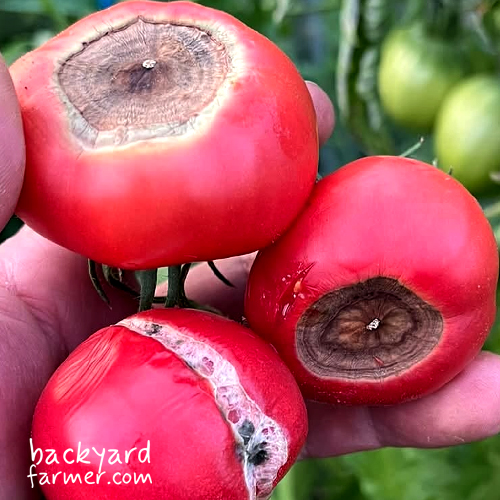
Blossom end rot in tomatoes causes dark, sunken patches at the bottom of developing fruit. It’s usually linked to disrupted calcium movement caused by inconsistent moisture, rather than a lack of calcium in the soil.
Damaged fruit won’t recover, but improving growing conditions can help prevent the next tomatoes from developing the same problem.
Blossom End Rot at a Glance
| Problem | Blossom end rot |
| Type | Physiological disorder, not an infectious disease |
| Affected crops | Tomatoes, peppers, aubergines and sometimes courgettes |
| Main symptoms | Dark, sunken, leathery patches at the blossom end |
| Main cause | Insufficient calcium reaching developing fruit |
| Common triggers | Irregular moisture, restricted roots, heat and nutrient imbalance |
| Best immediate action | Check root-zone moisture and growing conditions |
| Existing damage | Cannot be reversed |
| Future fruit | May develop normally once conditions improve |
| Contagious? | No |
What Does Blossom End Rot Look Like?
Blossom end rot usually appears as a dark, sunken patch at the blossom end of a tomato, opposite the stalk.
The affected area may begin as a pale brown or slightly water-soaked mark before becoming darker and leathery as the fruit develops. It may cover a small area or spread across much of the bottom of the tomato.
Peppers and aubergines can develop similar damage, although the patches may be less regular in shape.
Blossom end rot isn’t contagious. It’s a physiological disorder, although damaged tissue can later develop secondary decay.
Not every black patch on a tomato is blossom end rot. Spots elsewhere on the fruit, extensive mould or spreading soft rot may indicate another problem.
How to Stop Blossom End Rot on Tomatoes
You cannot repair fruit that already has blossom end rot, but improving growing conditions can reduce the risk of further tomatoes developing it.
The first priority is checking whether the roots are receiving a consistent supply of moisture.
What to Do Now
- Check moisture below the surface. Push a finger several centimetres into the compost or soil rather than judging moisture from the surface alone.
- Make sure water reaches the roots. Water slowly and thoroughly enough to moisten the active root zone.
- Correct moisture fluctuations. Avoid repeated drying followed by heavy rewatering.
- Check drainage and container size. Small pots can dry rapidly, while saturated compost restricts healthy root function.
- Review feeding and greenhouse conditions. Excess fertiliser, high temperatures and poor ventilation can contribute.
- Monitor developing fruit. Improvements will show in later fruit rather than damaged tissue.
The aim isn’t simply to water more. It’s to keep the root zone adequately moist without leaving it permanently saturated.
Blossom End Rot Troubleshooting
| What you find | Possible problem | What to do |
|---|---|---|
| Compost dry several centimetres down | Insufficient moisture | Water thoroughly and adjust watering frequency |
| Surface moist but deeper compost dry | Shallow watering | Water slowly and check moisture penetration |
| Water runs rapidly through dry compost | Uneven wetting or compost shrinkage | Apply water slowly in stages, letting it soak in between applications. Check that moisture reaches the root zone |
| Compost remains saturated | Excess water or poor drainage | Check drainage holes and reassess watering |
| Pot dries rapidly in hot weather | Limited growing volume | Consider larger containers, mulch or reliable irrigation |
| Greenhouse becomes excessively hot | Increased water stress | Improve ventilation and monitor moisture |
| Heavy fertiliser applications | Possible nutrient or salt imbalance | Return to recommended feeding rates |
There is no universal watering quantity or schedule.
A mature tomato plant in a small pot during hot weather may need much more frequent watering than one growing outdoors in well-prepared soil.
Check the actual moisture conditions rather than following an inflexible watering routine.
Why Do Tomatoes Get Blossom End Rot?
Blossom end rot develops when growing fruit doesn’t receive enough calcium for normal cell development.
In most cases, the soil already contains sufficient calcium, but inconsistent moisture or root stress interferes with its movement through the plant.
Calcium helps maintain cell walls and membranes. It moves through the plant with water, but developing fruit receive relatively little compared with leaves.
Restricted roots, excessive fertiliser, heat stress and other environmental conditions can also contribute. Some tomato varieties, particularly certain large-fruited and elongated plum types, are more susceptible.
Why Does Blossom End Rot Happen Even When You Water Every Day?
Daily watering doesn’t guarantee that moisture reaches the entire root zone.
Small amounts may only wet the surface, leaving deeper compost dry. Very dry compost may also shrink away from the container sides, allowing water to run through without soaking in properly.
Alternatively, excessive watering may leave the roots saturated and short of oxygen.
The important distinction is whether the compost is adequately moist where the roots are growing, not simply how often water is applied.
If blossom end rot continues despite regular watering, check moisture beneath the surface before changing your routine.
Blossom End Rot in Growbags and Small Pots
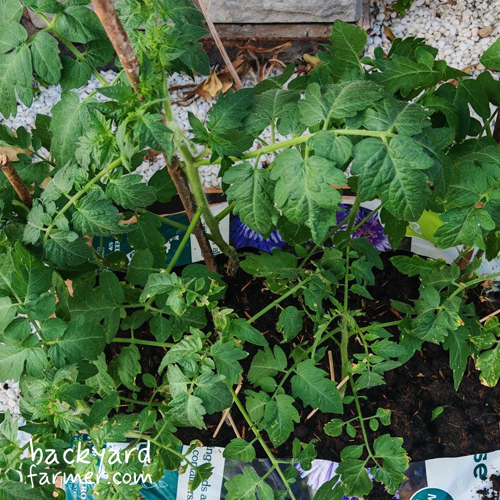
Tomatoes in growbags and small containers are particularly vulnerable to moisture fluctuations.
Their limited compost volume can dry rapidly in warm weather, while growing media that become very dry may be difficult to rewet evenly.
To improve conditions:
- Check moisture beneath the surface regularly.
- Avoid allowing the compost to dry completely.
- Consider larger containers for future crops.
- Use suitable irrigation or capillary watering where helpful.
- Ensure containers drain properly.
Mulching exposed compost can also reduce evaporation.
The aim is a more reliable moisture supply, not permanently waterlogged roots.
Can Blossom End Rot Be Reversed?
No. Once blossom end rot damages fruit tissue, that area cannot recover.
The sunken patch won’t disappear, even after watering and growing conditions improve.
However, the plant can remain healthy and productive. Later tomatoes may develop normally once the underlying problem is corrected.
Some fruit may continue showing symptoms for a while because the initial damage can occur before the patch becomes visible.
Should You Remove Tomatoes with Blossom End Rot?
Remove tomatoes that are severely damaged, decaying or unlikely to be usable.
Fruit with a small, dry patch may still develop usable portions and can be left until harvest if otherwise healthy.
Removing affected fruit doesn’t prevent the disorder spreading because blossom end rot isn’t infectious.
Can You Eat Tomatoes with Blossom End Rot?
A tomato with a small, dry patch of blossom end rot may still have usable flesh after the affected area is removed.
However, discard fruit showing mould, extensive softness, leakage or spreading decay.
Blossom end rot itself isn’t infectious, but damaged tissue can develop secondary fungal or bacterial decay.
Blossom End Rot on Courgettes — or Failed Pollination?
A courgette that stops growing, turns yellow and shrivels doesn’t necessarily have blossom end rot. Failed pollination or fruit abortion is often a more likely explanation.
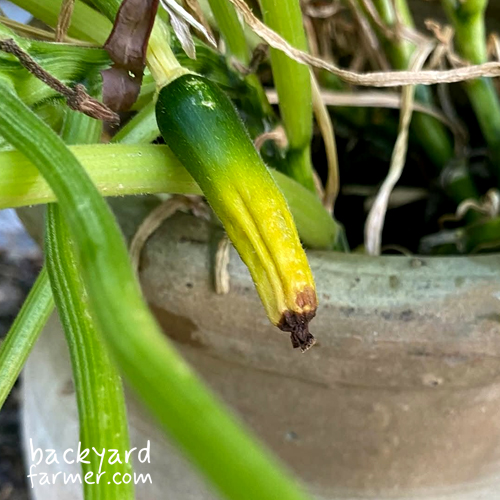
Cool, wet weather, limited pollinator activity and plant stress can all contribute to unsuccessful fruit development. Young plants may also abort developing fruit before they’re established enough to support a crop.
Courgettes can also develop genuine blossom end rot, usually appearing as a distinct dark, sunken lesion on a fruit that was otherwise developing.
How to Tell the Difference
| Courgette symptom | What to investigate |
|---|---|
| Small fruit stops growing, yellows and shrivels | Failed pollination or fruit abortion |
| Developing fruit forms a defined, sunken lesion | Blossom end rot is possible |
| Fruit develops spreading softness or mould | Secondary decay or another fruit rot |
If young courgettes repeatedly fail to develop, check whether male and female flowers are opening at the same time.
Poor weather may limit pollinator activity, while plant stress can also cause fruit to abort.
Where suitable flowers are available, hand pollination may help.
Don’t add calcium simply because an immature courgette has shrivelled.
For more advice on flowering and fruit development, see our How to Grow Courgettes guide.
Do Calcium Sprays, Eggshells and Epsom Salts Work?
Blossom end rot involves insufficient calcium reaching developing fruit, but adding more calcium doesn’t necessarily solve the problem.
Most ordinary garden soils and commercial growing media already contain calcium. The issue is often how that calcium reaches the fruit.
| Remedy | What the evidence supports |
|---|---|
| Crushed eggshells | Contain calcium but aren’t a dependable immediate treatment |
| Epsom salts | Supply magnesium, not calcium |
| Calcium sprays | Not a reliable general treatment because calcium moves poorly from leaves into fruit |
| Extra tomato feed | Excess feeding may increase nutrient imbalance or salt stress |
| Garden lime | Supplies calcium and raises pH; use only where soil conditions justify it |
| Gypsum | Supplies calcium but isn’t routinely needed without evidence of deficiency |
The RHS doesn’t recommend foliar calcium sprays as a dependable general solution to blossom end rot. Existing fruit damage also cannot be repaired by spraying.
Epsom salts contain magnesium sulphate, not calcium. Excess magnesium may interfere with calcium nutrition.
Genuine calcium deficiencies can occur, but they shouldn’t be assumed from blossom end rot alone.
Correct moisture and root conditions before considering calcium amendments.
How to Prevent Blossom End Rot
Good prevention begins with providing enough root space and a reliable moisture supply.
Before Planting
- Choose containers with sufficient growing volume for mature plants.
- Use growing media that retain moisture while draining freely.
- Ensure pots have adequate drainage.
- Consider how plants will be watered during hot weather or absences.
During the Growing Season
- Maintain steady root-zone moisture during flowering and fruit development.
- Mulch exposed soil where appropriate.
- Ventilate greenhouses during hot weather.
- Feed according to plant needs without excessive fertiliser.
- Avoid unnecessary root damage.
- Check moisture more frequently during hot, dry periods.
Some tomato varieties are more susceptible than others. If the problem repeatedly affects one variety despite good growing conditions, choosing a less susceptible variety may help in future seasons.
A few affected tomatoes early in the season doesn’t necessarily mean the whole crop will be lost.
For broader growing advice, see our How to Grow Tomatoes Outdoors and How to Grow Sweet Peppers in a Greenhouse guides.
Frequently Asked Questions About Blossom End Rot
No. Blossom end rot isn’t infectious and cannot spread between tomatoes. However, several fruits may develop it because they share the same growing conditions.
Yes. Plants can continue producing healthy tomatoes after blossom end rot appears. Improving root-zone moisture and correcting growing problems can reduce the risk to later fruit.
Yes. Peppers and aubergines can develop dark, sunken lesions associated with insufficient calcium reaching developing fruit. Consistent moisture, healthy roots and balanced feeding help reduce the risk.
It involves insufficient calcium within developing fruit, but this doesn’t necessarily mean the soil lacks calcium. Moisture fluctuations, restricted roots and nutrient imbalance can disrupt calcium movement.
Large fluctuations in soil moisture can contribute to blossom end rot. A prolonged dry spell followed by heavy rain may disrupt growing conditions, although several factors influence the disorder.
Usually not simply because blossom end rot has appeared. It isn’t infectious and doesn’t contaminate compost. Improving moisture management, drainage and growing conditions is generally more useful than replacing the growing medium.