Walk into your greenhouse on a cold winter morning and you might find the glass covered in droplets, the roof dripping and everything feeling rather damp. It’s a familiar sight in British greenhouses, particularly during long spells of cold, wet weather.
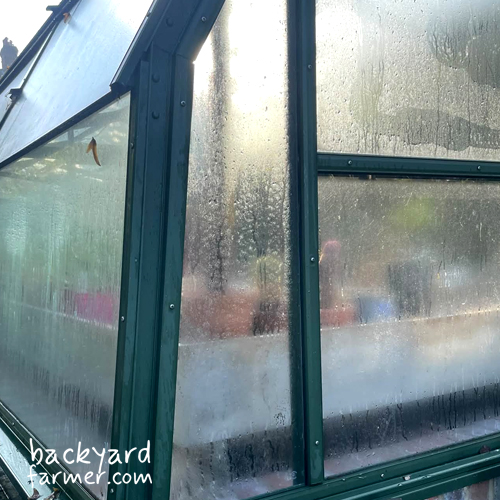
Fortunately, condensation inside a greenhouse is normal and doesn’t necessarily mean anything is wrong. The concern is when water regularly drips onto plants, leaves remain wet or mould begins to develop.
The best way to reduce greenhouse condensation is to ventilate when conditions allow, avoid unnecessary winter watering and prevent moisture collecting around your plants. You don’t need perfectly dry glazing to maintain a healthy growing environment.
Is Condensation in a Greenhouse a Problem?
A little condensation on cold glazing is rarely a reason to worry. Problems are more likely when damp conditions persist around your crops, particularly where plants are overcrowded or leaves remain wet for long periods.
Before making changes, identify what you’re dealing with.
| What you’re seeing | Is it a problem? | What to do |
|---|---|---|
| Light droplets on the glass in the morning | Usually normal | Monitor conditions |
| Water regularly dripping onto plants | Potentially | Improve ventilation and reduce excess moisture |
| Wet leaves, mould or rotting growth | Needs attention | Inspect plants and investigate the cause |
| Persistent puddles around pots or on floors | Potentially | Check drainage and remove standing water |
| Water entering through one joint during rainfall | Possible leak | Inspect glazing, seals and guttering |
If your greenhouse is damp but your winter vegetables remain healthy, drastic action is usually unnecessary.
The aim is healthy plants, not perfectly dry greenhouse glass.
How to Stop Greenhouse Condensation in Winter
You can usually reduce excess moisture and its effects through ventilation, careful watering and basic plant care, without buying additional equipment.
1. Ventilate Your Greenhouse When Conditions Allow
Ventilation helps exchange moisture-laden greenhouse air with outside air, reducing humidity when outdoor conditions are suitable.
Even when the air outside feels damp, ventilation can help if it contains less water vapour than the warmer air inside your greenhouse.
During winter:
- Look for milder, calmer periods during the day when opening vents won’t expose vulnerable plants to damaging conditions.
- Start by opening an adjustable roof vent or louvre, if available.
- Open the door for additional airflow when temperatures and wind conditions permit.
- Close vents before temperatures fall if your plants require additional protection.
- Avoid leaving everything open overnight simply to dry the glazing.
A greenhouse containing hardy winter salads can tolerate different conditions from one protecting frost-sensitive plants.
There’s no universal ventilation schedule. Use the weather, the crops you’re growing and the conditions inside the greenhouse to guide your decisions.
During prolonged wet weather, ventilation may improve growing conditions without making the glazing visibly dry.
The RHS also recommends ventilating greenhouses during suitable winter weather, even when temperatures are relatively low.
2. Avoid Unnecessary Winter Watering
Plants generally use less water during colder, darker months, especially when growth slows.
Continuing to water on a summer schedule can leave compost unnecessarily wet, increasing evaporation and humidity inside the greenhouse.
Instead:
- Check moisture below the compost surface before watering.
- Water in the morning where practical, allowing foliage and surfaces time to dry.
- Direct water towards the soil or compost rather than soaking leaves.
- Let containers drain freely and empty saucers that remain full.
- Avoid unnecessarily wetting greenhouse paths and floors.
Actively growing winter vegetables, including winter lettuce, still need adequate moisture.
Water according to the plant’s needs, not a fixed routine.
3. Improve Airflow Around Your Plants
Overcrowded plants can trap humid air around their leaves, particularly during winter when damp foliage takes longer to dry.
To improve conditions:
- Leave reasonable gaps between pots and seed trays.
- Remove dead, yellowing or decaying leaves.
- Keep foliage away from wet glazing where practical.
- Raise suitable containers onto staging to improve drainage and airflow.
- Avoid blocking ventilation openings with dense growth or stored materials.
Good spacing is especially important around overwintering plants and seedlings.
Persistently damp conditions can favour diseases such as damping off, particularly where young seedlings are overcrowded or their growing medium remains excessively wet.
4. Remove Standing Water and Check Drainage
Water collecting beneath staging, around pots or across greenhouse floors can contribute to persistently damp conditions.
Check for puddles, blocked drainage, overflowing trays and areas that remain saturated long after watering.
Remove unnecessary standing water and address drainage problems where possible.
Persistently damp hard surfaces can also develop algae, making paths slippery.
A greenhouse with soil borders will naturally contain moisture. There’s no need to keep every surface dry, but avoid water accumulating where it serves no purpose.
What if Your Greenhouse Stays Wet During Winter?
Even with sensible ventilation and watering, condensation may persist during British winter weather.
The appropriate response depends on the temperatures outside, the plants you’re protecting and whether moisture is affecting their health.
What if It’s Too Cold to Open the Greenhouse?
If you’re overwintering frost-sensitive plants, exposing them to freezing air simply to dry the glass may do more harm than good.
Look for milder daytime opportunities to ventilate, even if conditions only allow limited opening.
When ventilation isn’t practical, concentrate on avoiding unnecessary moisture and keeping vulnerable foliage clear of dripping surfaces.
Some condensation may remain until conditions improve.
If frost protection is your main concern, see our guide to protecting plants from frost.
What if Condensation Persists for Days?
During prolonged cold, damp weather, condensation can remain on the glazing despite sensible management.
Ventilation doesn’t guarantee visibly dry glass, particularly when conditions inside and outside the greenhouse are similar. Moisture may also return as temperatures fall overnight.
Rather than repeatedly trying to dry the glazing, assess the plants.
If leaves remain wet, decay is developing or seedlings are struggling, investigate and improve the conditions around them.
If plants are healthy and water isn’t persistently dripping onto vulnerable growth, some condensation is usually acceptable.
How to Stop Condensation in a Plastic or Mini Greenhouse
Small plastic greenhouses can experience rapid changes in temperature and humidity because they contain relatively little air.
When zip-up covers are kept tightly closed, moisture can accumulate on the inner surface and drip onto shelves or plants.
To reduce condensation:
- Partially unzip the cover during suitable daytime conditions.
- Use any built-in ventilation openings.
- Avoid packing plants against the plastic.
- Check drainage and avoid unnecessary watering.
- Close and secure the cover when wind, cold or frost threatens vulnerable plants.
Lightweight plastic greenhouses also need to be securely anchored, particularly when ventilation openings are exposed to strong winds.
Polycarbonate greenhouses experience condensation through the same basic process, although their ventilation arrangements may differ.
The aim is to allow moisture to escape when practical without sacrificing the protection your plants need.
Why Does Condensation Form Inside a Greenhouse?
Condensation occurs when moisture-containing air comes into contact with a surface cold enough for water vapour to form liquid droplets.
Greenhouses naturally contain moisture from evaporating water, damp compost and soil, and water released by plants through transpiration.
During the day, sunlight may warm the greenhouse air. As temperatures fall overnight, the glazing or plastic covering cools.
When air next to those surfaces cools to its dew point, condensation forms.
This explains why greenhouse roofs and walls are often wet on cold mornings, even when you haven’t watered recently.
Condensation can also form directly on cold foliage under certain conditions.
It’s a normal physical process. Problems are more likely when moisture persists around susceptible plants, particularly where airflow is poor.
Do Fans, Heaters and Insulation Stop Condensation?
Additional equipment can help manage greenhouse conditions, but it isn’t always necessary or effective for condensation alone.
| Method | What it actually does |
|---|---|
| Circulation fan | Moves air around plants but doesn’t remove moisture from a sealed greenhouse |
| Bubble-wrap insulation | Retains warmth but may reduce light or obstruct vents if poorly installed |
| Electric greenhouse heater | Raises temperature and may reduce condensation on warmed surfaces, but doesn’t remove water vapour |
| Gas or paraffin heater | Provides warmth but produces water vapour and combustion gases, including potentially dangerous carbon monoxide if combustion or ventilation is inadequate |
| Household moisture absorbers | Not established as a reliable primary solution for typical garden greenhouses |
A circulation fan may reduce stagnant air around plants, but there’s an important difference between air circulation and ventilation.
Moving air around a sealed greenhouse doesn’t remove its moisture. Ventilation exchanges indoor and outdoor air, while dehumidification physically removes water from the air.
Heating can also change relative humidity and surface temperatures, but heating alone doesn’t eliminate the moisture present.
Fuel-burning heaters require particular care because of the risks associated with combustion gases, inadequate ventilation and fire.
Bubble-wrap insulation may be useful for protecting tender plants, although it shouldn’t block ventilation openings or unnecessarily reduce the light available to hardy winter crops.
For most unheated allotment greenhouses, sensible ventilation, watering and plant care are the best starting points.
Greenhouse Condensation FAQs
Not necessarily. It depends on outdoor temperatures, wind and the plants you’re growing.
Hardy crops may tolerate cooler, ventilated conditions, while frost-sensitive plants require greater protection. During winter, make use of suitable daytime ventilation rather than leaving everything open regardless of the forecast.
Condensation doesn’t directly cause mould, but persistently humid conditions and wet foliage can favour fungal diseases.
Grey mould (Botrytis) can develop on susceptible plant material in damp conditions, particularly where air circulation is poor.
Improving ventilation, removing decaying material and avoiding overcrowding can help reduce the risk.
Condensation commonly appears across cold glazing or plastic, particularly after cold nights.
A leak is more likely when water repeatedly enters at a specific roof joint, panel, seal or gutter connection during rainfall.
Check where the water appears and whether it coincides with rain. Both problems can occur together.
You can remove accumulated water where it’s dripping onto vulnerable plants, provided it’s safe and practical to reach.
However, wiping down the glazing every morning isn’t usually necessary and won’t prevent condensation returning.
Managing ventilation, watering and drainage is generally more useful than repeatedly drying the panels.