
Yes, solar panels can supply a large share of a UK home’s electricity and may even generate as many kilowatt-hours over a year as the property consumes. But that does not mean the house can run entirely from solar at all times.
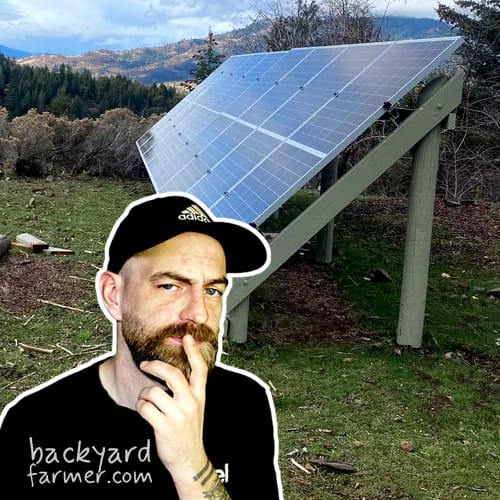
If you’re asking “can solar panels power my home?”, the answer depends on whether you mean annual generation or supplying electricity at the exact time you need it. Night-time demand, winter generation and when you use electricity all affect how much power you still need from the grid.
What Does “Power a Whole House” Actually Mean?
There are several different ways to answer that question.
| What do you mean? | Realistic answer |
|---|---|
| Generate electricity used by the home | Yes |
| Produce as many kWh annually as the home consumes | Possible on a suitable property |
| Meet household demand at every moment | Not normally from solar alone |
| Greatly reduce grid imports | Yes |
| Keep the home powered during a blackout | Not with a standard on-grid system |
| Operate completely without the grid | Possible, but this becomes an off-grid design problem |
For most homeowners, the more useful question is:
How much of the electricity my household actually uses can solar supply when I need it?
That is different from simply asking whether the panels can generate the same number of units as you consume over a year.
Annual Solar Generation Is Not the Same as Powering Your House
A solar system can generate as many kWh over a year as your home consumes and still leave you buying substantial electricity from the grid.
An MCS worked example shows this particularly well.
The household consumes 3,879kWh per year, while its solar system generates 4,059kWh — slightly more electricity than the property uses annually.
Yet without a battery, the MCS example estimates that only 1,177kWh of that solar is used on-site.
That works out at around:
- 29% solar self-consumption
- 30% grid electricity independence
So although annual solar generation exceeds annual household consumption, the home still imports a significant amount of electricity from the grid.
The reason is timing.
Solar may be exporting electricity at midday on a sunny June afternoon while the same household is importing electricity at 8pm in January.
Generating as many kWh as your home uses over a year does not mean supplying 100% of your household electricity.
Solar Self-Consumption vs Grid Independence
These measurements answer different questions.
| Measure | What it means |
|---|---|
| Solar generation | Total electricity produced by your panels |
| Solar self-consumption | The proportion of generated solar electricity used by your household |
| Grid electricity independence/self-sufficiency | The proportion of household demand supplied without importing from the grid |
| Export | Surplus solar electricity sent to the grid |
| Grid import | Electricity bought from the network |
Put simply:
Self-consumption asks how much of your solar electricity you used yourself.
Self-sufficiency asks how much of your household electricity demand solar actually covered.
A system can therefore have very high annual generation without achieving particularly high grid independence.
How Much Electricity Does a Typical UK Home Use?
From July 2026, Ofgem’s medium Typical Domestic Consumption Value for a single-rate electricity household is 2,500kWh per year.
| Ofgem reference | Annual electricity use |
|---|---|
| Low | 1,600kWh |
| Medium | 2,500kWh |
| High | 3,800kWh |
These are reference values used for comparison rather than a claim that every household uses exactly this amount.
A home with gas heating and no electric vehicle may use considerably less electricity than a property with a heat pump, EV or electric hot water.
Your own annual electricity consumption is therefore much more useful for solar planning than a generic national figure.
GB note: Ofgem’s Typical Domestic Consumption Values apply to Great Britain. Northern Ireland has separate electricity-market arrangements.
Why When You Use Electricity Matters
Two households can have identical solar systems and the same annual electricity consumption but achieve very different levels of grid independence.
The difference can simply be when they use electricity.
A household occupied during the day can naturally use more solar as it is generated. Daytime loads such as home working, washing, hot water or EV charging may absorb electricity that would otherwise be exported.
A house that is empty throughout most daylight hours may export more solar and then import electricity when people return in the evening.
MCS accounts for this in its solar self-consumption methodology rather than assuming that every household behaves in the same way.
Two homes with identical solar systems can have very different grid independence because they use electricity at different times.
Summer vs Winter: The Biggest Limitation
Solar panels work in winter, but UK solar generation is strongly seasonal.
During spring and summer you have:
- longer daylight hours
- stronger solar generation
- a greater chance of producing surplus electricity
- more opportunity to export or charge a battery
During winter, days are shorter and solar generation is much lower.
That creates a fundamental mismatch.
A home may produce far more electricity than it needs on sunny summer days while still relying heavily on the grid during December and January.
This is why a solar system that looks capable of matching your annual electricity use may not come close to supplying every day’s demand.
Solar does not stop working in winter. There is simply much less solar energy available.
What Difference Does a Battery Make?
A battery does not create more solar electricity. It changes when you can use it.
Without storage:
Solar → household → surplus export
With storage:
Solar → household → battery → later household use → remaining export
The same MCS worked example shows how much difference this can make:
| No battery | 7.5kWh usable battery | |
|---|---|---|
| Household demand | 3,879kWh | 3,879kWh |
| Solar generation | 4,059kWh | 4,059kWh |
| Solar used on-site | 1,177kWh | 2,801kWh |
| Solar self-consumption | 29% | 69% |
| Grid electricity independence | 30% | 72% |
These are worked-example figures, not a promise of what every household will achieve.
The important point is that the panels have not changed. The battery simply allows more daytime surplus to be used later.
There is still a major limitation:
A home battery can shift solar electricity across hours or into the next day, but it cannot save July’s surplus until January.
Storage can help bridge the gap between daytime generation and evening demand. It does not remove the seasonal difference between summer and winter generation.
For battery sizing, costs and whether storage makes sense financially, see Solar Battery Storage UK.
Can Solar Panels Run Everything in Your House?
They can contribute towards almost any normal household electrical load, but it helps to understand the difference between power and energy.
kWh measures energy used or generated over time.
kW measures power being used or produced at a particular moment.
Imagine:
Appliance demand: 3kW
Solar output right now: 1.5kW
In a normal grid-connected home:
- solar contributes around 1.5kW
- the grid supplies the remaining 1.5kW
The appliance does not need to be supplied entirely by solar for your panels to reduce grid use.
Solar does not have to power an appliance entirely by itself to reduce the electricity you buy from the grid.
This is also why a grid-connected solar system does not normally need to be sized around the highest instantaneous load your home could ever draw.
What About EVs and Heat Pumps?
Both can substantially increase household electricity demand, but they interact with solar differently.
Electric Cars
An EV can absorb solar surplus when it is parked at home during daylight hours.
If the car is normally away during the day and charged overnight, it will rely more heavily on grid electricity or energy previously stored in a home battery.
Solar can therefore contribute significantly to EV charging without necessarily supplying all of it.
Heat Pumps
Heat pumps highlight the seasonal mismatch particularly clearly.
They can use solar electricity, but heating demand is highest during the colder months when solar generation is weakest.
A sufficiently large solar array could potentially generate as much electricity over a year as a heat pump consumes while the household still exports summer electricity and imports significant amounts from the grid during winter.
Again, the annual total does not tell you how independent the house actually is.
Can Solar Panels Make Your Home 100% Self-Sufficient?
Potentially — but first you need to define 100%.
| Goal | What it means |
|---|---|
| 100% annual generation | Solar generates at least as many kWh as the household uses over a year |
| High solar self-consumption | Most generated solar electricity is used on-site |
| High grid independence | Most household demand is supplied without grid imports |
| Off-grid independence | The property can operate without the public electricity network |
Matching annual electricity consumption may be achievable on a suitable property.
Achieving very high grid independence is harder because the system must also deal with nights, winter and periods of poor weather.
True off-grid operation goes further again. Without the grid to fill shortfalls, the system must be designed around the difficult periods rather than the annual average. This usually means substantial storage and, in some cases, another backup source.
For that, see our Off-Grid Solar guides.
What Determines How Much of Your House Solar Can Power?
| Factor | Why it matters |
|---|---|
| Household electricity use | Higher annual demand means more electricity must be supplied |
| When you use electricity | Daytime demand is easier to cover directly |
| Solar array output | Determines how much electricity is available |
| Location | Solar resource varies around the UK |
| Roof orientation and shading | Affect total generation and when it is produced |
| Battery storage | Moves surplus daytime solar into later demand |
| Season | UK solar output changes considerably through the year |
East- and west-facing roofs can still produce useful amounts of solar electricity, although annual generation is generally lower than from an equivalent unshaded south-facing system.
For more on this, see Best Orientation for Solar Panels.
For actual panel numbers, see How Many Solar Panels Do I Need UK?
Is Maximum Grid Independence Always Worth Chasing?
Not necessarily.
More panels and larger batteries can increase self-sufficiency, but the most grid-independent system is not automatically the most cost-effective.
Extra summer generation may mostly be exported rather than reducing winter imports, while larger batteries add significant upfront cost.
For many households, the practical target is a sensible balance between reducing grid imports, installation cost, export value and how the household actually uses electricity, rather than chasing 100% independence at any price.
What About a Power Cut?
High solar self-sufficiency does not automatically mean your home will keep running during a blackout.
A standard grid-connected solar installation normally shuts down when the grid fails for safety reasons.
Having a battery does not automatically change that. Backup requires a system specifically designed with suitable isolation and EPS or backup equipment.
See Solar During a Power Cut UK for the full explanation.
Frequently Asked Questions
Yes. Solar panels can supply household electricity and may generate as much energy over a year as the property consumes. Most grid-connected homes will still import electricity when demand is higher than current solar generation.
It is technically possible with sufficient generation, storage and system design, but this is much harder than simply matching annual electricity use.
They may generate enough electricity over the year, but you can still export surplus power during sunny periods and import electricity at night or in winter.
No meaningful solar electricity is normally generated at night. The home uses grid electricity or stored battery energy.
Yes. Solar panels still generate electricity during winter, but output is considerably lower than during the strongest spring and summer months.
No. A normal grid-connected solar system works without one. A battery can increase the amount of your solar electricity you use by storing daytime surplus for later.
They can contribute whatever power they are producing at that moment. In a normal grid-connected home, the grid supplies any additional power required.
Solar can substantially reduce grid imports, particularly when combined with suitable storage, but high annual solar generation alone does not make a property grid-independent.ww