

The Man Behind Peak Cluster and What It Means for Local Landscapes
When large infrastructure projects land in rural areas, it’s easy to focus on the plans, the maps, and the impact. But behind those projects are people shaping the direction—and those people often tell you just as much as the plans themselves.
One of those figures is David Parki, chair of Peak Cluster — a proposed carbon capture and storage (CCS) network that could directly affect landscapes like the Peak District and surrounding regions, including parts of the North West.
This article looks at who he is, what he’s worked on, and what that tells us about the direction these projects tend to take—especially if you care about wildlife, countryside access, and land use.
A Career Built Around Industrial Decarbonisation
David Parkin has spent much of his career working in the UK energy and infrastructure sector, mainly on projects aimed at reducing emissions from heavy industry.
He is closely linked with Progressive Energy Ltd, a firm that develops large-scale systems like hydrogen production and carbon capture networks.
His work sits at the intersection of:
- Energy policy
- Industrial infrastructure
- Climate strategy
Rather than focusing on small-scale sustainability, his career has centred on system-level solutions—the kind that operate across whole regions rather than individual sites.
What Is Peak Cluster?
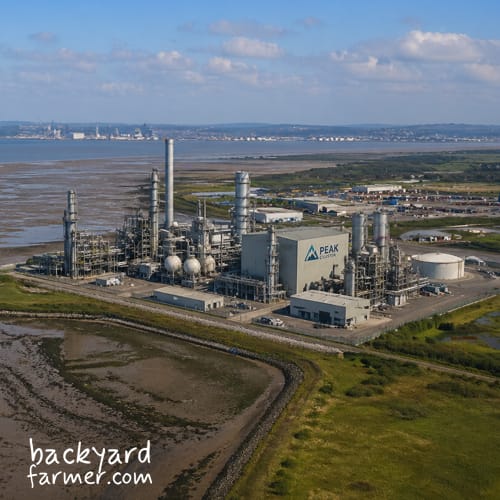
A Regional Carbon Capture Network
Peak Cluster is a proposed project designed to capture carbon dioxide emissions from industries such as:
- Cement production
- Lime manufacturing
- Waste processing
The idea is fairly straightforward in principle:
- Capture CO₂ at source
- Move it through a pipeline network
- Store it deep beneath the Irish Sea
These industries are often described as “hard to decarbonise”, because the emissions are part of the chemical process itself—not just from burning fuel.
Parkin’s Role in the Project
As chair of Peak Cluster, Parkin’s role is less about day-to-day operations and more about direction.
He is involved in:
- Strategic leadership of the project
- Representing it in consultations and the media
- Engaging with government and regulators
- Promoting CCS as part of the UK’s net-zero approach
In simple terms, he helps shape how the project is positioned—and how it moves forward.
The Bigger Picture: HyNet and UK Net Zero
Peak Cluster doesn’t sit on its own.
It links into wider infrastructure plans such as HyNet North West, which aims to build a broader network of:
- Hydrogen production
- Carbon capture pipelines
- Offshore storage
Taken together, these projects form part of a wider strategy: reduce emissions while keeping heavy industry running.
Who Is Behind Peak Cluster — And What Drives It?
Understanding a project like Peak Cluster isn’t just about the technology—it’s about how it’s structured.
Unlike a typical company, it isn’t owned by a single organisation. Instead, it is understood to be developed through a mix of:
- Infrastructure developers like Progressive Energy Ltd
- Industrial partners (cement and lime producers)
- Government-backed funding and incentives
This kind of setup is common in large UK infrastructure projects. But it also shapes what success looks like.
A Track Record in Large-Scale Energy Infrastructure
If you step back and look at Parkin’s career, there’s a clear pattern.
He has consistently worked on:
- Hydrogen and carbon capture systems
- Regional-scale infrastructure projects
- Solutions designed to keep existing industries operating while lowering emissions
That points to a specific approach:
Decarbonise the system we already have, rather than replace it entirely.
Some see that as practical. Others argue it may avoid bigger change.
How These Projects Generate Value
It’s also worth understanding that projects like Peak Cluster aren’t just environmental—they’re long-term infrastructure investments.
Value tends to come from:
- Payments for capturing and storing carbon
- Long-term operation of pipelines and storage systems
- Government incentives tied to emissions reduction
So success is usually measured in things like:
- Tonnes of CO₂ captured
- Infrastructure delivered
- Industrial output maintained
Not necessarily reductions in material use, consumption, or land pressure.
Where Tensions Can Arise
This is where things start to feel different at a local level.
Common tensions include:
- National vs local priorities
- Industrial continuity vs ecological change
- Public funding vs private return
None of these has simple answers—but they explain why projects like this tend to divide opinion.
Interpreting the Bigger Picture
Rather than focusing on personal motives, it’s often more useful to look at the system itself.
Parkin’s work fits into a wider model that aims to:
- Reduce emissions without shutting industries down
- Build new infrastructure rather than remove old systems
- Balance economic stability with climate targets
Whether that’s the right path is still very much up for debate. This article focuses on the structure and context behind the project, rather than making a judgment.
Why Supporters Back Projects Like This
Supporters—including industry and policymakers—tend to focus on practicality.
Cutting Emissions at Scale
Some industries, like cement, don’t have easy alternatives.
CCS is seen as one of the few realistic options.
Protecting Jobs and Industry
These projects are often framed as a way to:
- Keep UK manufacturing competitive
- Prevent industries from moving overseas
- Maintain local employment
Meeting Climate Targets
Large infrastructure is seen as necessary if national targets are going to be met.
Why Critics Are Concerned -Local Impact vs National Strategy
At ground level, the concerns tend to look very different.
Impact on Landscapes and Wildlife
Pipeline construction and related infrastructure can affect:
- Habitats
- Soil structure
- Hedgerows and field systems
- Sensitive or protected areas
For areas connected to the Peak District National Park, that’s an obvious sticking point. For more information about the abundance of protected species on the Wirral Peninsula coast, please see our article here.
Disruption to Communities
People living along proposed routes often raise concerns about:
- Construction disruption
- Access to land
- Long-term environmental change
Debate Over Carbon Capture Itself
Not everyone agrees CCS is the right solution.
Critics argue it can:
- Delay more fundamental changes
- Lock in existing industrial systems
- Carry long-term uncertainties
Supporters argue that without it, some emissions simply can’t be tackled at all.
Consultation and Trust
As with most large projects, trust becomes a big factor.
Questions often come down to:
- How decisions are made
- How communities are involved
- Who ultimately benefits
A Complex Role in a Complex Transition
David Parkin isn’t a campaigner or a policymaker. He sits somewhere in between—helping deliver the infrastructure that sits underneath climate policy.
That puts him in a position where he’s part of shaping outcomes, even if he’s not setting the overall direction.
Why This Matters for Wildlife and Land Use
If you care about wildlife and landscapes, projects like Peak Cluster raise bigger questions:
- Can large infrastructure and biodiversity goals realistically coexist?
- Are there better ways to reduce emissions?
- Who decides how land is used—and for what purpose?
Looking at the people involved helps make those questions feel a bit more grounded.
Final Thoughts
There isn’t a simple way to frame David Parkin’s role.
- To some, he’s helping tackle a difficult climate problem
- To others, he represents a model that keeps pressure on land and landscapes
In reality, it’s probably somewhere in between.
What’s clear is this:
Projects like Peak Cluster—and the people behind them—will shape not just industry, but the countryside itself
Sources include Companies House and other publicly available information. Public filings show that David Parkin resigned as a director of Peak Cluster Limited in July 2025. However, he continues to act as chair of the wider Peak Cluster project and remains publicly associated with its development.