
Introduction
After years of working as a gardener on the Wirral, one lesson keeps coming back to me:
Gardening starts to feel simpler when you stop fighting your conditions and build a system that works with them.
Most of the time, that means choosing crops that suit your climate, building healthy soil, and letting nature do more of the work.
That does not mean you just throw the seeds in and kick back on a rocking chair. It means knowing which jobs actually matter, which ones can wait, and which ones people often overcomplicate for no good reason.
When I first got into gardening properly, I made the same mistake most people make. I tried to grow too much, keep everything looking tidy, follow every bit of advice, and somehow stay on top of watering, weeding, feeding, pruning and planting all at once.
However, the longer I worked in real gardens, the clearer it became: the best gardens are not always the most complicated ones; they are the ones with a natural rhythm.
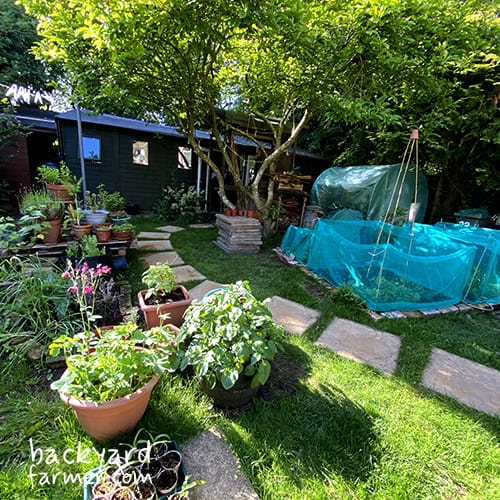
They usually have:
- A growing space that is easy to manage
- Local plants
- Simple habits you can stick to
- A gardener who can actually keep up with the weeds
That is what this guide is about. If you want to keep gardening simple, the answer is not to strip out all the joy or reduce your garden to the bare minimum. Instead, the trick is to build a growing space that works with your time, your energy and the way you actually live.
So, whether you are starting a veg patch, planning an allotment, growing in raised beds or just trying to make better use of your garden, this is my practical take on how to simplify gardening without losing the good stuff.
We will look at:
- simple layouts
- easy crops
- low-fuss routines
- basic gardening habits
- small decisions that make the garden easier to manage
Quick tip: Before you start planting, it helps to see your growing space clearly. That is why I built the free Backyard Farmer Allotment Planner. You can use it to map out beds, crops and spacing before you start digging — no sign-up needed.
That way, you can plan the space first, avoid overcrowding, and give yourself a simple garden layout you can actually follow.
Why Gardening Feels More Complicated Than It Needs To
Gardening should feel simple, but it rarely starts that way.
You start with a few packets of seeds, watch a few YouTube videos, read a few generic growing guides, and suddenly every crop seems to need a different method. Every problem has a specialist product. Every job feels like it should have been done three weeks ago.
That is where a lot of beginner gardeners get stuck. I personally feel that many approaches are overcomplicated, and by simplifying our gardening methods, we can save time and pointless tasks.
Plants already know how to grow. Our job is to give them the right conditions, remove what gets in the way, and let nature do the rest.
Too Much Advice Can Make Gardening Harder
There is always another way to sow seeds, another compost mix to try, another tool that promises to save time, and another opinion about the “right” way to grow.
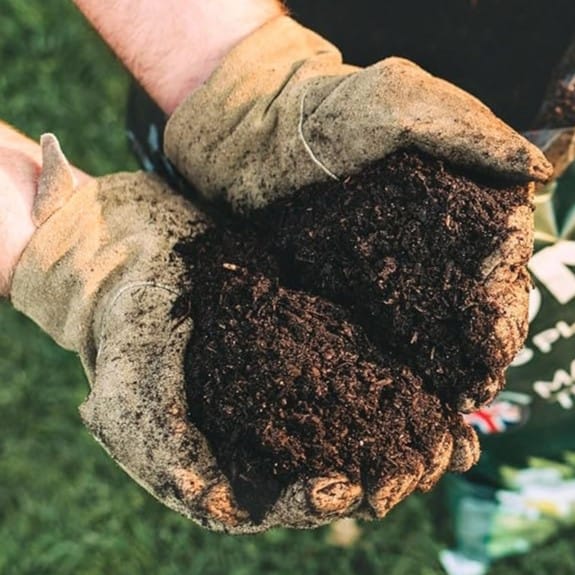
The fact is its all really quite simple, in real gardens, the basics still do most of the heavy lifting:
- Decent soil
- Enough light
- Regular watering
- Sensible spacing
- Spotting small problems early
Those simple gardening habits are not flashy, but they work. Most of the time, the garden does not need a complicated fix, a plastic product or a chemical spray. It needs the basics done well and often – that’s it.
Most People Start Too Big
The other common mistake is starting with too much at once.
People try to grow every vegetable they like the look of, fill every spare corner, buy too many tools, and copy gardens that have taken years to build. Then, when the watering, weeding and harvesting all arrive together, the garden starts to feel like another job instead of something useful and enjoyable.
That is why simple gardening works so well, especially if you are new to growing or trying to manage a garden around work, family and everyday life.
You do not need to know everything at the start. You need:
- A clear layout
- A few reliable crops
- A routine you can repeat
- Enough space to learn without getting overwhelmed
Most people don’t need more gardening advice. They need a simpler way to use the advice they already have.
Ask These Questions Before Adding More
Before adding more crops, more tools or more jobs to the list, strip the garden back to a few practical questions:
| Question | Why it matters |
|---|---|
| What do I actually want to grow? | Stops you wasting space on crops you will not use |
| How much space can I realistically manage? | Keeps the garden enjoyable instead of overwhelming |
| Can I reach, water and weed this area easily? | Makes weekly maintenance much simpler |
| What jobs need doing every week? | Turns gardening into a routine rather than a panic |
| What can wait? | Stops every small task feeling urgent |
Once you answer those honestly, gardening becomes much easier to manage. You stop trying to build the perfect garden all at once and start creating a system that actually fits your life.
The Simple Rule I Use as a Gardener
The simplest way I have found to make gardening easier is to stop treating every job, crop and corner of the garden as a separate problem.
Instead, I come back to one basic rule:
Grow what you use, in a space you can manage, with a routine you can repeat.
It sounds obvious, but it solves a lot of problems before they start. Many gardens become hard work because they are planned around good intentions rather than real life.
You sow too much. You squeeze plants into awkward spaces. You forget what needs watering. Then, before long, the garden is asking for more time and energy than you actually have.
Good basic gardening is not about knowing every trick in the book. It is about getting the foundations right and repeating them often enough that the garden starts working with you, rather than against you.
The Rule Broken Down
| Simple rule | What it means in practice |
|---|---|
| Grow what you use | Choose crops, herbs and plants that earn their space |
| Use a manageable layout | Keep beds, paths and containers easy to reach |
| Repeat the routine | Water, mulch, weed, harvest and adjust little and often |
Grow What You Actually Use
The first part is choosing plants that actually matter to you.
There is no point filling a bed with crops you rarely eat just because they look good in a seed catalogue. If you use salad leaves, herbs, potatoes, garlic, beans or courgettes every week, those crops are worth prioritising.
They give something back for the space and effort they take. That matters more than growing something just because everyone else seems to be growing it.
Make the Layout Easy to Manage
The second part is layout.
A garden can look productive on paper but still be awkward to manage. Beds that are too wide, containers tucked in the wrong place, crops planted too close together, and paths that are hard to move through all make simple jobs slower than they need to be.
A manageable layout makes watering, weeding, and harvesting feel much easier. It also makes you more likely to keep up with the garden because the jobs do not feel like a battle every time you step outside.
Build a Routine You Can Repeat
The third part is routine. This is where gardening basics really matter.
A quick walk around the garden, a bit of watering where needed, pulling small weeds before they become big ones, and harvesting little and often will usually do more good than one big panic session every few weeks.
That is the difference between a garden that feels simple and one that feels overwhelming.
You are not trying to control everything. You are building a system you can keep repeating through the season, even when life gets busy.
Start Small, Then Build Confidence
One of the best ways to keep gardening simple is to start smaller than you think you need to.
That can feel backwards at first, especially when you are excited to grow everything at once. However, a small garden you can manage well will teach you far more than a big space that quickly gets away from you.
This is especially true for gardening for beginners. You do not need to turn the whole garden into beds in your first season. One raised bed, a few large containers, or one clear section of an allotment is enough to learn the basics properly.
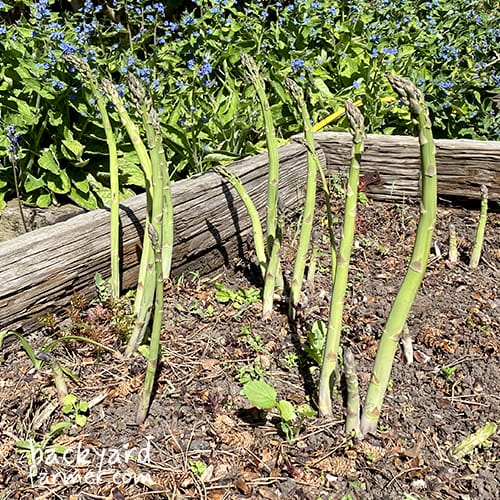
You will still practise the important jobs:
- Sowing
- Planting
- Watering
- Weeding
- Feeding
- Harvesting
The difference is that you are learning them without creating a workload that becomes overwhelming by June.
Start With One Manageable Space
In my experience, confidence comes from repeated success. When you grow a few crops well, you start to understand your own garden properly.
You notice:
- How your soil behaves
- Where the sun falls
- How quickly do pots dry out
- Which crops need the most attention
- Which jobs actually make a difference
Then you can build from there, one bed or growing area at a time.
| Starting point | Why it works |
|---|---|
| One raised bed | Gives you a clear, manageable growing space |
| A few large containers | Helps you learn watering, feeding and positioning quickly |
| One allotment section | Stops a full plot becoming too much too soon |
| A small herb patch | Gives regular harvests with very little fuss |
| A simple salad bed | Builds confidence because crops grow quickly |
Small Does Not Mean Unproductive
The mistake is thinking that small means unproductive. It does not.
A well-used raised bed can give you salad leaves, herbs, beetroot, spring onions, radishes, dwarf beans or strawberries through the season. A few big pots in the right place can produce tomatoes, chillies, herbs or potatoes.
Even a small corner can become useful if it is planned properly.
Learn Before You Expand
Starting small also makes it easier to notice what is happening.
You can spot dry compost, slug damage, yellowing leaves or overcrowded seedlings before they become a bigger problem. That is one of the most useful gardening basics to learn early:
Little and often beats leaving everything until it becomes urgent.
So, if you are trying to work out how to start gardening for beginners, do not begin by asking how much you can fit in.
Start by asking how much you can realistically look after.
Once that first space feels easy, add another. That way, the garden grows with your confidence instead of running ahead of it.
Choose Crops That Make Gardening Easier
The crops you choose can either make gardening feel easier or turn it into a constant juggling act.
Some plants need regular attention, careful timing, lots of protection or a bit more confidence. Others are far more forgiving, which makes them ideal if you want simple vegetable gardening that still gives you something useful back.
For me, easy crops are not just crops that grow quickly. They are crops that earn their space, fit into real life, and do not need you hovering over them every day.
So, if you are trying to keep gardening simple, start with plants that give reliable harvests without needing perfect conditions.
Easy Crops That Earn Their Space
| Crop | Why it helps keep gardening simple |
|---|---|
| Potatoes | Easy to understand, useful in the kitchen and good for opening up ground |
| Lettuce and salad leaves | Quick to crop and easy to sow little and often |
| Chard | Tough, productive and useful over a long season |
| Beetroot | Reliable, compact and good for raised beds or small spaces |
| Courgettes | Productive from just one or two plants |
| Runner beans | Good vertical crop that gives plenty from a small footprint |
| Garlic | Simple to plant and mostly gets on with it once established |
| Herbs | Useful, low-fuss and easy to grow near the kitchen |
| Strawberries | Perennial, rewarding and good for beds, pots or edges |
This does not mean you should only ever grow easy crops. It just means they give you a solid foundation.
Once you have a few reliable things growing well, you can add fussier crops later without the whole garden depending on them.
Grow With Your Conditions, Not Against Them
One of the biggest problems in gardening comes from trying to grow the wrong crop in the wrong conditions.
Tomatoes are a good example in the UK. They can grow brilliantly here, but they are not naturally built for a damp, cool, stop-start British summer. Once the weather turns wet and humid, blight can become a real problem, especially if you are growing tomatoes outdoors with poor airflow.
That does not mean you should never grow tomatoes. I still think they are worth growing. However, it does mean you need to understand what you are asking the plant to cope with.
If you want to grow crops that prefer warmer, more controlled conditions, you often need to manage the environment more carefully. That might mean:
- Using a greenhouse or polytunnel
- Improving airflow around the plants
- Watering at the base instead of soaking the leaves
- Keeping foliage as dry as possible
- Choosing varieties that suit your local conditions
- Giving plants enough space instead of cramming them in
In other words, you are almost creating a better version of the crop’s preferred habitat. That is fine, but it is more work.
The simpler option is to grow more crops that naturally suit your climate and space. UK-friendly vegetables such as potatoes, beetroot, chard, kale, beans, onions, garlic, leeks and hardy herbs tend to work with the garden rather than against it.
That is not boring gardening. It is smart gardening.
Ask These Questions Before Sowing
A simple way to choose crops is to ask three questions before sowing anything:
| Question | Why it matters |
|---|---|
| Will I actually eat or use this? | Stops seed-packet enthusiasm taking over the garden |
| Does it suit the space I have? | Prevents overcrowding and awkward maintenance |
| Can I look after it with my normal routine? | Keeps the garden manageable through the season |
This is where a lot of easy gardening for beginners starts to make sense.
A small bed of salad leaves, beetroot, herbs and a few beans can teach you more than trying to grow twenty different crops badly. You get regular harvests, you learn the rhythm of the season, and you start to see what works in your own garden.
Think About What Gives You Value
It also helps to think about value.
Not every crop needs to save you loads of money, but it should give you something worthwhile. Herbs are a good example because shop-bought bunches can be expensive and often go to waste. Lettuce and salad leaves are useful for the same reason: you can pick them fresh when you need them.
Potatoes, garlic, courgettes and beans also fit easily into everyday meals, which makes them worth the space.
Keep the Crop List Realistic
If you are planning a simple veg patch or allotment bed, start with a few crops you already cook with, then build from there.
The aim is not to grow the longest list possible.
The aim is to grow useful food in a way you can keep up with.
Simplify Gardening With a Clear Layout
A simple garden starts with a layout you understand.
If you know where your crops are going, how much space they need and what each bed is meant to do, the whole season becomes easier to manage.
This is one of the easiest ways to simplify gardening before the season gets busy. A clear layout helps you avoid:
- Overcrowded beds
- Wasted space
- Awkward paths
- Crops shading each other
- Watering areas are being spread out too much
- That classic mid-season tangle where everything grows into everything else
It also makes watering, feeding, weeding and harvesting easier because you can see what is happening at a glance.
Awkward Layouts Create Extra Work
In real gardens, awkward layouts create more work than people realise.
Beds that are too wide are harder to weed. Paths that are too narrow become annoying once crops fill out. Containers placed too far from the tap dry out before you notice. Tall crops in the wrong place shade smaller crops that need the light.
None of these problems is dramatic on its own. However, together they make the garden feel harder than it needs to be.
That is why I like planning beds before planting. A rough plan is enough. You do not need a perfect design or a professional drawing.
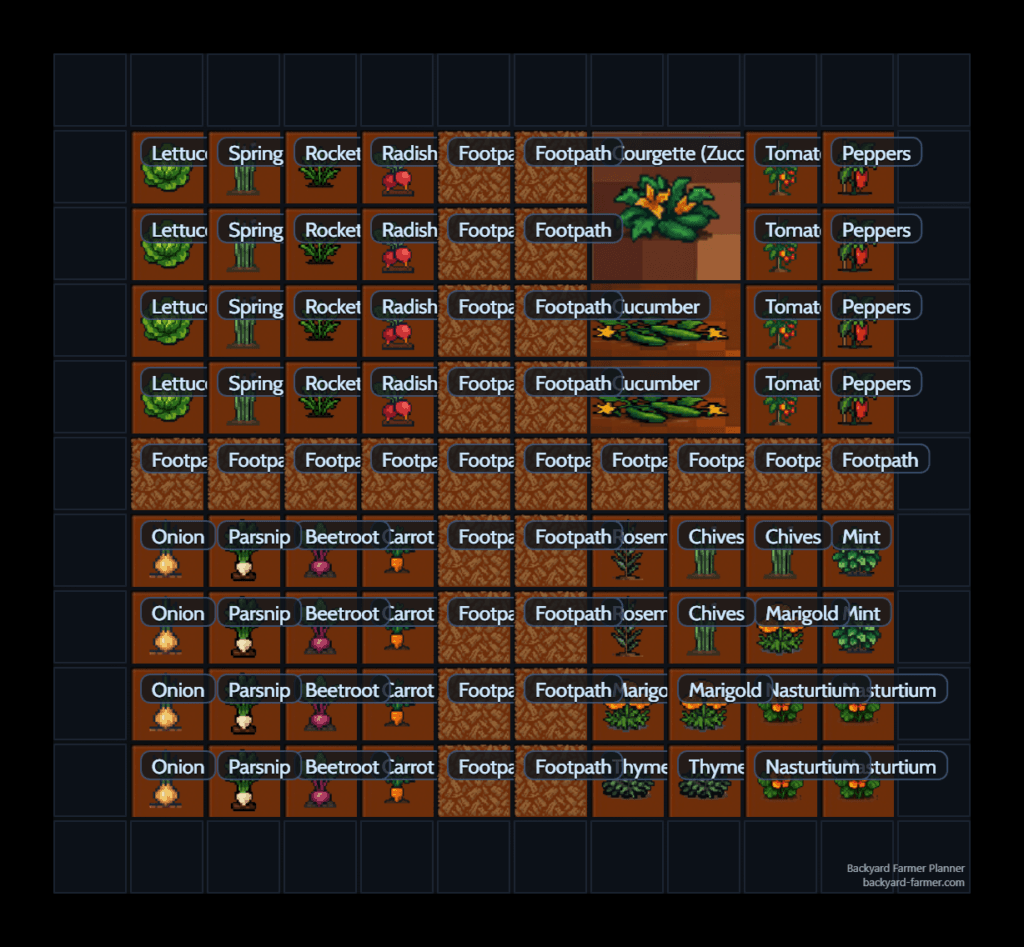
You just need to know:
- What is going on where
- How much room does each crop need
- whether you can reach everything easily
- Which crops need the most attention
- where watering and harvesting will be easiest
Simple Layout Choices That Make Gardening Easier
| Stops the garden from feeling cramped once crops grow | Why it keeps gardening simple |
|---|---|
| Keep beds narrow enough to reach | Makes weeding, planting and harvesting easier |
| Leave proper paths | Stops the garden feeling cramped once crops grow |
| Group thirsty crops together | Makes watering quicker and less wasteful |
| Put tall crops where they will not shade others | Helps smaller crops keep enough light |
| Keep regular harvest crops easy to access | Saves time when picking salad, herbs, beans and courgettes |
| Avoid planting too tightly | Reduces competition, airflow problems and mid-season chaos |
This is where a simple vegetable garden layout can make a big difference. Instead of guessing as you go, you can plan the space around the crops you actually want to grow.
For example, you might:
- Keep salad leaves and herbs close to the house
- Give potatoes their own section
- Place beans along a support
- Keep thirsty crops near the water source
- Leave courgettes enough room to sprawl without swallowing everything around them
Think in Garden Zones
If you are planning an allotment, raised bed or veg patch, think in zones rather than random spaces.
Put crops you harvest often where they are easy to reach. Put slower crops somewhere they can get on with growing. Keep anything that needs regular watering in a place you will actually remember to check.
| Garden zone | Good crops to place there |
|---|---|
| Near the house or main path | Herbs, salad leaves, strawberries, spring onions |
| Sunny open beds | Potatoes, beetroot, garlic, onions, chard |
| Vertical growing area | Runner beans, climbing beans, peas, cucumbers |
| Larger crop space | Courgettes, squash, brassicas, sweetcorn |
| Shadier or edge areas | Leafy crops, mint in pots, wildlife-friendly planting |
Use a Planner Before You Start Planting
You can sketch this on paper, but I built the free Backyard Farmer Allotment Planner to make the job easier.
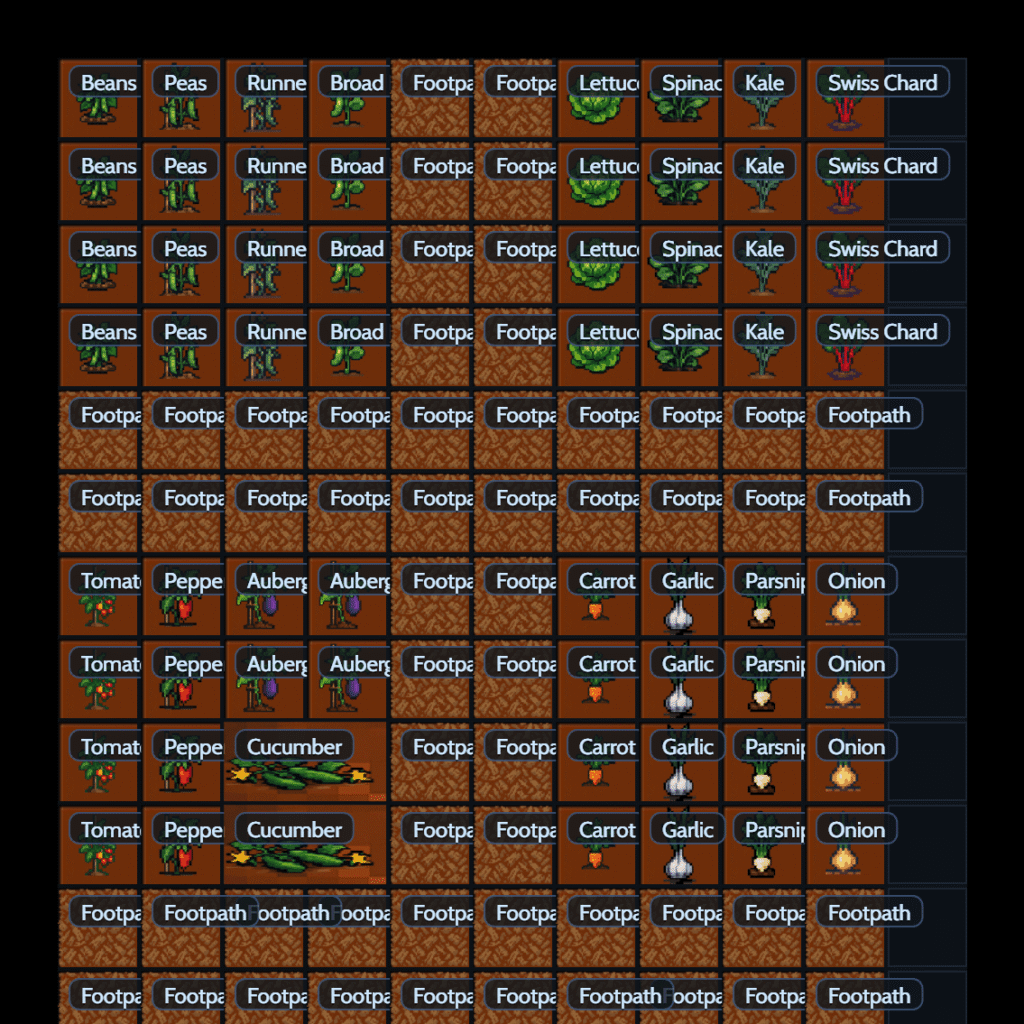
You can use it to:
- Map out your beds
- Test crop spacing
- Avoid overcrowding
- Plan a simple vegetable garden layout
- Build a rough plan before you start sowing
There is no sign-up needed, so you can open it, plan the space, and move things around before you commit plants to the ground.
The point is not to make the garden rigid. Things always change once the season starts.
The point is to give yourself a clear starting plan, so you are not making every decision while holding a tray of seedlings and wondering where on earth they are going to fit.
Keep Your Weekly Gardening Routine Simple
A garden becomes much easier to manage when you stop timing things by seed packet info and go for soil temperature and good compost.
Most of the time, low-maintenance gardening is not about doing nothing. It is about doing the right small jobs often enough that they never turn into big ones.
This is where a simple weekly routine helps. You do not need to spend hours outside every day. In fact, a few short checks through the week can often do more good than one big catch-up session at the weekend.

The routine I come back to is simple:
- Walk
- Water
- Weed
- Harvest
- Feed the soil
- Make a note of what is happening.
That covers most of the basics without turning gardening into a complicated schedule.
A Simple Weekly Gardening Routine
| Stops big wedding sessions | How often | Why it helps |
|---|---|---|
| Walk the garden | Daily if possible | Spots problems early |
| Water properly | As needed | Prevents plant stress |
| Pull small weeds | Weekly | Stops big weeding sessions |
| Harvest little and often | Several times a week | Keeps crops productive |
| Add mulch or compost | Seasonally | Reduces feeding and watering stress |
| Make notes | Weekly | Helps next year’s garden improve |
Walk the Garden Before Problems Build Up
The walk-around is probably the most underrated gardening job.
A quick look tells you more than any calendar can. You will notice if a pot is drying out, if slugs have found the lettuce, if beans need tying in, or if a crop is ready to pick.
That little bit of observation is what keeps the garden calm. It also stops small jobs from turning into the kind of jobs you keep putting off.
Water Properly, Not Randomly
Watering becomes simpler when you check plants properly instead of guessing.
Some crops need more water than others, especially in containers, raised beds and dry spells. However, watering deeply when needed is usually better than giving everything a light splash every day.
A simple rule is to check the soil first, then water where it is actually needed.
Deal With Small Weeds Early
Weeding works the same way.
Pulling small weeds while you are already walking past is much easier than waiting until a bed is covered. Five minutes here and there can save you a full afternoon later on.
This is one of the easiest ways to make an easy-to-maintain garden feel genuinely manageable.
Harvest Little and Often
Harvesting little and often is another simple habit that keeps the garden productive.
Salad leaves, herbs, beans, courgettes and strawberries all benefit from regular picking. It also reminds you why you are doing the work in the first place.
If you are growing food, harvesting should not feel like an afterthought. It is part of the routine.
Keep the Routine Realistic
If you want an easy-to-maintain garden, try not to make the weekly routine too ambitious.
A simple routine you actually follow will always beat a perfect routine you abandon by midsummer.
At the end of the week, make a quick note of anything useful:
- What grew well?
- What dried out?
- What got eaten?
- What needed more space?
- What would you change next time?
These small notes make next year’s garden easier because you are learning from your own patch, not just repeating generic advice.
Use Fewer Tools, But Quality Ones
You do not need a shed full of gear to simplify gardening.
You need a few tools you actually enjoy using, tools that do the job properly and are easy to grab when you need them.
This is something I have learned from working in gardens day after day. A cheap tool that bends, blunts or feels awkward in your hand makes every job more annoying than it needs to be.
On the other hand, a small set of reliable tools can make basic gardening jobs quicker, cleaner and much less frustrating.
Start With the Tools You Actually Use
For most simple gardening jobs, you can get a long way with the basics:
| Why does it earn its place | Why it earns its place |
|---|---|
| Hand trowel | Useful for planting, potting and small digging jobs |
| Fork or spade | Helps with soil work, planting and lifting crops |
| Secateurs | Essential for pruning, deadheading and cutting harvests cleanly |
| Watering can or hose | Makes proper watering easier and quicker |
| Gloves | Protects your hands when weeding, pruning or handling rough materials |
| Bucket or trug | Useful for weeds, compost, harvests and moving bits around |
| String or twine | Handy for tying in beans, tomatoes and supports |
| Plant labels | Stops you forgetting what you sowed and where |
The trick is not to buy every tool that promises to save time. It is to notice which jobs you actually do most often, then make those jobs easier.
If you grow mainly in containers, a good watering can, compost scoop and hand trowel will matter more than a specialist tool you only use once a year.
If you manage beds or an allotment, a decent fork, hoe, secateurs, and trug will probably earn their keep quickly.
Keep Your Tool Kit Practical
This is where basic gardening tools overlap with good habits.
A tool is only useful if you can find it, use it comfortably and trust it to do the job. If it lives buried under a pile of clutter, it might as well not exist.
A simple tool kit works best when you:
- Keep the tools you use most where you can reach them
- Clean them when they need it
- Sharpen blades when they start tearing stems
- Replace tools that make work harder than it needs to be
- Avoid buying specialist tools before you know you need them
Fewer Good Tools Beat a Shed Full of Clutter
A simple tool kit also stops gardening from becoming another expensive hobby before you have even started.
You can always add specialist tools later, once you know your garden and how you like to work. At the beginning, fewer good tools are usually better than a shed full of clutter.
If you want to keep gardening simple, build your kit around real jobs:
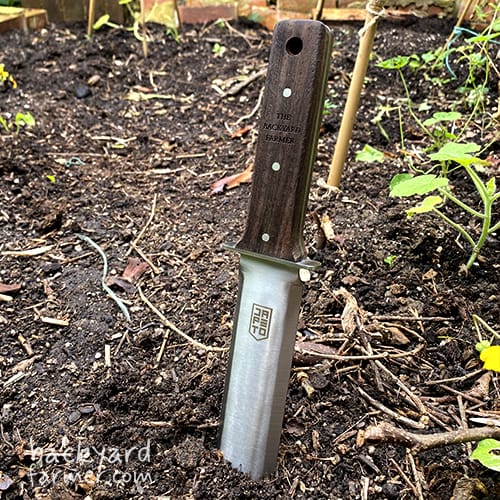
- Planting
- Watering
- Weeding
- Pruning
- Harvesting
- Carrying
That covers most of what happens in a garden throughout the year.
Make Watering and Feeding Less Complicated
Watering and feeding are two jobs people often overthink.
One person says feed every week. Another says never feed at all. One guide tells you to water daily, while another tells you to leave plants alone unless they are struggling.
In the middle of all that, it is easy to lose sight of what plants actually need:
- Steady moisture
- Decent soil
- Enough nutrients
- As little stress as possible
You do not need to become a soil scientist to keep gardening simple. Start by feeding the soil, keeping moisture in the ground and avoiding unnecessary stress.
That will solve more problems than constantly changing products, feeds and routines.
Group Plants by Watering Needs
A good first step is to group plants with similar needs.
Thirsty crops like courgettes, squash, beans, tomatoes and container plants are easier to manage when they are not scattered all over the garden. If everything that needs regular watering is in one area, you are less likely to miss it during a dry spell.
This sounds simple, but it makes a real difference when you are tired, short on time or trying to water before work.
Simple Watering and Feeding Habits
| Simple habit | Why it helps |
|---|---|
| Group thirsty crops together | Makes watering quicker and easier to remember |
| Mulch bare soil | Helps hold moisture and suppress weeds |
| Use water butts where possible | Saves mains water and gives you a backup in dry weather |
| Water deeply when needed | Encourages stronger roots than constant light sprinkling |
| Feed the soil with compost | Builds long-term fertility instead of relying only on bottled feeds |
| Use simple liquid feeds when useful | Helps hungry crops without making feeding complicated |
| Avoid random overfeeding | Prevents soft, leafy growth and wasted effort |
Mulch Before the Soil Dries Out
Mulching is one of the easiest ways to make a garden more low-maintenance.
A layer of compost, leaf mould, grass clippings, straw or another suitable mulch helps cover the soil, hold moisture and reduce weeds. It also means you are not constantly fighting the same dry, bare ground through summer.
If you want a low-maintenance garden, mulch is one of the first habits worth building.
Think Soil First, Not Plant First
When feeding gets overcomplicated, it is usually because people start by thinking about the plant instead of the soil.
In simple terms, the soil feeds the plant — so the better the soil system, the easier the plant’s job becomes. If the soil is poor, lifeless, compacted, too acidic or too alkaline, too dry, or lacking organic matter, the plant is already at a disadvantage.
That does not mean you need to test and measure everything constantly. However, it does mean the basics matter:
- Soil structure
- Organic matter
- Drainage
- Moisture holding
- PH balance
- Microbial life
- Regular compost or mulch
A bottle of feed can help, but it cannot fix a poor growing environment on its own. In most gardens, compost, mulch, healthy soil life and steady moisture will do more long-term good than constantly chasing individual plant feeds.
When it comes to feeding, I like to keep things practical. Compost is the foundation. If your soil is fed regularly with organic matter, your plants have a much better starting point.
Then, if you are growing hungry crops such as tomatoes, courgettes, squash or beans, you can add a simple feed when they need it.
Useful simple feeds include:
- Comfrey feed
- Seaweed feed
- Homemade compost
- Well-rotted manure when suitable
- General-purpose organic liquid feed
You do not need a different bottle for every plant. For most home growing, a steady soil-building routine and one or two simple feeds are enough.
Get the soil working, and the plants have a much better chance of looking after themselves.
Watch the Plant, Not Just the Calendar
The main thing is not to feed everything just because you feel like you should.
Some crops need more. Some need very little. Leafy crops, fruiting crops, root crops, and herbs all behave differently, so watch the plants rather than blindly following a routine.
Watering is the same. Check the soil before watering if you are unsure.
Containers dry out faster than open ground, raised beds can dry quickly in warm weather, and newly planted crops need more attention while they settle in. However, established plants in healthy soil often cope better than people expect, especially if the ground is mulched.
Make the System Easier Before Problems Start
If you want a low-maintenance garden, make watering and feeding easier before problems start.
Put thirsty crops where you can reach them. Mulch the soil. Collect rainwater where possible. Feed the garden in a steady, sensible way.
That is much simpler than trying to rescue stressed plants later, and it keeps the whole garden feeling calmer through the season.
Simple Pest Control Starts With Observation
Pest control is another part of gardening that can get overcomplicated quickly.
As soon as you see a few holes in a leaf, it is tempting to start searching for products, sprays, traps and quick fixes. Sometimes action is needed, but the first step should usually be much simpler:
Look properly before you react.
The simplest pest control habit is walking around the garden and noticing things before they become a problem.
That means checking plants while you water, harvest or weed. Most pest problems are much easier to deal with when you spot them early, before they spread across a whole bed.
What to Check When You Walk the Garden
Look at the soft new growth, the undersides of leaves, the stems, the soil surface and any plants that suddenly look weaker than the others.
| What to check | What it can tell you |
|---|---|
| Undersides of leaves | Aphids, eggs, caterpillars and early pest activity often hide here |
| New growth | Soft shoots are often the first place pests appear |
| Soil surface | Slug trails, disturbed seedlings or dry compost can show what is happening |
| Plant spacing | Crowded plants are harder to inspect and may have poorer airflow |
| General plant health | Weak, stressed plants are often more vulnerable |
A Bit of Damage Is Not Always a Disaster
In a real garden, you will get chewed leaves, nibbled seedlings and the odd crop that does not make it.
That does not mean the whole system has failed. It usually means the garden is alive, and your job is to decide what needs action and what can be left alone.
This is where simple gardening and wildlife-friendly gardening work well together.
A garden with birds, hoverflies, ladybirds, beetles, frogs and other useful wildlife often has more balance than one where every insect is treated as an enemy. You may still need netting, barriers or hand-picking for certain crops, but you do not always need to reach for a spray first.
A Healthy Garden Does Some of the Work for You
One of the best ways to keep pest problems down is to make the garden healthier as a whole.
A garden with flowers, herbs, shrubs, compost, leaf litter, long grass in places and plenty of wildlife is not just prettier. It is more balanced.
That balance matters. Beneficial insects help control aphids. Birds pick off caterpillars and grubs. Frogs and beetles help with slugs. Healthy soil also supports stronger plants, and stronger plants usually cope better with pressure.
This is where gardening can sound complicated, but the principle is simple:
If the conditions are right, nature does a lot of the work.
You still need to step in sometimes. You may still need netting, hand-picking, watering, pruning or protection. However, the more balanced the garden becomes, the less it feels like you are fighting everything on your own.
Simple Pest-Control Habits
| Spot problems before they spread | Why it helps |
|---|---|
| Walk the garden regularly | Spots problems before they spread |
| Check leaves properly | Finds pests while numbers are still low |
| Accept light damage | Stops you reacting to every small mark |
| Encourage wildlife | Supports natural pest control over time |
| Use netting where needed | Protects vulnerable crops like brassicas and soft fruit |
| Keep plants healthy | Strong plants cope better with pressure |
Prevention Is Usually Easier Than Rescue
Some of the best pest control is prevention.
Give plants enough space, keep them watered during dry spells, avoid overfeeding soft leafy growth, and remove badly affected leaves when needed. These basic gardening habits do not sound exciting, but they make a big difference.
If you are growing food, it also helps to know which crops are worth protecting:
- Brassicas may need netting against pigeons and caterpillars
- Young salad crops may need slug protection
- Carrots may need covering to reduce carrot fly problems
- Soft fruit may need bird netting as it ripens
You do not have to protect everything in the same way. However, you do need to understand what is most at risk, so you can protect the crops that actually need it.
Aim for Balance, Not a Pest-Free Garden
The aim is not to create a pest-free garden. That is not realistic, and it is not especially healthy either.
Instead, aim for a garden that can handle a bit of pressure, recover well, and still give you useful harvests without turning every insect into a crisis.
That is a much calmer way to garden, and it fits better with how real gardens actually work.
Stop Chasing the Perfect Garden
One of the quickest ways to make gardening feel complicated is to chase a version of gardening that does not really exist.
Perfect beds, spotless paths, flawless crops and a garden that always looks ready for a photo might be nice to look at. However, most real gardens do not work like that for long.
A slightly messy garden that feeds you is better than a perfect garden you are too overwhelmed to maintain.
That is worth remembering, especially when you are trying to keep gardening simple.
A few weeds do not mean failure. A chewed leaf does not mean the crop is ruined. A bed that looks a bit wild in July might still be producing salad, herbs, beans, courgettes and potatoes.
Useful beats perfect every time.
Real Gardens Are Always Changing
Real gardens are seasonal, imperfect and always changing.
Spring can look organised, then summer arrives, and everything grows twice as fast as expected. Paths narrow, leaves flop over edges, weeds appear overnight, and crops do not always behave exactly as the seed packet promised.
That is normal. It does not mean you are doing it wrong.
Perfection Turns Gardening Into Pressure
The problem with chasing perfection is that it turns every small job into a judgment.
Instead of enjoying the harvest, you only notice what still needs doing. Instead of learning from the season, you feel like you have fallen behind.
That is not gardening made simple. That is gardening turned into pressure.
| Perfection mindset | Simpler gardening mindset |
|---|---|
| Every bed has to look tidy | Beds need to be healthy, accessible and useful |
| A few weeds mean failure | Small weeds are normal and can be managed little and often |
| Every crop must succeed | Some crops work, some do not, and that teaches you something |
| The garden should look good all the time | The garden should support real life through the season |
| More effort always means better results | Smarter routines often matter more than doing more |
Work With the Garden, Not Against It
This is where working with the garden, rather than constantly fighting it, makes a big difference.
If a crop struggles every year in one spot, move it. If a bed is always hard to reach, change the layout. If you never keep up with a certain job, simplify it or drop it.
Good gardening is not about forcing a perfect plan onto the space. It is about improving the system each season.
Productive Matters More Than Polished
A productive patch matters more than a polished one.
If your garden gives you fresh herbs, a few good meals, some wildlife, a reason to get outside and a better connection to the seasons, it is doing something valuable.
It does not need to look like anyone else’s garden to be worth having.
Simple gardening is still proper gardening. In fact, it often takes more experience to know what can be left alone than to keep adding jobs to the list.
The more time you spend in gardens, the more you realise that not every problem needs an immediate fix, and not every bit of mess is really a problem.
Final Thoughts: Simple Gardening Is Still Proper Gardening
Keeping gardening simple does not mean cutting corners.
It means building a garden around real life.
After years of working as a gardener, that is the lesson I keep coming back to. The best gardens are not always the ones with the most complicated planting plans, the biggest tool collections or the strictest routines.
They are usually the gardens that:
- Keep producing
- Keep teaching you something
- Still feels manageable when life gets busy
- Fit around the way you actually live
Focus on What Makes the Biggest Difference
If you want to keep gardening simple, start with the parts that make the biggest difference:
- Grow crops you actually use
- Keep your beds easy to reach
- Choose a layout you understand
- Water properly
- Mulch where you can
- Pull small weeds before they become big ones
- Accept that every season will teach you something different
That is the real point of gardening made simple.
It is not about making the garden boring or doing the bare minimum. It is about taking away the unnecessary friction, so you can spend more time growing, harvesting, learning and enjoying the space.
A Simple Garden Can Still Do a Lot
A simple garden can still be productive. It can still be beautiful. It can still support wildlife, feed your household, save a bit of money and give you a better connection to the seasons.
In many ways, the simpler the system is, the easier it is to keep showing up for it.
So, if your garden feels overwhelming, do not start by adding more for the sake of it. Start by making the system clearer:
- Simplify the layout
- Simplify the crop list
- Simplify the weekly routine
- Build from there
Work With Nature Where You Can
The more I garden, the more I come back to this: work with nature where you can, and only control the environment where you need to.
If a crop suits your climate, soil and space, it usually becomes much easier to grow. If it does not, you either need to change the conditions or accept that it may always be harder work.
That is why simple gardening is not just about doing fewer jobs. It is about choosing better battles.
Grow veg that suits the UK climate outside, and save the extra protection for crops that genuinely need it. Use greenhouses, covers or extra care for crops that need more protection. Build healthy soil. Encourage wildlife. Then, once the conditions are right, let nature do as much of the work as possible.
Start With the Layout
If you want to simplify your own growing space, start with the layout.
Use the free Backyard Farmer Allotment Planner to map your beds, test crop spacing, and build a plan you can actually follow through the season.
You can always change things as you go. That is part of gardening. However, having a simple plan gives you something to work from, rather than making every decision in a rush once the seedlings are ready to go outside.
FAQs
Start with a small growing space, choose easy crops, use a clear layout, mulch bare soil, water deeply, and follow a simple weekly routine instead of trying to do everything at once.
The easiest way to keep gardening simple is to grow fewer crops well, keep your beds easy to reach, and plan your layout before planting. A simple garden plan prevents overcrowding and makes watering, weeding and harvesting much easier.
Yes. Simple gardening is usually better for beginners because it builds confidence. It is better to manage one productive bed properly than to take on a whole garden and feel overwhelmed.
Start with the crops you actually eat, group plants by space and watering needs, and use a planner to map the layout before sowing. This helps you avoid wasted space and makes the garden easier to maintain through the season.