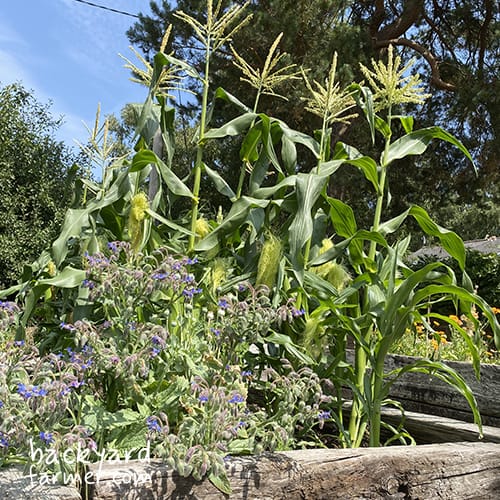
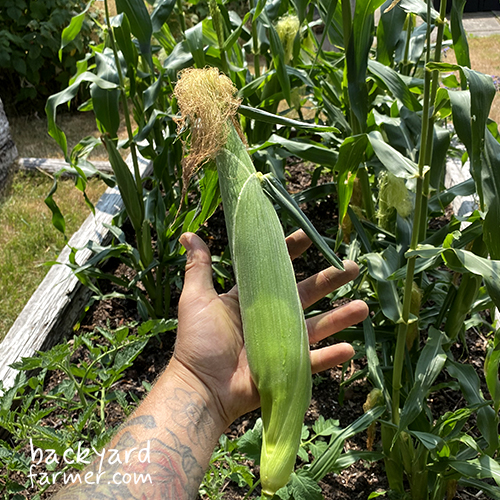
Introduction
Growing sweetcorn in the UK is definitely worth doing, but it is one of those crops where the small details make the harvest. You can grow tall, healthy-looking plants and still end up with patchy cobs if the spacing, watering, timing, or pollination is off.
The good news is that sweetcorn is not difficult once you understand what it wants. However, it does need a little more planning than quicker crops like lettuce, radish, or courgettes.

For a decent crop, focus on:
- Warmth from sowing through to planting out
- Full sun and a sheltered position
- Rich soil that holds moisture without staying soggy
- Steady watering, especially when cobs are forming
- Block planting, so the plants can pollinate properly
This guide walks through how to grow sweetcorn in the UK, from sowing seed and planting out to spacing, feeding, pollination, side shoots, common problems, and harvesting at the right moment.
If you just want the quick version, use the guide below. However, if you want to avoid half-filled cobs and disappointing harvests, the real value is in the practical details — especially block planting, watering during cob formation, and understanding how sweetcorn pollination works.
When to Plant Sweetcorn in the UK
The best time to plant sweetcorn in the UK is usually late May to June, once the risk of frost has passed and the soil has properly warmed.
You can sow sweetcorn indoors earlier, but this is still a warm-season crop. It might look tough once it gets going, but young sweetcorn really does not enjoy cold, wet ground.
For most UK growers, the most reliable method is:
- Sow indoors in April or May
- Harden plants off gradually before planting out
- Plant outside from late May to June
- Avoid cold, wet soil wherever possible
Direct sowing outdoors can work in mild areas. However, it is less reliable if spring is cold, wet, or slow to warm up. Personally, I would rather start sweetcorn indoors and plant out sturdy young plants once the weather has settled.
| Job | Typical UK Timing | Notes |
|---|---|---|
| Sow indoors | April to May | Best option for most UK gardens and allotments |
| Direct sow outdoors | May to early June | Only once the soil is warm and conditions are settled |
| Plant outside | Late May to June | Wait until frost risk has passed |
| Harvest | August to October | Depends on variety, sowing time, and summer weather |
Do Not Rush Sweetcorn Into Cold Soil
Do not be fooled by one warm afternoon in April. Sweetcorn needs warmth around the roots, not just a bit of sunshine on the leaves.
If the seed sits in cold, wet compost, it can rot before it gets going. Likewise, if young plants go outside too early, they often sulk, stall, or never quite catch up.
That early check matters in a UK summer because the growing season is not endless. A plant that sits still for two or three weeks in cold soil has already lost valuable time.
Regional Timing Matters
In colder parts of the UK, including northern areas, exposed allotments, and higher ground, it is usually better to wait a little longer before planting out.
A later, stronger plant will often do better than an early one that has been knocked back by cold nights.
If your plot is sheltered and your soil warms quickly, you may be able to plant earlier. However, if your beds stay cold and damp, wait until conditions feel properly settled.
The Main Beginner Mistake
The most common timing mistake is starting sweetcorn too early indoors, then being forced to hold leggy plants in small pots because the outdoor weather is not ready.
Aim for sturdy young plants that are actively growing, not tall, tired seedlings that have been waiting around for weeks.
As a simple rule: sow warm, plant out late, and do not rush sweetcorn into cold soil.
Where to Grow Sweetcorn
Sweetcorn grows best in a warm, sunny, sheltered spot with fertile soil and steady moisture. In the UK, that warmth really matters.
You are not just trying to grow tall green plants. You are trying to give the cobs enough summer heat and light to fill properly before the season starts to turn.
For the best results, choose a spot with:
- Full sun for most of the day
- Shelter from strong wind
- Rich soil improved with compost or well-rotted manure
- Good moisture retention without sitting wet
- Enough room for a block, not a single row
Sun and Shelter
Choose the sunniest part of the garden or allotment if you can. Sweetcorn will cope with the odd bit of light shade, but I would not waste it on a gloomy corner.
If the plants are short of sun, they may grow slowly, flower late, or struggle to ripen decent cobs before autumn creeps in.
Shelter matters as well. Strong winds can rock the plants, dry the soil, or flatten a crop just as it starts looking promising. Ideally, you want a spot that is sunny, warm, and protected from the worst wind, while still allowing some air movement for pollination.
Soil for Sweetcorn
Sweetcorn is a hungry crop, so it does best in soil that has been improved before planting.
Good soil for sweetcorn should be:
- Fertile
- Moisture-retentive
- Free-draining
- Rich in organic matter
- Warm rather than cold and soggy
In plain English, the soil needs to hold enough water to keep the plants growing strongly, but it should not sit wet around the roots.
If your soil is light, sandy, or tired, add compost or well-rotted manure before planting. If it is heavy and slow to warm up, wait until conditions improve rather than planting into cold mud.
Growing Sweetcorn in Raised Beds and Allotments
Raised beds can work very well for growing sweetcorn in the UK, especially because they warm up quickly in spring. However, they can also dry out quickly in summer, so watering becomes more important once the plants start growing strongly.
Allotments are often ideal because there is usually enough space to plant a proper block. However, exposed plots can be tricky.
If your plot is open, choose a bed with some shelter from the worst wind. At the same time, avoid tucking sweetcorn into deep shade behind a fence or hedge just because it feels protected.
You do not need a perfect site, but try to avoid the two extremes:
- A cold, shaded corner
- A completely exposed, wind-blasted bed
For most gardens, a sunny raised bed, open veg patch, or sheltered allotment bed is ideal. Before planting, enrich the soil, clear weeds, and make sure you have enough room for a proper block rather than a single row.
Best Sweetcorn Varieties for UK Growers
For UK gardens and allotments, the best sweetcorn varieties are usually early or mid-early types. These have a better chance of ripening properly in a shorter summer.
Sweetcorn loves warmth. So, if you choose a variety that needs a long, hot season, you can end up with cobs that are late, small, or never quite sweeten properly.
For beginners, keep the variety choice simple:
- Choose one reliable variety
- Look for early or UK-suitable types
- Grow the plants together in one block
- Avoid mixing different sweetcorn types too closely
- Focus on strong plants and good pollination before experimenting
F1, Supersweet, and Other Sweetcorn Types
You will see different terms used for sweetcorn, including:
- Standard sweetcorn
- Supersweet
- Sugar-enhanced
- Extra tender/sweet types
- F1 hybrids
These affect flavour, texture, sweetness, and sometimes how the plants need to be grown.
You do not need to become an expert in sweetcorn genetics. However, there is one important point to know: different sweetcorn types can cross-pollinate and affect cob quality.
That matters because sweetcorn is wind-pollinated. If you grow a supersweet variety close to a standard variety, pollen can move between them. As a result, the cobs may not have the flavour, sweetness, or texture you expected.
On a normal garden or allotment plot, the easiest option is to grow one type of sweetcorn in one block.
Good Sweetcorn Varieties to Look For
Good varieties to look for include early, UK-suitable names such as:
- Swift F1
- Earlibird F1
- Lark F1
- Earliking F1
- Similar early-cropping types
Availability changes from year to year, so do not get too hung up on one exact variety. Instead, check the description and look for phrases such as:
- Early cropping
- Reliable
- Suited to UK conditions
- Good for cooler summers
- Compact, if you are growing in a smaller space
Match the Variety to Your Plot
If your plot is windy or exposed, a slightly shorter or stockier variety can be easier to manage than a very tall one.
If you are growing in a small garden or container, look for compact types. Even then, remember that compact sweetcorn still needs several plants grouped for good pollination.
For most beginners, my advice is simple: pick one early F1 variety, sow it warm, plant it out after frost, and grow enough plants in a block.
That will do more for your harvest than buying five different varieties and squeezing them into odd corners.
How to Sow Sweetcorn from Seed
The easiest way to grow sweetcorn from seed in the UK is to start it indoors in spring. This gives the plants a head start while the outdoor soil is still too cold.
That is especially useful if you garden in a cooler, wetter, or more exposed part of the country.
For most UK growers, aim to sow sweetcorn seeds in April or May.
You can use:
- Individual pots
- Deep modules
- Root trainers
- Cardboard loo rolls
The main aim is to give each seedling enough root space so it can be planted out later without too much disturbance.
Simple Sweetcorn Sowing Method
- Fill individual pots or deep modules with good-quality, free-draining compost.
- Sow one sweetcorn seed per pot.
- Water gently so the compost is moist, not soaked.
- Keep the pots warm until germination.
- Move seedlings into bright light as soon as they appear.
- Grow them on until they are sturdy, but not pot-bound.
- Harden them off before planting outside.
Some gardeners sow two seeds per pot and remove the weaker seedling. However, if your seed is fresh and conditions are warm, one seed per pot is usually enough.
Keep Seeds Warm, Not Soggy
Sweetcorn seed likes warmth, but it does not want to sit in cold, wet compost.
Keep the compost moist rather than soaked, and avoid leaving pots somewhere cold overnight. Cold, soggy compost is one of the easiest ways to lose sweetcorn before it even gets started.
Once the seedlings appear, give them as much light as possible. A bright windowsill, greenhouse, cold frame, or sheltered propagator setup can all work.
The thing to avoid is warmth without enough light. That is how you end up with tall, leggy seedlings that flop around before they ever reach the bed.
Avoid Root Disturbance and Pot-Bound Plants
Sweetcorn is often described as hating root disturbance. That is a useful warning, but do not let it make the crop sound fussy.
In practice, the main things to avoid are:
- Rough handling
- Tangled roots
- Seedlings stuck in small pots for too long
- Pulling roots apart at planting time
The biggest mistake is sowing too early, then having nowhere suitable to plant them when they are ready. If the weather outside is still cold and the seedlings are already stretching in their pots, they can lose vigour before they even get into the ground.
For a reliable crop, aim for short, sturdy young plants with healthy roots. They should be ready to move outside once the weather has settled, the soil has warmed, and the risk of frost has passed.
How to Plant Sweetcorn Outside
Plant sweetcorn outside once the risk of frost has passed, the soil has warmed, and the plants have been hardened off. For most UK gardens and allotments, that usually means late May to June, depending on your local weather.
At this stage, the aim is simple: get sturdy young plants into warm, fertile soil without knocking them backwards.
Prepare the Bed First
Before planting, spend a bit of time preparing the bed. Sweetcorn is a hungry crop, so mix in compost, well-rotted manure, or another good organic soil improver if the ground is tired.
You want the soil to be:
- Fertile
- Moisture-retentive
- Warm
- Weed-free
- Not cold or waterlogged
This is also the point where you need to think about layout. Plant sweetcorn in a block, not a long single row. That will help with pollination later, because sweetcorn relies on wind to move pollen from the tassels down to the silks on the cobs.
Simple Sweetcorn Planting Method
- Harden the seedlings off for several days before planting.
- Prepare the bed with compost or well-rotted organic matter.
- Mark out a square or rectangular block rather than a single row.
- Water the seedlings before planting so the rootballs are moist.
- Plant each seedling at roughly the same depth it was growing in the pot.
- Firm the soil gently around each plant so it does not rock in the wind.
- Water well after planting.
- Mulch once the soil is warm and the plants are settled.
Handle the Roots Gently
Try to keep the rootball intact when planting. Sweetcorn does not enjoy being knocked about, especially if the plants are already dealing with cold nights, dry soil, or a windy site.
That said, you do not need to treat it like glass. Just handle the plants gently, avoid tearing the roots apart, and get them into the ground while they are still young and sturdy.
Protect Young Plants if the Weather Turns
If the weather suddenly turns cold after planting, a temporary fleece cover can help the plants through a rough patch.
This is especially useful on exposed allotments or in colder parts of the UK, where late spring nights can still catch you out.
Once planted, keep an eye on wind rock. If the stems are moving too much at the soil level, firm them in again or add a simple cane for support until they root properly.
A plant that rocks around in the wind will struggle to establish well.
The goal is to plant sweetcorn while it is still full of energy, into warm soil, with enough space around it to grow strongly. Get that bit right, and you give the crop a much better chance before the important pollination stage arrives.
Sweetcorn Spacing and Block Planting
Sweetcorn spacing matters more than many beginners realise. It is not just about giving each plant enough room to grow. It is also about keeping the plants close enough together so they can pollinate properly.
Unlike crops such as lettuce, carrots, or beetroot, sweetcorn should not be planted in one long, neat row. Because sweetcorn is wind-pollinated, it needs to grow in a block or grid.
That block layout gives pollen a much better chance of falling from the tassels at the top of the plants onto the silks lower down on the cobs.
How Far Apart Should Sweetcorn Be Planted?
As a practical guide, plant sweetcorn around 35–45cm apart in each direction.
That spacing gives each plant enough room to grow strongly, while still keeping the block close enough for good pollination.
| Layout | Usefulness | Notes |
|---|---|---|
| Single row | Poor for normal sweetcorn | Pollination is less reliable |
| 3 x 3 block | Minimum useful block | Better than rows, but still small |
| 4 x 4 block | Good beginner target | More reliable pollination |
| Larger block | Best where space allows | Better pollen movement and stronger harvest potential |
| One plant per square foot | Possible in rich soil | Works best with good feeding and watering |
How Many Sweetcorn Plants Do You Need?
A 3 x 3 block is about the smallest layout I would bother with for normal sweetcorn.
A 4 x 4 block or larger gives you a much better chance of full cobs, especially in a garden or allotment where wind direction can be a bit unpredictable.
In simple terms:
- 3 x 3 plants is the minimum I would aim for
- 4 x 4 plants are a better beginner target
- Larger blocks are more reliable if you have the space
- Single rows are best avoided for normal sweetcorn
Sweetcorn Spacing in Raised Beds
If you are growing sweetcorn in raised beds, treat it as a block crop rather than something to tuck along the edge.
You can grow one plant per square foot in rich soil, but it is not the most forgiving setup if the bed dries out or the plants are underfed. Slightly wider spacing is often easier for beginners because each plant has more room, more moisture, and less competition.
The classic mistake is squeezing sweetcorn into a spare strip of ground because the plants look narrow when they are young. They soon become tall, hungry plants, and if they are too cramped, dry, or planted in a poor layout, the cobs can suffer later.
If you want to avoid cramming plants into a layout that will not pollinate well, use the Allotment Planner to map your sweetcorn as a proper block before you plant.
The key thing to remember is simple: sweetcorn needs neighbours. A small group of plants planted well will usually do better than a few isolated plants dotted around the plot.
How Sweetcorn Pollination Works
Sweetcorn pollination is the bit that explains why layout matters so much. You can grow strong, healthy plants, but if the pollen does not reach the silks properly, the cobs will not fill evenly.
Sweetcorn is wind-pollinated. The tassels at the top of the plant release pollen, and that pollen needs to fall or blow onto the silks that appear from the developing cobs lower down the plant.
In a good-sized block, this mostly happens on its own. However, in a small garden, narrow bed, or sheltered corner, pollination can be a bit hit and miss.
Why Missing Kernels Happen
Each silk is connected to one potential kernel.
That means:
- If a silk is pollinated, that kernel can develop
- If a silk is not pollinated, that part of the cob stays empty or poorly formed
- Poor pollination often shows up as missing kernels, patchy cobs, or half-filled sweetcorn
This is why sweetcorn should be grown in blocks. In a block, pollen has a much better chance of moving between plants and reaching the silks. In a single row, especially a small one, a lot of pollen can simply miss the target.
Common Causes of Poor Sweetcorn Pollination
Poor pollination is more likely if:
- You grow too few plants
- Plants are in a single row rather than a block
- The weather is very still, wet, or awkward during flowering
- Plants dry out when tassels and silks appear
- The block is tucked into a spot with poor airflow
- Plants flower unevenly because some were checked by cold or poor early growth
It is easy to blame the seed or the variety when cobs are patchy. Quite often, though, the issue is simply that the pollen did not land where it needed to.
Can You Hand Pollinate Sweetcorn?
Yes, you can hand-pollinate sweet corn if you are growing a small block or if pollination looks patchy.
The simplest method is to gently shake the plants when the tassels are shedding pollen. Some growers also collect pollen from the tassels and dust it onto the silks by hand.
You do not usually need to do this with a decent-sized block, but it can be useful in:
- Small gardens
- Container setups
- Very sheltered spaces
- Small blocks with fewer plants than ideal
What to Check if Your Cobs Are Patchy
The odd patchy cob is not always a disaster. However, if most of your sweetcorn cobs have missing kernels, look first at:
- Spacing
- Block size
- Watering during flowering
- Whether the plants were healthy when they flowered
- Whether the plants were checked by cold or poor early growth
Missing kernels on sweetcorn are usually caused by poor pollination. Each silk on the cob connects to one kernel, so if pollen does not reach every silk, parts of the cob will stay empty or poorly filled.
Watering, Feeding, and Care
Sweetcorn is a hungry, thirsty crop, especially once it starts growing quickly. If you plant it in poor, dry soil and leave it to fend for itself, you may still get plants, but the cobs are likely to be smaller and less reliable.
Thankfully, sweetcorn care does not need to be complicated. Focus on three things:
- Rich soil before planting
- Deep watering in dry spells
- Extra attention when tassels, silks, and cobs appear
Feed the Soil Before Planting
The best feeding starts before the plants go in. Prepare the bed with compost, well-rotted manure, or another good organic soil improver.
This helps the soil hold moisture and gives the plants a strong start. Sweetcorn makes a lot of leafy growth before it forms cobs, so it needs decent fertility from the beginning.
If your soil is poor, sandy, or tired, do not skip this stage. It is much harder to rescue weak sweetcorn later than it is to give it a good start.
Water Deeply, Especially in Dry Weather
Watering matters most during dry spells. However, it becomes especially important when the tassels and silks appear, because this is when the plant is flowering and starting to form the cobs.
If the soil dries out badly at this stage, the plants can struggle just when they need steady moisture most.
As a simple guide, water deeply rather than giving the surface a quick splash. You want moisture getting down into the root zone, not just wetting the top inch of soil.
Raised beds and containers dry out faster than open ground, so check them more often in warm weather.
Mulch Once the Soil Is Warm
Once the soil is warm and the plants are settled, a mulch can be really useful.
Good mulch options include:
- Grass clippings, used in thin layers
- Compost
- Leaf mould
- Straw
- Other suitable organic mulches
Mulching helps hold moisture, reduce weeds, and keep the soil more even through hot spells. Just avoid piling mulch tightly against the stems, as that can keep things too damp around the base of the plant.
Feeding Sweetcorn During the Season
Feeding sweetcorn during the season does not need to be overcomplicated. If the soil is well prepared, the plants may only need a boost once they are growing strongly.
In poorer soil, raised beds, or containers, a liquid feed every couple of weeks can help.
During strong leafy growth, sweetcorn appreciates nitrogen. Once cobs are forming, steady moisture and balanced feeding matter more than throwing lots of extra fertiliser at the crop.
In other words, do not try to force it. Keep the plants growing steadily and avoid letting them swing between dry, hungry, and stressed.
Weed and Support Young Plants
Weeding is most important while the plants are young. Once sweetcorn is tall, it can shade the ground a little, but early competition from weeds can slow it down.
Keep the block clear, especially while the plants are getting established.
On windy sites, check for plants rocking at the base. If they are moving too much at the soil level, firm the soil gently around them or add a simple cane for support.
Sweetcorn usually stands well once rooted, but exposed allotments can be rough on young plants.
The main thing is consistency. Sweetcorn does not need fussing over every day, but it does need rich soil, proper watering, and a bit of attention at the flowering and cob-swelling stage.
That is where good care turns tall plants into proper sweetcorn cobs.
Should You Remove Sweetcorn Side Shoots?
You usually do not need to remove sweetcorn side shoots. These extra shoots, often called tillers, can appear from the base of the plant, especially when sweetcorn is growing strongly.
It is easy to look at them and assume they are stealing energy from the main stem. In most garden situations, though, they are not a problem worth worrying about.
What Are Sweetcorn Side Shoots?
Side shoots are extra stems that grow from the base of the plant. They are fairly common and often show up on healthy, vigorous sweetcorn.
They can look a bit odd if you have not grown sweetcorn before. However, they are not usually a sign that anything has gone wrong.
Should You Cut Them Off?
In most cases, leave them alone.
Removing sweetcorn side shoots is unlikely to improve the main cob, and cutting them off can damage the plant if you are heavy-handed.
The bigger factors are still:
- Warmth
- Feeding
- Watering
- Spacing
- Block planting
- Pollination
If your sweetcorn has side shoots but the plants look healthy, I would not lose sleep over them.
When Might You Remove Them?
Side shoots are only worth removing if they are:
- Damaged
- Diseased
- Badly in the way
- Making it difficult to water or care for the plant
Even then, cut them cleanly rather than tearing them away from the stem.
If Your Cobs Are Poor, Look Elsewhere First
If your sweetcorn has side shoots and poor cobs, the side shoots are probably not the main issue.
Check the basics first:
- Were the plants in a proper block?
- Did they have enough water when tassels and silks appeared?
- Were they planted out too early?
- Did cold weather check their growth?
- Were there enough plants for good pollination?
For most UK growers, the best advice is simple: do not fuss over sweetcorn side shoots. Leave healthy plants alone and put your effort into good spacing, steady watering, and helping the crop through the pollination stage.
Common Sweetcorn Problems
Most sweetcorn problems come back to the same few things: timing, warmth, water, spacing, and pollination.
It is not usually a mysterious crop. However, it can be unforgiving if it gets checked early, dries out during flowering, or ends up planted in a layout that does not pollinate well.
Here are the most common problems when growing sweetcorn in the UK, along with the likely causes and practical fixes.
| Problem | Likely Cause | Practical Fix |
|---|---|---|
| Poor germination | Cold compost, old seed, sowing too early, or compost kept too wet | Sow fresh seed in warm, moist compost and avoid waterlogging |
| Seedlings rot | Cold, wet compost or poor airflow | Use free-draining compost, steady warmth, and water lightly |
| Seedlings go leggy | Too much warmth and not enough light | Move seedlings into brighter light as soon as they germinate |
| Plants stall after planting | Planted out too early, cold nights, or root stress | Harden off properly and wait for settled weather |
| Plants stay small | Poor soil, cold conditions, lack of feed, or dry roots | Improve soil, water deeply, and feed once plants are growing strongly |
| Yellowing leaves | Cold stress, waterlogging, nutrient shortage, or root problems | Check soil moisture first, then feed only if plants are actively growing |
| Plants blow over | Exposed site, loose soil, shallow rooting, or wind rock | Firm plants in well, choose a sheltered spot, and stake if needed |
| Missing kernels | Poor pollination, too few plants, single rows, or drought during flowering | Plant in blocks, grow more plants, water well, and hand pollinate if needed |
| Small cobs | Dry soil, poor feeding, cool summer, late sowing, or weak plants | Water during cob swelling, feed steadily, and choose early varieties |
| Cobs eaten | Badgers, mice, birds, squirrels, or other local pests | Use legal physical protection and ask nearby growers what pest pressure is common |
Poor Germination and Rotting Seedlings
Poor germination is usually the first issue people hit. Sweetcorn seed needs warmth to get going, and it can rot if it sits in cold, wet compost.
If you have had patchy germination before, try this:
- Sow a little later
- Use fresh seed
- Keep the compost warm
- Keep compost damp, not soaked
- Avoid leaving pots somewhere cold overnight
Leggy seedlings are usually a light problem. This often happens when sweetcorn is started too early on a warm windowsill. Warmth gets the seed moving, but once the shoots appear, they need strong light and enough space to grow sturdy.
Plants Stalling After Planting Out
Plants that stall after planting out have often been checked by cold weather. Sweetcorn can look fine indoors, then sit still for weeks if it goes into cold soil.
In a short UK season, that early check can matter.
It is usually better to plant out a little later into better conditions than rush weak plants outside and hope they catch up. Sweetcorn is not great at shrugging off a bad start.
Missing Kernels and Patchy Cobs
Missing kernels and patchy cobs are nearly always a pollination issue.
This usually happens when:
- Plants are grown in a single row
- There are too few plants
- Plants are spaced too far apart
- The crop dries out during flowering
- Plants flower unevenly after a poor start
If pollen does not reach all the silks, the kernels do not fill properly. Planting in blocks and keeping plants watered when tassels and silks appear will help prevent this.
Small Cobs and Weak Growth
Small cobs can be caused by a cool summer. However, they are also common when plants have been underfed, planted too late, or allowed to dry out.
Sweetcorn is a hungry crop, especially in raised beds and containers. Do not expect full cobs from poor, dry soil.
If your plants are small, pale, or struggling, check the basics first:
- Did they go out too early?
- Is the soil rich enough?
- Are they getting enough sun?
- Are they drying out between watering?
- Were they planted too close together?
Pests Eating Sweetcorn
Pest pressure depends heavily on your site. Some gardens barely have any trouble, while some allotments get serious damage from badgers, mice, birds, or squirrels.
Badgers can be a particular problem with sweetcorn, but they are legally protected in the UK. Control needs to focus on prevention, barriers, and local allotment guidance — not trapping, harming, relocating, or interfering with setts.
If you are on an allotment, ask nearby growers what usually attacks sweetcorn on that site. Local knowledge is often more useful than generic pest advice.
The best way to avoid most sweetcorn problems is to get the basics right from the start: sow warm, plant out after frost, grow in a block, keep the soil rich and moist, and pay close attention when the plants start flowering.
When and How to Harvest Sweetcorn
Sweetcorn is usually ready to harvest in the UK from August to October, depending on the variety, sowing time, and how warm the summer has been.
Early varieties in a good season may be ready from late summer. However, later sowings, cooler sites, or plants that were checked early can easily run into early autumn.
The trick is picking the cobs at the right moment.
Pick too early, and the kernels can be watery and underdeveloped. Leave them too long,g and the sugars start turning starchy, giving you tougher, less sweet cobs.
Signs Sweetcorn Is Ready to Harvest
The first sign to check is the silk at the end of the cob.
Sweetcorn is usually close to ready when:
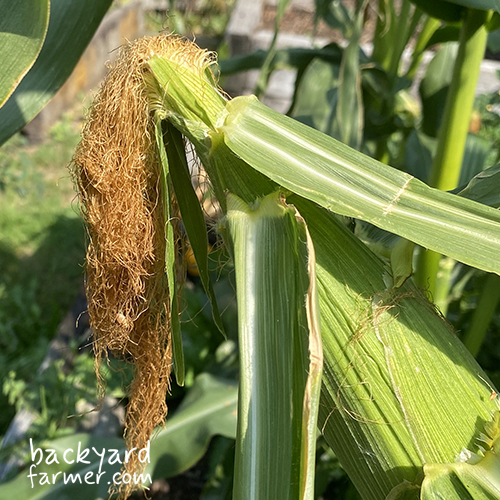
- The silks have turned brown and dry
- The cob feels full and rounded through the husk
- The kernels look plump when checked
- The plant still looks healthy enough to support the cob
Do not rely on the silks alone. They are a useful clue, but the cob itself still needs checking.
Use the Milk Test
The most reliable way to check sweetcorn is the milk test:
- Peel back a small part of the husk near the top of the cob.
- Press a kernel with your thumbnail.
- Check the liquid that comes out.
| Kernel Test Result | What It Means |
|---|---|
| Clear, watery liquid | Too early |
| Milky, creamy liquid | Ready to harvest |
| Thick, doughy liquid | Overripe |
If the liquid is milky, the cob is ready. If it is still clear, give it a little longer. If it has gone thick and pasty, the cob has probably gone past its sweetest stage.
How to Pick Sweetcorn
Once a cob is ready, harvest it by twisting it downward and away from the stem.
Try not to yank the whole plant around, especially if there are more cobs still developing. A clean twist is usually enough to remove the cob without damaging the rest of the plant.
Eat sweet corn as Fresh as Possible.
For the best flavour, pick sweetcorn as close to cooking time as possible. This is one of the real joys of growing it yourself.
Sweetcorn starts losing sweetness after picking as the sugars turn to starch. A cob cooked soon after harvest can taste miles better than one that has been sitting around.
If you have several cobs ready at once, use the freshest ones first. You can store sweetcorn briefly in the fridge, but it is not a crop I would harvest early just for convenience.
Let the plant hold the cob until you are ready, then pick it fresh.
A good rule is: brown silks, full cob, milky kernel — then straight to the kitchen.
Can You Grow Sweetcorn in Pots?
Yes, you can grow sweetcorn in pots, but it is harder than growing it in the ground or in a raised bed.
Sweetcorn is tall, hungry, and thirsty. It also needs enough nearby plants for good pollination, which makes it a bit awkward for containers.
The Main Container Problem
The main mistake is trying to grow one or two sweetcorn plants in a small pot and expecting a proper crop.
You might get a cob, but pollination will be much less reliable. Sweetcorn does best when several plants are grouped, even in containers.
For pot-grown sweetcorn, aim for:
- Large, heavy containers
- Several plants are grouped close together
- A sunny, sheltered position
- Regular watering
- Regular feeding once plants are growing strongly
- Enough stability so plants do not rock in the wind
Use Large Pots and Group Them Together
If you want to try growing sweetcorn in pots, use the largest containers you can manage and group them close together in a sunny, sheltered spot.
A single small pot is not enough. You are trying to create a mini block of plants, not a few lonely stems dotted around the patio.
Heavy containers are useful because sweetcorn gets tall. A windy patio or exposed garden can knock pots over or rock the plants loose, especially once the plants are carrying cobs.
Watering and Feeding Sweetcorn in Pots
Container-grown sweetcorn dries out quickly, especially in hot weather. Once the plants are tall and starting to flower, they can use a lot of water.
Check the compost often and water deeply. Try not to let the pots swing between bone dry and soaking wet, as that sort of stress can hit the plants just when they need steady growth.
Feeding matters more in pots, too. There is only so much nutrition in a container, and sweetcorn uses it quickly.
Start with good compost, then feed regularly once the plants are growing strongly, especially as they move towards flowering and cob formation.
Is Container Sweetcorn Worth It?
For most beginners, I would treat pot-grown sweetcorn as a fun experiment rather than the most reliable method.
If you have the choice, a raised bed or allotment block will usually give better results. However, if containers are all you have, go big, grow several plants together, keep them fed and watered, and give them the sunniest spot available.
Companion Planting with Sweetcorn
Sweetcorn can work well with companion planting, but it is worth keeping the advice realistic.
The crop already needs space, water, feeding, and good pollination. So, if this is your first time growing sweetcorn, do not make the layout more complicated than it needs to be.
Good companion planting should support the crop, not turn the bed into a tangled mess.
Three Sisters Planting
The classic companion planting method is Three Sisters planting, where sweetcorn, climbing beans, and squash are grown together. The idea is simple:

- Sweetcorn gives the beans something to climb
- Beans add nitrogen to the system over time
- Squash spreads across the ground, shading the soil and helping reduce weeds
It is a lovely idea, and it can work well. However, in the UK, it is not always as easy as it looks on paper.
Sweetcorn needs to be strong and well-established before climbing beans start pulling on it. If the beans grow too quickly, they can overwhelm young or weak sweetcorn plants.
Squash and pumpkins also need plenty of room, so the whole planting can become crowded if you try to squeeze it into a small bed.
How to Try Three Sisters Planting in the UK
If you want to try Three Sisters planting, let the sweet corn get established first.
A simple approach is:
- Plant the sweetcorn in a proper block.
- Let the plants become sturdy before adding beans.
- Add climbing beans once the sweetcorn can support them.
- Let squash or pumpkin trail around the edges where there is space.
- Keep the whole bed well watered and fed.
For beginners, I would usually start with a plain block of sweetcorn before trying a full Three Sisters layout.
Once you know how sweetcorn behaves on your plot, it is much easier to experiment with beans, squash, and pumpkins around it.
Good Crops to Grow Near Sweetcorn
Good crops to grow near sweetcorn include:
- Climbing beans, if the sweetcorn is strong enough first
- Squash or pumpkins, if you have plenty of space
- Courgettes around the edge of a larger bed
- Low-growing herbs or flowers nearby to support pollinators in the wider garden
- Leafy crops nearby, as long as they are not shaded too heavily
What to Avoid Planting with Sweetcorn
Avoid planting sweetcorn where it will be shaded by taller crops or forced to compete too heavily for water.
The main thing is not whether a companion plant sounds clever on paper. It is whether the sweetcorn still gets what it needs:
- Full sun
- Enough space
- Steady moisture
- Good airflow
- Enough nearby plants for pollination
So, companion planting with sweetcorn can be useful, but it is not magic.
Get the block planting, watering, and pollination right first. After that, companion crops can become a useful bonus rather than another thing to go wrong.
Plan Your Sweetcorn Layout Before You Plant
Sweetcorn is one crop where the layout really does affect the harvest.
If you plant it in a thin row, squeeze it into odd gaps, or spread the plants too far apart, you are much more likely to end up with poor pollination and patchy cobs.
Before you plant, it is worth sketching out your block properly. It does not need to be complicated, but it should give the plants the best chance of pollinating well.

Aim for:
- A square or rectangular block, not a single row
- Enough space between plants
- Full sun for most of the day
- Shelter from the worst wind
- Enough nearby plants for good pollination
The Allotment Planner can help you map your sweetcorn spacing, block layout, companion planting, and bed design before anything goes in the ground.
That way, you can plan the crop as a proper block from the start, rather than trying to squeeze plants into whatever gaps are left later. With sweetcorn, that little bit of planning can make a real difference.
FAQ
Yes, you can grow sweetcorn in pots in the UK, but it is harder than growing it in the ground or in raised beds. Sweetcorn needs space, steady moisture, regular feeding, and enough nearby plants for pollination.
One or two plants in a small pot are unlikely to give you a strong crop. If pots are your only option, use large containers, group several plants together, and give them the sunniest, most sheltered spot you have.
A small 3 x 3 block is a realistic minimum, but 4 x 4 or more is better. Sweetcorn is wind-pollinated, so a group of plants gives pollen a much better chance of reaching the silks.
A few isolated plants, or one long row, are far more likely to produce patchy cobs.
Missing kernels are usually caused by poor pollination. Each silk on a sweetcorn cob connects to one potential kernel, so if pollen does not reach every silk, parts of the cob stay empty or poorly filled.
To reduce the risk, plant sweetcorn in blocks, keep it watered during flowering, and grow enough plants together for pollen to move properly between them.
Plant sweetcorn outside after the last frost, usually from late May into June. In colder areas, exposed allotments, or higher ground, it is better to wait until nights are reliably mild and the soil has warmed.
Sweetcorn planted into cold soil can stall badly and may never fully catch up, so it is worth waiting for better conditions.
Sweetcorn is easy once you understand its main needs, but it is less forgiving than crops like lettuce, beans, or courgettes.
The basics are simple: sow it warm, plant it out after frost, grow it in a block, keep it watered, and choose an early UK-suitable variety.
In most cases, no. Sweetcorn side shoots, or tillers, are common and usually do not need removing. They are not normally the reason cobs fail.
If your crop is struggling, look first at spacing, watering, feeding, pollination, and whether the plants were checked by cold weather.
It is safer to grow one type of sweetcorn at a time, especially if you are growing supersweet varieties. Sweetcorn is wind-pollinated, so pollen can move between nearby plants.
If different sweetcorn types cross-pollinate, the flavour, sweetness, or texture of the cobs may be affected. For beginners, one variety in one block is the simplest route.
Poor germination is usually caused by cold compost, old seed, sowing too early, or compost that has been kept too wet.
Sweetcorn likes warmth and moisture, but it can rot if it sits in cold, soggy conditions. Sow fresh seed in warm compost and keep it damp rather than soaked.
Sweetcorn is ready when the silks have turned brown and dry, the cob feels full through the husk, and the kernels release a milky liquid when pierced.
Clear liquid means it is too early, while thick or doughy liquid means it has gone too far. Milky liquid is the sweet spot.
You can save seed from open-pollinated sweetcorn, but most common garden varieties are F1 hybrids, which will not reliably grow true from saved seed.
Cross-pollination can also affect the seed, so beginners are usually better off buying fresh seed each year for predictable results.
Yes, badgers can damage or eat sweetcorn, especially on allotments. However, badgers are legally protected in the UK.
Prevention needs to focus on legal physical barriers, good site management, and local allotment advice rather than trapping, harming, or disturbing them.