
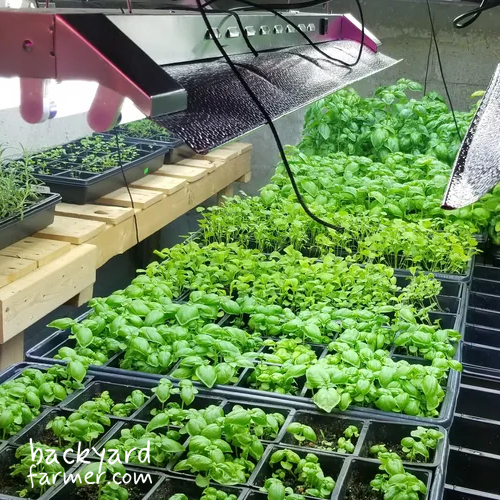
Vegetables can grow successfully under artificial light, but seedlings, microgreens, herbs and leafy greens are the most practical choices.
Fruiting crops such as tomatoes, chillies, peppers, aubergines and cucumbers are possible, but need stronger light, more warmth and closer management. For most UK growers, artificial lighting is most useful for seed-starting, winter leaves and extending the season rather than replacing outdoor or greenhouse growing.
Supplementary Light or Growing Entirely Under Lights?
The amount of artificial light needed depends on whether it is supporting daylight or replacing it.
Supplementary lighting:
- Adds to natural light from a window
- Works well for seedlings, herbs and leafy crops
- Is especially useful during January, February and early spring
- May require less output where a bright window already provides useful light
Growing entirely under lights:
- Provides effectively all the useful light the crop receives
- Is needed in grow tents, cupboards, garages and shelving away from windows
- Requires closer control of temperature, airflow, watering and electricity use
- Becomes more demanding with tomatoes, chillies, cucumbers and other fruiting crops
Do not judge a setup by clock hours alone. Ten hours of weak winter daylight plus six hours under a lamp does not automatically provide sixteen useful growing hours. The amount of light reaching the leaves matters as much as the duration.
Supplementary lighting supports useful daylight. Growing entirely under lights means supplying the crop’s full daily light requirement.
For fixture selection guidance, see How to Choose an LED Grow Light.
Which Vegetables Grow Best Under Artificial Light?
Some vegetables are much more practical indoors than others. The best choices stay compact, mature quickly and do not need large containers, support or pollination.
| Crop group | Examples | Difficulty | Practical verdict |
| Strong beginner choices | Vegetable seedlings, microgreens, lettuce, rocket, salad leaves, basil and parsley | Easy | Best place to start |
| Moderately demanding | Spinach, chard, coriander, radishes, spring onions, baby beetroot and turnips | Easy–moderate | Practical with suitable conditions |
| High-demand fruiting crops | Compact tomatoes, chillies, peppers, aubergines and cucumbers | Moderate–hard | Possible with strong light, warmth and root space |
| Best raised indoors and moved outside | Cordon tomatoes, brassicas, courgettes, squash, beans and sweetcorn | Easy as seedlings | Excellent use of grow lights |
| Usually inefficient through harvest | Pumpkins, large brassicas, climbing beans, maincrop potatoes and sweetcorn | Hard | Technically possible but rarely worthwhile |
What This Means in Practice
- Start with compact crops: Seedlings, microgreens and leafy vegetables need less space and light and can provide quick or repeat harvests.
- Plan carefully for roots and cooler crops: Spinach often prefers cooler conditions, while radishes, spring onions, baby beetroot and turnips need suitable container depth.
- Choose dwarf fruiting varieties: Compact tomatoes, chillies and peppers are more manageable, but still require stronger light, warmth, larger pots and closer care.
- Move larger crops outside: Pumpkins, climbing beans, large brassicas, potatoes and sweetcorn usually use too much indoor space and electricity to justify growing them through to harvest.
For most beginners, seedlings, microgreens, herbs and leafy greens provide the best return for the available space and power.
How Long Should Grow Lights Be On for Vegetables?
Most vegetable grow lights run for 12–18 hours per day, but the right schedule depends on the crop, growth stage, light intensity and any useful daylight already reaching the plants.
| Crop or stage | Practical starting range | Important qualification |
| Seedlings | 14–16 hours | Weak light and excessive warmth can still cause stretching |
| Microgreens | 14–18 hours | Longer schedules are possible but rarely necessary |
| Leafy greens | 12–16 hours | The required duration depends on light intensity |
| Herbs | 12–16 hours | Basil generally needs more light and warmth than parsley |
| Fruiting vegetables | 14–18 hours | Long hours cannot compensate for inadequate intensity |
What These Timings Mean
- Photoperiod is the number of hours the light operates.
- DLI, or daily light integral, is the total useful light the crop receives during the day.
- A weak light cannot always be made suitable by running it for longer.
- A stronger light may provide the required daily total in fewer hours.
- Natural daylight can contribute, but its value varies with the season, weather, window direction and distance from the glass.
Several hours beside a dim UK winter window may provide far less useful light than the same period during spring.
Use a timer to maintain a consistent routine and provide a regular dark period. Sixteen hours of light followed by eight hours of darkness is a practical starting point for many home setups, but it is not a universal rule.
Continuous lighting is unnecessary for most growers and can cause problems in sensitive crops such as tomatoes.
Temperature, Airflow and Humidity
Artificial light cannot compensate for unsuitable temperatures, stagnant air or persistently damp conditions. The growing environment must also suit the crop and its stage of growth.
Temperature
- Leafy greens and many herbs tolerate cooler conditions than fruiting vegetables.
- Tomatoes, chillies, peppers, aubergines and cucumbers generally need more warmth.
- Seedlings kept very warm under weak light are more likely to become tall and stretched.
- Cold compost can slow root growth even when the leaves receive enough light.
- Warm-season crops may benefit from extra heat during germination, but should not remain unnecessarily warm after emergence.
Airflow
- Gentle air movement encourages sturdier seedlings.
- It reduces stagnant conditions and helps damp foliage dry.
- Avoid directing a strong, constant blast at the plants.
- A fan cannot compensate for overcrowding, poor drainage or excessive watering.
Humidity
- Cabinets, tents and crowded shelves can trap moisture.
- Persistently humid conditions increase the risk of mould, mildew and damping-off.
- Very dry air increases water loss and can cause containers to dry more quickly.
There is no single humidity target suitable for every crop. Focus on avoiding extremes, maintaining gentle airflow and checking how quickly the compost and foliage dry.
For guidance on positioning lights, timers and ventilation, see How to Install and Maintain LED Grow Lights.
Heated Propagator or Grow Light?
A heated propagator and a grow light perform different jobs during seed-starting.
| Equipment | Main job |
| Heated propagator | Warms the compost to support germination |
| Grow light | Provides overhead light for healthy growth after emergence |
When to Use Extra Heat
- Chillies, sweet peppers and aubergines benefit most consistently from warm compost.
- Tomatoes may germinate without extra heat in an already warm room.
- Once most seedlings emerge, remove the lid or open the vents.
- Reduce bottom heat when it is no longer needed.
Warmth without enough light can produce weak, elongated seedlings. A grow light may warm the surrounding air slightly, but it should not be relied upon to maintain a stable compost temperature. Equally, a heated propagator cannot replace adequate overhead light after germination.
Heat helps seeds germinate. Light helps emerged seedlings grow compactly.
Containers, Compost, Watering and Feeding
The roots need suitable conditions as well as good light. A strong grow light cannot compensate for restricted containers, poor drainage or persistently wet compost.
Choose the Right Container
- Use modules or seed trays for young seedlings.
- Shallow trays work well for microgreens.
- Herbs and salad leaves can grow in relatively modest pots.
- Radishes, beetroot and other root crops need enough depth to develop properly.
- Tomatoes, peppers and cucumbers require much larger final containers.
Restricted roots can slow growth and reduce flowering or fruit production.
Prioritise Drainage
Use a clean, free-draining growing medium and make sure every container has drainage holes. Check moisture below the surface rather than judging the compost by appearance alone. Peat-free compost can look dry on top while remaining wet around the roots.
Water According to Conditions
Drying speed changes with light intensity, temperature, airflow, container size and plant maturity. Water when the root zone needs it rather than following a fixed daily schedule.
Constantly wet compost can weaken roots and encourage damping-off and fungus gnats. Mature fruiting plants can also suffer if allowed to dry out repeatedly.
Feed According to Growth Stage
Young seedlings need relatively little feeding while growing in fresh compost. Mature tomatoes, peppers and cucumbers need more consistent nutrition as growth and fruit production increase. Follow crop-specific guidance rather than using one feeding schedule for every indoor vegetable.
Pollination and Fruiting Indoors
A healthy-looking plant will not always produce a useful crop. Fruiting vegetables also need suitable temperatures, healthy roots and successful pollination.
Tomatoes, Chillies and Peppers
- These crops are generally self-fertile, meaning each flower contains the parts needed to set fruit.
- Gentle tapping, vibration or mild air movement can help release and move pollen indoors.
- A lack of insects is not always the main cause of poor fruit set.
Aubergines
- Flowers may benefit from light vibration or careful hand assistance.
- Fruit set is more reliable when the plant is growing strongly and temperatures remain suitable.
Cucumbers
- Pollination requirements depend on the cultivar.
- Parthenocarpic cucumber varieties can set fruit without pollination. Many all-female greenhouse types are bred for this, making them easier to manage in enclosed spaces.
- Mixed-flower cultivars may need more attention, and poor pollination can produce misshapen or aborted fruit.
Courgettes, Pumpkins and Squash
These crops produce separate male and female flowers, so hand pollination may be needed where insects cannot reach them. Their size and spreading habit also make them inefficient choices for most indoor setups.
Other Causes of Poor Fruit Set
- Insufficient daily light
- Unsuitable temperature or humidity
- Inconsistent watering
- Restricted or unhealthy roots
- Incorrect feeding
Lighting is only one part of successful fruiting. The plant must also be warm, healthy, well rooted and successfully pollinated.
Three Simple Indoor-Growing Setups
Match the containers, light coverage and level of control to the crop you want to grow.
Seed-Starting Shelf
Best for: Tomatoes, chillies, brassicas, aubergines and other transplants destined for outside.
What it needs:
- Modules or seed trays
- Seed compost
- Even overhead light
- Adjustable hanging system
- Timer
- Optional bottom heat
- Thermometer and gentle airflow
Watch for: Uneven coverage, excessive warmth and the light becoming too distant as seedlings grow.
Herb and Leafy-Green Shelf
Best for: Lettuce, rocket, spinach, basil, parsley and microgreens.
What it needs:
- Trays or pots
- Free-draining compost
- Drainage tray
- Broad, even light coverage
- Timer
- Gentle air movement
- Space for succession sowing
Watch for: A strong central hotspot with weak light around the edges.
One Compact Fruiting Crop
Best for: A dwarf tomato or compact chilli.
What it needs:
- A genuinely compact cultivar
- Adequate final container
- Strong whole-plant coverage
- Height adjustment or dimming
- Support and airflow
- Temperature monitoring
- Consistent watering, feeding and pollination
Watch for: Higher costs and closer management than a seedling or salad shelf.
For suitable fixtures, see Best LED Grow Lights UK. For hanging, timers and routine care, see How to Install and Maintain LED Grow Lights.
Common Problems at a Glance
Indoor-growing problems rarely have one obvious cause. Check the whole setup before assuming the grow light is responsible.
| Symptom | Common possibilities | First checks |
| Leggy seedlings | Weak light, excessive distance, too much warmth or crowding | Light position, duration, temperature and spacing |
| Yellow leaves | Wet roots, cold compost, low light or poor nutrition | Moisture, roots, temperature and affected leaves |
| Slow growth | Insufficient daily light, cold roots or restricted containers | Light, temperature and root space |
| Scorched or curled leaves | Excessive intensity, heat or inconsistent watering | Light distance, canopy temperature and compost moisture |
| Fungus gnats | Persistently damp compost | Watering, drainage and surface moisture |
| Mould or mildew | Stagnant humid air, crowding or wet foliage | Ventilation, spacing and watering habits |
| Weak flowering or fruit set | Low light, unsuitable temperature, poor pollination or plant stress | Light, warmth, flower condition and overall vigour |
| No useful harvest | Crop too demanding for the available setup | Coverage, root volume, warmth and crop choice |
Check More Than One Cause
- Leggy seedlings may result from weak light, excess warmth or overcrowding.
- Scorched leaves can also be caused by drought, fertiliser salts or damaged roots.
- Yellow leaves may reflect moisture, temperature, nutrition or natural ageing.
Avoid diagnosing a plant from one visual symptom. Check the light, compost, temperature, roots and overall growing conditions together.
For detailed optimisation, see Maximising Plant Growth with LED Grow Lights. For bleaching, curling and excessive-light symptoms, see Grow Lights Too Close. Crop-specific problems should be checked against the relevant vegetable-growing guide.
Is Growing Vegetables Under Lights Worth It?
Artificial lighting is most worthwhile when it solves a clear seasonal or space problem.
Usually Worthwhile
- Starting seeds earlier
- Raising stronger transplants for outdoor planting
- Growing microgreens
- Keeping herbs productive through winter
- Producing cut-and-come-again salad leaves
- Supplementing a dim windowsill
These uses involve compact plants, short growing periods or repeat harvests, so they generally make efficient use of space and electricity.
Worthwhile for Some Growers
A compact chilli, dwarf tomato or suitable cucumber can be rewarding where there is enough light, warmth and container space.
A more demanding setup may also be worthwhile for:
- Homes without outdoor growing space
- Unusual cultivars that are difficult to buy
- Educational projects
- Growers who value freshness and enjoyment as well as cost
Harder to Justify
Indoor growing becomes less practical when crops need:
- Large fruiting canopies
- Additional room heating
- Months of high-intensity lighting
- Large containers and support
- Regular pruning or training
- A large footprint for a relatively small harvest
Sprawling, climbing and long-season crops are therefore usually better grown outdoors or under greenhouse cover.
Artificial lighting is generally most valuable for seed-starting and extending the growing season, rather than replacing outdoor vegetable growing entirely.
Frequently Asked Questions
Seedlings, microgreens, lettuce, rocket, salad leaves and compact herbs are the easiest place to start. They stay relatively small, mature quickly and usually need less light and root space than fruiting vegetables.
Most setups run for around 12–18 hours per day. Seedlings often suit 14–16 hours, while herbs and leafy greens may need 12–16 hours. The correct duration still depends on light intensity and any useful daylight.
Most home growers should provide a regular daily dark period using a timer. A schedule of 16 hours of light and eight hours of darkness is a practical starting point, but it is not a fixed rule for every crop.
Yes, but compact or dwarf varieties are more practical. Tomatoes grown through fruiting need strong, even light coverage, suitable warmth, a large enough container, support, consistent watering and help moving pollen between the flowers.
Only where the compost is too cold for reliable germination, additional warmth is particularly useful for chillies, sweet peppers and aubergines. Once seedlings emerge, they need strong overhead light more than continued high temperatures.
Common causes include weak light, excessive distance from the fixture, too much warmth, overcrowding and unsuitable watering. Check the whole setup rather than assuming that extending the lighting period will solve the problem.
Usually not for large crops that require months of strong lighting, heating and large containers. Artificial light offers better value for seed-starting, microgreens, herbs and salad leaves, especially where it extends the UK growing season.
Final Practical Recommendation
For most UK growers, artificial light is most useful for raising stronger seedlings, keeping herbs and salad leaves productive, and extending the season when natural light is weak.
Start with compact crops such as microgreens, lettuce, rocket, basil or parsley. They use space efficiently and need less light and root volume than mature fruiting vegetables.
Tomatoes, chillies and other fruiting crops are possible, but they require stronger light, larger containers and closer control of temperature, watering and pollination. One setup will not suit every crop.
For fixture guidance, see How to Choose an LED Grow Light. To compare current options, see Best LED Grow Lights UK.