
Learning how to grow borage is fairly straightforward, which is why it turns up in so many UK veg patches, allotments and wildlife gardens. It grows quickly from seed, produces beautiful star-shaped blue flowers, and bees absolutely love it.
That said, borage is not a tiny, tidy herb. It can:
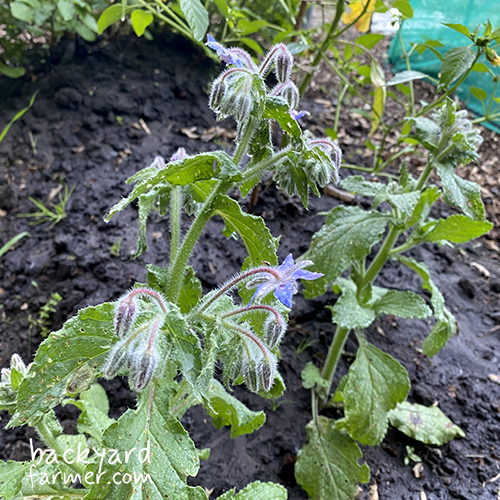
- Get bigger than you expect
- Lean about in windy spots
- Self-seed freely if you let it run to seed
- Pop up again next year in places you may not have planned
For some gardeners, that is part of the charm. For others, it can feel like borage has invited itself into every spare gap.
The good news is that growing borage in the UK is easy once you understand where to put it and how much space to give it. It does not need rich soil, constant feeding, or much fuss. In fact, it is often happiest when you sow it directly where you want it to grow and then mostly leave it alone.
In this guide, I’ll walk you through:
- When to sow borage
- How to grow borage from seed
- Whether borage works in pots
- How to stop it taking over
- How to use it as a bee-friendly companion plant around edible crops
When to Plant Borage in the UK
Best window: April to June
Late sowing: July can still work in mild areas
Main tip: Wait until the soil has warmed up
The best time to plant borage in the UK is from April to June, once the soil has started to warm up and the worst of the frosts have passed. You can sow it a little earlier in mild areas, but for most gardens and allotments, there is no need to rush it.
For a simple sowing guide, think of it like this:
- April: Good for early sowings once the soil is workable and warming
- May: Often the most reliable month for direct sowing
- June: Still a good time to sow for summer flowers
- July: Possible in mild areas, but flowering time may be shorter
Borage is usually grown from seed and does best when it is sown directly where you want it to grow. The seedlings can cope with normal spring conditions once they are up and growing, but cold, wet soil can slow germination down.
Before sowing, check the ground:
- If the soil is cold and claggy, wait another week or two.
- If the soil is workable and starting to warm, you can sow.
- If the soil is dry, water the seedbed gently before or after sowing.
For an early crop of flowers, sow borage in April or May. This gives the plants time to build strong leafy growth before flowering through summer. You can also sow again in late spring or early summer if you want a longer run of flowers for bees and other pollinators.
A late sowing in July can still work, especially in a mild part of the UK. However, the plants may not flower for as long before autumn arrives. If your main aim is growing borage for bees, earlier sowings are usually better because they give you a longer flowering season.
Once you have grown borage once, you may not need to sow it every year. It self-seeds freely, and seedlings often pop up the following spring.
That can be useful, but keep an eye on self-sown plants if they appear:
- In small raised beds
- Along paths
- Around young seedlings
- In shared allotment spaces
- In places where borage may shade other crops
If you are planning your sowing calendar across the whole garden, borage is a useful crop to add to your spring planting list alongside other easy annual herbs and pollinator plants.
Where to Grow Borage
Best position: Sunny and open
Soil: Average, free-draining soil
Avoid: Cold, compacted, waterlogged ground
Borage grows best in a sunny, open spot with free-draining soil. It will cope with light shade, especially in the middle of summer, but you will usually get stronger growth and more flowers if it gets plenty of sun.
A good borage spot should have:
- Plenty of sun
- Soil that drains reasonably well
- Enough space for the plant to spread
- Easy access for bees and other pollinators
- Room around it so it can lean a little without causing trouble
One of the nice things about borage is that it is not fussy about soil. It can grow in average garden soil and will often manage in fairly poor ground too, as long as the soil is not sitting wet.
The main soil problems to avoid are:
- Cold, compacted ground
- Heavy waterlogging
- Soil that stays wet for long periods
- Tiny gaps where the plant has no room to grow
In rich soil, borage can grow very leafy and floppy, so do not feel you have to give it your best compost-heavy bed. A spare sunny edge, a wildlife corner, or a gap near fruiting crops is often enough. It is a useful plant, but it does need room.
The main thing to remember is that borage is bigger and looser than many people expect. It is not a neat little windowsill herb. A happy plant can spread out, lean over neighbouring crops, and drop seed around itself.
That is fine if you want a relaxed, bee-friendly patch. However, it is less ideal if you are trying to keep a tidy row of small seedlings nearby.
Can You Grow Borage in Pots?
Yes, you can grow borage in pots, but it is easier in the ground. Borage develops a taproot and grows into a fairly large plant, so it needs a deep, roomy container rather than a small herb pot.
For pot-grown borage, aim for:
- A large, deep container
- Free-draining compost
- A sunny position
- One strong plant per pot, or plenty of space in a larger container
- Regular watering during warm, dry weather
If you want to grow borage from seed in a pot, sow it directly into the container instead of starting it in a tiny module and moving it later. Use free-draining compost, keep the pot in a sunny position, and thin the seedlings so you are not trying to grow too many plants in one container.
The main issue with pots is watering. Borage in open ground can usually look after itself once established, but container-grown plants dry out faster. In warm weather, check the compost regularly and water before the plant starts to wilt.
For most gardeners, I would treat pots as a good option for:
- One or two plants near a patio
- A wildlife-friendly container area
- A small pollinator corner
- A trial plant before giving it more space in the ground
If you want a strong, low-maintenance patch for bees, open ground or a raised bed is usually the better choice.
Can You Grow Borage on an Allotment?
Yes, borage is a brilliant allotment plant if you give it the right place. It attracts bees and other pollinators, which makes it useful around fruiting crops.
Good allotment positions include:
- The edge of a bed
- Beside a path
- Near a compost area
- In a pollinator strip
- Around fruit bushes
- Near crops that benefit from pollination
Borage works well near crops such as:
- Strawberries
- Beans
- Courgettes
- Squash
- Cucumbers
- Fruit bushes
Rather than squeezing it into the middle of a small crop row, place borage somewhere it can do its job without shading smaller crops or getting in the way when you are weeding and harvesting.
On an allotment, the only real caution is self-seeding. Borage can scatter seed and come back in unexpected places the following year.
If you like a relaxed, wildlife-friendly plot, you may welcome a few volunteers. If your site is more formal, deadhead it or remove plants before they set seed.
Before sowing borage on an allotment, ask yourself:
- Will it shade anything small nearby?
- Can I reach around it to weed and harvest?
- Is it too close to a shared path?
- Am I happy for it to self-seed here?
If you are working borage into a mixed allotment layout, it is worth planning where it will sit before you sow. A single plant can take up more space than expected, especially once it starts flowering and leaning into neighbouring crops.
Borage vs Comfrey: What’s the Difference?
Borage and comfrey are often mentioned together because both are useful, bee-friendly plants for allotments, veg patches and wildlife gardens. However, they are not the same plant, and they behave quite differently in the garden.
| Feature | Borage | Comfrey |
|---|---|---|
| Plant type | Annual | Perennial |
| How it spreads | Self-seeds freely | Regrows from deep roots |
| Main use | Flowers for bees, edible flowers, companion planting | Compost activator, mulch, comfrey feed, bee plant |
| Best position | Bed edges, pollinator corners, near fruiting crops | Permanent patch, compost area, orchard edge |
| Control issue | Seedlings popping up | Deep roots are hard to remove |
| Edible use | Young leaves and flowers are used by some gardeners | Usually grown for plant feed, not kitchen use |
The main difference is that borage is an annual that spreads by seed, while comfrey is a perennial that comes back from the root every year. That makes borage easier to remove if it appears in the wrong place, but more likely to pop up around the garden if you let it set seed.
Comfrey is better as a permanent utility plant. It is excellent for:
- Making comfrey feed
- Adding leaves to compost
- Cutting as mulch around hungry crops
- Supporting bees and other pollinators
- Filling a rough corner where it can stay long term
However, once comfrey is established, it can be difficult to move. Even small pieces of root can regrow, so it is worth planting it somewhere you are happy to keep it.
Borage is better if you want a quick, easy annual flower for bees and companion planting. It is less permanent than comfrey, but it can still become a nuisance if you let it self-seed everywhere.
If you grow both, give comfrey a fixed, out-of-the-way spot and use borage more flexibly around the edges of beds, fruiting crops and pollinator areas.
How to Tell Borage and Comfrey Apart
Borage and comfrey can look similar at a glance, especially before you get used to them. Both have rough, hairy leaves and both attract plenty of bees. However, once you look at the shape of the plant and flowers, they are fairly easy to tell apart.
| Feature | Borage | Comfrey |
|---|---|---|
| Flowers | Usually bright blue, star-shaped flowers | Usually purple, pink, cream or blue bell-shaped flowers |
| Flower position | Open flowers held loosely on branching stems | Drooping clusters of tubular bells |
| Leaves | Rough, oval to pointed leaves on branching annual stems | Larger, longer leaves, often forming a strong clump from the base |
| Growth habit | Loose, branching, annual plant | Dense, clump-forming perennial |
| Overall feel | More open, airy and sprawling | Heavier, leafier and more permanent |
The quickest way to tell them apart is by the flowers. Borage flowers are usually open and star-shaped, while comfrey flowers hang in small bell-like clusters. Borage tends to look lighter and more branching, whereas comfrey usually looks like a stronger, leafier clump coming from the same base each year.
The leaves are another clue. Borage leaves are rough and bristly, but the plant has a looser, more annual look. Comfrey leaves are generally larger, longer and more substantial, with the whole plant looking more like a permanent patch than a self-sown annual herb.
If you are unsure, look at where the plant is growing too. A plant that appears as a fresh seedling in different gaps each spring is more likely to be borage. A plant that returns from the same crown every year, especially in a big leafy clump, is more likely to be comfrey.
How to Grow Borage from Seed
Best method: Direct sow outdoors
Sowing depth: 1–2 cm
Beginner mistake: Sowing too many seeds in one small space
The easiest way to grow borage from seed is to sow it directly into the soil where you want it to grow. Borage does not really need starting in trays, and because it develops a taproot, it often settles better when it is not moved around too much.
Before sowing, get the area ready:
- Choose a sunny spot.
- Clear away weeds.
- Rake the soil to a reasonably fine surface.
- Remove large stones or clods from the top layer.
- Water the soil gently if it is very dry.
You do not need to make the bed perfect, but you do want the seedlings to get going without heavy weed competition straight away.
Simple Sowing Steps
- Choose a sunny, open spot.
- Clear weeds from the area.
- Rake the soil to create a reasonably fine surface.
- Sow the seeds about 1–2 cm deep.
- Cover lightly with soil.
- Water gently.
- Thin seedlings once they are large enough to handle.
If the soil is already damp, avoid soaking it. Borage likes moisture to germinate, but cold, wet soil can slow things down.
Once the seedlings appear and are large enough to handle, thin them out so the strongest plants have room to grow. It can feel wasteful, but it is better to have a few strong borage plants than a crowded clump that turns floppy and tangled later on.
If you are growing borage from seed in a pot, use the same basic approach:
- Sow directly into a deep container.
- Keep the compost lightly moist.
- Thin to the strongest seedling.
- Keep the pot in a sunny position.
- Avoid moving the plant around too much once it is established.
You can transplant borage, but it is not the best method for most beginners. If you do start it in modules, move the plants while they are still young and avoid disturbing the roots too much. For a simple, reliable approach, direct sowing is usually the way to go.
Spacing and Layout
Plant spacing: 30–45 cm
Row spacing: 45–60 cm
Best placement: Bed edges, pollinator corners, or near fruiting crops
Borage needs more room than many people expect. A good spacing is around 30–45 cm between plants, with a bit more space if you are growing it in rich soil or letting it fill out naturally.
Use this as a rough guide:
| Layout | Suggested spacing |
| Individual plants | 30–45 cm apart |
| Rows | 45–60 cm between rows |
| Square foot bed | Usually 1 plant per square |
| Small raised bed | Place on an edge or corner |
| Pollinator strip | Allow room for plants to lean and self-seed |
The biggest spacing mistake is treating borage like a compact kitchen herb. It is not like parsley, thyme or chives. A healthy borage plant can become broad, leafy and slightly unruly, especially once it starts flowering.
If it is crammed in too tightly, it can:
- Flop over nearby seedlings
- Make the bed feel messy
- Block access for weeding
- Shade smaller crops
- Become harder to deadhead or remove later
For most gardens and allotments, borage works best on the edge of a bed, beside a path, near fruiting crops, or in a pollinator-friendly corner. That gives bees easy access to the flowers without putting a big, floppy plant right in the middle of your main crop rows.
If you want to map your borage spacing properly, use the Allotment Planner to lay it out before you plant. It is especially useful if you are mixing borage with strawberries, beans, courgettes, squash or other crops that also need room to spread.
Watering, Feeding, and Care
| Care job | What to do |
| Watering | Keep seedlings lightly moist, then water during dry spells |
| Feeding | Usually not needed in decent soil |
| Mulching | Helpful in dry summers, especially in raised beds or pots |
| Weeding | Most important while seedlings are small |
| Support | Useful in windy spots if plants start leaning |
| Self-seeding control | Deadhead or remove plants before seed matures |
Borage is a low-maintenance plant once it gets going. The main time to pay attention is while the seedlings are young, because they need enough moisture and light to establish before they can look after themselves.
Watering Borage
After sowing, keep the soil lightly moist until the seedlings appear. You do not need to soak the ground every day, but try not to let the seedbed dry out completely during a warm spell.
Once the plants are established, borage is usually fairly tolerant of dry periods, especially when grown in open ground.
Water more often if:
- You are growing borage in pots
- The plant is in a raised bed during a dry spell
- The seedlings are still small
- The leaves start to wilt in hot weather
Feeding Borage
Feeding is rarely needed. In fact, too much rich feed can encourage lots of soft, leafy growth, which can make the plants more likely to flop.
If your soil is reasonable, borage will usually grow well without extra fertiliser.
Avoid overfeeding if you want:
- Stronger, less floppy plants
- More balanced growth
- Less sprawling leafy growth
- A lower-maintenance plant
Mulching and Weeding
A light mulch can help in dry summers, especially around plants growing in raised beds or containers. It also helps keep weeds down while the young plants are getting started. Just avoid piling mulch right up against the stem.
Weeding matters most early on. Once borage becomes a decent-sized plant, it can hold its own, but small seedlings can easily get lost among faster weeds. Give them a clean start and they will usually romp away.
Managing Shape and Self-Seeding
The only other care job is managing the plant’s shape and seed. In windy spots, borage may lean or sprawl, so you can:
- Grow it near sturdier plants
- Tuck it beside a bed edge
- Give it light support if needed
- Cut back awkward stems
- Remove plants before seed matures if you do not want self-seeding
That is really the balance with growing borage: it does not need much pampering, but it does need a little management if you want it to stay where you put it.
Is Borage Good for Bees?
Yes — borage is one of the easiest annual herbs to grow for bees.
The flowers are open, star-shaped and easy for pollinators to access, which makes them much more useful than highly bred flowers that look pretty but offer very little.
Borage is useful for bees because it offers:
- Open flowers that are easy to access
- A long flowering period when sown early enough
- Plenty of blooms on mature plants
- A useful food source close to edible crops
- A simple way to add biodiversity to a veg patch or allotment
If you are growing borage for bees, the aim is simple: give them a long-lasting patch of flowers close to the crops that need pollination. Borage can flower through a useful part of the growing season, and once it gets going, it often keeps producing new flowers for weeks.
It works especially well near crops such as:
- Strawberries
- Beans
- Courgettes
- Squash
- Cucumbers
- Fruit bushes
These crops all benefit from good pollinator activity, so having a few bee-friendly plants nearby can help bring more insect life into the growing area.
That said, it is worth keeping the claims realistic. Borage is not a magic trick that guarantees bigger harvests. Its real value is that it supports bees and other pollinators, adds biodiversity to the garden, and helps make your veg patch or allotment feel more alive.
For a wildlife-friendly garden, borage is a lovely bridge between edible growing and pollinator planting. You get useful flowers, the bees get a food source, and the garden gets a bit more movement and life.
Common Problems When Growing Borage
Borage is usually easy to grow, but a few things can catch people out. Most problems come from sowing too early, crowding the plants, or letting them self-seed more than you wanted.
| Problem | Likely cause | Simple fix |
| Too many seedlings | Self-seeding | Deadhead or remove plants before seed drops |
| Floppy growth | Rich soil, wind, or overcrowding | Give more space and avoid overfeeding |
| Poor germination | Cold soil, dry soil, old seed, or deep sowing | Sow shallowly once soil has warmed |
| Rough leaves | Natural ageing | Pick young leaves or focus on flowers |
Borage Self-Seeding Everywhere
Borage is an annual, so the original plant does not live forever. However, it produces plenty of seed, and those seeds often drop into the soil and germinate the following year. This is why it can seem like borage “comes back” every spring.
Self-seeding can be useful if you want:
- Free plants next year
- A relaxed wildlife garden
- More flowers for bees
- A less formal growing space
However, it can become annoying if borage appears:
- In small raised beds
- Along paths
- Around delicate seedlings
- In a tidy herb patch
- On a shared allotment boundary
To keep it under control, deadhead flowers before they set seed, or pull the plant out once flowering starts to fade. You do not need to remove every single flower, but it is worth acting before the plant drops seed all over paths and beds.
Borage Plants Becoming Floppy
Borage can become tall, leafy and top-heavy, especially in rich soil or exposed positions. If it is planted too close to other crops, it may lean over them and make the bed feel messy.
Common causes of floppy borage include:
- Rich soil
- Overcrowding
- Exposed, windy positions
- Too much soft leafy growth
- Not enough space around the plant
The best fix is good spacing from the start. Give each plant enough room, avoid overfeeding, and place it somewhere it can sprawl a little without causing problems. Bed edges, pollinator corners and open allotment spaces are usually better than tight rows of small crops.
If a plant is leaning badly, you can give it light support or cut back some of the growth. It is a relaxed, informal plant by nature, so do not expect it to behave like a clipped herb border.
Poor Germination
Poor germination is usually caused by cold soil, dry soil, old seed, or sowing too deeply. Borage is not difficult from seed, but it still needs a reasonable start.
To improve germination:
- Sow once the soil has warmed in spring.
- Keep the seedbed lightly moist.
- Sow shallowly, around 1–2 cm deep.
- Avoid burying seed too deep.
- Use fresh seed where possible.
- Try again if your first sowing fails in cold conditions.
If your first sowing fails, do not panic. Sow again when the weather is warmer and conditions are more settled.
Leaves Looking Rough or Tatty
Borage leaves are naturally bristly, and older leaves often look coarse or tired as the plant matures. This is normal and does not usually mean anything is wrong.
If you want to use the leaves:
- Pick them young.
- Choose smaller, tender leaves.
- Avoid large, coarse leaves.
- Use them sparingly if you dislike the texture.
Once the plant is flowering, most gardeners focus more on the blue flowers than the leaves. The flowers are easier to use, prettier on the plate, and far more useful for bees.
When and How to Harvest Borage
Harvest leaves: When young and tender
Harvest flowers: When fully open and bright blue
Best use: Fresh, as flowers wilt quickly
You can start harvesting borage leaves when the plant is young and leafy, but most people grow it for the flowers. The leaves have a mild cucumber-like flavour when they are young, although they are also bristly, so they are not as easy to use as softer herbs.
Harvesting Borage Leaves
For leaves, aim to pick:
- Young leaves
- Smaller leaves
- Fresh, healthy growth
- Leaves before they become too coarse
Older leaves get rougher and more bristly, so they are usually less useful in the kitchen. In practice, once the flowers start coming, they tend to become the main harvest.
Harvesting Borage Flowers
The flowers usually appear from early to midsummer onwards, depending on when you sowed the seed and how warm the season has been. Spring-sown borage normally gives the longest flowering period.
Pick borage flowers when they are:
- Fully open
- Bright blue
- Fresh-looking
- Dry rather than wet from rain
- Easy to pull gently from the plant
They are delicate, so it is best to harvest them by hand rather than cutting whole stems unless you are clearing the plant back. Pick on a dry day if you want to use them fresh in salads, drinks, ice cubes or as a garnish.
Borage flowers are best used soon after picking. They do not store well for long, and they can wilt quickly once removed from the plant. If you only need a few, pick them as you need them rather than harvesting a big batch.
Harvest Signs
Borage is ready to harvest when the flowers are fully open, bright blue, and easy to pull gently from the plant. Avoid picking flowers that are still closed, faded, or starting to dry out if you want them for fresh use.
For leaves, look for young, healthy growth rather than large, older leaves. If the leaves feel very coarse, they are probably past their best for eating. At that stage, leave the plant for the bees and enjoy the flowers instead.
Companion Planting with Borage
Best companions: Strawberries, tomatoes, courgettes, squash, cucumbers, beans and fruit bushes
Main benefit: Attracts pollinators
Avoid: Planting it where it will shade small crops
Borage is often talked about as a companion plant, and it does earn its place in a mixed growing space. The main benefit is simple: it brings bees and other pollinators into the area. That makes it useful near crops that rely on good pollination.
Good companions for borage include:
- Strawberries
- Tomatoes
- Courgettes
- Squash
- Cucumbers
- Beans
- Fruit bushes
- Pollinator-friendly herb beds
These crops do not need borage beside them to grow, but having bee-friendly flowers nearby can help make the whole patch more active and wildlife-friendly.
Borage also works well in:
- Pollinator strips
- Herb beds
- Wildlife corners
- Around the edges of allotment beds
- Informal cottage-style planting
There are not many hard rules about what not to plant with borage. The main thing is to avoid putting it where it will shade or smother smaller crops.
Avoid placing borage too close to:
- Tiny seedlings
- Low-growing herbs
- Very small salad crops
- Crops that need a tidy, open row
- Narrow paths where it will lean into the way
It is also worth being realistic about companion planting. Borage is not a cure-all for pests, and it will not magically fix a poor layout or neglected crop. Its value is in supporting pollinators, adding biodiversity, and making your garden or allotment feel more balanced.
Plan Your Borage Layout Before You Sow
Borage is easy to grow, but it is worth giving it a proper place before you scatter seed around the garden. One plant can take up more room than expected, especially once it starts flowering and leaning towards nearby crops.
Use the Allotment Planner if you want to map out:
- Borage spacing
- Companion planting
- Bed edges and pollinator corners
- Nearby fruiting crops
- Paths and access space
- Where self-seeding might become a problem
It is a simple way to work out where borage fits best, whether you are using it beside strawberries, around courgettes, near beans, or in a pollinator-friendly corner of the plot.
FAQ
Yes, you can grow borage in pots, but choose a large, deep container rather than a small herb pot. Borage develops a taproot and can grow into a fairly big plant, so it needs room below the soil as well as above it. Keep the pot in a sunny position and water regularly in dry weather.
To grow borage from seed in a pot, sow the seed directly into a deep container filled with free-draining compost. Cover the seed lightly, water gently, and keep the pot somewhere sunny. Once the seedlings are up, thin them to the strongest plant so it has enough space to grow properly.
Borage grows quickly and can usually start flowering from early to midsummer, depending on when you sow it and how warm the weather is. Spring sowings normally give the longest flowering season, while later sowings may still flower but for a shorter period.
Yes, borage is very easy for beginners. It germinates well, grows quickly, and does not need much feeding or fussing over. The main beginner mistake is not giving it enough space or letting it self-seed more freely than intended.
The most common mistake is underestimating its size. Borage can become tall, wide and slightly floppy, especially in rich soil or windy spots. Give it a proper space on a bed edge, allotment corner or pollinator strip rather than squeezing it between small crops.
You can sow borage into early summer, and July sowings may still work in mild parts of the UK. However, earlier sowings usually produce stronger plants and a longer flowering season. If you mainly want borage for bees, spring sowing is usually best.
Borage is an annual, so each individual plant completes its life cycle in one season. However, it self-seeds readily, so new seedlings often appear the following year. This is useful if you want a relaxed wildlife garden, but it can need managing in small beds.
Yes, borage is excellent for bees and other pollinators. Its open, star-shaped flowers are easy for insects to access, and it can flower for a useful stretch of the growing season. It is a good choice near fruiting crops, veg patches and wildlife-friendly areas.
Borage can cope with average or fairly poor soil, as long as it drains well. It does not need rich feeding, and overly rich soil can sometimes encourage soft, floppy growth. The main thing to avoid is cold, compacted, waterlogged ground.
Borage works well near strawberries, tomatoes, beans, courgettes, squash, cucumbers and fruit bushes. Its main companion planting value is attracting pollinators, rather than directly feeding or protecting other crops.
Yes, borage is a useful allotment plant, especially around fruiting crops and pollinator-friendly strips. Give it room, avoid placing it where it will shade small seedlings, and remove flowers before they set seed if you do not want it spreading around the plot.