
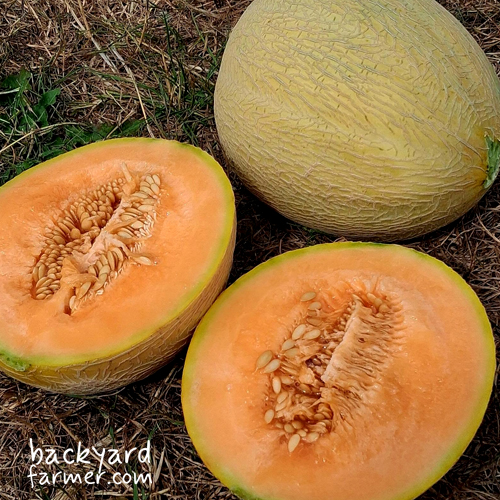
Growing Galia melons in the UK is possible with a greenhouse or polytunnel, where the plants receive the warmth they need to produce sweet, ripe fruit.
An unheated greenhouse can work well if you get the timing right. Start seeds indoors in April or May, plant under cover once temperatures are suitable and aim to harvest in late summer.
The main challenges are keeping the plants growing steadily, getting the flowers pollinated and knowing when the melons are ready to pick.
When to Sow Galia Melons in the UK
The best time to sow Galia melon seeds is from mid-April to mid-May. Starting indoors gives the plants time to establish before greenhouse conditions become suitable for planting.
Melons need consistent warmth to germinate, ideally around 18–21°C. A heated propagator is useful, although a consistently warm, bright windowsill can also work.
Avoid sowing too early if you’re using an unheated greenhouse. Melon seedlings grow quickly in warm conditions and can become pot-bound while waiting for temperatures to improve.
Aim to have healthy young plants ready for transplanting in late May or June.
Choosing Galia Melon Seeds
Galia melons are recognised by their netted yellow skin and sweet, pale-green flesh.
The name is also used for several Galia-type hybrids, which can differ in fruit size, disease resistance and growing requirements.
For UK cultivation, choose seeds recommended for greenhouse or polytunnel growing.
Recommended seeds: Galia Melon – Plant World Seeds
These are sold specifically as Galia melons, with greenhouse cultivation recommended for the UK.
Seeds saved from supermarket melons aren’t a reliable alternative, as hybrids may not produce fruit identical to the parent. There are also potential biosecurity concerns.
Where to Grow Galia Melons
Galia melons need plenty of sunlight, warmth and space for their vines to develop. A greenhouse or polytunnel provides the most reliable growing conditions in the UK.
Greenhouse Temperature and Ventilation
Wait until greenhouse temperatures remain reliably above 12–15°C, including overnight, before planting young melons into their final positions.
Cold nights can slow growth considerably, even when the greenhouse feels warm during the day.
A maximum/minimum thermometer is useful for monitoring overnight lows. See our guide to the best greenhouse thermometers for suitable options.
Melons grow well at around 25°C, but excessive greenhouse heat can cause problems. Open vents and doors during warm weather to prevent overheating and maintain airflow.
Keeping the greenhouse permanently closed to retain warmth can lead to excessive heat and poor ventilation, both of which can interfere with healthy growth.
Greenhouse Space and Supports
Galia melons produce vigorous trailing vines, but growing them vertically saves valuable greenhouse floor space.
Install sturdy canes, netting or a trellis before the plants become established. Allow enough room for foliage to spread without becoming tangled with neighbouring crops.
Supports must also be strong enough to carry developing fruit.
If you’re organising greenhouse growing space alongside other crops, the free BYF Allotment Planner can help you plan the layout before planting.
How to Grow Galia Melons from Seed
Galia melon seeds germinate readily when given consistent warmth.
- Fill individual 7.5cm pots with moist, peat-free seed compost.
- Sow two seeds per pot, approximately 1.5cm deep.
- Keep the pots at 18–21°C, ideally in a heated propagator.
- Seedlings should begin appearing after approximately one week.
- If both seeds germinate, remove the weaker seedling.
- Keep the remaining plant warm, bright and evenly moist.
Avoid saturating the compost, as young melon plants dislike cold, waterlogged conditions.
Once seedlings have developed three or four true leaves, they should be approaching a suitable size for planting out.
If greenhouse temperatures are still too low, move them into slightly larger pots rather than allowing the roots to become congested.
Planting Galia Melons in a Greenhouse
Galia melons can be grown in greenhouse borders, large containers or growing bags.
Plant in late May or June once conditions are warm enough, taking care not to damage the roots.
Keep the rootball at approximately the same depth as it was in its original pot. Avoid burying the stem or leaving a depression where water can collect around its base.
Planting in Greenhouse Borders
Prepare the soil with well-rotted compost or other organic matter to improve fertility and moisture retention.
For vertically trained plants, the RHS recommends spacing around 45cm apart at the base of their supports.
Remember that this is the planting distance, not the total space occupied by the mature vines. Allow room above and around the plants for healthy foliage and airflow.
Water thoroughly after planting and guide the stems towards their supports.
Growing Galia Melons in Pots
Galia melons can grow successfully in large containers, making them suitable for greenhouses without soil borders.
Use a pot at least 40cm wide and deep, with drainage holes and good-quality peat-free multipurpose compost.
Grow one plant per container. A standard growing bag can also accommodate one melon plant.
Container-grown melons need particularly careful watering because compost dries out quickly during hot weather. Install sturdy supports from the beginning.
Caring for Galia Melon Plants
Once established, Galia melons need regular watering, suitable feeding and some attention to training.
Watering
Keep the soil or compost evenly moist, particularly during flowering and fruit development.
Container-grown plants may need watering daily during hot weather, while those growing in greenhouse borders usually retain moisture for longer.
Check the compost before watering rather than following a fixed schedule. Water around the base of the plant, preferably in the morning.
Avoid allowing the roots to dry out completely or remain waterlogged. Both can stress the plant and interfere with fruit development.
Feeding
Container-grown melons benefit from a general liquid fertiliser every 10–14 days during early growth.
Once developing fruits reach approximately walnut size, switch to a high-potassium feed, such as tomato fertiliser, at similar intervals.
Plants growing in fertile greenhouse soil may need less additional feeding.
Avoid excessive nitrogen, which can encourage leafy growth rather than productive fruit development.
As the fruits begin ripening and the foliage naturally declines towards the end of the season, stop feeding and reduce watering.
Training and Pruning
Vertical training helps control the vines and makes better use of greenhouse space.
There are two main stages: establishing the plant’s structure and managing the shoots carrying developing fruit.
Stage 1: Establish the plant
- Guide the main stem upwards along a sturdy support.
- Allow side-shoots to develop and train them horizontally across the supporting framework.
- Once these side-shoots have produced around seven to nine leaves, pinch out their growing tips to encourage further flowering shoots.
Stage 2: Manage developing fruit
- Once the flowers have been pollinated and fruits begin swelling, select the strongest developing melons.
- Remove unwanted flowers and excess fruitlets from the fruiting shoots.
- Pinch out each selected fruiting shoot two or three leaves beyond its retained fruit.
- Remove further unwanted growth beyond these points as the fruits develop.
The first stage encourages flowering growth. The second concentrates the plant’s resources on ripening the selected melons.
Tie stems loosely to avoid damage as they thicken.
As the melons become heavier, support them with mesh or fabric slings secured to the greenhouse framework. Don’t rely on the fruit stalks to carry their full weight.
How to Pollinate Galia Melons
Galia melon plants produce separate male and female flowers. Bees and other insects can transfer pollen naturally, but pollination isn’t always reliable inside a greenhouse.
Hand-pollination can improve the chances of fruit developing.
Identifying Male and Female Flowers
Male flowers grow on slender stalks without any swelling underneath.
Female flowers have a small, immature melon directly behind the petals.
Male flowers often appear before female flowers, so it’s normal for plants to flower initially without producing fruit.
How to Hand-Pollinate
- Find a fully open male flower and female flower.
- Use a small, soft paintbrush to collect pollen from the centre of the male flower.
- Gently transfer the pollen onto the centre of the female flower.
- Repeat with other open female flowers.
Alternatively, remove the petals from a male flower and gently touch its pollen-bearing centre against the female flower.
After successful pollination, the small swelling behind the female flower should begin enlarging.
If it turns yellow, shrivels and drops away, the fruit hasn’t developed successfully.
Poor pollination is one possible cause, but cold conditions, excessive heat and inconsistent watering can also interfere with fruit development.
How Many Galia Melons Can One Plant Produce?
Under good greenhouse conditions, a healthy melon plant may ripen four to six fruits, although this isn’t a guaranteed yield in an unheated UK greenhouse.
For beginners, producing two or three properly ripened Galia melons would still be a worthwhile result.
Allow developing fruits to reach approximately 2.5cm across before selecting which ones to keep. Remove excess fruitlets so the plant can concentrate its resources on the remaining crop.
The aim is to ripen a manageable number of good-quality melons rather than allowing the plant to carry more fruit than it can support.
When and How to Harvest Galia Melons
Galia melons grown in UK greenhouses generally ripen between August and September, although early crops may be ready from late July.
Picking at the right time is important. An underripe melon may look fully developed but lack the sweetness expected from a Galia.
How to Tell When a Galia Melon Is Ripe
Unlike some other melon types, a ripe Galia will usually begin separating naturally from its stalk. This is one of the most useful signs that the fruit is ready to harvest.
Look for several indicators together:
- Skin colour: The background colour beneath the netting changes from green towards golden-yellow.
- Fragrance: The fruit develops a strong, sweet, fruity smell.
- Stalk: Cracking appears around the attachment point, and a fully ripe melon may separate with very little pressure.
- Softness: The blossom end may give slightly under gentle pressure.
When the skin has turned yellow, the fruit smells sweet and the stalk begins separating naturally, the melon is generally ready to pick.
Don’t force a melon off if it remains firmly attached. Allow more time for ripening, checking regularly so the fruit doesn’t become overripe.
If the other indicators suggest it’s ripe but the stalk remains attached, cut it cleanly with secateurs.
Avoid harvesting based on fruit size alone, as this varies between cultivars and growing conditions.
Will Galia Melons Ripen After Picking?
Galia melons can continue to soften and develop aroma after harvesting, but their sugar content won’t increase significantly.
A melon picked too early won’t become properly sweet simply by leaving it on a windowsill.
For the best flavour, allow fruits to ripen fully on the plant whenever possible.
Eat ripe melons promptly or refrigerate them until needed. Keep cut melon refrigerated.
Common Galia Melon Growing Problems
Most difficulties with Galia melons relate to greenhouse conditions, watering or pollination.
| Problem | Likely cause and solution |
|---|---|
| Flowers but no melons | Male flowers may appear first. Once female flowers develop, check pollination and greenhouse temperatures. |
| Small melons turning yellow | Failed pollination or plant stress. Check whether flowers opened and were pollinated, along with watering and temperature. |
| Lots of leaves but little fruit | Excess nitrogen, insufficient light or poor pollination. Review feeding and training. |
| White powder on leaves | Possible powdery mildew. Remove badly affected foliage and improve growing conditions. |
| Yellow or speckled leaves | Check watering and inspect leaf undersides for red spider mites. |
| Stems turning brown or rotting | Check for damaged stems, excessive moisture around the base and poor airflow. |
| Melons aren’t sweet | Fruit may have been harvested too early. Check several ripeness indicators before picking. |
Pests and Diseases
Aphids, glasshouse red spider mites and slugs can all affect Galia melons. Check young shoots and leaf undersides regularly so infestations can be managed early.
Powdery mildew is another potential problem, especially later in the growing season. Some Galia cultivars have resistance, but this doesn’t make them immune.
More serious diseases include Fusarium wilt and cucumber mosaic virus. Good greenhouse hygiene, healthy growing conditions and avoiding overcrowding help reduce preventable problems.
Also check for rodent damage where mice are a problem, particularly around young stems and developing fruit.
What to Grow After Galia Melons
Once the plants have finished cropping, remove the old vines and clear away any diseased material.
Greenhouse borders can then be prepared for suitable autumn or winter crops, such as winter lettuce or spinach, provided temperatures and daylight allow.
Frequently Asked Questions
Yes. Galia melons can grow successfully in an unheated UK greenhouse or polytunnel. Start seeds indoors in April or May and wait until temperatures remain reliably above 12–15°C before planting.
They can grow outdoors in particularly warm, sheltered locations, but ripening is less reliable. A greenhouse or polytunnel offers a better chance of producing sweet, mature fruit.
Yes. Use a container at least 40cm wide and deep, with one plant per pot. Provide sturdy supports and maintain regular watering and feeding.
Not always, as insects can pollinate the flowers naturally. However, hand-pollination is useful in greenhouses where insect activity is limited.
A healthy greenhouse melon plant may produce four to six ripe fruits under good conditions. Actual yields vary, and plants growing in cooler conditions may ripen fewer.
Poor pollination is one possible cause. Temperature extremes, inconsistent watering and general plant stress can also prevent young fruits from developing.
Look for golden-yellow skin beneath the netting, a sweet fragrance and slight softness near the blossom end. Natural separation from the stalk is a particularly useful sign that a Galia melon is fully ripe.