
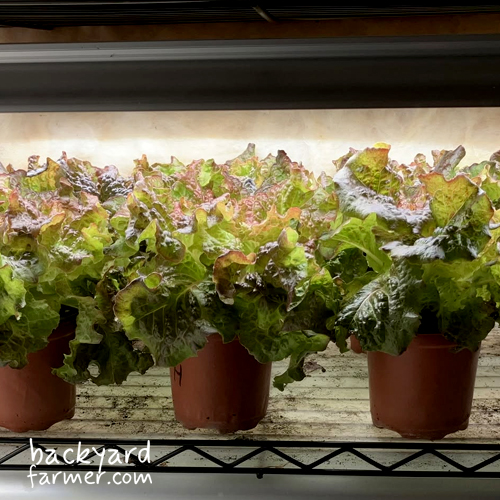
You can grow loose-leaf lettuce, rocket, mizuna and other baby salad leaves indoors in containers of peat-free compost. Give them the brightest suitable windowsill available—or use a grow light during darker months—keep the compost evenly moist and cut above the growing point so the leaves can regrow.
The simplest approach is to grow young, cut-and-come-again leaves rather than full lettuce heads. They need less room, crop more quickly and make better use of a windowsill or small indoor growing area. This guide covers salad leaves grown in compost, not hydroponics or indoor herbs.
Indoor Salad Leaves at a Glance
| What to consider | A good starting point |
|---|---|
| Easiest crops | Loose-leaf lettuce, salad rocket, mizuna and mild mustard leaves |
| Container | About 12cm minimum; 15cm is more forgiving; drainage holes are essential |
| Compost | Fresh peat-free multipurpose compost suitable for sowing |
| Light | Your brightest unobstructed windowsill, or a suitable grow light in darker conditions |
| Sowing | Sow thinly and follow the seed packet for covering depth |
| First harvest | Often around 4–8 weeks, depending on the crop, season and light |
| Regrowth | Around 2–4 useful cuts from many suitable crops |
| Regular supply | Sow another small tray every 2–3 weeks as a starting rhythm |
These figures are useful for planning, but they are not guarantees. Variety, room temperature, day length, window direction and sowing density can all change how quickly a tray grows.
What Do We Mean by Indoor Salad Leaves?
This guide covers baby and cut-and-come-again leaves grown beyond the microgreen stage. They are given more root space, allowed to develop larger leaves and may regrow after cutting.
Microgreens are normally sown much more densely and harvested younger, usually as a single cut. Full lettuce heads sit at the other end of the scale: they need more room, stronger light and a longer growing period. They can be grown indoors, but they are rarely the most productive choice for a small windowsill.
If you are growing basil, parsley or other culinary herbs, use the separate indoor herb gardening guide.
Best Salad Leaves to Grow Indoors
For a first tray, start with loose-leaf lettuce, salad rocket, mizuna or a mild mustard. They grow quickly and stay compact.
| Crop | Why it works indoors | Likely first cut | What to watch |
| Loose-leaf lettuce | Mild, productive and suited to repeat picking | Often 4–6 weeks | Choose loose-leaf rather than hearting types; heat and drought encourage bolting |
| Salad rocket | Fast and reliable in small batches | Often 4–6 weeks | Flavour strengthens with age; heat and drought encourage flowering |
| Mizuna or mibuna | Compact, mild and particularly good at regrowing | From about 4 weeks | Keep cool and evenly moist |
| Mild mustard leaves | Quick leaves with colour and flavour | Often 5–6 weeks | Some varieties are very hot, so check the packet |
| Lamb’s lettuce | Mild, compact cool-season leaves | Slower and variable | Germination and winter growth can be slow |
| Baby spinach | Familiar flavour; suits leaf-by-leaf picking | Sometimes from 4 weeks | Dislikes waterlogging and hot, dry conditions |
Baby-leaf pak choi and chard are also possible, although pak choi can bolt under stress and chard eventually needs more room. Lettuce varieties such as Salad Bowl and Lollo Rossa suit loose-leaf harvesting better than large hearting types.
What You Need
You do not need a specialist indoor-growing system. The basic equipment is:
- salad-leaf seeds or a suitable baby-leaf mixture;
- a tray, trough, window box or pot with drainage holes;
- a saucer or waterproof drip tray;
- fresh peat-free multipurpose compost suitable for sowing;
- a label and pencil;
- a watering can with a fine rose, or a tray for bottom watering;
- clean scissors for harvesting; and
- an optional grow light and timer.
Choosing a Container
A container about 12cm deep is workable for a short crop. Around 15cm is more forgiving because the extra compost holds moisture more steadily. Width mainly determines how much you can grow, but every container needs drainage holes and a saucer.
Choosing the Compost
Fresh peat-free multipurpose compost suitable for sowing lets the crop germinate and remain in one container. Seed compost may contain too little nutrition for several harvests. Plain coir holds water well but is not a complete source of plant nutrition.
Choose a Windowsill or Grow Light
Light is usually the main limit indoors. Warmth alone will not produce compact, healthy leaves if the plants are stretching towards a dim window.
The Best Windowsill
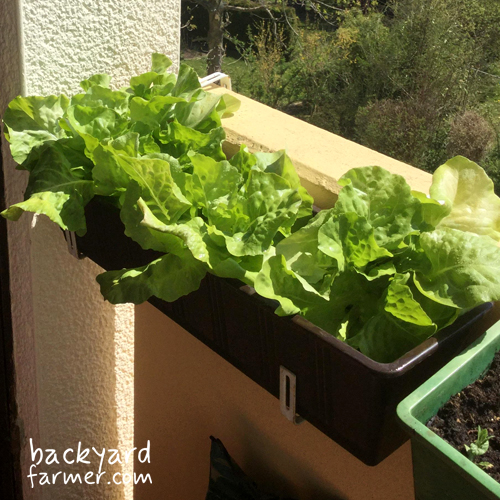
Use the brightest unobstructed position available. A south- or south-west-facing window normally provides the most light, while east- and west-facing windows can work during brighter months. A north-facing sill is less reliable, particularly from autumn to early spring. Nearby buildings, trees, balconies and glazing can change this.
Keep the tray away from radiators and glass that becomes excessively hot. Turn it every few days if seedlings lean, although rotation cannot compensate for a genuinely dark position.
When a Grow Light Helps
Use a grow light if seedlings become long, pale or floppy, lean heavily or make very little progress. It is also the more dependable option through the darkest UK months.
Around 12–16 hours of artificial light in each 24-hour period is a sensible starting range. Use a timer and give the plants a daily dark period rather than leaving the light on continuously.
Follow the manufacturer’s guidance for height and coverage; there is no universal distance that suits every model. Adjust if plants stretch, lean, bleach or scorch.
For more detail, see the guides to growing vegetables under artificial light and choosing an LED grow light.
How to Sow Salad Leaves Indoors
1. Fill the Container
Fill a clean container with fresh compost, leaving a small watering gap below the rim. Firm the surface gently without compressing it.
2. Moisten the Compost
Water before sowing and let the excess drain. This stops the first watering washing small seeds into clumps.
3. Sow Thinly
Scatter seed evenly or sow in shallow rows. Roughly 1–2cm between seeds is a useful starting point for many baby-leaf crops, although the packet takes priority. Avoid a solid mat: crowded seedlings compete for light and stay damp for longer.
4. Cover According to the Packet
Many small salad seeds need only a shallow covering, often around 5–10mm. Follow the packet rather than treating this as a fixed rule. Larger seeds such as peas need a different method.
5. Label the Tray
Label the crop and sowing date so you can judge its speed and plan the next batch.
6. Keep the Compost Evenly Moist
Place the tray in a bright position and keep it moist during germination. A clear lid can slow moisture loss, but remove or ventilate it when seedlings emerge. They need usable light straight away.
7. Thin Crowded Seedlings
Baby leaves can grow closer than mature plants, but still need light and airflow. Remove the weakest or most crowded seedlings before they form a tangled mat.
Watering, Thinning and Feeding
Watering
Keep the compost evenly moist during germination. Once plants establish, water when the surface begins to lose moisture rather than following a daily schedule. Water gently at compost level or briefly from below, then let the container drain. Do not leave the roots sitting in water.
Routine misting is unnecessary. It does not replace root watering and can keep crowded foliage damp.
Temperature and Airflow
Most salad leaves prefer a cool, bright room to a hot sill above a radiator. Normal room ventilation is enough. Remove dead leaves, avoid packing wet trays together and improve the light if seedlings become pale and stretched.
Feeding
Fresh multipurpose compost normally contains enough nutrition for the first crop. After several cuts, a light liquid feed may help pale or slowing plants, but check light, watering and drainage first and follow the product label.
How and When to Harvest Salad Leaves
Many baby leaves are ready at roughly 8–10cm high, commonly four to eight weeks after sowing. Fast crops in good light may be ready towards the lower end of that range, while winter trays, crowded seedlings and dim positions take longer.
Leaf size, tenderness and several true leaves are better guides than an exact date.
Pick the Outer Leaves
For spaced lettuce, spinach and chard, take the largest outside leaves without damaging the small central leaves. This keeps the crown growing.
Cut a Whole Tray
For a denser crop, cut above the lowest growing point, commonly leaving about 2.5–5cm above the compost depending on the plant.
The exact height matters less than protecting the central crown. If the growing point is removed, the plant may not produce another useful crop.
After Harvesting
Remove damaged leaves, water if needed and return the tray to strong light. Regrowth is often smaller or slower than the first crop.
Expect around two to four useful cuts from many cut-and-come-again leaves, sometimes fewer and occasionally more. Replace the tray when growth becomes sparse, tough, bitter, diseased or begins to bolt.
Use clean hands and scissors, remove any slimy leaves and rinse the harvest in fresh water before eating. Do not wash salad with soap or household cleaning products.
How to Keep a Regular Supply
One small windowsill tray gives a modest harvest rather than a constant household supply. For better continuity, sow another small batch every two to three weeks as a starting rhythm.
| Tray | Stage |
| Tray 1 | Large enough to harvest |
| Tray 2 | Established and actively growing |
| Tray 3 | Newly sown or just germinating |
In winter, three to four weeks between batches may be more realistic because germination and growth slow down. Adjust the gap to the crop, the light available and how quickly you use the leaves.
Two or three sensibly spaced trays are more dependable than one container sown as densely as possible.
Growing Salad Leaves Indoors in Winter
Salad leaves can grow indoors in winter, but a window-only crop will normally be slower and less dense than one grown in spring or summer. An ordinary heated room solves cold more easily than it solves the lack of usable daylight.
A suitable grow light makes compact winter growth more reliable. Use it on a timer, follow the manufacturer’s coverage guidance and keep watching the plants rather than relying on wattage or hanging distance alone.
Winter-labelled loose-leaf lettuce, lamb’s lettuce, mizuna, mild mustard, rocket and baby spinach are all worth considering. Check the packet for autumn, winter or protected-sowing suitability because variety matters as much as the crop name.
During winter:
- expect germination, harvesting and regrowth to take longer;
- water less often as the plants use moisture more slowly, without allowing germinating compost to dry out;
- move leaves away from very cold glass at night;
- keep trays clear of radiators below the sill;
- maintain gentle airflow without chilling the seedlings; and
- sow small batches rather than relying on one oversized tray.
You can keep sowing through the year, but winter results depend heavily on the light available.
Common Problems With Indoor Salad Leaves
| Symptom | Likely cause | What to do |
| Long, pale or leaning seedlings | Too little light, sometimes with too much warmth | Move to a brighter position or add a grow light; do not add fertiliser |
| Seedlings collapse at compost level | Damping off in wet, crowded or stagnant conditions | Remove affected plants and improve drainage, light and airflow; resow cleanly if it spreads |
| Grey mould or surface growth | Dead material, wet compost, crowding or weak airflow | Remove affected material, reduce crowding and water the compost rather than the leaves |
| Yellow leaves or wilting in wet compost | Waterlogging, poor light or natural ageing | Empty the saucer, check drainage and let the surface begin drying before watering |
| Bitter leaves or a flower stem | Heat, drought, age or bolting | Restore even moisture, move away from hot glass and replace old plants |
| Little regrowth | Damaged crown, stressed roots, weak light or an exhausted tray | Improve conditions or sow again; leave the growing point intact next time |
| Curled, sticky leaves and insects | Aphids | Isolate the tray, remove small colonies and discard a heavily infested crop |
Fungus gnats often indicate persistently damp compost. Let the surface begin losing moisture and check the drainage holes. For wider issues, see common indoor vegetable-growing problems.
Frequently Asked Questions
Yes, if the position is bright enough. A grow light becomes more useful when seedlings stretch, leaves remain pale or winter growth almost stops.
It is possible with enough light, root space and a suitable variety, but loose-leaf plants are quicker and use a small container more efficiently. Use the complete UK lettuce guide for mature plants.
Many fast crops are ready in four to eight weeks, depending on variety, season, light, temperature and sowing density.
Two to four useful cuts is realistic for many crops. Some give fewer and well-grown mizuna may give more. Replace weak or poor-quality regrowth.
No. Microgreens are sown more densely and harvested younger, usually once. Baby leaves grow longer, need more root space and may regrow.
Usually not for the first crop in fresh multipurpose compost. After repeated cuts, check light, moisture and drainage before considering a light liquid feed.
Start With One Small Tray
Start with loose-leaf lettuce or mizuna in a drained container on your brightest suitable windowsill. Keep the compost evenly moist, watch how the seedlings respond to the light and sow a second tray in two or three weeks if the first is growing well.
If you also have an outdoor space, the complete guide to growing salad leaves in the UK covers beds, pots, sowing times and a wider range of crops.